Vimto
A fruit cordial from the temperance bars
- Non-alcoholic
- Local name
- Vimto
- Served
- Chilled, or hot in winter
What it is
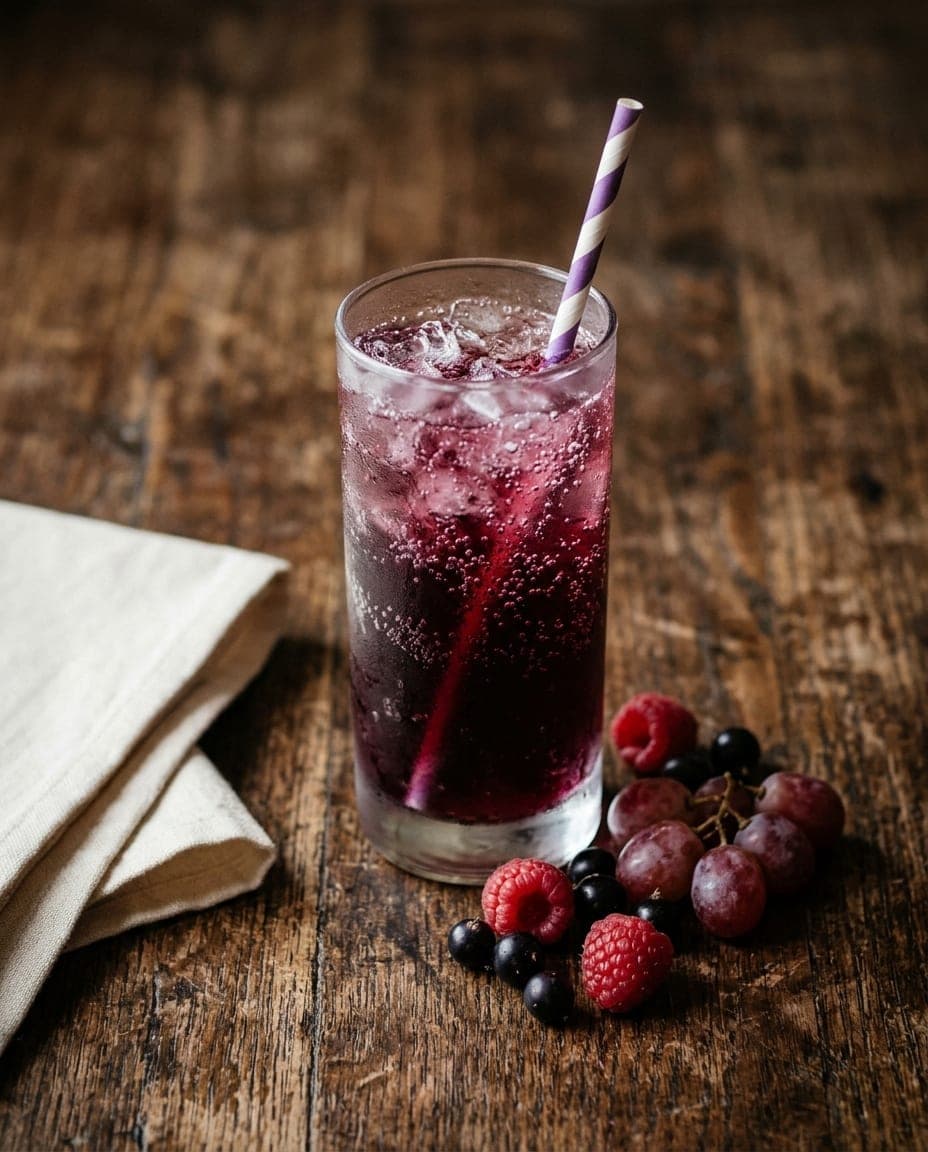
Vimto is a deep red, sweet fruit drink that originated in Greater Manchester. It is a cordial, meaning a concentrated syrup of fruit juice, herbs and spices that is diluted with water before drinking. The liquid has a distinctive ruby colour and a taste built on grape, raspberry and blackcurrant, rounded out by a blend of mild herbs and spices that give it a complexity unusual for a soft drink.
The drink was created in 1908 by John Noel Nichols, a Manchester wholesaler of herbs, spices and medicines. He originally named it Vim Tonic and sold it as a non-alcoholic alternative in the temperance bars of northern England, where alcohol was often discouraged or banned. The name was shortened to Vimto in 1912. While the brand has become a national staple across the United Kingdom, its roots remain firmly tied to Manchester and the wider North West region.
Today, Vimto is consumed in two distinct ways. In summer and during warmer months, it is served chilled, often over ice, as a refreshing beverage. In winter, particularly in the north of England, it is frequently heated and drunk warm, similar to how mulled wine or hot chocolate might be enjoyed. This versatility has kept it popular for over a century.
The temperance roots of Vim Tonic
The history of Vimto begins with the temperance movement, which sought to reduce or eliminate alcohol consumption in Britain during the late 19th and early 20th centuries. In Manchester, where the industrial working class was large, temperance bars and clubs offered an alternative to the pub. These establishments needed a drink that could replace beer or ale without causing intoxication.
John Noel Nichols saw an opportunity to create a beverage that would satisfy the desire for a substantial, flavourful drink while adhering to these principles. He formulated Vim Tonic using fruit juices and a secret blend of herbs and spices. The drink was marketed as a "tonic" not because it possessed medicinal properties in the modern sense, but because it was intended to be restorative and invigorating for those abstaining from alcohol.
The name "Vim" referred to energy and spirit, while "Tonic" presented it as a health drink. As the brand grew, the word "Tonic" was dropped, leaving just Vimto. The original recipe was designed to be robust enough to stand up to the palate of someone used to strong ale, yet gentle enough to be enjoyed by children and those avoiding alcohol entirely.
How it is made and what goes into it
Vimto is not a single-fruit drink like orange squash or apple juice. It is a blend, constructed from a base of grape, raspberry and blackcurrant juices. These fruits provide the drink's characteristic deep red hue and its complex sweet-tart balance. The blackcurrant contributes a sharpness that cuts through the sweetness, while the raspberry and grape add body and fruitiness.
Beyond the three fruits the recipe carries herbs and spices, which the label records without naming. That herbal edge is what separates it from a plain fruit squash, and it is the part that comes forward when the drink is heated.
The product is sold as a concentrate. Consumers do not drink it straight from the bottle; instead, they mix it with cold water, usually in a ratio of one part syrup to four or five parts water, though this varies by personal preference. The result is a sweet, aromatic beverage that can be enjoyed immediately after mixing or allowed to chill for an hour.
How to drink it
The way Vimto is served depends largely on the season and the region. In summer it is served cold over ice, which is how most of the country drinks it.
In winter, particularly in the north of England, Vimto takes on a different role. The concentrate is topped up with boiling water instead of cold. This hot version is drunk as a comfort in cold weather and often taken in flasks to football matches. The warmth brings out the herbal and spicy notes in the syrup, creating a taste that some describe as similar to a light fruit punch or a non-alcoholic mulled beverage.
The drink pairs well with the salty crunch of crisps or the sweetness of a dessert. There is no strict rule for what accompanies it, but the key is that the temperature matches the mood: cold for refreshment, warm for comfort.
Vimto beyond the United Kingdom
While Vimto is a British institution, its reach extends far beyond Manchester and the wider United Kingdom. The drink has a long following in the Middle East, where the concentrate has been sold for the better part of a century. In countries such as Kuwait, Saudi Arabia, the United Arab Emirates and Iraq, Vimto is a household staple.
During Ramadan it is one of the standard drinks for breaking the fast at sunset, diluted and served cold, and sales across the Gulf rise sharply for the month.
The popularity in the Middle East has led to a version of the brand that is tailored slightly to local tastes, though the core ingredients remain largely the same. The concentrate is sold in large bottles or tins, often in deep red packaging that stands out on supermarket shelves. This international presence has made Vimto one of the few British soft drinks with a significant following outside the English-speaking world.
Curious facts
- The name changed. The drink was originally called "Vim Tonic" when it launched in 1908, but the word "Tonic" was dropped after a few years to shorten the brand name.
- A herb merchant's creation. Nichols traded in herbs and spices, which is the obvious explanation for a soft drink built on them rather than on fruit alone.
- A winter staple in the north. Heating Vimto is a common practice in Greater Manchester and other northern English regions during the colder months, turning it into a warm comfort drink.
- Ramadan favourite. The concentrate has been sold across the Gulf for generations, and the month of Ramadan is the peak of its year.
- No alcohol, ever. Despite its name suggesting "tonic" or medicinal qualities, Vimto was always non-alcoholic and never contained any spirit.
- A colour that sticks. The deep red carries into tablecloths and shirts, and is the first thing any Vimto household learns about it.
Where to try it
The most authentic place to experience Vimto is in Greater Manchester, where the drink was invented and remains a cultural fixture. In Manchester city centre, traditional cafes and family-run establishments often serve it alongside classic British fare. Many local pubs, even those that serve alcohol, will offer Vimto as a non-alcoholic option for children or those who prefer not to drink.
It is in every supermarket in the country as a bottle of concentrate, which is how most of it is drunk.
In the Gulf it is in every supermarket and corner shop, stacked by the case in the weeks before Ramadan. The packaging differs from the British bottles.
Where to try it
1 destination
 Camper Van Rentals
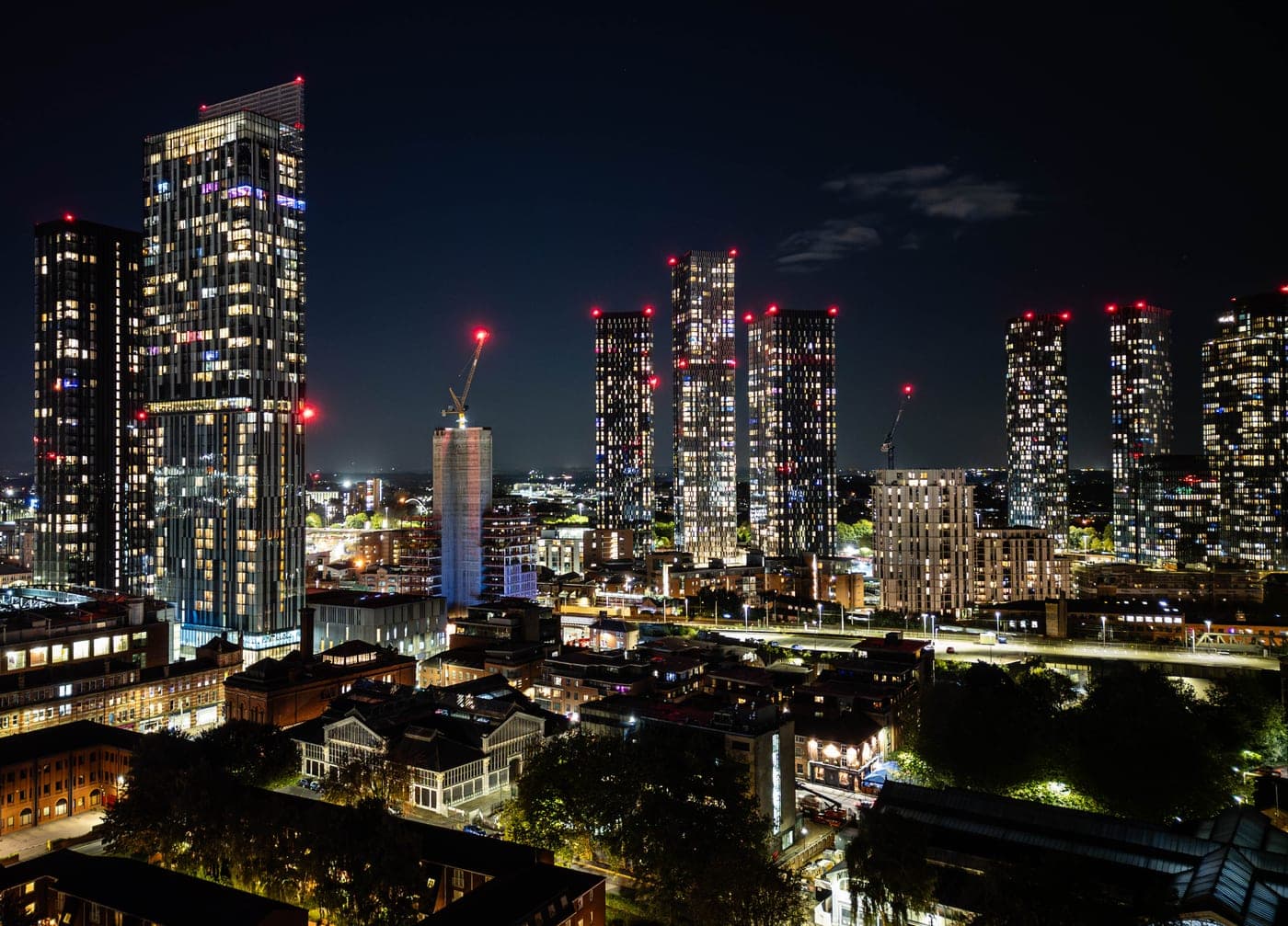
Manchester
Vibrant city known for its industrial heritage, music scene, and football.
Camper Van Rentals
1 region
- Camper Van Rentals1 destination
Greater Manchester
Greater Manchester sits where the flat Cheshire plain gives way to the rising moors of the Pennines. It is a region built from cotton, coal and canal water, and its slow-travel character comes less from any single view than from a pattern that repeats from town to town: a canal basin, a former cotton mill turned into flats or studios, a covered market hall, a parish church with a soot-darkened tower. Reading that pattern, town by town, is what makes exploring the region worthwhile. Manchester itself anchors the region, its warehouse districts and Victorian civic buildings now holding galleries, independent shops and the city's long-running music venues. Salford, across the water from the city centre, keeps its own identity around the restored docks of Salford Quays, once a working dock for the city's trade. Stockport, above the River Mersey, has its own market hall and a warren of former mill buildings and railway arches now used by small breweries. Bury holds one of the region's markets, still trading on its historic stalls. Bolton, Oldham, Rochdale and Wigan each carry the same textile-town layout of mill chimneys, terraced streets and market squares, softened now by parks and reused industrial buildings. Beyond the built-up towns, the region edges into open country. Saddleworth, a cluster of stone villages in the Pennine foothills, keeps a slower, more rural pace than the towns below it. Moorland reservoirs and packhorse routes lace the hills around it, laid out originally to serve the textile trade and now walked for their own sake. Closer to the city, Heaton Park has formal gardens and open lawns within an urban setting, while the Bridgewater and Rochdale canals thread through several towns, their towpaths still following the routes barges once used to move coal and cloth. Food and craft culture in the region grows directly from this working history. Markets in Bury, Bolton and Ashton-under-Lyne sell black pudding, meat pies and baked goods alongside fresh produce, and a number of small breweries now operate from the same brick mill buildings that once spun cotton. Museums across the region, from restored mills to preserved engine houses, explain the mechanics of the Industrial Revolution in the buildings where it happened, rather than behind glass elsewhere. Architecture is a constant thread. Red-brick mills, often five or six storeys with rows of tall windows built to let in light for weaving, dominate the skyline of towns like Stockport and Ashton-under-Lyne. Grand Victorian town halls in Manchester, Rochdale and Bolton reflect the wealth the textile trade generated, with detailed stonework and clock towers that still mark the centre of each town. Victoria Baths in Manchester, a restored public swimming and bathing complex, gives a sense of how public life was organised in the region a century ago. What unites Greater Manchester's towns is this shared inheritance of industry and its slow, ongoing conversion into something new: mills into studios, docks into waterside walks, markets that never stopped trading. Villages on the region's moorland edge offer a quieter counterpoint, their stone cottages and chapel spires a short step from the industrial towns below. Together they give the region a layered, unhurried rhythm — one town's market square leading naturally to the next town's canal basin, and from there up onto open moor.
Camper Van Rentals