Cranachan
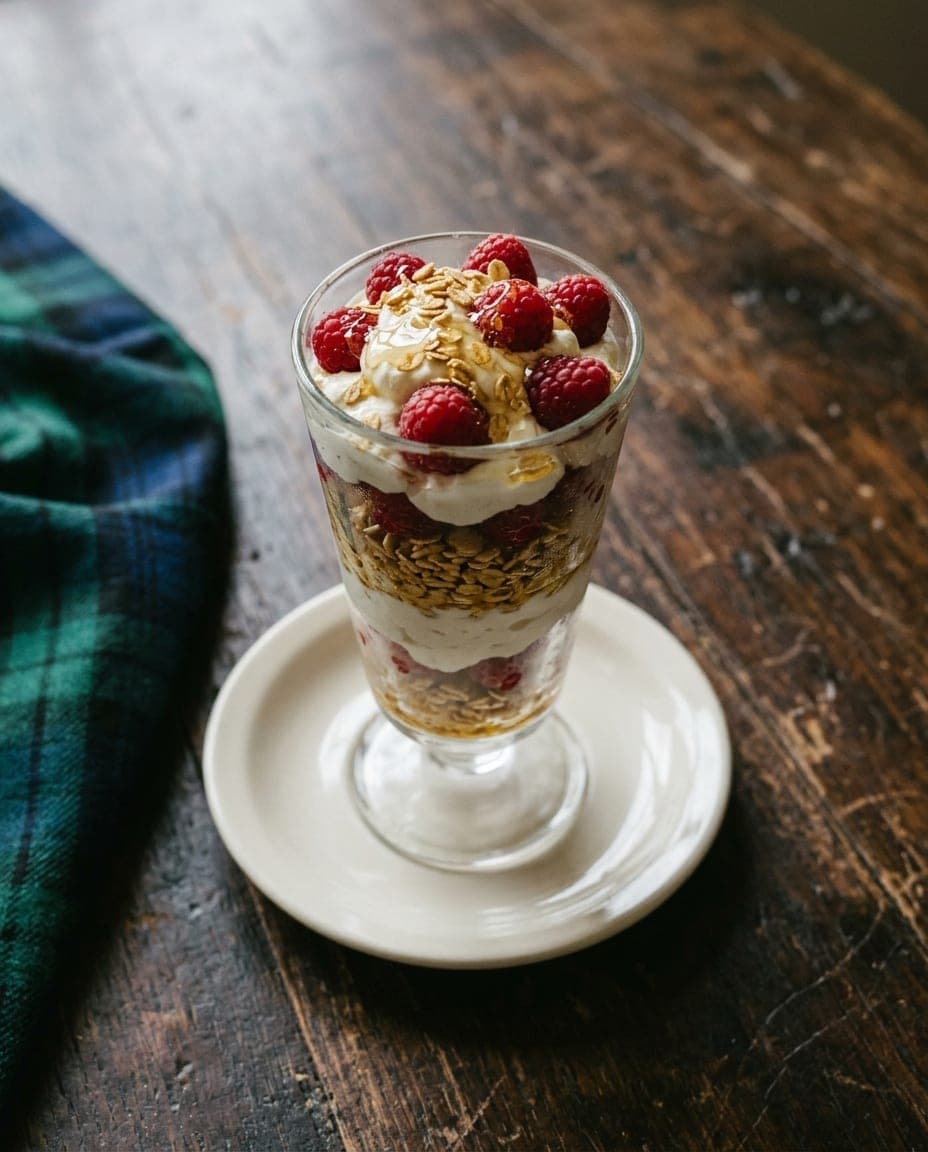
Toasted oats, whisky, honey and raspberries layered in a glass
- Vegetarian
- Local name
- Cranachan
- Best eaten at
- A Burns Night supper
- Pairs with
- Whisky
What it is
Cranachan is a Scottish dessert that combines toasted oatmeal, whipped cream, heather honey, fresh raspberries and a dram of whisky, layered in a glass rather than cooked into a single mass. The dish looks simple but relies on specific textures to hold together. The oats are dry-toasted in a pan until golden and crisp before being folded into the cream, ensuring they do not turn soggy when mixed with the fruit.
The result is a cool, fragrant treat that feels rustic yet refined. It sits somewhere between a fruit salad and a trifle but lacks the baked pastry or custard layers found in other British desserts. The texture varies from bite to bite: soft cream gives way to crunchy oats, then bursts of tart raspberry juice, all held together by the sweetness of honey and the sharpness of the spirit.
Cranachan is not merely a sweet course; it is a celebration dish. While it can be found on menus year-round in Edinburgh and other cities, its true home is the Burns Night supper held on 25 January to honour the poet Robert Burns, and during Hogmanay, the Scottish New Year festivities. It is a dish that demands attention to the quality of its components, as there are no sauces or thickeners to hide behind.
The evolution from harvest food to modern dessert
The origins of cranachan lie in the agricultural traditions of the Scottish Highlands and the Lowlands, where simple ingredients were combined to celebrate a harvest, traditionally the late-summer raspberry harvest. The name comes from the Gaelic crannachan, a word linked to a kind of churn and to a milky dish eaten at harvest time or Halloween.
In its earliest forms, known as cream-crowdie, it was a plainer mixture of cream and toasted oats. It often included crowdie, a fresh soft cheese, beaten together with the toasted oatmeal and sweetened with honey, with raspberries added only when in season. This version was a hearty snack for farm workers rather than a dessert served at a formal dinner table.
The transformation into the dish known today came later; older recipes often left out the whisky and treated the fruit as optional. As the tradition moved from the fields to the dining rooms of Edinburgh and Glasgow, the crowdie was replaced by whipped cream, and the raspberry became the essential fruit. This shift went hand in hand with the commercial cultivation of raspberries in Scotland, particularly in Perthshire and Angus, where the climate produces fruit of a size and flavour suitable for the dessert. The addition of whisky to the mix solidified its status as a celebratory treat, turning a rustic harvest snack into a symbol of Scottish identity.
What goes into it
There is no single official recipe, but the core ingredients remain constant across Scotland. A proper cranachan relies on the quality of each element, as the dish offers little room for substitution without losing its character.
- Toasted oatmeal: Oats are dry-toasted in a heavy pan until they turn golden brown and crisp. This step is critical; raw oats would become mushy when mixed with the cream.
- Whipped cream: Fresh double cream is whipped to soft peaks, providing a light base that holds the other ingredients without becoming heavy.
- Heather honey: The floral sweetness of heather honey is preferred for its distinct flavour, though any good quality Scottish honey works.
- Fresh raspberries: Ripe berries are used whole or lightly crushed to release their juice into the cream.
- Whisky: A measure of single malt whisky is folded in, adding warmth and depth that cuts through the sweetness of the honey and cream.
The assembly is usually done in a glass or a shallow bowl, with layers of cream, oats, fruit and honey repeated until the vessel is full. The final touch is often a dusting of extra toasted oats on top to maintain the crunch.
How it is eaten
Cranachan is served as a dessert, on Burns Night typically following a main course of haggis, neeps and tatties. It is eaten with a long spoon, driven to the bottom of the glass so that each mouthful takes cream, oats and fruit at once; the layers are for looking at and are destroyed immediately.
The dish pairs naturally with whisky, both as an ingredient and as a drink served alongside it. A dram of single malt complements the honey and raspberry notes without overwhelming them, ideally poured from the same bottle that went into the dessert.
In Edinburgh restaurants, cranachan often appears on menus during the winter months, especially in January and December. It is frequently presented as part of a Burns Night supper, where the tradition of reciting poetry and drinking whisky makes the dessert feel like a natural conclusion to the evening.
The story behind the toast
The most distinctive feature of cranachan is the dry-toasting of the oats. This step separates it from other oat-based desserts like porridge or crumble. Oats were toasted in a dry pan over the fire because it changes them: the starch colours, the taste turns nutty, and the grain stays crisp instead of swelling into the cream.
The modern assembly — layered in a glass, with whisky in it — is a restaurant idea laid over an older farm one. The older version was crowdie or cream beaten with toasted oatmeal and eaten at harvest; the raspberries and the whisky came later, and the glass later still.
Curious facts
- The oats must be dry-toasted. Raw or boiled oats would turn mushy when mixed with cream, ruining the texture. The toasting creates a crisp layer that stays distinct until eaten.
- Heather honey is preferred. While any honey works, heather honey is traditional for its dark colour and distinctive floral taste, which complements the whisky and berries.
- Raspberries are essential. The dish relies on the tartness of fresh Scottish raspberries to balance the sweetness of the honey and cream. Other fruits like blackberries or strawberries are rarely used in a true cranachan.
- The whisky came later. The roots lie in older harvest foods; the standard modern version, with whisky and whipped cream in place of crowdie, is a later development.
- A Burns Night favourite. The dish is a common choice at Burns Night suppers, where it serves as a sweet conclusion to a night of poetry and whisky.
Where to try it
Cranachan is available year-round in Edinburgh restaurants, but it shines brightest during the winter season, particularly around Burns Night on 25 January and Hogmanay. Traditional Scottish restaurants in the Old Town and New Town often serve it as part of a Burns Night menu, alongside haggis and whisky.
Perthshire and Angus are the raspberry counties — most of the Scottish crop comes off those fields — and cafés there make a point of the fruit in season. Hotels across the country put it on through the winter.
Where to try it
1 region
 Camper Van Rentals1 destination
Edinburgh
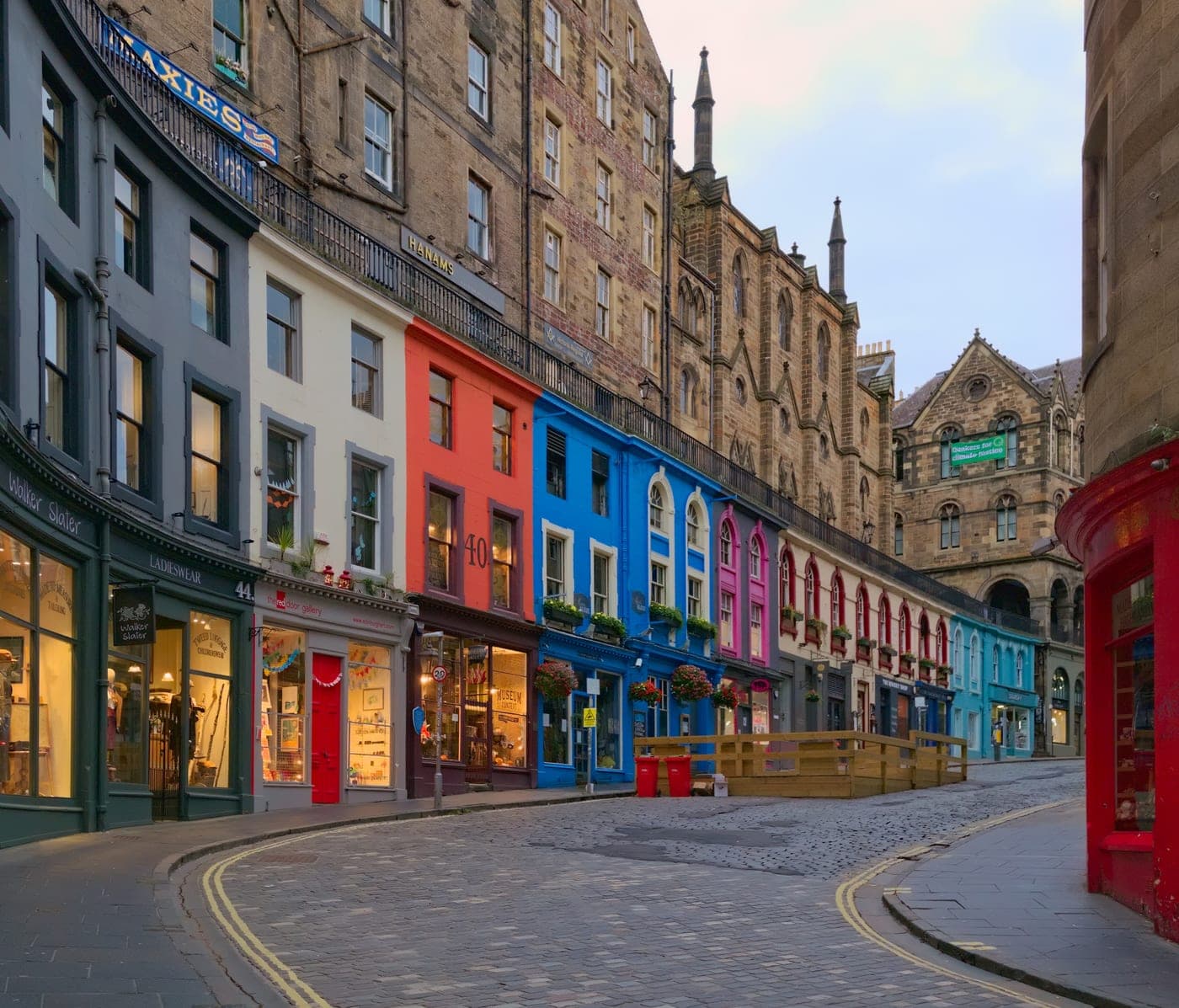
Scotland's capital, Edinburgh, is renowned for its historic and architectural significance. The city is famous for the iconic Edinburgh Castle perched atop Castle Rock, offering panoramic views. Its Old Town is a UNESCO World Heritage site, featuring cobbled streets and medieval buildings. Nearby, the New Town showcases Georgian architecture and vibrant cultural spots. Beyond the city, the Scottish Borders offer picturesque landscapes and historic towns like Melrose and Jedburgh, known for their abbeys. Edinburgh is also a gateway to the Highlands, where travelers can explore remote glens and lochs. The region hosts various festivals, including the renowned Edinburgh Festival Fringe, celebrating arts and culture.
Camper Van RentalsCastles