Devon and Dorset crab
Pot-caught brown crab from England's south-west harbours
- Local name
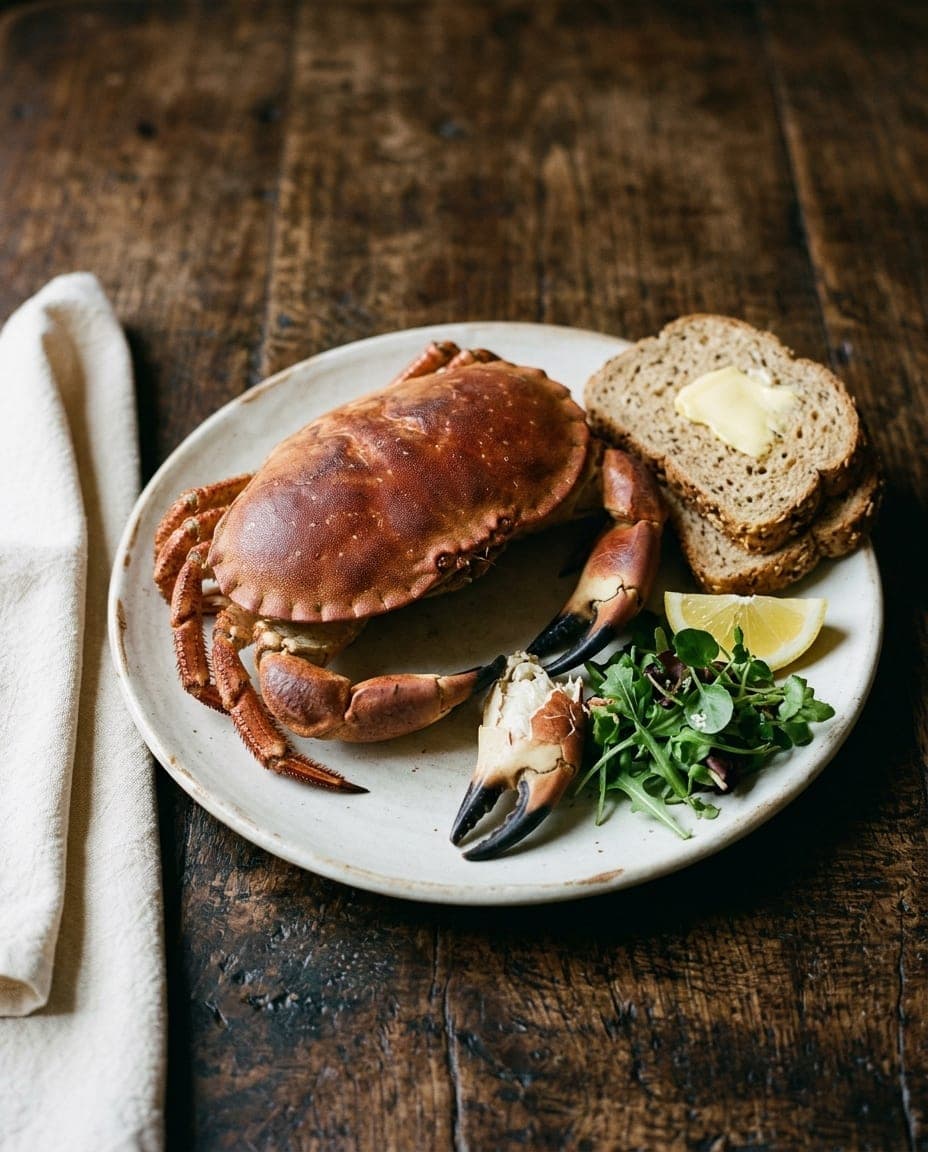
- Dressed crab
- Served with
- Brown bread, salad, lemon
- Best eaten at
- A harbourside café
- Pairs with
- English sparkling or a dry white
What it is
Along the coasts of Devon and Dorset, crab is less a recipe than a local habit. Brown crab is caught in pots off both counties, landed in small harbours and eaten within hours, most often as a dressed crab or a crab sandwich. The meat comes in two kinds that define the dish: white meat from the claws and legs, sweet and fibrous, and brown meat from the body, softer and much richer.
A dressed crab has the white and brown meat picked out and arranged back in the cleaned shell, the brown sometimes loosened with breadcrumbs or a little mayonnaise, with lemon, brown bread and salad alongside. The sandwich mixes the two meats with a little mayonnaise, lemon juice and black pepper and piles them onto thick brown bread, which holds the moisture without going soggy. Dressed crab is eaten all round the British coast; what makes it local here is where the pots were set.
Where it comes from
The crab is caught with pots, a static method: strings of baited pots are left on the sea floor and hauled every day or two, and the crabs come up alive and undamaged, which is what the fresh trade depends on. The boats work close inshore and land into the same towns that cook the catch.
In Devon the landings are spread across both coasts — small north-coast ports such as Appledore, and in the south Salcombe and Dartmouth, which land some of the largest brown crab catches in the country. Further east in Dorset, boats out of Weymouth set their pots on the rocky ground off the Isle of Portland. The waters there are anything but sheltered — the Portland Race off the Bill is a notorious tidal stretch — but the rocky seabed gives crab and lobster the crevices they need, and the same pots bring up both.
What goes into it
The preparation relies on the quality of the meat rather than a long list of ingredients. A dressed crab or a good sandwich will typically contain:
- Brown crab meat, from the body, which gives a deep, savoury richness.
- White crab meat, from the claws and legs, adding sweetness and a firmer texture.
- Mayonnaise, used sparingly to bind the two meats without overpowering them.
- Lemon juice, for acidity to cut the fat of the brown meat.
- Freshly ground black pepper, the main seasoning.
The result is a pale, loose filling against dark bread. There is nothing to hide behind: pasteurised or previously frozen meat announces itself immediately, which is why the places that do it well say where the crab was landed.
How it is eaten
The setting is a café beside a working harbour, in a village like Appledore or on the quay at Weymouth. The sandwich comes on thick brown bread with a little salad and a wedge of lemon; the dressed crab arrives in its shell with the same companions.
English sparkling wine, now made in quantity across the south of England, or a dry white with enough acidity to stand up to the brown meat, are the usual glasses.
Curious facts
- Two distinct textures. White meat from the claws is firm and sweet; brown meat from the body is softer and more intense.
- Pot-caught, not trawled. Most crab served on these coasts comes from pots, which keeps the catch alive and the seabed intact.
- Two animals, one fishery. Off Portland the same pots take lobster as well as crab, and the two are sold side by side off the same boats.
- Simple seasoning. Good versions rely on little more than lemon and pepper.
- Local by catch, not by recipe. Dressed crab is eaten all round Britain; here the point is that it was landed a few hundred metres away.
Where to try it
A harbour café in Appledore, Salcombe or Dartmouth in Devon, or on the waterfront at Weymouth in Dorset, where the crab was landed that morning. Fishmongers in the same towns sell dressed crab in the shell to take away, which is the cheaper and often better option. Quality varies with how recently the crab was picked: meat picked that day tastes of the sea, and meat picked three days ago tastes of the fridge.
Where to try it
1 destination
 Wine Tasting
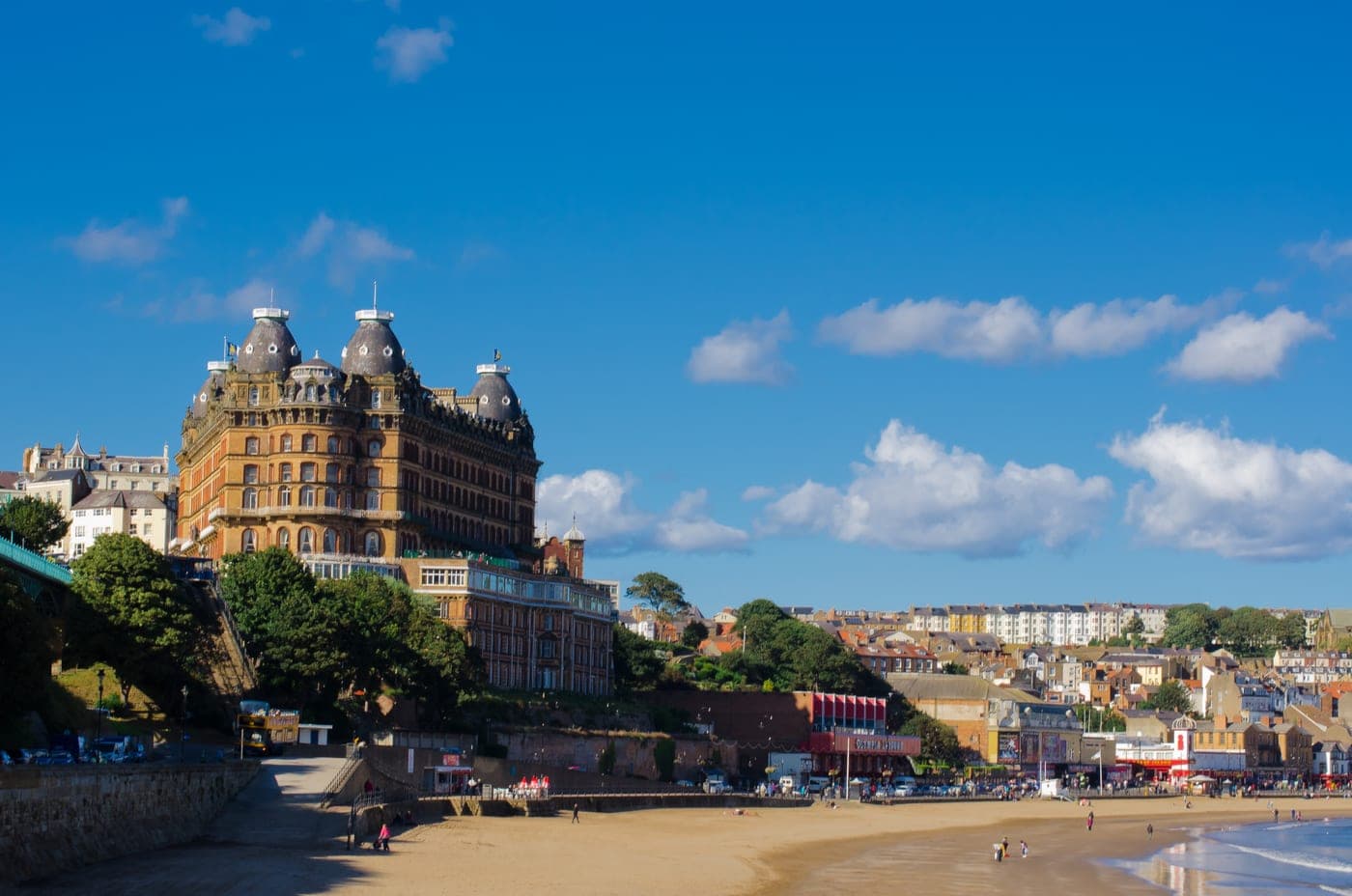
Appledore
Historic fishing village on the North Devon coast with maritime heritage.
Wine Tasting
2 regions
- Wine Tasting2 destinations
Devon
Devon, known for its diverse landscapes, features both rugged coastlines and rolling hills. The region is famed for its cream teas, with clotted cream and scones at the heart of local cuisine. Exeter, the county town, boasts a rich history dating back to Roman times, while towns like Totnes and Dartmouth offer vibrant markets and historic architecture. Devon is home to Dartmoor National Park, where ancient stone circles and wild ponies can be found, providing ample hiking opportunities. The area also has a unique maritime heritage, with fishing villages like Clovelly and Lynton showcasing traditional coastal life. This region is the only one in the UK with two coastlines, making it a remarkable destination for nature enthusiasts.
Wine TastingLocal Cuisine  Boat Rentals1 destination
Dorset
Dorset is known for its stunning Jurassic Coast, a UNESCO World Heritage site featuring dramatic cliffs and fossils. This region is home to the historic town of Dorchester, where Thomas Hardy was born, and the picturesque village of Cerne Abbas, famous for its giant chalk figure. Weymouth, with its sandy beach and Georgian seafront, adds to the coastal charm. The area offers rich agricultural landscapes, with local produce and traditional farms. Notably, it has one of the oldest recorded histories in England, with archaeological sites like Maiden Castle. The region is also famous for its unique stone circles and ancient burial mounds, revealing deep connections to prehistoric cultures.
Boat Rentals