Devon cream tea
A warm scone, clotted cream, then jam
- Vegetarian
- Local name
- Devon cream tea
- Best eaten at
- A Devon tearoom
- Pairs with
- A pot of tea
What it is
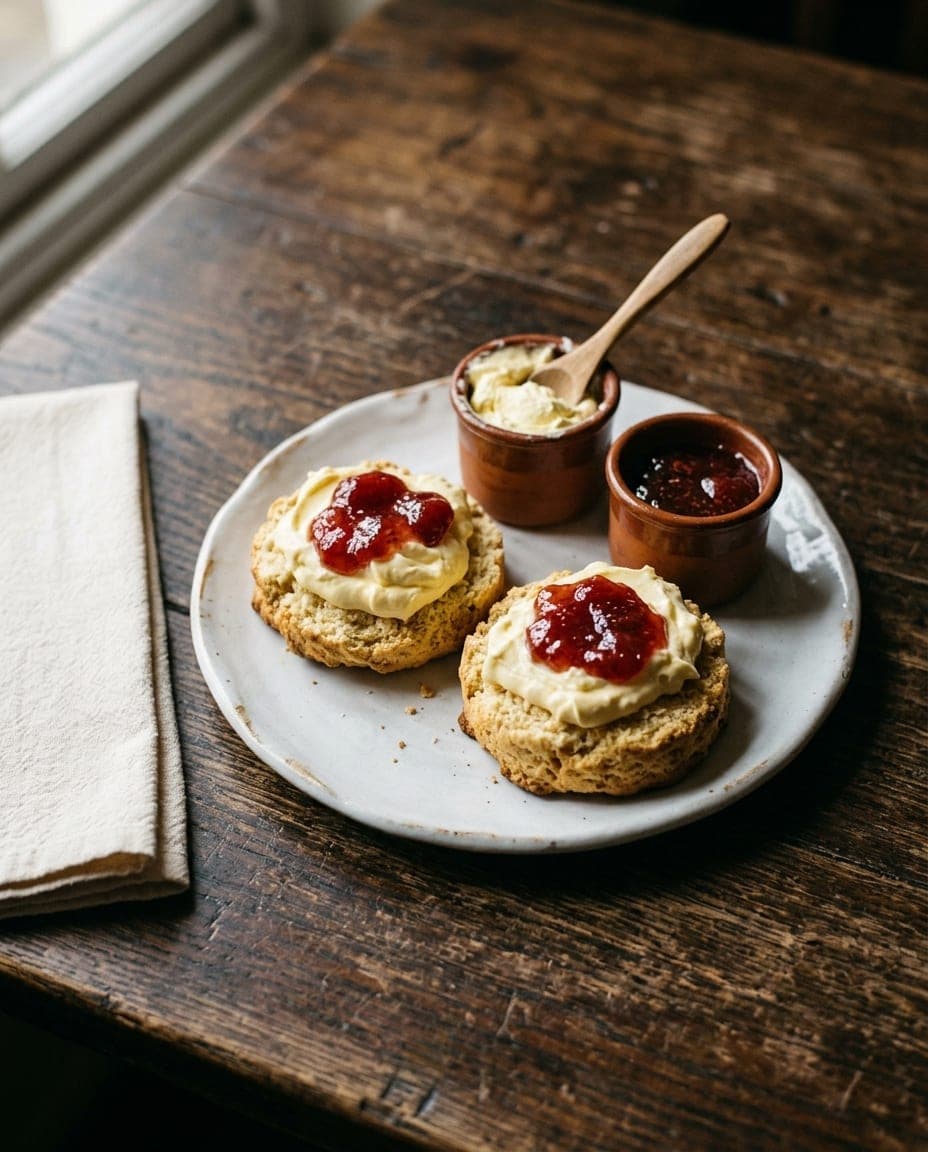
The Devon cream tea is a specific afternoon meal centred on scones, usually two, split open and topped with clotted cream and strawberry jam, served alongside a pot of hot tea. It is not merely a snack but a regional institution. The dish is simple in its components yet complex in its rules, particularly regarding the order in which the toppings are applied. In Devon, the clotted cream goes on the scone first, followed by a layer of jam. This sequence is a point of genuine local pride and the subject of friendly rivalry with neighbouring Cornwall, where the reverse order is the custom, though in practice both orders are served in both counties.
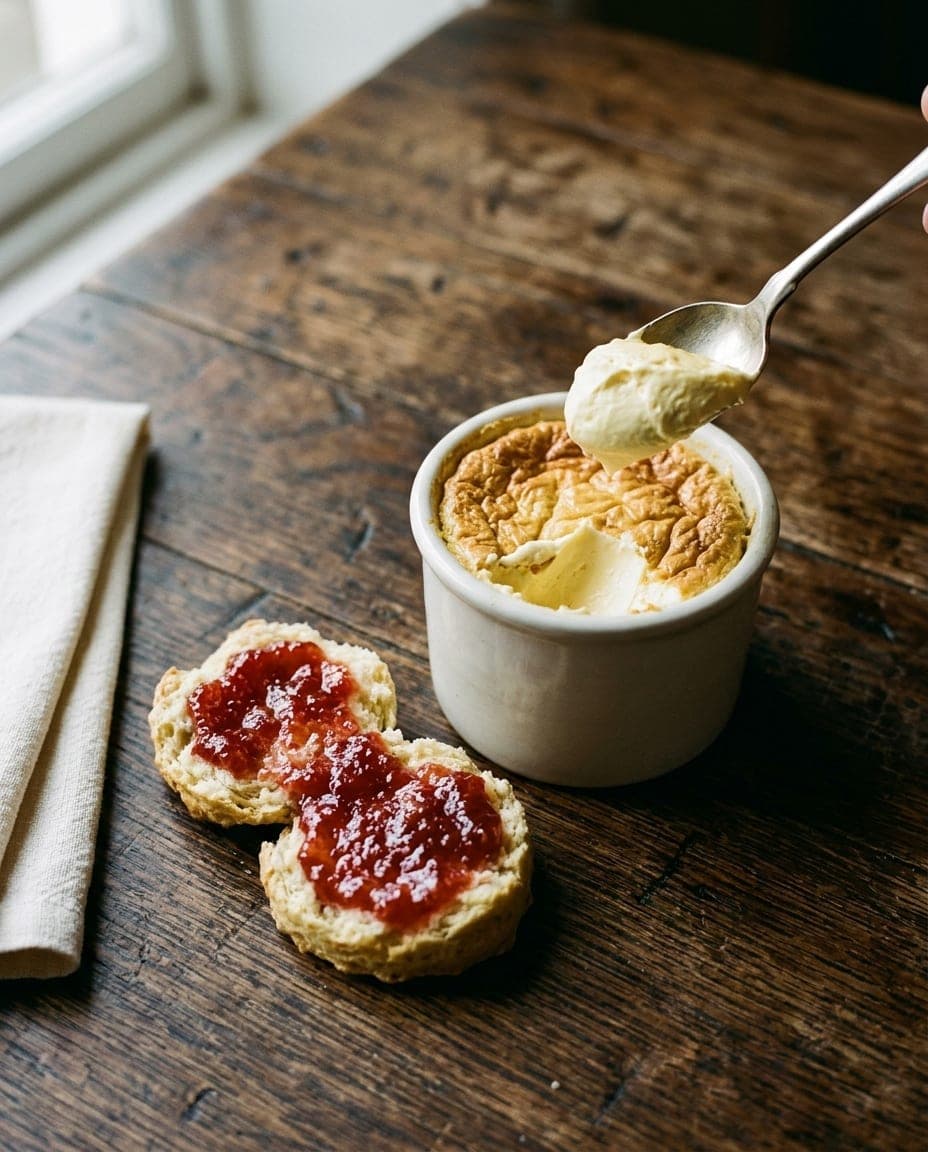
The scone itself is a key element of the experience. It should be warm, freshly baked and split horizontally rather than cut into thin slices. The texture is light on the inside with a slightly crisp crust, enough to hold the weight of the toppings without collapsing. While plain scones are common, many traditional bakers in Devon also offer versions studded with sultanas or raisins. The cream is clotted cream, which is a different thing from whipped: scalded, set, and thick enough to spread. Butter is not part of it. It has a golden skin on top and a dense, buttery consistency that allows it to sit firmly on the scone without running off.
The tea accompanying the meal is usually a strong black brew, served in a pot for sharing or individual cups. The combination of the warm, slightly sweet scone, the rich cream, the tartness of the jam and the hot tea creates a balanced taste that feels both comforting and substantial. It is a dish that demands attention to detail, from the temperature of the scone to the thickness of the cream, turning a simple act of eating into a small ceremony.
The origin story and the abbey
The history of the Devon cream tea is woven with legend as much as fact. A persistent local tradition links the practice to Tavistock Abbey, an ancient monastery in the south-west of England. The story goes that after Vikings sacked the abbey in 997, the monks rewarded the local workers who helped rebuild it with bread, clotted cream and strawberry preserves. There is no surviving record from that time confirming the exact recipe or the order of toppings, though there is evidence of clotted cream being made at the abbey by the 14th century, and the tale remains a popular part of the region's folklore.
What is better documented is later and duller: cream, jam and scones served together became a tearoom trade, usually dated to the 19th century, as day-trippers reached the west on the new railways and farms found a use for a surplus they could not sell far.
The argument with Cornwall over the order is conducted with more conviction than the facts can support on either side, and neither county shows any sign of conceding. In 2010 a campaign was even launched to protect the name "Devon cream tea" under EU rules, but it never became a registered name.
What goes into it
The components of a proper Devon cream tea are few but must be of high quality. There is no room for shortcuts when the dish is prepared with care.
- A warm scone: Ideally baked fresh on the day, split open to reveal a soft interior. Plain or sultana varieties are both acceptable, though the plain version allows the other flavours to shine more clearly.
- Clotted cream: A thick, rich dairy product made by gently heating full-cream milk and letting it cool slowly in shallow pans, so the cream rises and sets into clots. It has a distinct buttery flavour and a texture dense enough to support the jam without sliding off.
- Strawberry jam: Traditionally strawberry rather than any other fruit, offering a balance of sweetness and acidity that cuts the fat of the cream. The jam should be spreadable but not runny.
- A pot of tea: A strong black tea, often a blend suited to the British palate, served hot in a ceramic pot or individual cups.
Four things, and any one of them wrong is noticed: a cold scone, a thin cream, a runny jam, weak tea.
How it is eaten
The ritual of eating a Devon cream tea begins with the preparation of the scone. It should be split gently by hand or with a knife, taking care not to tear the crust too much. Once the scone is open, the clotted cream is applied first, spread generously on each half. The thickness of the cream means it stays in place, forming a solid base for the next step. The strawberry jam is then added on top of the cream, creating layers of flavour that are experienced together with each bite.
This order is essential to the Devon method, where the cream takes the place of butter as the first layer. The visual layering of the dish is part of its appeal, with the golden cream visible beneath the red jam. Each bite is meant to take all three at once.
The tea is poured through the meal and does the work of cutting the fat and the sugar. It is not a quick plate.
Curious facts
- The order matters. In Devon, the clotted cream goes on first, followed by the jam. This is the reverse of the Cornish method, where the jam is applied before the cream.
- A local legend. The tradition is often linked to Tavistock Abbey around the turn of the 11th century, though no written records from that time confirm the specific recipe or order.
- The scone's role. The scone must be warm and split, not cut into thin slices, to ensure it can hold the weight of the clotted cream without breaking.
- A regional dispute. The debate over which county has the correct method is a source of friendly rivalry, with both sides defending their local custom with pride.
- Cream first has an argument behind it. Clotted cream is stiff enough to spread on the scone like butter, and jam sits on top of it without sliding — which is the Devon case, whatever Cornwall says.
Where to try it
The best place to enjoy a Devon cream tea is in a traditional tearoom, particularly one located in the countryside or a small village. Stoke Gabriel, a village on a creek off the River Dart, is the kind of place it belongs: small, family-run rooms that have been serving the same thing for decades.
The two things that separate a good room from a poor one are whether the scones were baked on the premises that morning and whether the cream came from a Devon dairy. Both are usually said on the menu by places that can say it.
Where to try it
1 destination
 Wine Tasting
Stoke Gabriel
Picturesque riverside village on the Dart estuary in South Devon.
Wine TastingLocal Cuisine
1 region
 Wine Tasting2 destinations
Devon
Devon, known for its diverse landscapes, features both rugged coastlines and rolling hills. The region is famed for its cream teas, with clotted cream and scones at the heart of local cuisine. Exeter, the county town, boasts a rich history dating back to Roman times, while towns like Totnes and Dartmouth offer vibrant markets and historic architecture. Devon is home to Dartmoor National Park, where ancient stone circles and wild ponies can be found, providing ample hiking opportunities. The area also has a unique maritime heritage, with fishing villages like Clovelly and Lynton showcasing traditional coastal life. This region is the only one in the UK with two coastlines, making it a remarkable destination for nature enthusiasts.
Wine TastingLocal Cuisine