Devonshire clotted cream
Scalded cream with a golden crust
- Vegetarian
- Local name
- Devonshire clotted cream
- Served with
- Scones and strawberry jam
- Best eaten at
- A Devon cream-tea room
- Pairs with
- Tea
What it is
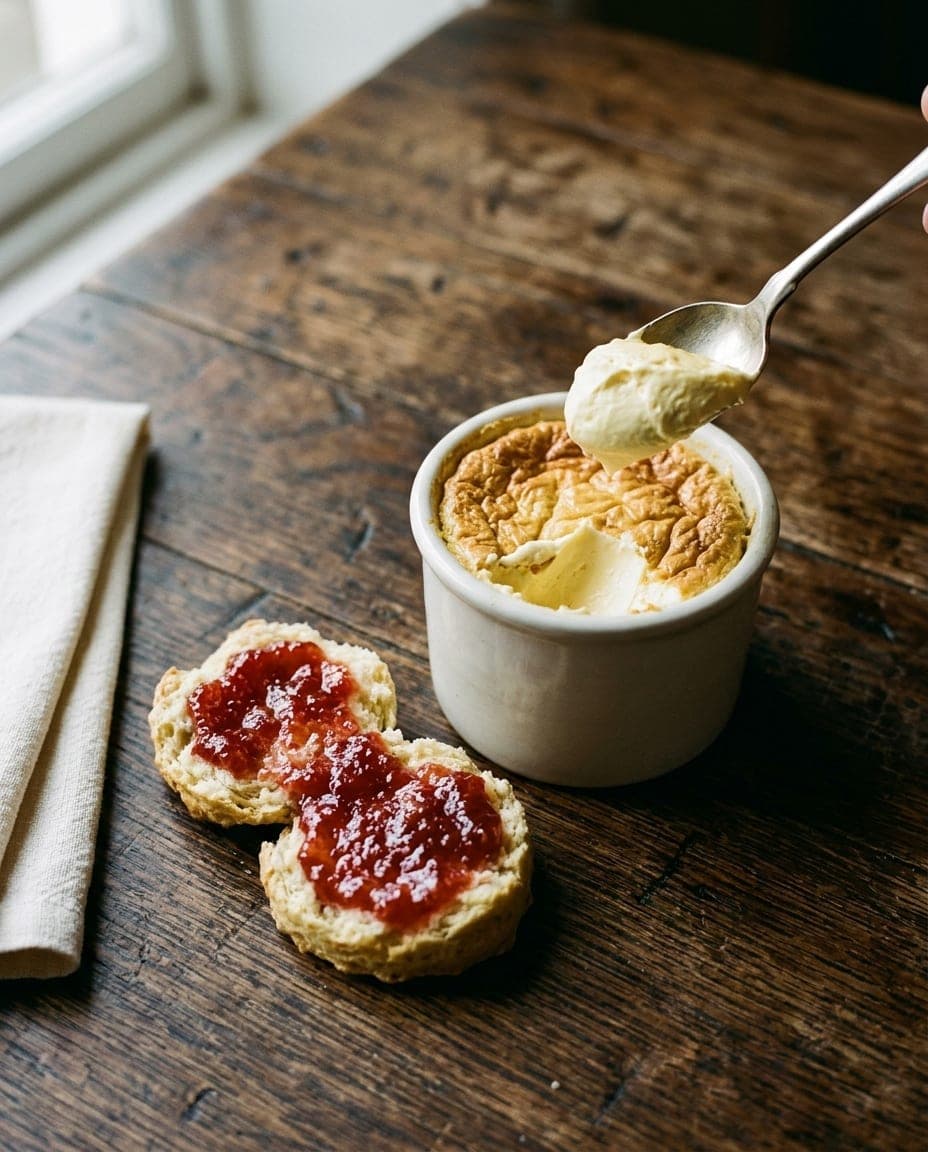
Devonshire clotted cream is a deep, dense dairy product of the county of Devon in south-west England, with Cornwall its rival claimant. It is a scalded cream: heated slowly and cooled until the fat rises to the surface and sets into a thick golden crust. The result is a substance that sits somewhere between a soft butter and a heavy custard, with a texture so substantial it can hold the shape of a spoon long after it has been lifted from the bowl.
The cream is defined by its appearance and its method of creation rather than a specific brand or producer. It appears as a yellow crust over a pale, thick cream; Devon cream is usually a shade paler than Cornish. The golden crust is not a sign of burning but a marker of quality, formed when the milk fat rises and coagulates over many hours of gentle heating. This crust is the part most prized by locals.
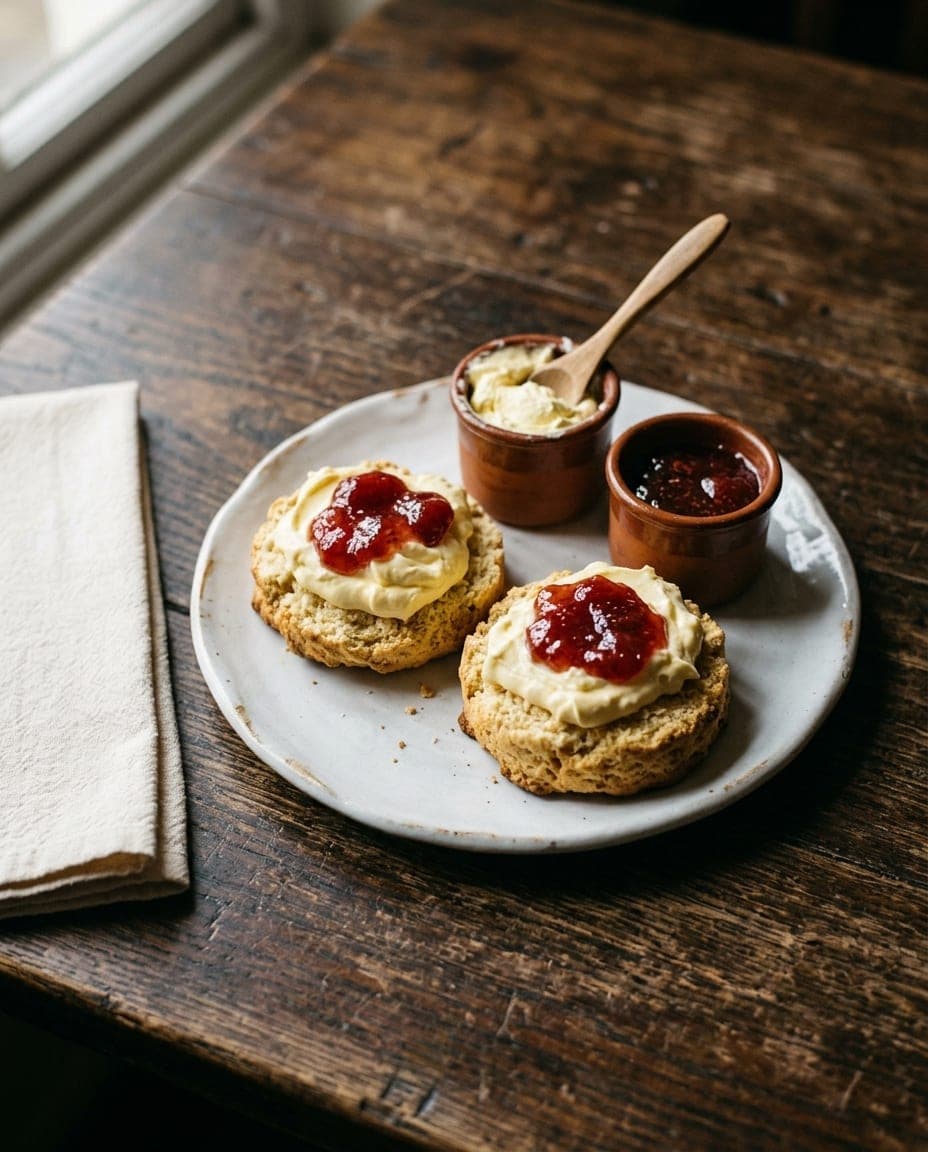
The product is inextricably linked to the Devon cream tea, a traditional afternoon meal where the clotted cream is paired with locally baked scones and strawberry jam. While similar products exist elsewhere, the specific texture and taste of Devonshire clotted cream are tied to the local dairy traditions of the county. It is a regional speciality that does not claim the protected status enjoyed by its neighbour across the border in Cornwall, yet it remains a point of local pride and a staple of the region's culinary identity.
The method behind the golden crust
The making of clotted cream is an exercise in patience rather than precision. The process traditionally begins with fresh full-cream milk left to stand in shallow pans, traditionally of earthenware, copper or enamel, until the cream rises naturally to the top. The pans are then heated slowly, over hot embers or in a water bath, and held well below boiling for a long time; modern dairies heat the cream by steam or water bath.
During this long period and the slow cooling that follows, the fat separates from the liquid milk and rises to form a thick layer on the surface. This layer coagulates into the characteristic golden crust. The temperature must be carefully managed; if the cream boils, the texture changes and the result is no longer true clotted cream. Once the heating is complete, the pans are left to cool slowly, allowing the crust to set firmly before the clots are skimmed off.
The resulting product must contain at least 55 per cent butterfat, and often more, which gives it its dense, spoonable consistency. This high fat content means the cream does not melt easily on a warm scone, nor does it slide off the side of a bowl. The skimmed milk left beneath the clots was traditionally used in baking or for butter.
Where it comes from
Devonshire clotted cream has its roots in the farming traditions of Devon, a county known for its dairy herds and pastoral landscapes. The practice is centuries old and began as a way of making something keepable out of milk that would otherwise spoil. The shallow pans sat in the hearth or the cooling oven and were left there while the household got on with the day.
The region's dairy farms have long focused on breeds of cattle that produce milk with a high butterfat content, which is essential for creating a thick crust. While the exact origins are not recorded in any single document, the method has been passed down through generations of Devonshire farmers. The product remains a local speciality, made by dairies of every size within the county, from farms to large creameries.
How it is eaten
The traditional way to enjoy Devonshire clotted cream is as part of a cream tea, a light meal typically served in the afternoon. The experience begins with warm scones, baked fresh and split into two halves. In Devon the clotted cream goes on first, spread like butter, with strawberry jam on top; in Cornwall it is the other way round. The order is a well-known local argument, and most Devonians insist on the cream first.
The scones are spread with a knife and eaten by hand, so that each bite takes the thick cream and the crumbly scone together. The texture of the clotted cream is such that it does not run off the scone, making it easy to enjoy without mess. A pot of hot tea, usually a strong black blend, is served alongside to complement the fat of the cream and the sweetness of the jam.
While the cream tea is the most common context for eating the product, clotted cream also appears in other forms. It can be spooned onto fresh berries or fruit crumbles, or spread on toast as a breakfast item. The golden crust is often scooped with the rest of the cream, though some prefer to save it for last to savour its concentrated flavour.
Curious facts
- A local speciality. Unlike Cornish clotted cream, a protected designation of origin since 1998, Devonshire clotted cream has no protected name.
- The golden crust is edible. The thick yellow layer on top is the most prized part and is scooped with the cream below rather than discarded.
- A slow process. The cream requires hours of gentle heating just below boiling point, a method that cannot be rushed without affecting the texture.
- High butterfat content. With a fat content of at least 55 per cent, the cream is dense enough to hold its shape on a warm scone without melting immediately.
- A regional debate. The order of applying jam and cream is a frequent topic of discussion among Devonians, with many preferring to spread the cream first.
- Farmhouse origins. Scalding was a way of getting something that kept out of milk that did not, long before refrigeration.
Where to try it
The most authentic experience of Devonshire clotted cream can be found in a traditional Devon cream tea room, particularly those located in the countryside or near coastal towns. These establishments are often small, unpretentious spaces where the focus is on the quality of the food rather than the decor. They may serve as part of a larger farm shop or stand alone as a dedicated tea room.
The rooms are scattered across the county, from the edge of Dartmoor to the coastal villages, and the good ones bake their scones that morning and buy their cream from a dairy down the road. Farm shops sell it by the pot to take away, which is the other way to meet it.
Where to try it
1 region
 Wine Tasting2 destinations
Devon
Devon, known for its diverse landscapes, features both rugged coastlines and rolling hills. The region is famed for its cream teas, with clotted cream and scones at the heart of local cuisine. Exeter, the county town, boasts a rich history dating back to Roman times, while towns like Totnes and Dartmouth offer vibrant markets and historic architecture. Devon is home to Dartmoor National Park, where ancient stone circles and wild ponies can be found, providing ample hiking opportunities. The area also has a unique maritime heritage, with fishing villages like Clovelly and Lynton showcasing traditional coastal life. This region is the only one in the UK with two coastlines, making it a remarkable destination for nature enthusiasts.
Wine TastingLocal Cuisine