Balti
Fast-cooked curry served in the bowl it cooked in
- Local name
- Balti
- Served with
- Naan bread
- Best eaten at
- A Birmingham Balti Triangle restaurant
- Pairs with
- Lager
What it is
Balti is a Birmingham curry. It appeared in the 1970s in restaurants run by families from northern Pakistan and Kashmir along Ladypool Road, Stoney Lane and Stratford Road, in the Sparkbrook, Sparkhill and Balsall Heath area south of the city centre that came to be called the Balti Triangle — and spread outward from there.
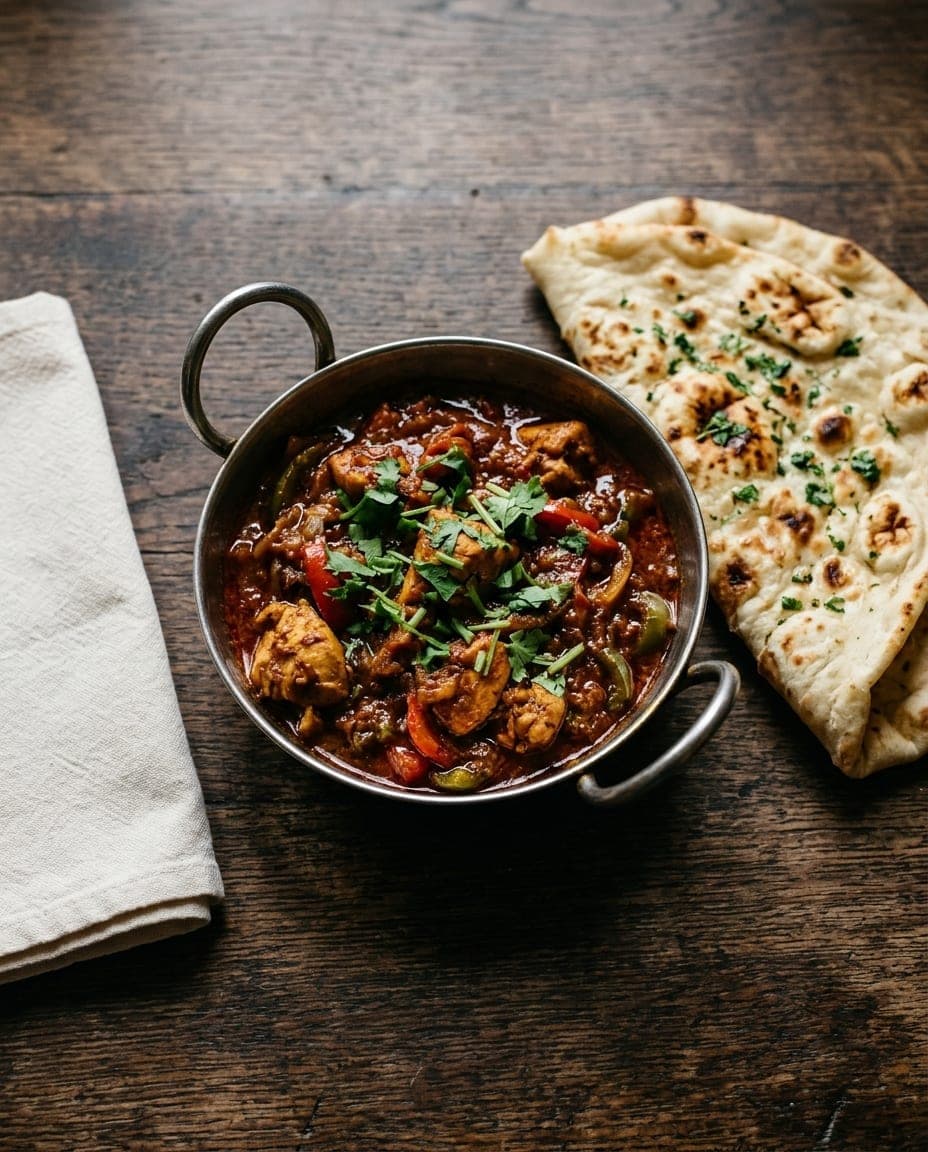
The defining feature of a balti is not merely its taste, though that is distinctively aromatic and spicy, but the vessel in which it arrives at the table. The food is cooked fast over a very high flame in a shallow bowl of thin pressed steel — the balti dish, close kin to the karahi — so the sauce reduces hard in minutes and clings to the meat instead of pooling. The dish is served still bubbling in this same steel bowl, often set on a wooden or metal stand.
It is a meal designed for speed and sharing. Unlike many curries that are simmered slowly for hours to develop depth, the balti is cooked in minutes, retaining a bright, fresh taste of the spices and the main ingredient. The result is a thick, glossy sauce that coats the food without pooling at the bottom of the bowl. It was cheap food made by people building businesses in post-war Birmingham, and the city has claimed it since.
Where it comes from
No document records the moment of invention. What is agreed is the decade — the 1970s — and the source: the cooking of Kashmir and northern Pakistan, adapted by families running restaurants in Birmingham.
The name itself remains a subject of debate. Most sources take it from balti, a Hindi and Urdu word for a bucket (itself from Portuguese balde), or from a pot of that name similar to the karahi. A link to the Baltistan region of northern Pakistan has also been suggested, but food historians point out that Baltistan's cooking bears no resemblance to the Birmingham dish. What matters is that the term stuck in Birmingham and became synonymous with this specific style of curry.
The restaurants of the Triangle were close enough to compete directly, which is the usual explanation for how fast the style settled. The point worth keeping: a balti is not an Indian dish served in Britain but a British dish made by South Asian cooks with the techniques they brought.
How it is cooked
The method of cooking sets the balti apart from almost every other curry on offer. The chef places the steel bowl over a burner with a very high flame, often a specialized wok burner that can reach temperatures far beyond those used in standard kitchen stoves. Ingredients are added in stages: onions and spices are fried first to release their oils, followed by the main protein or vegetables, and finally a sauce made from tomatoes, ginger, garlic and fresh herbs.
The heat is so intense that the liquid in the bowl evaporates rapidly, forcing the sauce to thicken and adhere to the food within a few minutes. This high-heat technique prevents the meat from becoming tough and keeps the vegetables crisp-tender. The result is a dish that is rich and concentrated but never greasy or heavy. The steel bowl acts as both the cooking vessel and the serving dish, allowing the food to retain its heat until it reaches the table.
Lamb, chicken, prawns, spinach and mushrooms are the usual fillings, all of them things that cook in minutes. The sauce runs orange-red to brown depending on the spicing, and the heat varies sharply from one kitchen to the next.
What goes into it
The ingredients of a balti are simple but chosen for their ability to withstand high heat and create a robust sauce. There is no single official recipe, as every cook in the Balti Triangle guards their own blend of spices and techniques. However, the core components remain consistent across the region.
- Meat or vegetables: Lamb, chicken, prawns or spinach are the most common choices, cut into bite-sized pieces to ensure quick cooking.
- Aromatics: Fresh ginger, garlic, onions and tomatoes form the base of the sauce, providing a sharp, fresh foundation.
- Spices: Cumin, coriander, turmeric and garam masala are used in varying proportions, often with a touch of green chilli or dried red chilli for heat.
- Fresh herbs: Coriander leaves and sometimes mint are added at the end to brighten the dish.
- Oil or ghee: A generous amount is used to facilitate the high-heat cooking and carry the flavours.
The sauce is thick and clings to the food, with little free liquid left in the bowl. It is not a curry that relies on cream or coconut milk for texture, though some modern variations may include a small amount of yoghurt. The focus remains on the balance between the spice, the meat and the fresh herbs.
How it is eaten
It is eaten with the hands. The bowl arrives still spitting, often on a wooden stand, with a large thin naan beside it, frequently one big enough for the whole table; the bread is torn and used to scoop straight from the bowl.
Cutlery is rarely used for the main course, and the bowl itself is too hot to hold, which is what the stand is for.
The dish is typically eaten as a main course at lunch or dinner. It pairs naturally with a cold lager or a pint of pale ale, which helps to cool the palate against the heat of the spices. In some restaurants, a side of pickled onions or a fresh salad is served alongside the balti to add a crisp contrast to the rich sauce. The bread is essential; without it, the experience feels incomplete.
Curious facts
- The bowl is the cookware. Unlike most curries that are cooked in one pot and served in another, the balti is cooked and served in the same steel vessel, which retains heat and adds to the visual drama of the dish.
- A British invention. Despite its South Asian roots, the balti is widely recognised as a British creation, developed by Pakistani and Kashmiri restaurateurs in Birmingham during the 1970s rather than in South Asia itself.
- The Triangle is three roads. Ladypool Road, Stoney Lane and Stratford Road sit within a couple of miles of each other south of the city centre, and the name covers the restaurants along all three.
- No single inventor. Several restaurants have claimed credit, among them one on Stoney Lane that opened in 1977 and called itself the home of balti, but no single creator is documented.
- No protected name. A bid to register "Birmingham Balti" as an EU Traditional Speciality Guaranteed, pursued from 2012 to 2016, failed because there was no standard recipe.
- Fast cooking requires skill. The high-heat method demands constant attention from the chef, who must manage the flame and ingredients to prevent burning while achieving the desired reduction.
Where to try it
The best place to eat a balti is in the Balti Triangle itself, where the tradition was born. There are far fewer balti houses there than at the peak, when some fifty clustered in the area, but the ones that remain still serve the dish in its original form, in the same steel bowls used for decades. These establishments are typically family-run, with a focus on authenticity rather than luxury.
The bread is usually served fresh from the oven, warm and slightly charred at the edges. A cold lager or a pint of pale ale complements the heat of the curry perfectly.
Where to try it
1 region
 Boat Rentals1 destination
West Midlands
The West Midlands is a historically rich region in the UK, known for its industrial heritage and vibrant cultural scene. Birmingham, the largest city, boasts a variety of museums and the diverse cuisine of its Balti Triangle. Nearby, Coventry is famous for its medieval cathedral and the unique Herbert Art Gallery. The region also features the picturesque canals of Stratford-upon-Avon, the birthplace of Shakespeare, where visitors can explore historic sites related to the playwright. The Malvern Hills offer stunning landscapes and walking trails, ideal for outdoor enthusiasts. This area is recognized for its local festivals celebrating everything from music to food, providing a glimpse into the region's cultural tapestry.
Boat Rentals