Devon scrumpy
Cloudy, strong farmhouse cider
- Alcoholic
- Local name
- Devon scrumpy
- Served
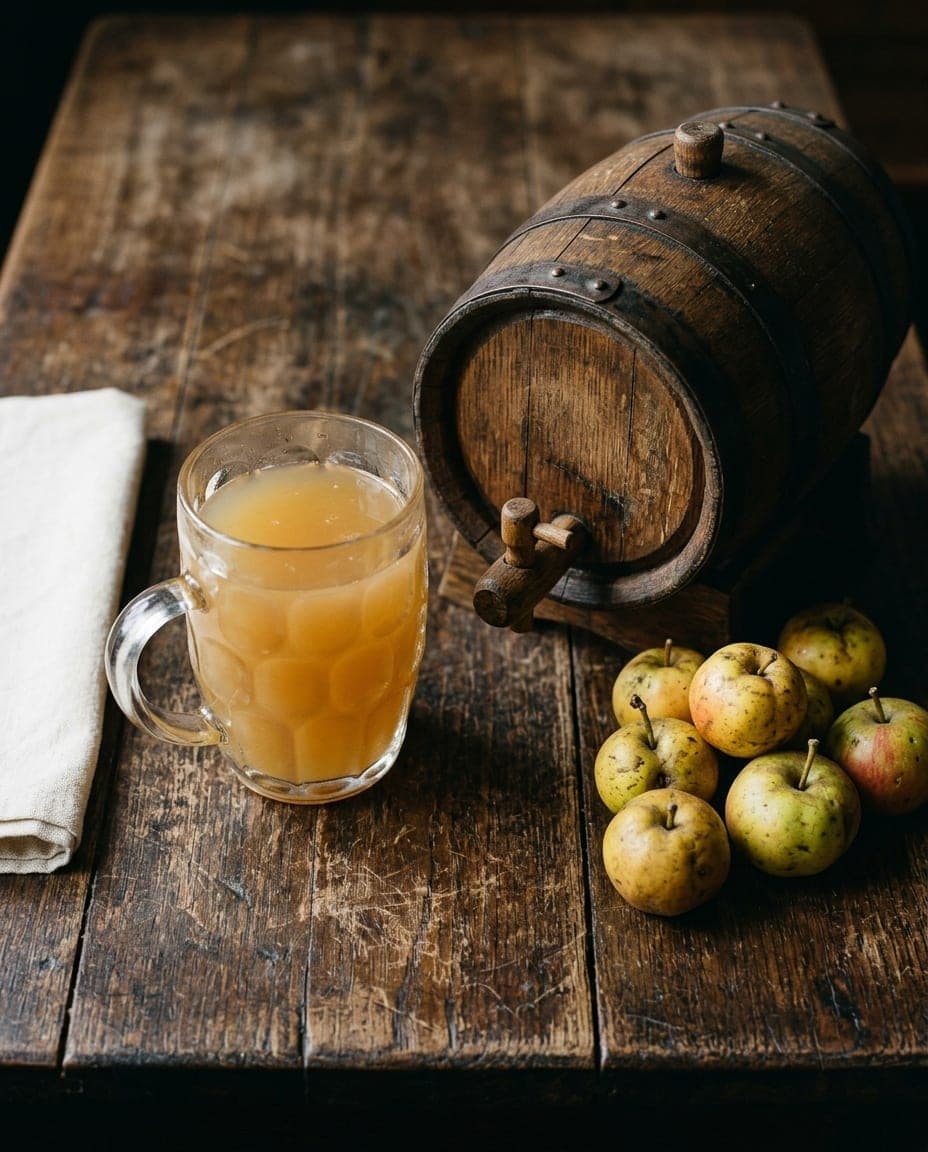
- By the pint, from the barrel
- Best eaten at
- A West Country cider farm
- Pairs with
- Ploughman's, cheddar
What it is
Devon scrumpy is a rough farmhouse cider from the West Country, specifically the orchard lands of Devon. It is not the pale, sweet, carbonated drink often found in supermarkets elsewhere in the United Kingdom. This is a cloudy, usually still drink made from cider apples milled whole, skins and pips included, which keeps the tannin. The result is a dry, strong liquid that hangs heavy on the palate, offering a sharp, earthy fruitiness rather than a sugary finish.
The word itself comes from the dialect scrump, a small or withered apple; to scrump first meant gathering windfalls and the small apples left after the harvest, and only later stealing them. Scrumpy was traditionally made from such unselected fruit, which allowed farm families to make use of produce that would otherwise be lost, turning imperfect fruit into a drink that could sustain them through the winter. Today, scrumpy remains tied to specific orchards where farmers still press their own harvest, selling the cider directly from the barrel or in plastic flagons at the farm gate.
The orchard tradition
In Devon, cider making is a seasonal craft that begins in autumn when the apples are ripe and ends as the barrels run dry. Unlike industrial production which filters out sediment to create a clear liquid, scrumpy retains its cloudiness because the fine particles of apple skin and pulp remain suspended in the liquid. This gives it a texture that feels substantial and rustic, often described as "hazy" or "muddy" by those unfamiliar with it.
The drink is sold straight from the barrel at West Country cider farms, where the temperature of the cellar keeps it cool but not cold. Farms rarely bottle it, because a live cider carries on fermenting and a sealed bottle is unpredictable. Instead, it flows from a tap into a pint glass or a plastic flagon for immediate consumption. The strength varies from batch to batch depending on the apple varieties used and the length of fermentation, but it is generally stronger than standard table cider.
What goes into it
There is no single official blend, as each farm relies on its own orchard and its own method. However, the ingredients are always simple and local:
- Cider apples: A mix of sharp, sweet, and bittersweet varieties grown specifically for pressing, chosen for their high tannin content.
- Windfall fruit: Traditionally, unselected apples including those gathered from the ground, contributing to the rough character of the drink.
Traditional scrumpy is fermented from juice alone, so the taste depends on the quality of the fruit and the skill of the maker; some modern scrumpy is sweetened. The cloudiness comes from the fine apple solids that are not filtered out, giving the drink a deep amber or russet colour.
How it is drunk
Scrumpy is best enjoyed in the setting where it was made: a cider farm in Devon during the harvest season. It is served by the pint, often in a sturdy glass or a plastic flagon, and is meant to be drunk slowly to appreciate its complex flavour. The strong, dry nature of the cider pairs naturally with the sharpness of West Country cheddar, which cuts through the tannins without overpowering them.
A ploughman's lunch is the traditional plate beside it: bread, a wedge of mature cheddar, pickled onions and chutney. The saltiness of the cheese and the tang of the pickles balance the dryness of the cider, creating a meal that feels both hearty and authentic to the region.
Curious facts
- Still rather than fizzy. Unlike many commercial ciders, scrumpy is usually still, because it is drawn straight from the barrel rather than carbonated and bottled.
- A dialect name. The term scrumpy, first recorded in 1904, derives from scrump, a dialect word for a small or withered apple.
- Plastic flagons. At many cider farms, the drink is sold in plastic flagons rather than glass bottles, a practical choice for farm workers and visitors who want to take it home.
- Regional focus. Scrumpy belongs to the whole West Country, Somerset as much as Devon, and both counties keep the tradition of barrel serving alive.
Where to try it
A cider farm in Devon, where the drink is drawn from the barrel into a glass or a flagon and sold a few yards from the press that made it. The orchards run through the middle of the county and down into the South Hams, and most of the farms that press also sell at the gate.
Country pubs across Devon and Somerset keep a barrel of farm cider behind the bar, usually named after the farm rather than a brand. The strength is not always advertised and is frequently higher than the lager next to it; a half is a common first order for that reason. Autumn, after pressing, is when the newest cider appears, and the wassail celebrations in the orchards around Twelfth Night in January are the other point in the year when the trade is on display.
Where to try it
1 region
 Wine Tasting2 destinations
Devon
Devon, known for its diverse landscapes, features both rugged coastlines and rolling hills. The region is famed for its cream teas, with clotted cream and scones at the heart of local cuisine. Exeter, the county town, boasts a rich history dating back to Roman times, while towns like Totnes and Dartmouth offer vibrant markets and historic architecture. Devon is home to Dartmoor National Park, where ancient stone circles and wild ponies can be found, providing ample hiking opportunities. The area also has a unique maritime heritage, with fishing villages like Clovelly and Lynton showcasing traditional coastal life. This region is the only one in the UK with two coastlines, making it a remarkable destination for nature enthusiasts.
Wine TastingLocal Cuisine