Eccles cake
A flaky round of buttered currants
- Vegetarian
- Local name
- Eccles cake
- Served with
- Lancashire cheese
- Best eaten at
- A Lancashire bakery
- Pairs with
- Tea
What it is
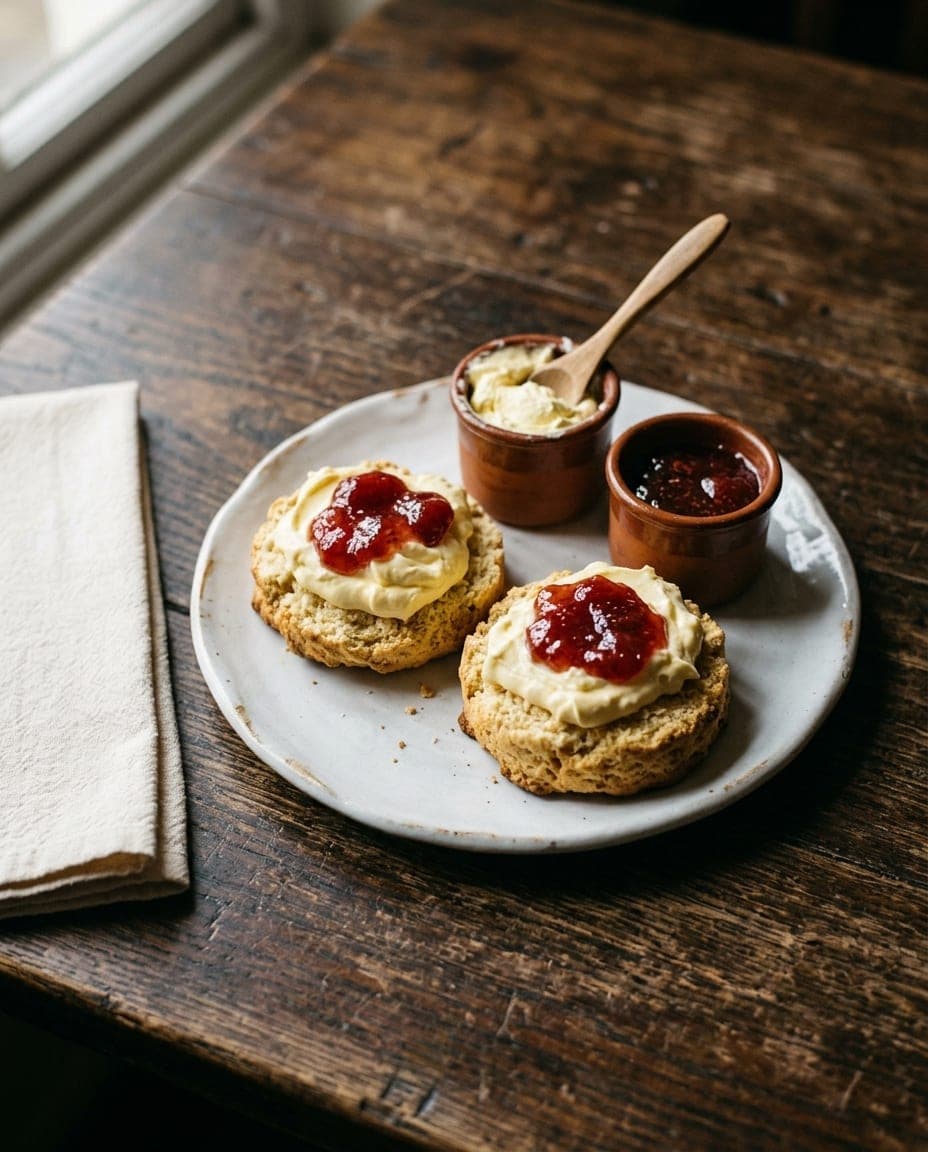
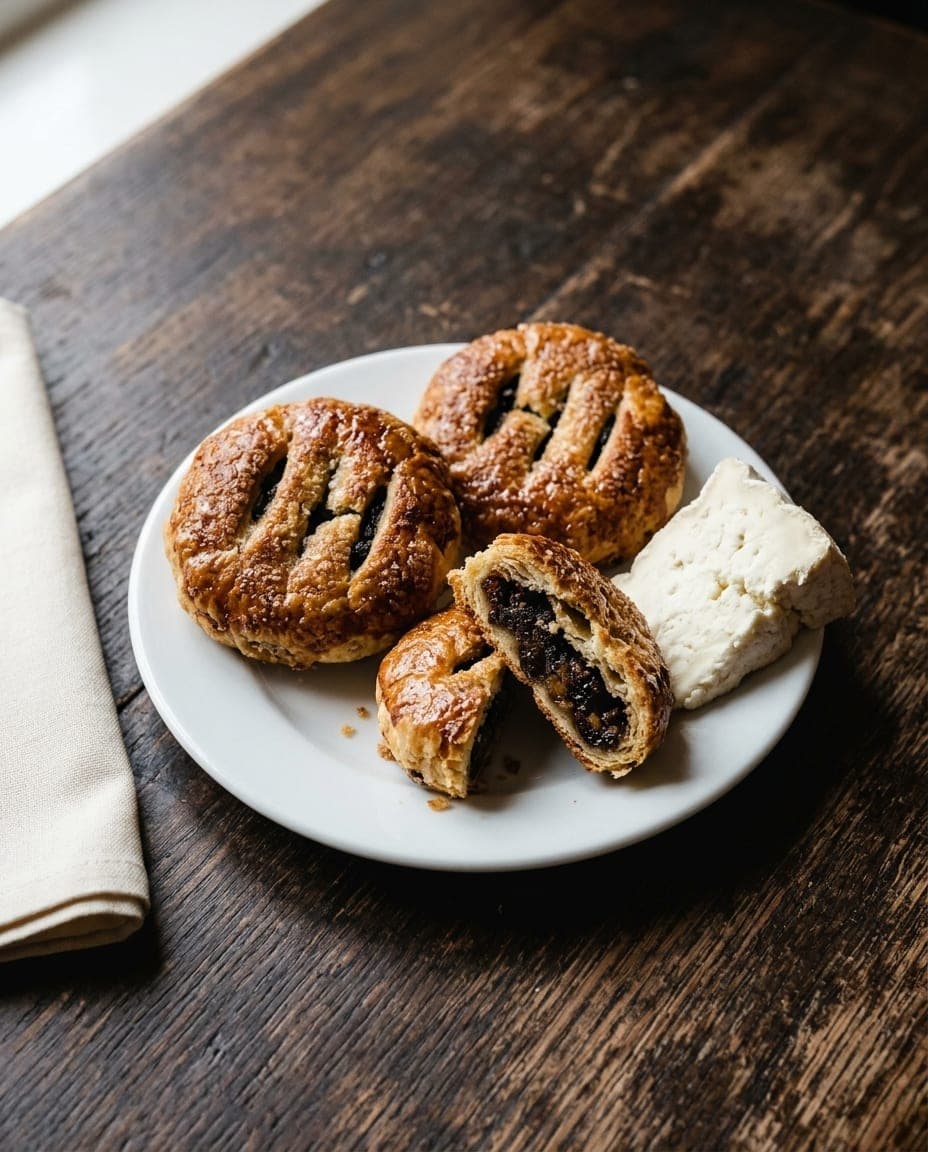
The Eccles cake is a round of flaky puff pastry filled with a dense mixture of buttered currants, sugar and mixed spice. It comes from the town of Eccles in Greater Manchester, now part of the wider Salford urban area just west of Manchester city centre. The pastry is thin enough to be almost translucent at the edges, yet sturdy enough to hold the heavy filling without breaking. It is not a delicate sweet; it is a substantial, buttery treat that sits heavily on the tongue.
The most striking feature of the dish is how it is eaten. While it might seem unusual to pair a sweet pastry with cheese, this combination is the local orthodoxy in Lancashire and Greater Manchester. A wedge of crumbly, salted Lancashire cheese is served alongside the warm cake, allowing the diner to eat a piece of pastry with a piece of cheese. The sharpness of the cheese cuts through the sweetness of the currants, creating a balance that locals have favoured for generations.
The pastry itself has a distinct appearance. It is typically round and flat, with a visible dusting of sugar on top. Before baking, the surface is slashed three times across the centre, a practice that allows the filling to expand and the sugar to melt into a glossy, caramelised crust. The result is a golden-brown disc that smells strongly of butter and spice, often leaking a little syrup from the cuts when fresh from the oven.
The history of the town's pastry
The link between the cake and the town is so strong that the name itself serves as proof of origin. While food historians note that many pastries share similar names across Britain, the Eccles cake is specifically tied to the market town of Eccles. It was being sold commercially there by the late 18th century, with 1793 usually cited as the year James Birch began selling them from his shop in the town centre, where a blue plaque now marks the site. A similar recipe for "sweet patties" had already appeared in Elizabeth Raffald's cookbook in 1769, so who first devised the recipe itself is less certain.
The story of its creation is not one of royal invention or high culinary art. It is usually said to have grown from the practical needs of a working-class community. The ingredients—butter, currants, sugar and flour—were affordable staples available to bakers who wanted to create a quick, filling snack for workers heading out for the day. The flaky texture was achieved through the labour-intensive process of rolling butter into layers of dough, a technique that promised a light result despite the heavy filling.
Packaged versions are sold across the country, but the bakery Eccles cake remains a Greater Manchester and Lancashire speciality, and the name still appears on bakery signs across the region.
How it differs from other cakes
The most common point of confusion for visitors is the distinction between the Eccles cake and the Chorley cake. Both originate in Lancashire and both are filled with currants, but they are fundamentally different in texture and taste. The Chorley cake is made with shortcrust pastry rather than puff pastry, making it denser and flatter. It is also less sweet, with no sugar crust on top.
The Eccles cake, by contrast, relies on the airiness of puff pastry to support its weight. The filling is rich and wet, held in place by the delicate layers of dough. While the Chorley cake is often eaten as a light snack or a mid-morning treat, the Eccles cake feels more substantial, almost like a dessert disguised as a breakfast item. This difference in texture is why the two are rarely confused by locals, even though they share the same regional roots.
Another distinction lies in the serving style. The Chorley cake is usually sold plain or with a light dusting of sugar, whereas the Eccles cake is defined by its caramelised top and the specific ritual of eating it with cheese. This pairing has become so well-known that it defines the experience of the dish for anyone visiting the area.
What goes into it
The ingredients are simple, yet the method requires precision to achieve the correct texture:
- Flaky or puff pastry, rolled thin enough to be flaky but strong enough to hold the filling without tearing during baking.
- Currants, dried grapes that have been plumped in butter or water before being mixed with sugar and spice.
- Butter, used generously both within the pastry layers and as a coating for the currants, giving the cake its deep flavour.
- Sugar, which forms a caramelised crust on the top of the cake after baking.
- Mixed spice, typically a blend of cinnamon, nutmeg and cloves, adding warmth to the fruit filling.
The result is a heavy, buttery disc in which the pastry is mostly a container for the fruit. The sugar on top melts during baking, creating a glossy sheen that often leaks slightly from the cuts made before the oven.
How to eat it
The traditional way to enjoy an Eccles cake is at a Lancashire bakery, preferably one that bakes fresh in the morning. The cake is best eaten warm, when the butter has softened and the sugar on top is still slightly sticky. A wedge of crumbly Lancashire cheese is served alongside it, often in a small dish or wrapped in paper.
The diner eats a piece of the pastry with a piece of the cheese to balance the sweet and salty flavours. This combination is not an afterthought; it is the standard way the dish is presented across the region. A cup of tea is the essential companion, as the warm liquid helps to cut the fat of the butter and currants.
While some visitors might find the cheese pairing surprising, it is a long-standing local custom. The saltiness of the cheese enhances the sweetness of the fruit, creating a taste that feels complete rather than contradictory. For those who prefer their cake plain, many bakeries will sell it without the cheese, though this goes against the traditional rule of the region.
Curious facts
- A specific number of cuts. The pastry is traditionally slashed three times across the top before baking, a mark that lets the filling expand and the sugar caramelise evenly.
- The cheese pairing. The combination with Lancashire cheese is not a modern trend but a long-standing local practice, often considered essential to the authentic experience.
- A regional name. While similar pastries exist elsewhere, the term "Eccles cake" refers specifically to the version from Greater Manchester, distinguishing it from other currant buns.
- It is a bakery item, not a restaurant one. Eccles cakes are bought over a counter by the bag, and are at their best within a few hours of the oven.
- A working-class origin. The recipe likely developed as a practical, filling snack for workers, using affordable ingredients like butter and dried fruit to create a substantial treat.
Where to try it
The best place to eat an Eccles cake is in a traditional Lancashire bakery, particularly those found in Greater Manchester and the surrounding areas. Some bakeries in and around Eccles still bake them, often selling them fresh from the oven in the morning. These small shops are where the tradition remains strongest.
Supermarkets sell them in packets across the country, cold and uniform. The bakery version is a different object: thicker, wetter inside, and sticky on top.
Where to try it
1 destination
 Camper Van Rentals
Manchester
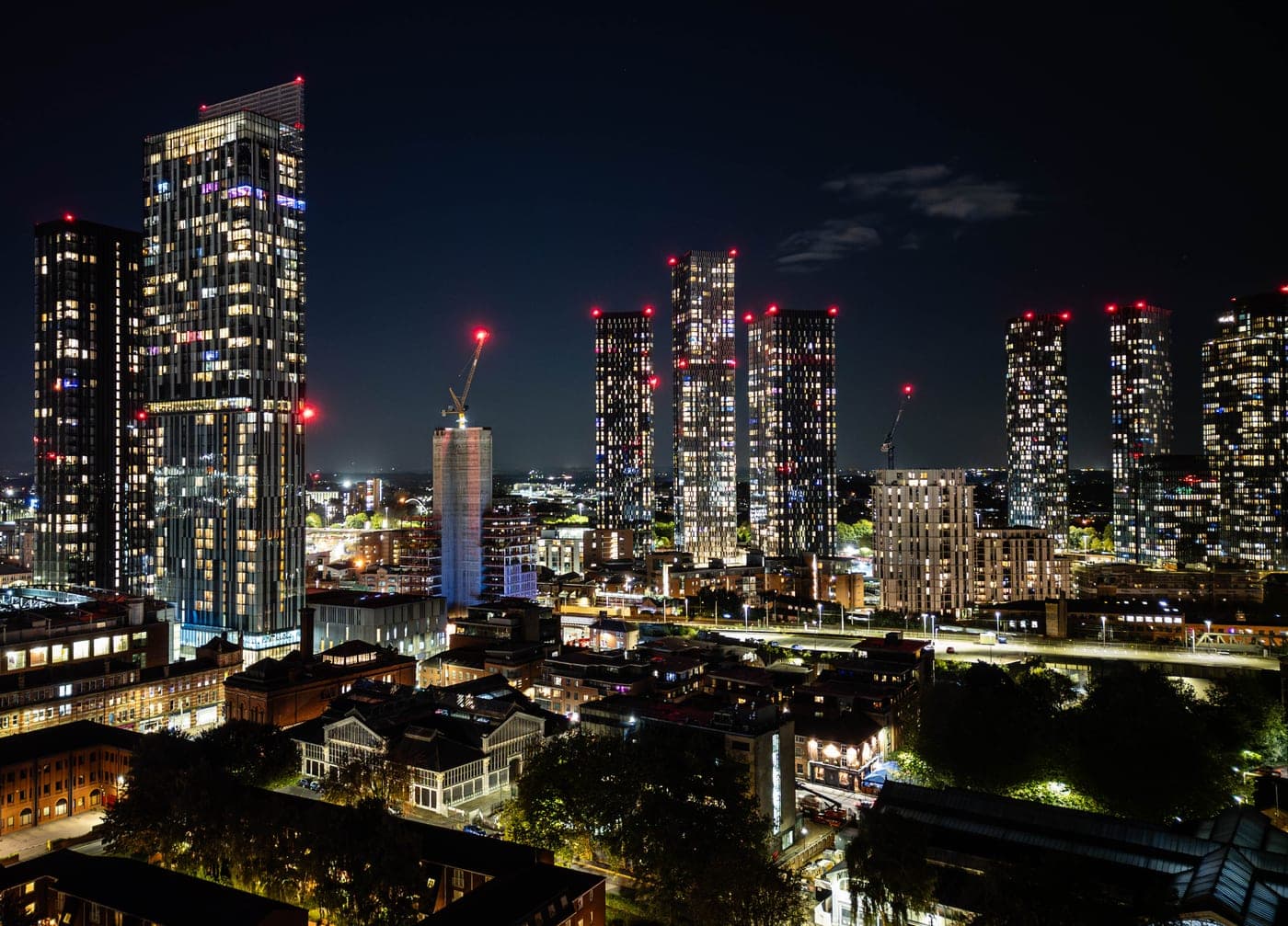
Vibrant city known for its industrial heritage, music scene, and football.
Camper Van Rentals
1 region
- Camper Van Rentals1 destination
Greater Manchester
Greater Manchester sits where the flat Cheshire plain gives way to the rising moors of the Pennines. It is a region built from cotton, coal and canal water, and its slow-travel character comes less from any single view than from a pattern that repeats from town to town: a canal basin, a former cotton mill turned into flats or studios, a covered market hall, a parish church with a soot-darkened tower. Reading that pattern, town by town, is what makes exploring the region worthwhile. Manchester itself anchors the region, its warehouse districts and Victorian civic buildings now holding galleries, independent shops and the city's long-running music venues. Salford, across the water from the city centre, keeps its own identity around the restored docks of Salford Quays, once a working dock for the city's trade. Stockport, above the River Mersey, has its own market hall and a warren of former mill buildings and railway arches now used by small breweries. Bury holds one of the region's markets, still trading on its historic stalls. Bolton, Oldham, Rochdale and Wigan each carry the same textile-town layout of mill chimneys, terraced streets and market squares, softened now by parks and reused industrial buildings. Beyond the built-up towns, the region edges into open country. Saddleworth, a cluster of stone villages in the Pennine foothills, keeps a slower, more rural pace than the towns below it. Moorland reservoirs and packhorse routes lace the hills around it, laid out originally to serve the textile trade and now walked for their own sake. Closer to the city, Heaton Park has formal gardens and open lawns within an urban setting, while the Bridgewater and Rochdale canals thread through several towns, their towpaths still following the routes barges once used to move coal and cloth. Food and craft culture in the region grows directly from this working history. Markets in Bury, Bolton and Ashton-under-Lyne sell black pudding, meat pies and baked goods alongside fresh produce, and a number of small breweries now operate from the same brick mill buildings that once spun cotton. Museums across the region, from restored mills to preserved engine houses, explain the mechanics of the Industrial Revolution in the buildings where it happened, rather than behind glass elsewhere. Architecture is a constant thread. Red-brick mills, often five or six storeys with rows of tall windows built to let in light for weaving, dominate the skyline of towns like Stockport and Ashton-under-Lyne. Grand Victorian town halls in Manchester, Rochdale and Bolton reflect the wealth the textile trade generated, with detailed stonework and clock towers that still mark the centre of each town. Victoria Baths in Manchester, a restored public swimming and bathing complex, gives a sense of how public life was organised in the region a century ago. What unites Greater Manchester's towns is this shared inheritance of industry and its slow, ongoing conversion into something new: mills into studios, docks into waterside walks, markets that never stopped trading. Villages on the region's moorland edge offer a quieter counterpoint, their stone cottages and chapel spires a short step from the industrial towns below. Together they give the region a layered, unhurried rhythm — one town's market square leading naturally to the next town's canal basin, and from there up onto open moor.
Camper Van Rentals