Urner Alpkäse
A raw-milk cheese made each summer on Uri's alps
- Vegetarian
- Local name
- Urner Alpkäse
- Served with
- Bread, potatoes
- Best eaten at
- A Uri alpine dairy
- Pairs with
- Swiss white
What it is
Urner Alpkäse is a semi-hard cheese produced in the canton of Uri, the mountain canton that runs from Lake Lucerne up to the Gotthard Pass. It is not a product found in every Swiss supermarket, but a seasonal speciality tied to the high pastures where cows graze during the short summer. The cheese is made from raw cow's milk, which gives it a deep, nutty flavour that is distinct from the milder cheeses of lowland dairies.
The name itself describes its origin: Alpkäse means "alp cheese", referring to the high mountain huts where the cows are taken in late spring. In Uri, these pastures are steep and rocky, and the milk produced here carries a specific character shaped by the local grasses and the altitude. The resulting wheels are firm and dense, often eaten in thick slices when young and gaining bite with age.
The making on the alp
The production of Urner Alpkäse begins where most Swiss cheese making ends: on the mountain. During the summer months, herders move their herds up to the Alpen, leaving the valley farms behind. In these high-altitude dairies, often simple stone or wooden structures, the cheese is made entirely by hand.
The process relies on traditional methods that have changed little over centuries. The raw milk is poured into large copper kettles, on some alps still heated over a wood fire, which is said to add a faint smokiness to the finished cheese. Once the curds form, they are cut and cooked before being pressed into moulds. The wheels are then aged for several months, many of them well after the cows have returned to the valley in autumn.
Because the pastures are steep and the summer season is short, the amount of milk available is limited. Around 130 of Uri's 323 alps make cheese, together producing roughly 200 tonnes a year, so Urner Alpkäse is never mass-produced. Most of it stays within the canton of Uri or is sold directly from the alpine huts to visitors who make the journey up the mountain.
How it tastes and what goes with it
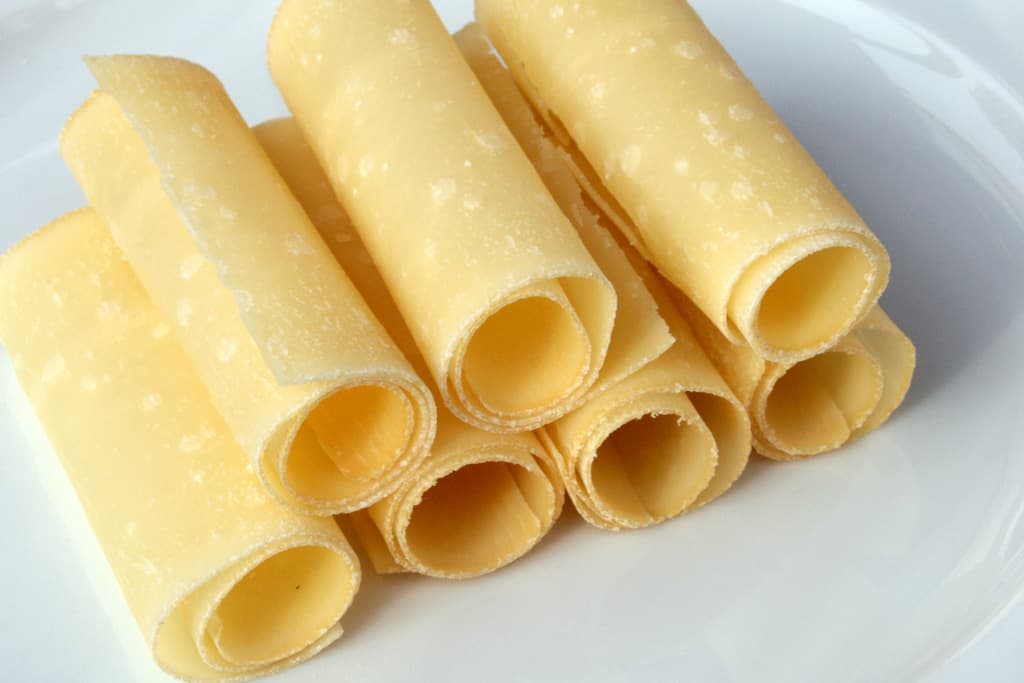
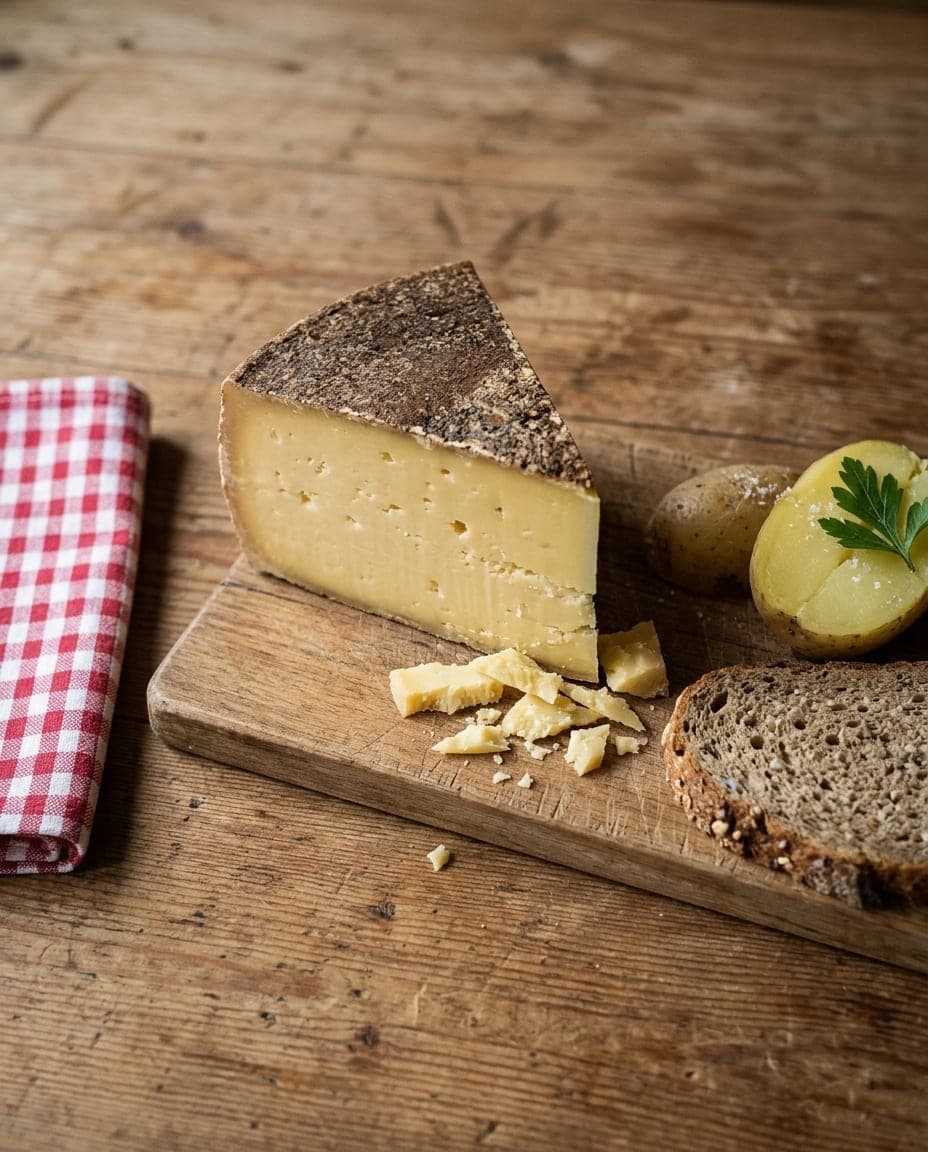
Urner Alpkäse has a robust profile that rewards patience. When first cut, the cheese can be slightly sharp and salty, developing a deeper, earthy complexity as it matures. The texture is firm but not crumbly, offering a satisfying resistance when bitten. Like most Alpine cheeses it melts well, so it works as well in the pan or over potatoes as it does on the board.
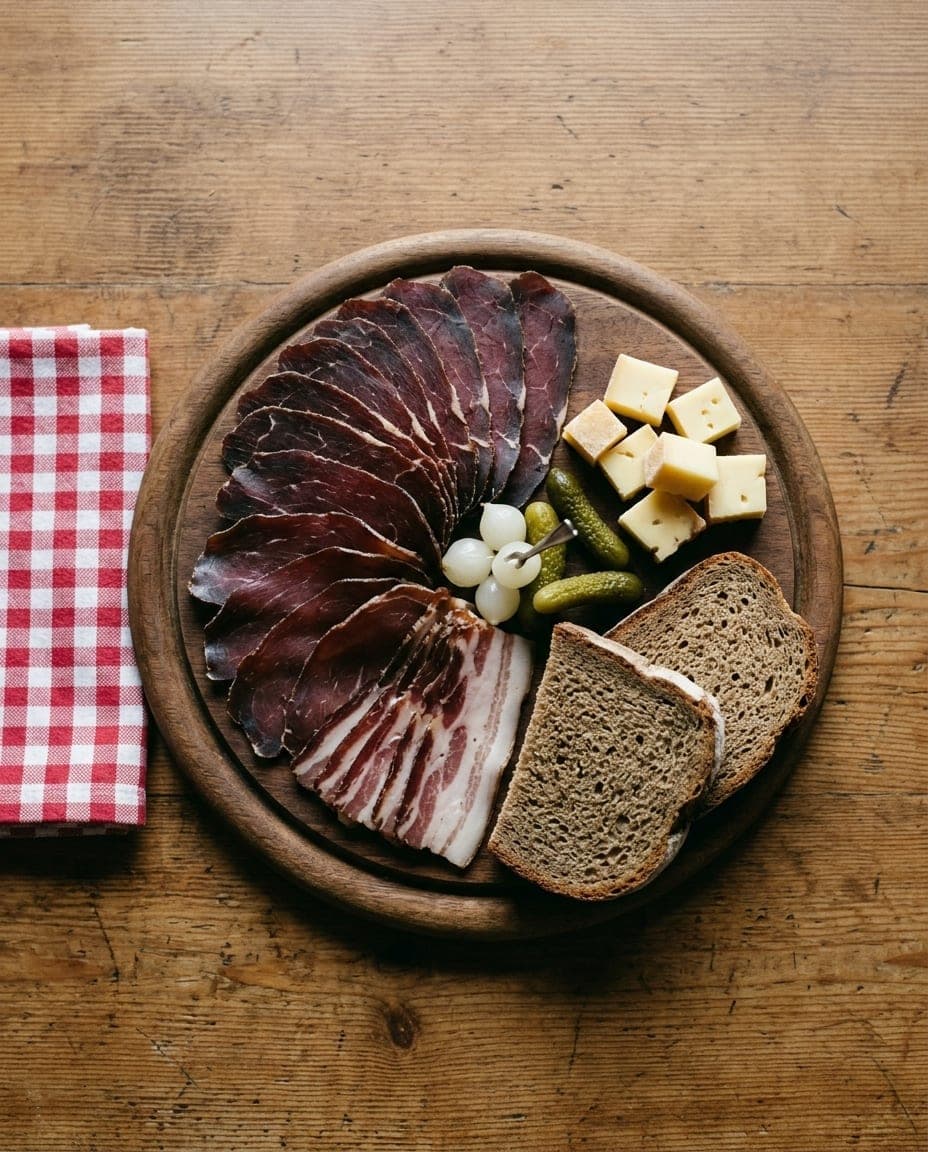
Locals typically serve the cheese with simple, traditional accompaniments that balance its intensity. Slices of fresh bread are common, allowing the diner to taste the cheese on their own without distraction. Boiled potatoes, often served with just a little butter and herbs, provide a neutral base that complements the nuttiness of the milk.
A dry Swiss white is the usual glass — Uri grows almost no vines, so the bottle comes from the Valais or the lake cantons. The crisp acidity of a dry white cuts the fat of the aged curd, cleansing the palate for the next bite. A glass of local beer is also an acceptable choice for those who prefer something with more body.
Curious facts
- A copper vessel. The cheese is made in copper kettles on the alp, some of them still heated over a wood fire, as Swiss alp cheese has been for centuries.
- Raw milk only. Like most traditional Swiss cheeses, Urner Alpkäse is made from raw, full-fat milk, which keeps the character of the alpine grasses.
- Limited supply. The short summer season and steep terrain mean the total production is small, about 200 tonnes a year, with much of it consumed locally or sold directly by the herders.
- A long wait. Although made in summer, the older wheels are aged through the winter, and a well-matured Urner Alpkäse is a different cheese from the young one sold in August.
- Not a protected name. While specific regional cheeses in Switzerland have AOP status, Urner Alpkäse relies on traditional reputation rather than a geographical indication; only the word "Alp" itself is regulated by Swiss law.
Where to try it
The most authentic experience of Urner Alpkäse happens at the source: a mountain dairy in Uri during the summer season. Visitors can travel to the high pastures near Andermatt, where traditional herding practices are still maintained. These alpine dairies often offer small tastings or sell wheels directly from their storage caves.
In the valley, farm shops and the Saturday market in Altdorf carry it once the herds come down. In summer the pass markets on the Klausen, Oberalp and Gotthard sell it, and the Urner Alpkäsemarkt in Seedorf at the end of November is when the canton's cheese is most on display.
The label to read says which alp the wheel came from. That is the difference between a cheese made in a copper kettle at 1,800 metres and a valley cheese sold under a mountain-sounding name.
Where to try it
1 destination
 Panoramic Trains
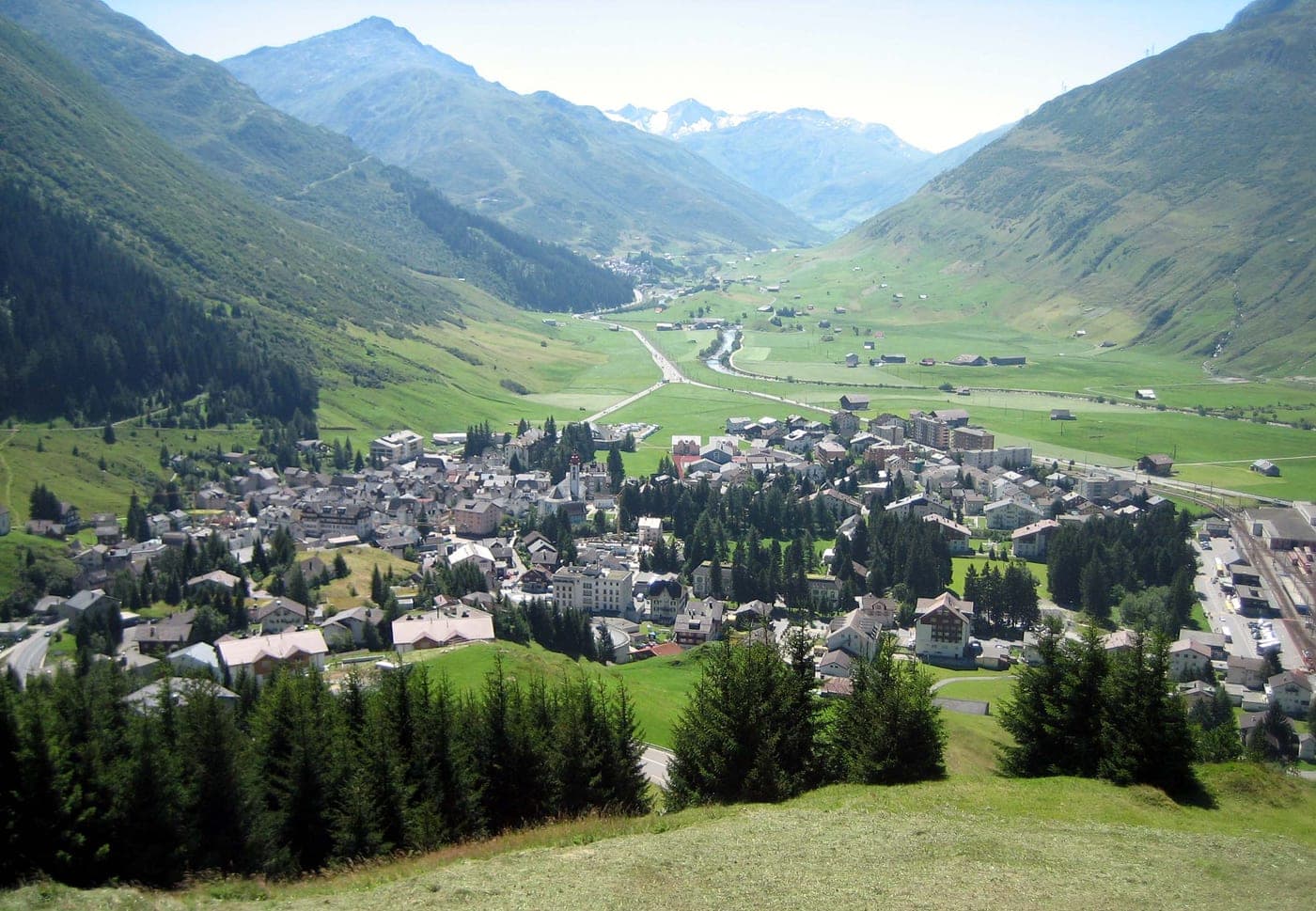
Andermatt
Alpine village at the crossroads of historic mountain passes.
Panoramic TrainsHiking
1 region
- Panoramic Trains1 destination
Uri
Uri sits at the very centre of Switzerland, wrapped around the long southern arm of Lake Lucerne that locals call Lake Uri. Steep forested slopes rise straight from the water here, and behind them the valley narrows and climbs toward the Gotthard massif, one of the great watersheds of the Alps. Uri is one of the original cantons that formed the Swiss Confederation in 1291, and the region still moves at the pace that history left it: small villages in side valleys, cattle grazing on steep meadows, and church bells marking the hours rather than traffic. This is a canton built for slow days rather than long checklists. Altdorf, the cantonal capital, keeps the legend of William Tell alive with a statue in its main square and a small museum on the story, but it is otherwise a quiet market town where the pace suits a morning coffee more than a rushed photo stop. Further down the lake, Flüelen sits right on the water. Bürglen, Tell's supposed birthplace, keeps its own chapel and archive dedicated to him. Higher up the valley, Andermatt has grown from a farming village into a small alpine resort without losing its old stone-house core. Farming still shapes daily life across Uri. Alpine terraces above the villages are used for haymaking in summer, and many families still move their cattle up to high pastures for the warmer months, following a rhythm called Alpaufzug. Small dairies on these alps turn the summer milk into mountain cheese, often sold directly at the farm or at village markets. Local restaurants tend to keep menus short and seasonal, built around this cheese, cured meat, and whatever vegetables the short alpine summer allows. The Gotthard Pass has shaped Uri's history more than almost anything else. For centuries it was the main route linking northern and southern Europe, and the old cobbled road still climbs over the summit past stone bridges and staging posts built for mule trains and early travellers. Away from the pass, Uri's side valleys hold quieter walking country: the Schächental below the Klausen road, the Maderanertal with its glacier views, and countless smaller trails linking one village to the next through larch forest and open alp.
Panoramic TrainsHiking