Birchermüesli
The soaked oat bowl invented by a Zurich doctor around 1900
- Vegetarian
- Local name
- Birchermüesli
- Served with
- Grated apple, fresh berries
- Best eaten at
- A Zurich café, for breakfast
- Pairs with
- Coffee
What it is
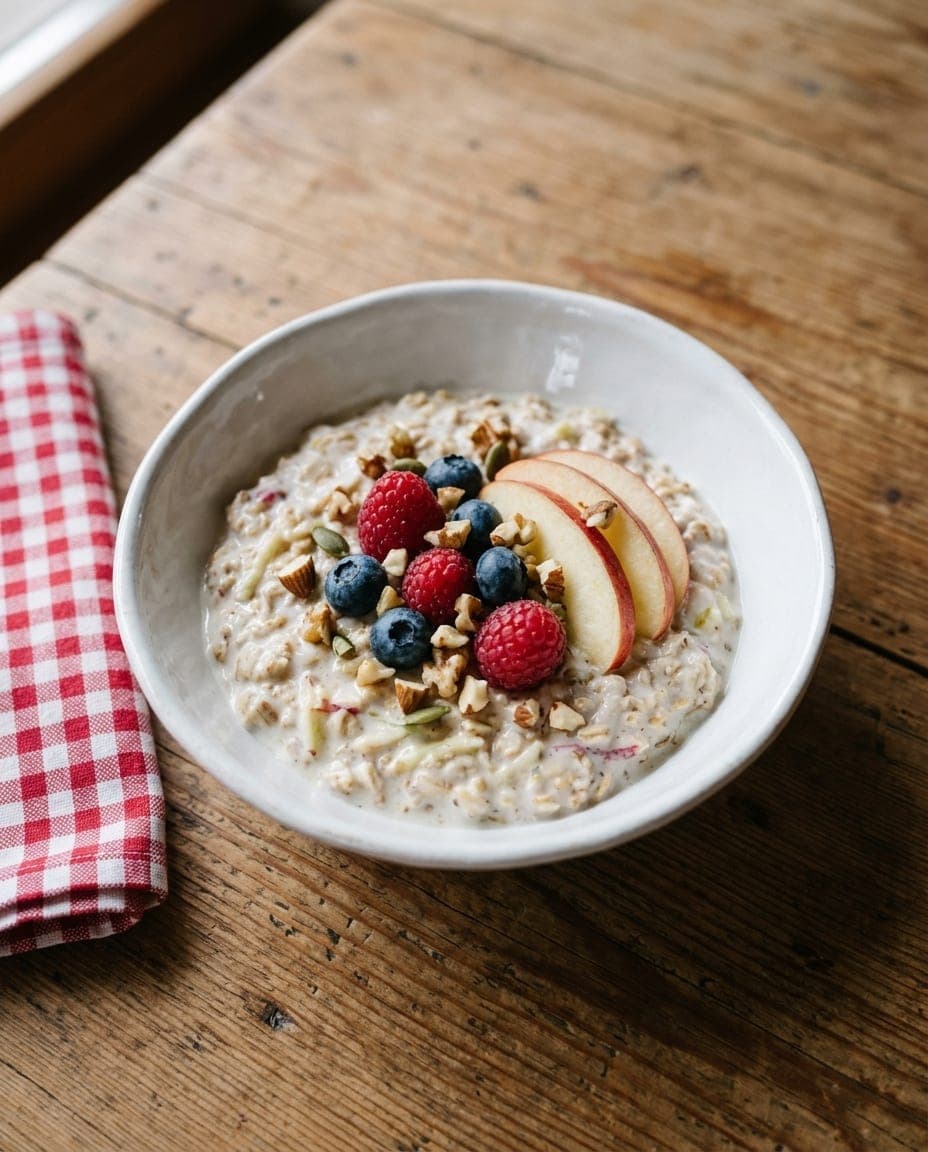
Birchermüesli is a bowl of soaked oats, not the dry crunchy flakes found in supermarket packets across the world. It consists of rolled oats that have been left to stand overnight in liquid until they soften into a creamy, wet texture. To this base are added grated apple, including the skin and core, along with ground nuts such as hazelnuts or almonds, and often fresh berries. The result is a dish that is sharp, moist and substantial, sitting somewhere between a porridge and a fruit salad.
The name itself tells part of the story. Müesli is a diminutive of the Swiss German Mues, meaning "little mush". It refers to the soft consistency of the dish rather than any specific ingredient list. The prefix Bircher- attaches it to its creator, Dr Maximilian Bircher-Benner, who devised the dish at the end of the 19th century and himself called it simply d Spys, "the dish". While the dry muesli that now travels the globe bears his name, the original recipe was a far cry from the crunchy, ready-to-eat versions found on shelves today.
This is not merely a breakfast food in the traditional sense. In its earliest form, it was served to patients at his clinic in Zurich as part of a full meal, notably the evening meal, rather than in the morning. Dr Bircher-Benner believed that raw fruit and soaked grains were essential for health, a view that was radical for his time. The dish he created remains one of the most enduring culinary exports from Switzerland, and while the dry packet version has spread worldwide, soaked Birchermüesli is still sold fresh in Swiss dairies, supermarkets and cafés.
The doctor and his sanatorium
Maximilian Bircher-Benner was a physician working in Zurich who became deeply interested in the link between diet and health. In the 1890s he opened a small private clinic in the city, and in 1904 moved into a larger sanatorium on the Zürichberg, named Lebendige Kraft ("living force"), dedicated to treating patients with chronic ailments through rest, fresh air and a specific type of nutrition. It was at his clinic that he began serving the oat dish that would later bear his name.
The doctor did not invent the concept of soaking oats in milk or water; such preparations existed in various forms across Europe, and he is said to have been inspired by a dish served to him on a hike in the Swiss Alps. However, he refined the method to create a consistent dish for his patients. He served it at the start of meals rather than as a separate breakfast course. The intention was to introduce raw elements into the diet in a way that could be digested easily by those who were unwell. A single spoonful of oats was soaked overnight in water, with a spoonful of sweetened condensed milk (or cream and honey) stirred in and the juice of half a lemon for acidity. Condensed milk was chosen partly because raw fresh milk then carried a risk of tuberculosis.
The apple played a central role in this formulation, and far outweighed the oats. Dr Bircher-Benner insisted on using the whole fruit, skin, core and all, grated directly into the bowl. He believed that raw plant foods stored the energy of sunlight and passed it on as a living force, a theory that sparked debate among medical professionals of the era. Ground hazelnuts or almonds went on top.
The clinic drew visitors from across Europe who came to see the regime, and the bowl of oats was the first thing most of them met. The name followed the method out of the building.
How it differs from the dry version
The modern muesli found in supermarkets is a different creature entirely. It consists of rolled or flaked grains that are dried until crisp, often with added sugar, honey or dried fruit. These mixes are designed for convenience: they can be eaten straight from the packet or with cold milk. They are crunchy, shelf-stable and meant to be stored for months.
The original Birchermüesli is soft, wet and perishable. It must be prepared in advance, as the oats require several hours to absorb the liquid and soften. The apple is fresh and grated immediately before serving, ensuring a sharp, bright flavour that would disappear if dried. The nuts are usually ground or chopped coarsely just before eating to preserve their texture. Beyond the spoonful of sweetened condensed milk or honey, no sugar is added in the traditional version; most of the sweetness comes from the fruit.
The industrial version kept the name and dropped the method: no soaking, sugar added, dried fruit in place of fresh. The two foods now share a word and very little else.
What goes into it
There is no single official recipe, as the proportions vary depending on the cook and the ingredients available. However, the core components remain consistent in any version that claims to be the original:
- Rolled oats, which are soaked overnight in water (in the original) or milk until they become soft and creamy.
- Fresh apple, grated whole including the skin and core, added just before serving to provide sharpness and texture.
- Sweetened condensed milk, or cream with honey, stirred into the soaked oats, which is what makes the result creamy rather than merely wet.
- Lemon juice, a small amount, which sharpens the whole bowl and keeps the grated apple from browning.
- Ground nuts, typically hazelnuts or almonds, sprinkled on top to add fat and a slight crunch to the soft base.
- Fresh berries, such as strawberries or raspberries, a later addition often folded in at the last moment for seasonal variation.
No extra sugar goes in. What sweetness there is comes mostly from the apple, with a little from the condensed milk or honey, which is the clearest difference from the packets sold under the same name.
How to eat it
In Zurich, the traditional way to enjoy Birchermüesli is at a café or restaurant that still prepares it from scratch. It is typically served in a deep bowl, with the soaked oats forming a soft bed for the grated apple and nuts. A spoon is essential, as the texture is too wet to eat with fingers.
It is best eaten as part of a larger meal rather than on its own. In the sanatorium, it was served at the start of meals, above all the evening meal. Today, it appears on breakfast menus in Zurich cafés, often alongside fresh fruit, bread or cheese. A cup of strong black coffee is the usual companion, the bitterness of the brew balancing the sweetness of the apple and cream.
Curious facts
- The name means little mush. Müesli is a diminutive form in Swiss German, referring to the soft consistency of the soaked oats rather than any specific ingredient list.
- It was not a breakfast. Dr Bircher-Benner did not serve his oat dish as a breakfast item but before meals, especially supper, for his patients at the sanatorium.
- The apple is raw and whole. The original recipe requires the apple to be grated with its skin and core intact, providing freshness and texture that dried apples cannot offer.
- It was not invented in isolation. Soaked grain preparations existed across Europe before Dr Bircher-Benner, but he refined the method into a specific dish for medical purposes.
- The industrial version lost the soaking. Modern muesli is dry and crunchy, designed for shelf life, whereas the original requires hours of preparation to achieve its soft texture.
Where to try it
The best place to eat authentic Birchermüesli is in a Zurich café that still prepares it from scratch rather than serving a pre-packaged mix. Many traditional establishments in the city centre maintain the practice of soaking oats overnight and grating fresh apple daily.
The clinic Bircher-Benner ran above the city closed in 1994. What survives is the bowl, and the test of a café version is whether the apple was grated that morning: left to stand, it browns and the sharpness goes.
Where to try it
1 destination
 Camper Van Rentals
Zurich
Cultural hub with medieval old town, vibrant arts scene, and Lake Zurich.
Camper Van RentalsHiking
1 region
- Camper Van Rentals1 destination
Zurich
Located at the confluence of the Limmat River and Lake Zurich, this region is Switzerland's largest urban area, known primarily for its financial institutions and vibrant cultural scene. Beyond the bustling city, Zurich offers access to numerous hiking trails in the nearby Uetliberg mountain, providing stunning panoramic views. The old town, with its medieval buildings and narrow alleys, reveals a rich history dating back to Roman times. Lake Zurich is a hub for outdoor activities such as swimming and sailing, while the nearby towns of Rapperswil and Winterthur present unique historic sites and museums. The region is also celebrated for its chocolate and cheese, with local markets showcasing artisanal products. Discovering the lesser-known neighborhoods can lead to hidden gems, including local galleries and family-owned eateries.
Camper Van RentalsHiking