Brasciadèla (rye ring bread)
A crisp rye ring bread from Valposchiavo, hung to dry on poles
- Vegetarian
- Local name
- Brasciadèla
- Served with
- Cured meats, cheese
- Best eaten at
- A Valposchiavo bakery
What it is
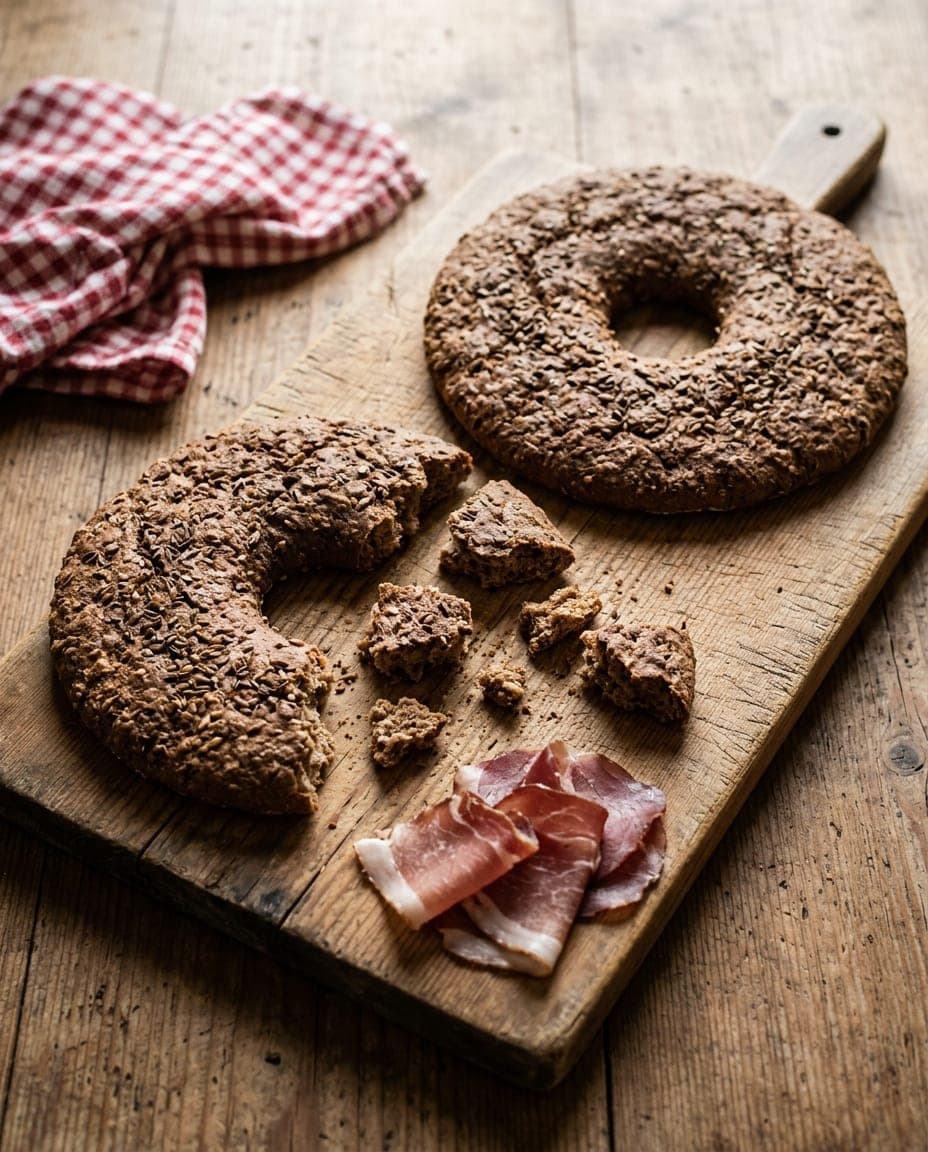
Brasciadèla (also spelled Brasciadèla or Brascidèla) is a distinctive ring-shaped bread made from rye flour and flavoured with aniseed in the Val Poschiavo, the Italian-speaking valley of Graubünden that slopes down towards the Italian border. It is not a bread found across Switzerland, but a local speciality tied to this specific mountain community. The ring is about 30 cm across, thin and crisp, baked dry enough that it breaks easily and could once be stored for long periods without spoiling.
The defining feature is the hole in the centre. This was not an aesthetic choice but a practical necessity for mountain households. In the past, bread was baked only occasionally. Once cooled, the rings were threaded onto wooden poles in a dry room, the càmbra dal pan. The central hole allowed air to circulate through the loaf, ensuring it dried evenly and remained hard enough to last until the next baking season.
How it was made for the mountains
The dough is simple: primarily rye flour, sometimes mixed with a small amount of wheat flour to aid the rise, water, salt, a leaven and a spoonful of aniseed. The mixture is shaped into rings rather than loaves or flatbreads. After baking, the result is a dark, crisp bread that resists mould in the dry mountain air.
This method of preservation was essential before refrigeration. A single bake could feed a family for weeks. The hard texture meant the bread did not go stale quickly; it simply remained hard until it was eaten or treated. In a region where fresh grain was scarce, a loaf that could hang on a pole for months was a vital part of the household larder, and its light, flat ring was easy to carry up to the summer pastures.
What goes into it
The ingredients are minimal, reflecting the constraints of the valley:
- Rye flour, which provides the dark colour, earthy flavour and dense texture.
- Wheat flour, used in small quantities by some bakers to help the dough rise in the cool mountain climate.
- Water from the local streams or wells.
- Salt, for flavour and preservation.
- Leaven, often a sourdough starter, which gives the bread its tang and helps it keep well.
- Aniseed, the one flavouring, which gives the ring its characteristic sweet, liquorice note.
There are no added fats or dried fruits. The flavour is grain and anise: nutty, slightly sour and gently aromatic. Because the dough is lean, the resulting bread is dry and crisp, designed to be broken into pieces rather than cut into thick slices.
How it is eaten
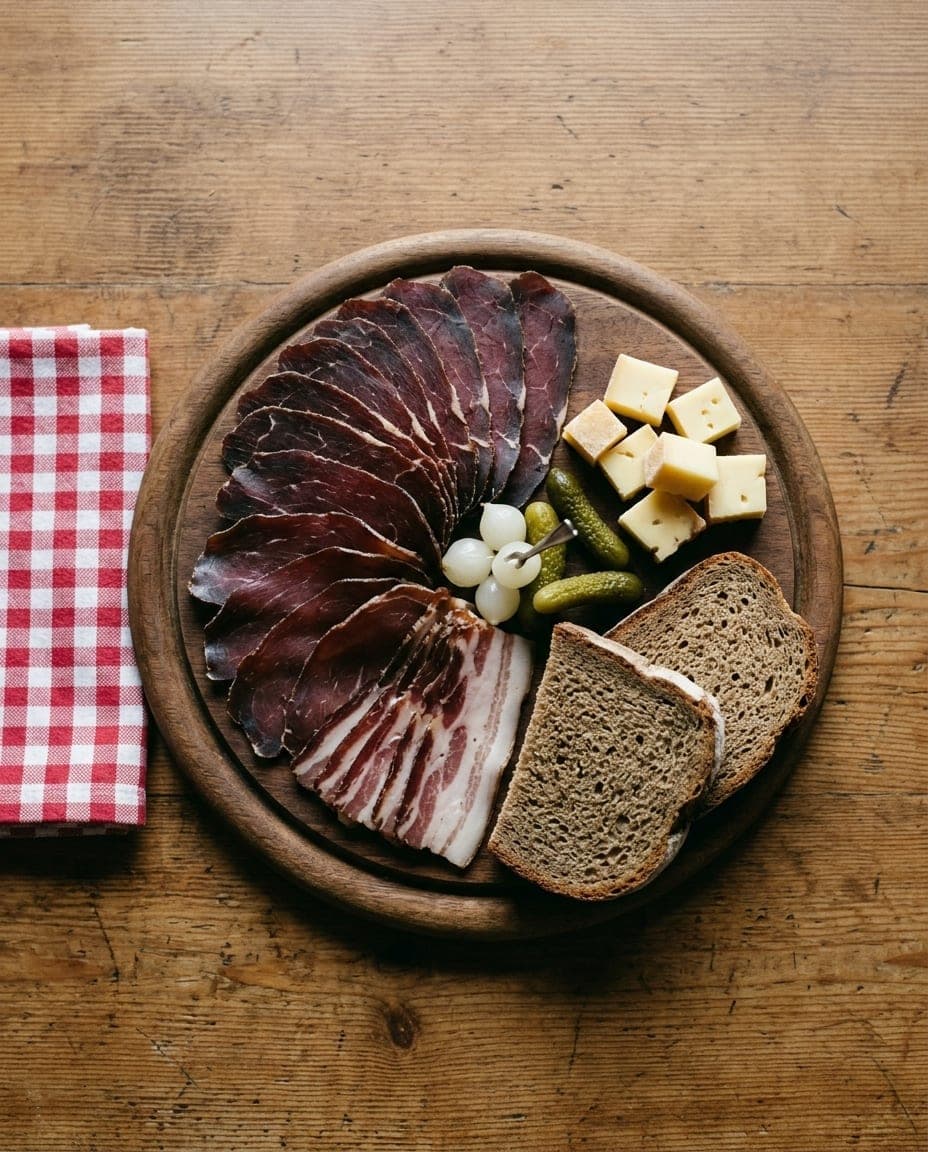
Brasciadèla is served as part of a cold plate, with the valley's cured meats — salsiz, dried beef, raw ham — and a hard cheese from one of the alps above it. The ring is broken by hand rather than sliced. It is not meant to be chewy or soft like a fresh loaf; the crunch is part of the experience.
When the bread had dried out further and become too hard to bite comfortably, it was softened by soaking — in milky coffee at breakfast, or in soup. A piece of Brasciadèla placed into a bowl of hot broth absorbs the liquid and becomes tender, adding body to the dish. This dual life — as a dry snack and a sop — made it versatile for daily meals.
Curious facts
- A tool for drying. The central hole was designed specifically for threading the loaves onto wooden poles, allowing them to hang in a dry room where air could circulate freely around the entire ring.
- A lean dough. Unlike many European breads that include fat or sugar, Brasciadèla is a lean bread made with flour, water, salt, leaven and aniseed, which is why it could stay hard for months.
- Soup's best friend. When the bread became too dry to eat directly, it was traditionally broken into hot soup or milky coffee to soften.
- A regional shape. In Graubünden the anise-flavoured rye ring is specific to Valposchiavo; other parts of the canton bake their rye bread in different shapes.
- Year-round availability. While once baked only occasionally and dried, it is now made by every baker in the valley and mostly eaten fresh, at breakfast or alongside lunch and dinner; home-baked rings have become rare.
Where to try it
A bakery in Poschiavo or one of the villages along the valley floor, where it is baked in rings and sold whole.
The Bernina railway comes down from the pass through the valley to Tirano, which is how most visitors reach it. The valley runs a label, 100% Valposchiavo, for food grown and made within its own boundaries, and it is worth asking whether the rye in a loaf came from the valley's own fields.
Where to try it
1 destination
 Panoramic Trains
Poschiavo
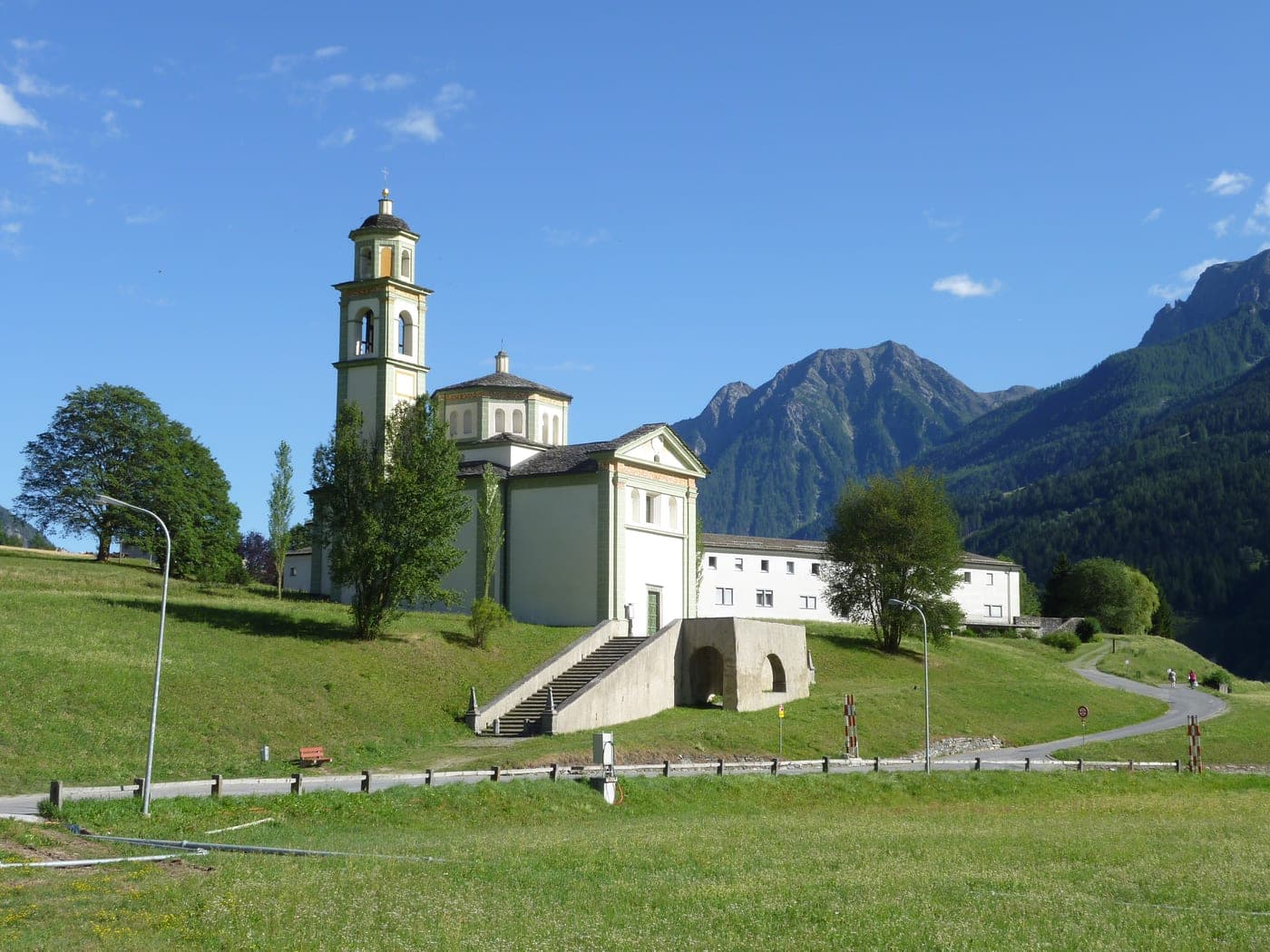
Italian-speaking Swiss town with baroque churches, historic center, and Mediterranean atmosphere
Panoramic TrainsHiking
1 region
 Panoramic Trains15 destinations
Graubünden
Graubünden is Switzerland's largest canton, known for its stunning alpine landscapes and unique cultural heritage. The region is famous for its diverse languages, with Romansh being one of the official languages. Notable cities include Chur, the oldest city in Switzerland, and the resort town of St. Moritz, renowned for winter sports and luxury. The area boasts the breathtaking Engadin Valley, home to picturesque villages like Sils and Maloja, and offers excellent hiking trails in the Swiss National Park. Graubünden is also known for its traditional cuisine, including hearty dishes like Capuns and Pizzoccheri, reflecting its rich agricultural roots. The region hosts lesser-known festivals that celebrate local traditions, adding to its authentic character.
Panoramic TrainsHiking