Assiette valaisanne
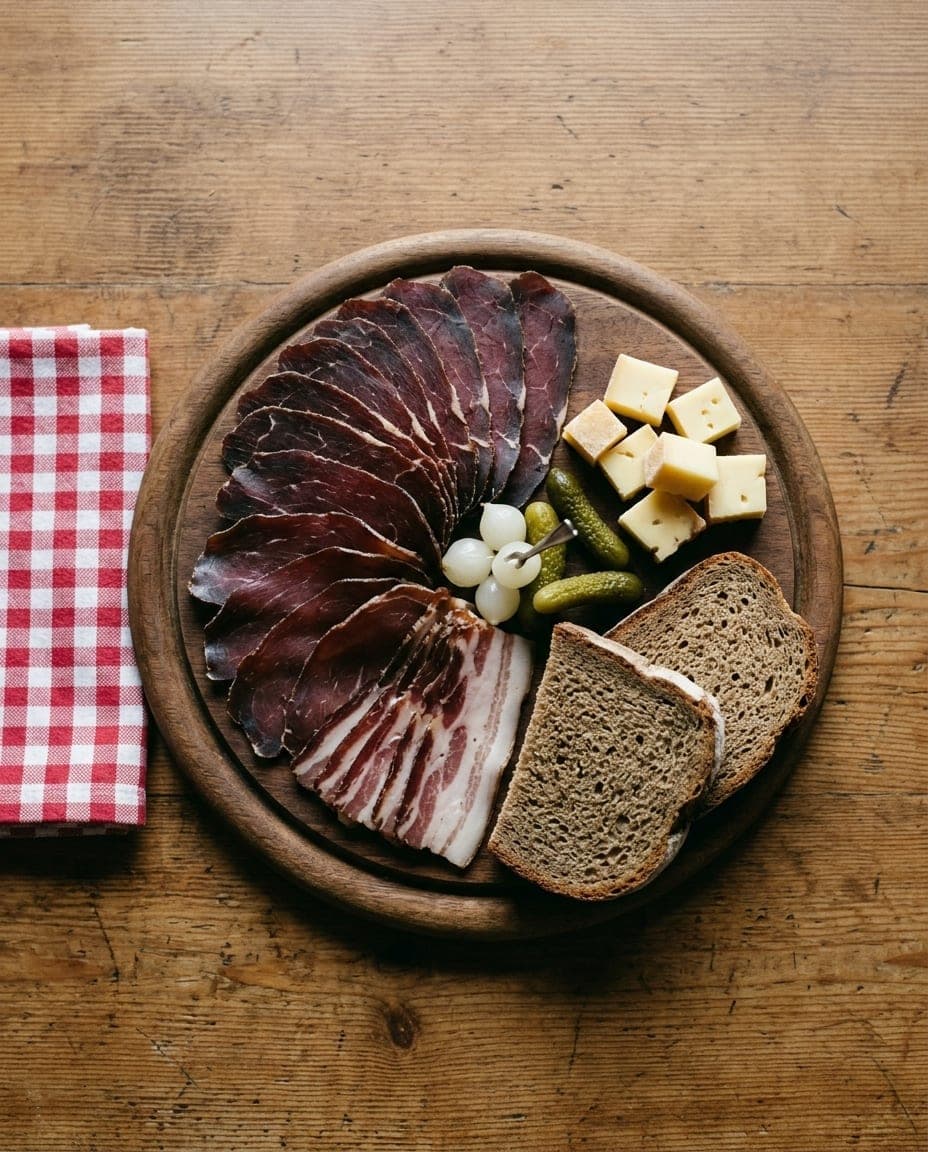
A cold platter of dried beef, ham, rye bread and cheese
- Local name
- Assiette valaisanne
- Served with
- Rye bread, gherkins
- Best eaten at
- A Valais mountain restaurant
- Pairs with
- Fendant or Cornalin
What it is
The assiette valaisanne is a cold plate rather than a cooked dish, serving as the culinary signature of Switzerland's Valais valley. It arrives at the table as a generous platter of dried meats, cheeses and dark bread, designed to be eaten slowly with the fingers or a knife. The heart of the arrangement is viande séchée du Valais, air-dried beef that has been cured by the dry winds and high altitude of the valley before arriving in paper-thin slices. Alongside the beef are cuts of raw ham and often lard sec, air-dried bacon, all accompanied by slices of raclette cheese cut cold rather than melted.
This dish is not an invention of modern restaurants but a reflection of how food was preserved in the mountains for centuries. The valley's unique climate, with its low humidity and strong winds, allows meat to dry slowly without spoiling, creating a texture that is firm yet tender when sliced against the grain. The platter typically includes dark Valais rye bread, which has a dense crumb capable of holding up to the deep flavours of the cured meats. Small gherkins and pickled onions are served on the side to cut through the fat and provide a sharp contrast to the savoury elements.
How the valley makes the meat
The quality of the assiette valaisanne depends entirely on the geography of the Valais region. The drying process relies on the specific combination of altitude, temperature and wind that exists in the upper valleys. Meat hung to cure here loses moisture slowly in the dry air, which concentrates the flavour. This method has been used for generations, though the exact origins of the current style are not recorded in a single document.
In a mountain restaurant or a vineyard café, this dish is often the answer when the kitchen is closed or the chef wants to showcase the region's produce without heating a stove. It is a practical solution that turns preservation into a celebration. The meat is sliced thin enough to be translucent, revealing the fine grain of the lean muscle. When eaten fresh from the board, the beef has a subtle sweetness and a firm texture that requires chewing rather than swallowing whole.
What goes into it
The components of the platter are simple but specific to the region:
- Viande séchée du Valais, air-dried beef cured in the valley's dry winds, sliced paper-thin.
- Raw ham, salted and air-dried for several months; like the beef and bacon, it is cured, not smoked.
- Lard sec, air-dried pork belly, included for its rich, salty fat.
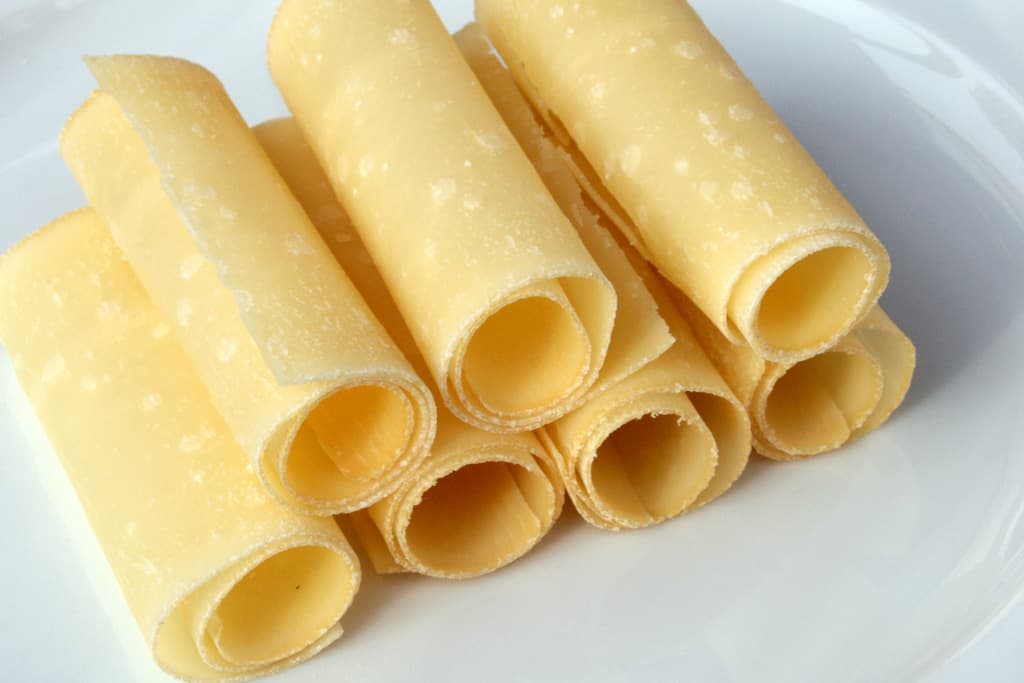
- Raclette cheese, served cold in thick slices to complement the meat without melting.
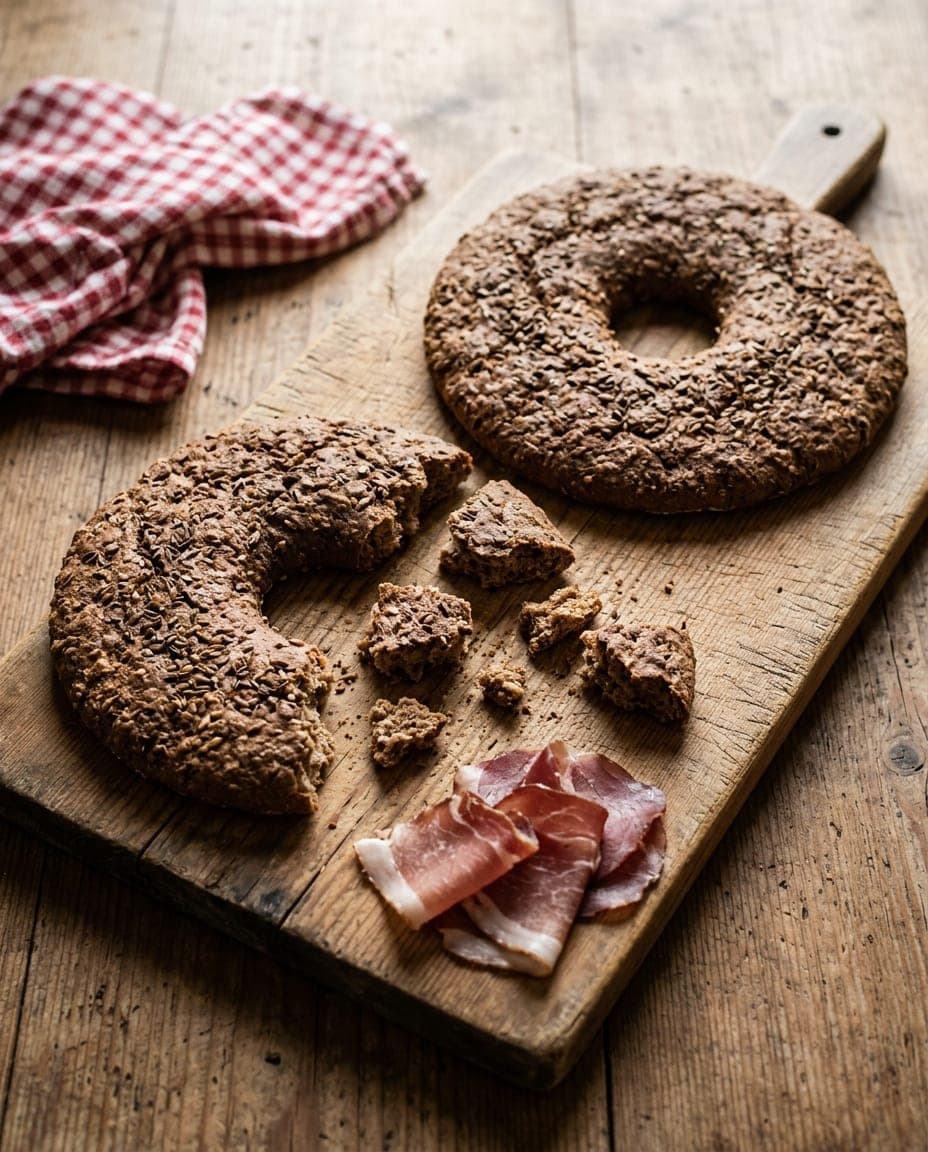
- Valais rye bread, a dark, dense loaf made with Valais-grown rye.
- Gherkins and pickled onions, providing a sharp, acidic counterpoint to the rich fats.
The result is a balanced mix of textures and tastes, where the saltiness of the meat meets the creamy cheese and the tang of the pickles. There are no sauces or dressings; the flavours come from the ingredients themselves.
How to eat it
The assiette valaisanne is best enjoyed as an afternoon snack or a light lunch at a mountain restaurant. It can open a larger meal, but just as often it stands on its own as a satisfying course. Diners typically take a slice of rye bread, top it with a piece of beef and cheese, and bite into the combination, letting the flavours linger before moving to the next item. The gherkins are eaten alongside or between bites to cleanse the palate.
The traditional pairing is a glass of Fendant, the dry white wine made from Chasselas grapes grown on the sunny slopes of the Valais. The crisp acidity of the wine cuts the fat of the meat and cheese perfectly. A glass of Cornalin, a local red wine, is also common for those who prefer a fuller body. It is an hour's eating rather than twenty minutes'.
Curious facts
- A climate-dependent cure. The dry air of the Valais is what the traditional cure was built on; in a damp climate, open-air drying is far harder to manage.
- Cold cheese only. Unlike many Swiss dishes where raclette is melted, here it is served cold to maintain a firm texture that matches the cured meats.
- No cooking required. The dish requires no heat source beyond the natural air of the valley, making it ideal for mountain huts or vineyard terraces.
- A regional focus. While dried beef exists elsewhere in Switzerland, the Valais version is distinct due to its specific curing conditions. The beef itself is Swiss rather than strictly Valaisan, since the canton does not raise enough cattle to supply it.
- The bread matters. Dark rye bread from the region has a density that prevents it from becoming soggy when paired with moist cured meats.
Where to try it
A mountain restaurant anywhere in the Valais — Zermatt, the Val d'Anniviers, the Lötschental — where it is the standing order when the kitchen is between services.
The vineyard carnotzets along the Rhône valley serve it with their own wine, which is the other setting it belongs to. Butchers in Sion, Sierre and the valley towns sell the dried beef by the slice to take away, cut on the machine while the customer waits.
Where to try it
1 destination
 Panoramic Trains
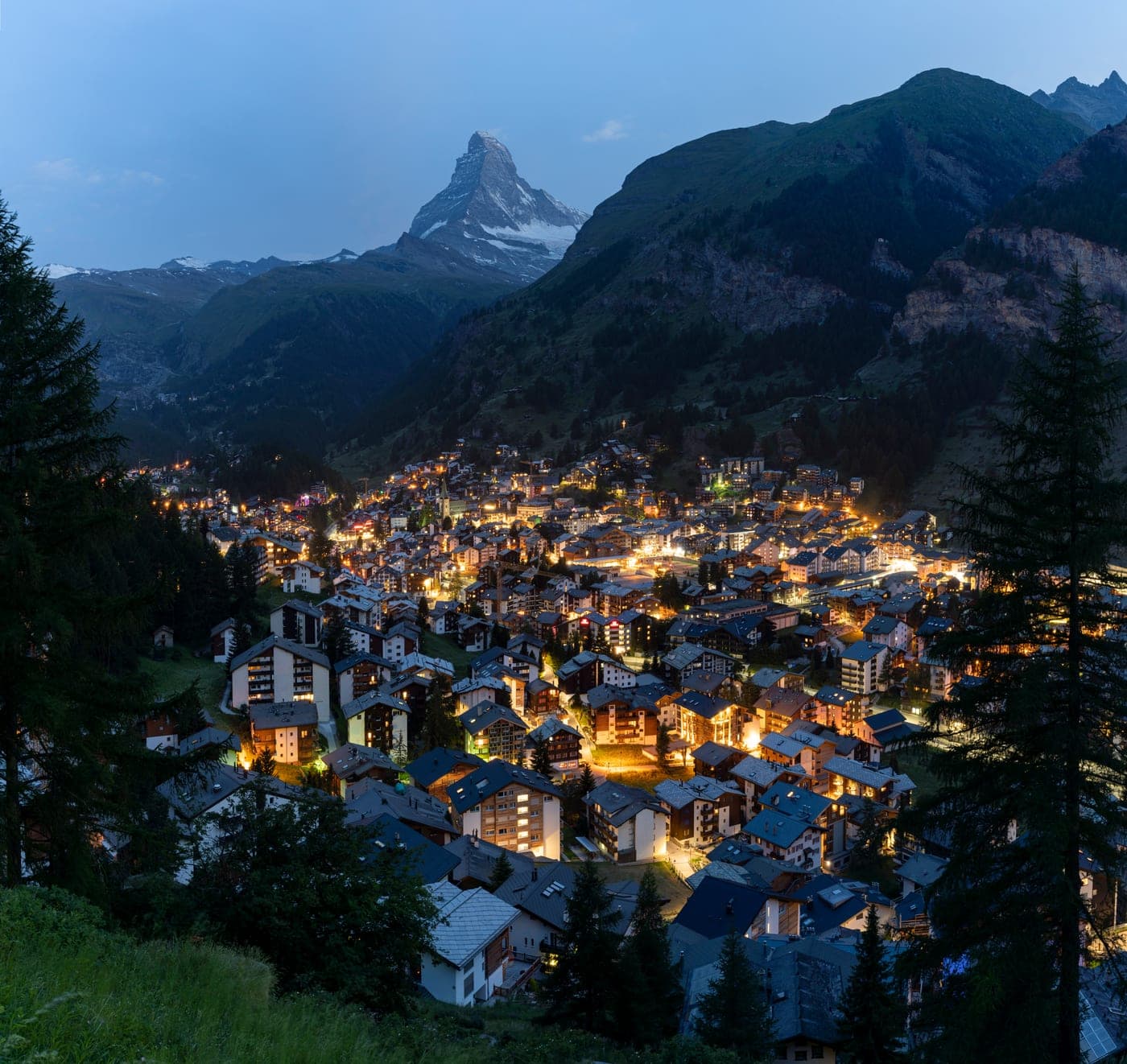
Zermatt
Iconic car-free mountain resort beneath the Matterhorn.
Panoramic TrainsHikingLocal Cuisine
1 region
- Panoramic Trains3 destinations
Valais
Valais is a prominent region in Switzerland, known for its striking alpine landscapes and rich cultural heritage. It is home to the famous Matterhorn and the largest ski area in the country. The region is characterized by its terraced vineyards, which produce unique wines like Fendant and Dôle. Sion, the capital, boasts a medieval old town and ancient castles. Zermatt, a car-free village, offers access to breathtaking hiking trails. The region is also famous for its local cheeses and traditional festivals, including the Fête de la Saint-Bernard. With stunning mountain scenery and charming villages, Valais invites exploration beyond the typical tourist path.
Panoramic TrainsHikingLocal CuisineWine Tasting