Bündner Birnbrot (pear bread)
A dark, dense loaf of dried pear and walnut from Graubünden
- Vegetarian
- Local name
- Bündner Birnbrot
- Served with
- Butter
- Best eaten at
- A Graubünden bakery
- Pairs with
- Coffee
What it is
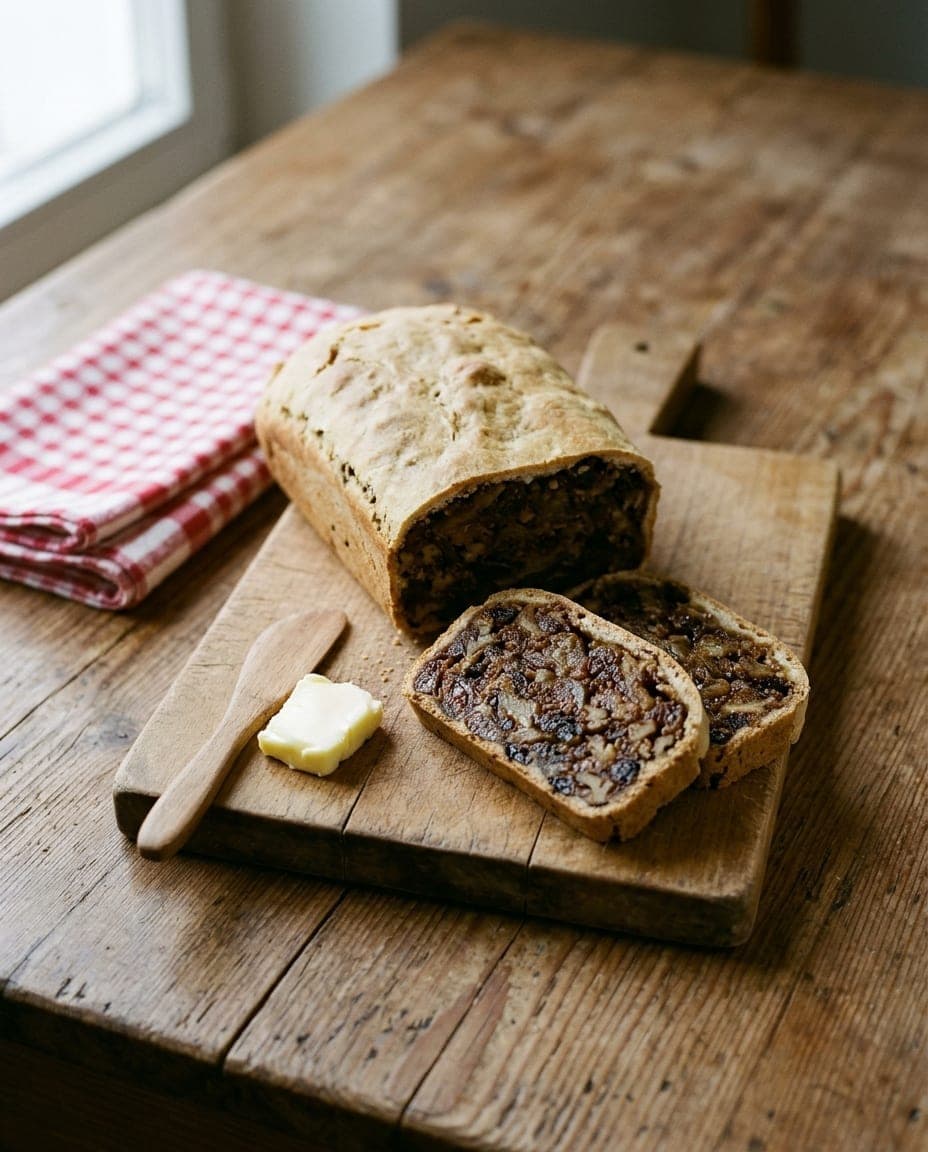
Bündner Birnbrot is a dark, dense loaf that belongs to the canton of Graubünden in the Swiss Alps. It is not a cake, nor a pastry in the usual sense, but a bread where the filling outweighs the crust. The interior is almost black, packed with chopped dried pears, figs and raisins mixed with walnuts, cinnamon and cloves, worked into a little bread dough and wrapped in a thin layer of yeast dough.
The loaf is heavy and rich, designed to be sliced thinly and eaten as a snack rather than a main course. In the past, it was a practical way to preserve the harvest from autumn through the winter months. Today, it remains a seasonal favourite around Christmas, though many bakeries in the region sell it throughout the year. The name means pear bread from Graubünden, and what it tastes of is concentrated dried fruit and clove.
A bread for the long winter
The story of this loaf begins with the geography of Graubünden. In a mountain canton where fresh fruit is scarce for much of the year, preserving the harvest was essential. Pears were dried and stored for months. When the weather turned cold, these dried pears were soaked and used to sweeten and stretch breads that could last on shelves without spoiling — grain had to be bought in from the lowlands, and fruit made it go further.
The tradition dates back to a time when sugar was expensive and imported. The sweetness of the Birnbrot came largely from the fruit itself. The addition of kirsch or pear spirit helped preserve the mixture and added a sharp, warming note that cut through the density of the dough. It was a food made for cold days, long evenings by the fire and journeys across high mountain passes where a heavy loaf could provide lasting energy.
While the exact origins are not recorded in a single document, the practice is bound up with rural life. The bread was baked in large quantities for Advent, Christmas and New Year and given as gifts or kept for family consumption during the winter. In Scuol, in the Lower Engadine, girls traditionally give a Birnbrot to a favourite schoolmate on 26 December. It remains a symbol of the region's ability to make something substantial from simple, preserved ingredients.
What goes into it
There is no single official recipe, and every baker has their own way of balancing the components. The structure is consistent, however:
- Dried pears, soaked in liquid and chopped finely, form the bulk of the filling.
- Figs and raisins add texture and a deeper sweetness to the mix.
- Walnuts, often roughly crushed, provide a crunchy contrast to the soft fruit.
- Spices such as cinnamon and cloves give the loaf its characteristic warm aroma.
- Kirsch or pear brandy, in Graubünden often used to soak the pears overnight, moistening the mixture and aiding preservation.
- A thin casing of yeast dough that encases the filling without overwhelming it; some Graubünden versions use more bread dough in the mix and skip the casing.
The final product is dark, almost black when cut across, with a texture that is soft yet firm. It is not a sweet treat in the modern sense but a fruit loaf that sits comfortably between bread and cake.
How to eat it
Bündner Birnbrot is best bought at a Graubünden bakery, where it is often sold in whole loaves or by the slice. The traditional way is to spread it thinly with butter, or to eat it with a mild cheese. It pairs naturally with a cup of black coffee, which complements the spice and sweetness without competing with them.
Slices are cut thin, both because the loaf is heavy and because it keeps for weeks and is meant to last. Some toast it; most do not.
Curious facts
- The colour is natural. The dark interior comes from the caramelisation of the fruit during baking, not from added food colouring or heavy chocolate.
- A winter necessity. In the past, this bread was essential for surviving the long months when fresh produce was unavailable in the mountains.
- No protected name. Unlike some Swiss cheeses or meats, there is no official designation protecting the term "Bündner Birnbrot" from imitation.
- Butter or cheese. The usual accompaniment is plain butter to balance the sweetness, though a mild cheese is also common; it is a classic picnic for hikers and skiers.
- A regional identity. Pear bread belongs to the eastern Swiss Alps — Glarus and the Toggenburg have their own versions — but the Graubünden one is coarser, with the pears chopped rather than sieved.
Where to try it
A bakery in Graubünden — Chur, Davos, St Moritz, or any village with its own baker — where it is sold whole, by the half, or in slices from a cut loaf.
It is at its most visible in the weeks before Christmas, when the bakeries make it in quantity and it is bought as a gift. A similar filling appears in Lucerne as a Birnenweggen, spread on yeast dough and rolled up like a roulade, which is the nearest relative.
Where to try it
1 region
 Panoramic Trains15 destinations
Graubünden
Graubünden is Switzerland's largest canton, known for its stunning alpine landscapes and unique cultural heritage. The region is famous for its diverse languages, with Romansh being one of the official languages. Notable cities include Chur, the oldest city in Switzerland, and the resort town of St. Moritz, renowned for winter sports and luxury. The area boasts the breathtaking Engadin Valley, home to picturesque villages like Sils and Maloja, and offers excellent hiking trails in the Swiss National Park. Graubünden is also known for its traditional cuisine, including hearty dishes like Capuns and Pizzoccheri, reflecting its rich agricultural roots. The region hosts lesser-known festivals that celebrate local traditions, adding to its authentic character.
Panoramic TrainsHiking