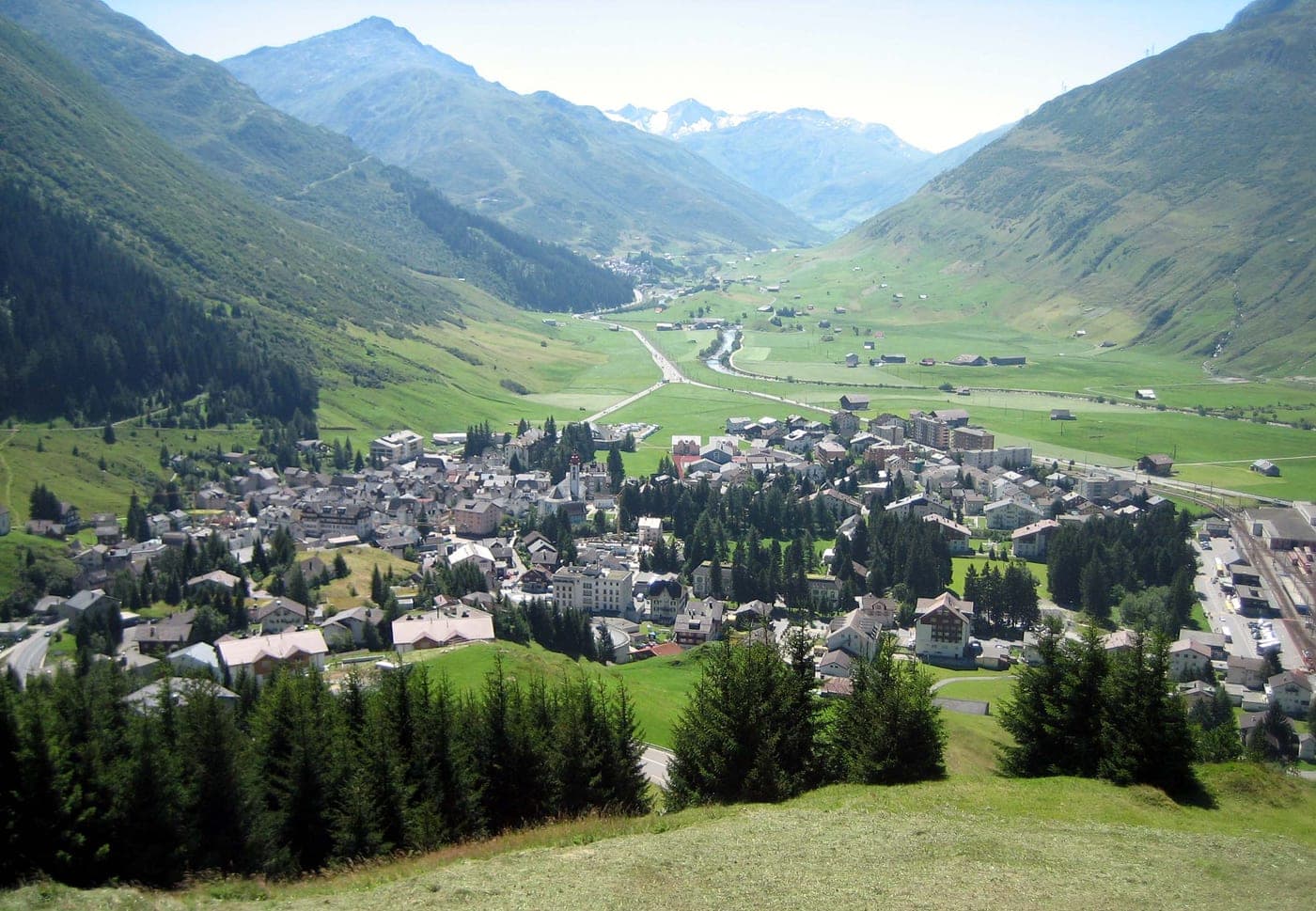
Uri sits at the very centre of Switzerland, wrapped around the long southern arm of Lake Lucerne that locals call Lake Uri. Steep forested slopes rise straight from the water here, and behind them the valley narrows and climbs toward the Gotthard massif, one of the great watersheds of the Alps. Uri is one of the original cantons that formed the Swiss Confederation in 1291, and the region still moves at the pace that history left it: small villages in side valleys, cattle grazing on steep meadows, and church bells marking the hours rather than traffic.
This is a canton built for slow days rather than long checklists. Altdorf, the cantonal capital, keeps the legend of William Tell alive with a statue in its main square and a small museum on the story, but it is otherwise a quiet market town where the pace suits a morning coffee more than a rushed photo stop. Further down the lake, Flüelen sits right on the water. Bürglen, Tell's supposed birthplace, keeps its own chapel and archive dedicated to him. Higher up the valley, Andermatt has grown from a farming village into a small alpine resort without losing its old stone-house core.
Farming still shapes daily life across Uri. Alpine terraces above the villages are used for haymaking in summer, and many families still move their cattle up to high pastures for the warmer months, following a rhythm called Alpaufzug. Small dairies on these alps turn the summer milk into mountain cheese, often sold directly at the farm or at village markets. Local restaurants tend to keep menus short and seasonal, built around this cheese, cured meat, and whatever vegetables the short alpine summer allows.
The Gotthard Pass has shaped Uri's history more than almost anything else. For centuries it was the main route linking northern and southern Europe, and the old cobbled road still climbs over the summit past stone bridges and staging posts built for mule trains and early travellers. Away from the pass, Uri's side valleys hold quieter walking country: the Schächental below the Klausen road, the Maderanertal with its glacier views, and countless smaller trails linking one village to the next through larch forest and open alp.