Älplermagronen
Alpine herdsman's macaroni with potato, cream and apple sauce
- Vegetarian
- Local name
- Älplermagronen
- Served with
- Apple sauce, fried onions
- Best eaten at
- A Swiss alpine hut
- Pairs with
- Swiss lager
What it is
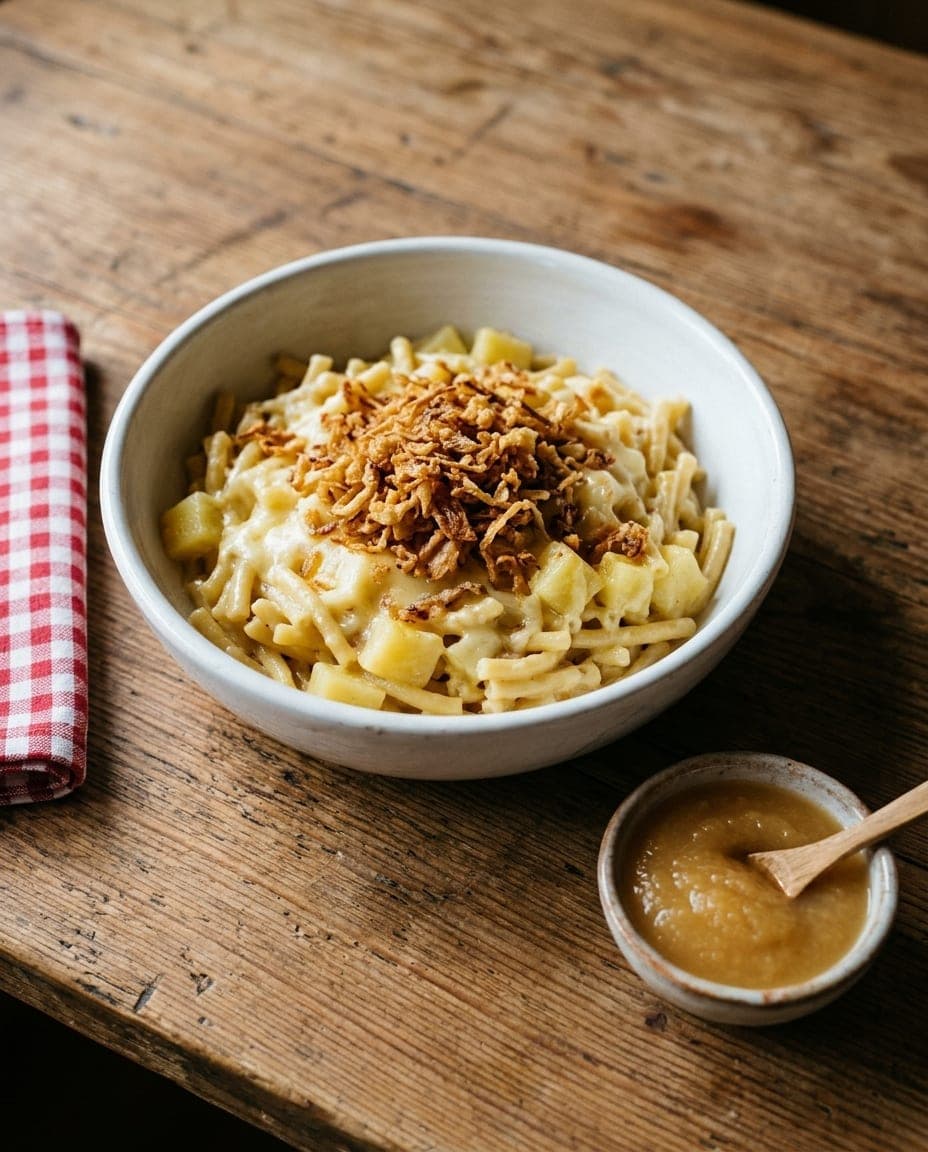
Älplermagronen is a dish of the Swiss Alps, most closely associated with central Switzerland — Lucerne, Schwyz, Uri and their neighbours. It is a comforting mixture of macaroni and diced potato boiled together in the same pot, then drained and stirred with cream and grated cheese until the ingredients are bound into a thick, golden mass. The dish is finished with a layer of onions fried until dark and brown, and served with a side of apple sauce that cuts the fat of the dairy.
The name translates roughly to "Alpine herdsman's macaroni": Älpler is the herdsman on the summer alp, and Magronen is borrowed from the Italian maccheroni. It is not a gourmet creation refined in a city kitchen, but a practical meal designed for life in the high pastures. A single bowl is substantial enough to fuel a long day of work or to warm up after a hike in cold weather. While it has become a staple on menus across Switzerland, it remains most closely associated with the mountain huts and chalets of the central Alpine regions where the dish originated.
The herdsman's logic
The story of Älplermagronen is one of necessity rather than invention. When herdsmen moved their cattle to the high alpine meadows for the summer grazing season, milk and cheese were made on the spot, but everything else had to be carried up. Dry pasta, which became widespread in Switzerland in the 19th century, was light and kept well, so it earned its place in the pack alongside potatoes. A popular story credits Italian workers on the Gotthard tunnel with bringing the pasta, though food historians are sceptical. Combined with the alp's own cream and cheese, it made a filling meal.
The cooking method reflected this constraint. All the ingredients were boiled together in a single pot over an open fire or a simple stove. This saved fuel and time, and meant that everything was ready to eat at once. The result was a dish that could feed a whole group of workers with minimal effort. Over time, the recipe moved down from the seasonal huts to the farmhouses and kitchens of the valleys.
Today, the dish is a fixture of traditional restaurants in the central Swiss cantons and well beyond. It appears on the menu of a mountain hut, a valley inn or a family-run hotel with equal frequency. The recipe varies from valley to valley: in Uri the potatoes are often left out, Obwalden has its own Hindersi-Magronen, and some cooks add bacon, ham or a sliced cervelat.
What goes into it
There is no single official version, but the core components are broadly consistent across the central Alps:
- Macaroni, usually short tube pasta that holds its shape well during boiling.
- Potatoes, cut into small cubes and boiled alongside the pasta until soft (though some versions, notably in Uri, leave them out).
- Cream, which creates a rich sauce that binds the ingredients together.
- Grated cheese, typically a hard or semi-hard Alpine cheese such as an Alpkäse, Sbrinz or Gruyère, melted into the hot pasta.
- Fried onions, cooked slowly until they turn dark brown and sweet, then scattered on top as a garnish.
- Apple sauce, served on the side to provide a sharp, fruity contrast to the creamy, savoury dish.
The balance between the salty cheese and the sweet apple sauce is the defining feature of the meal. The fried onions add a texture that is both crisp and soft, while the cream ensures the dish is hearty enough to sustain a heavy physical effort.
How to eat it
Älplermagronen is traditionally eaten as a main course in a Swiss alpine hut or a rustic restaurant. It arrives in a large bowl or a shallow plate, often with the fried onions piled high on top. The apple sauce is served in a separate small dish, allowing the diner to spoon it over the pasta as they wish.
The acidity of the apples cuts through the fat of the cream and cheese, refreshing the palate between mouthfuls. A glass of Swiss lager is a common drink pairing, as the carbonation helps to cleanse the mouth after each bite.
In a mountain hut, the dish is often shared among a group of hikers or climbers who have just returned from the trails. The large portions are designed for this communal style of eating. Locals may also eat it at home during the winter months, sometimes adding a little bacon or ham to the mix for extra flavour.
Curious facts
- The apple sauce is essential. Many visitors expect a side of vegetables or salad, but apple sauce (Apfelmus) is the traditional accompaniment, and it is a large part of the dish's character.
- A single pot meal. The entire dish is cooked in one pot, a method that was necessary for herdsmen with limited fuel and equipment on the high pastures.
- Regional roots. While now common across Switzerland, the dish is most strongly linked to the central cantons of Lucerne, Schwyz and Uri, where it likely originated.
- A winter staple. It is a favourite during the colder months, when hearty, warming meals are preferred over lighter summer dishes.
- No strict cheese rule. Alpkäse, Sbrinz and Gruyère are all common, and cooks use whatever hard Alpine cheese the region has to hand.
Where to try it
The most authentic experience of Älplermagronen can be found in a Swiss alpine hut in the central cantons, particularly in the area around Andermatt or in the valleys of Lucerne and Schwyz. These huts often serve the dish as a standard lunch option for hikers and skiers. In the towns below the mountains, traditional restaurants and family-run hotels also offer excellent versions, often using local cheese and cream from nearby farms.
On a hut menu it sits among the main courses and the portion assumes a morning's walking. The apple sauce arrives in its own dish and is not optional; the onions are, and more of them can usually be had for the asking.
Where to try it
1 destination
 Panoramic Trains
Andermatt
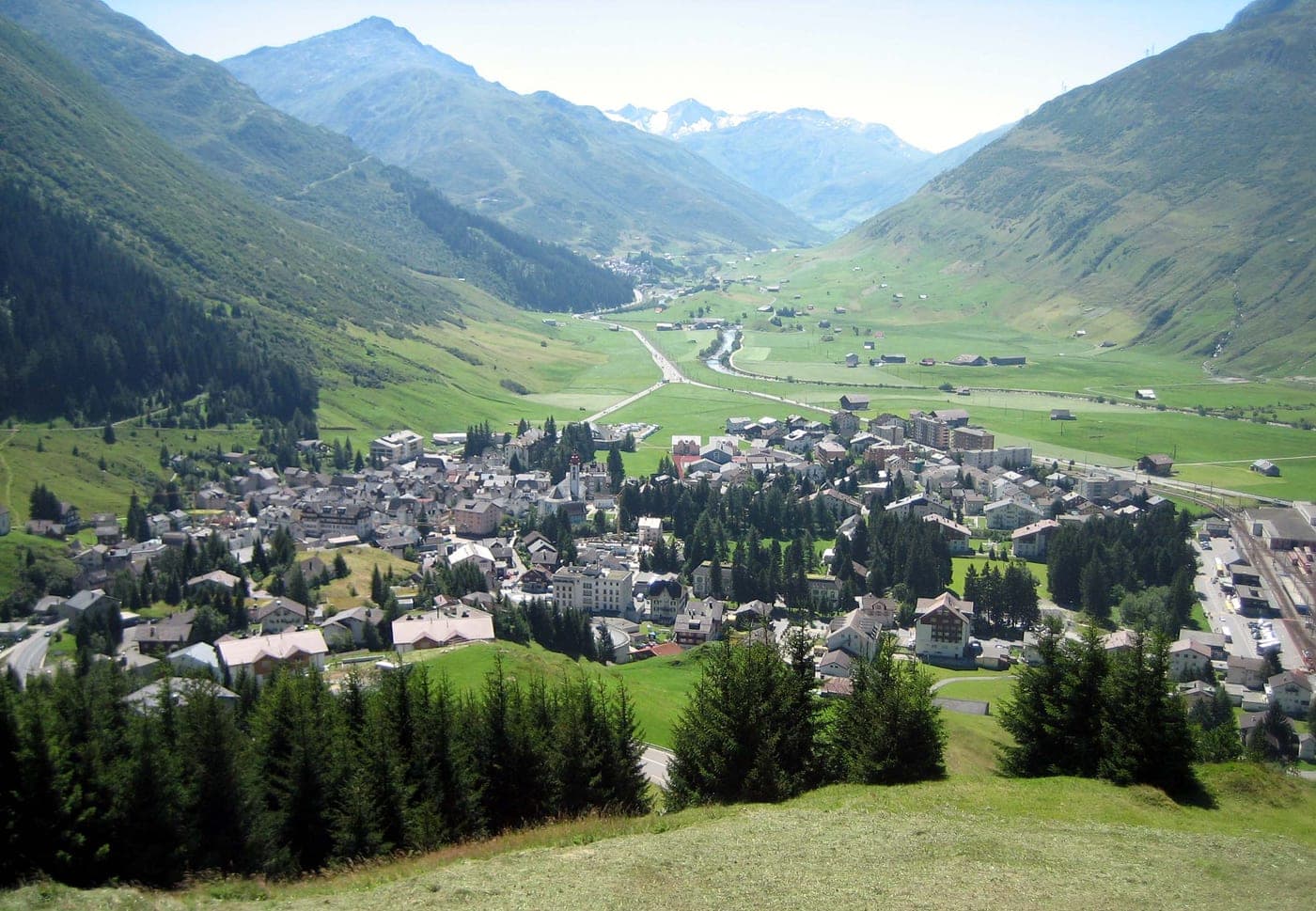
Alpine village at the crossroads of historic mountain passes.
Panoramic TrainsHiking
3 regions
 Boat Rentals2 destinations
Lucerne
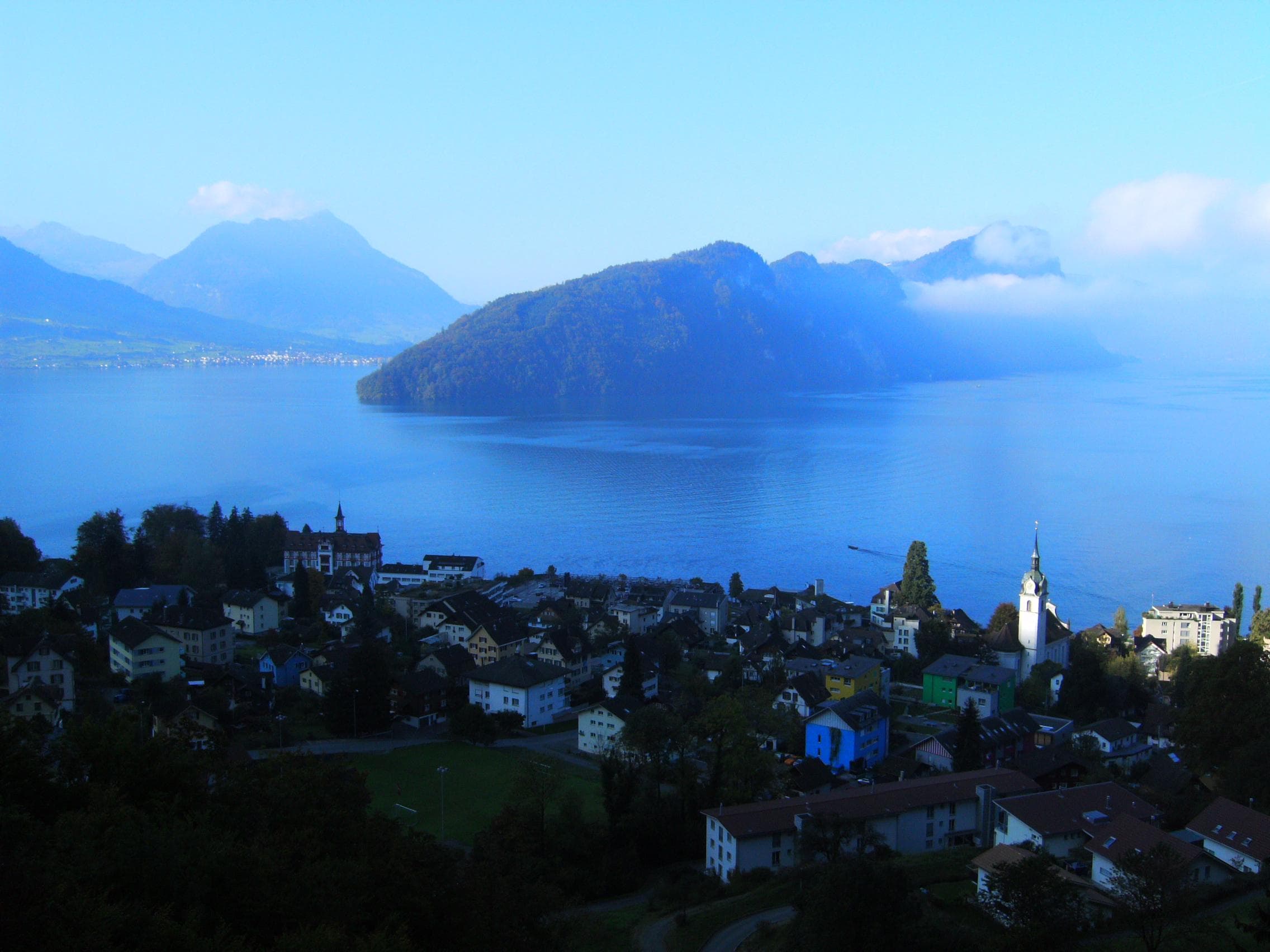
Nestled by Lake Lucerne, this region is surrounded by stunning mountains, including the iconic Pilatus and Rigi. The area is renowned for its rich history, notably the Chapel Bridge, a covered wooden bridge dating back to the 14th century. Lucerne serves as a gateway to nearby villages like Weggis and Vitznau, which offer breathtaking views and hiking trails. The region's culture is reflected in its local festivals, such as Fasnacht, a vibrant carnival celebrated with elaborate masks and costumes. Known for its traditional Swiss cuisine, don't miss the chance to try local specialties like rösti and fondue. Lucerne's blend of natural beauty and cultural heritage makes it a unique destination for exploration.
Boat RentalsHikingLocal Cuisine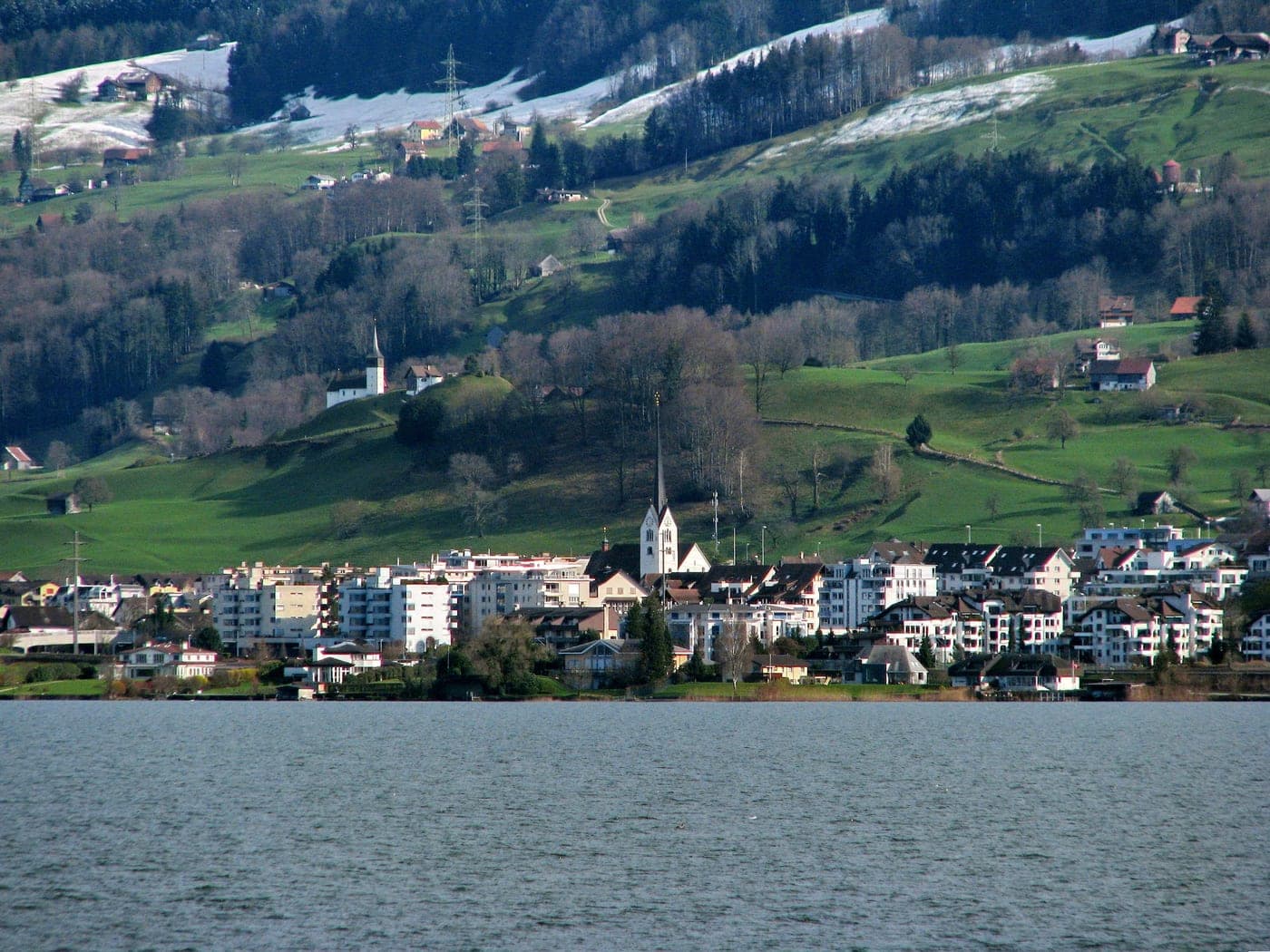 Boat Rentals1 destination
Schwyz
Nestled in the heart of Switzerland, Schwyz is a historical region notable for its role in the founding of the Swiss Confederation. The town of Schwyz, the capital, is home to the National Museum, which showcases local history and culture. This region is characterized by stunning landscapes, including Lake Lauerz and the surrounding mountains, ideal for hiking and exploring nature. Schwyz is also famous for its traditional craftsmanship, particularly in wood and textiles. The nearby village of Muotathal offers deep gorges and unique limestone formations, while the historic site of Rigi, known as the 'Queen of the Mountains,' provides breathtaking views and rich hiking trails.
Boat RentalsHiking- Panoramic Trains1 destination
Uri
Uri sits at the very centre of Switzerland, wrapped around the long southern arm of Lake Lucerne that locals call Lake Uri. Steep forested slopes rise straight from the water here, and behind them the valley narrows and climbs toward the Gotthard massif, one of the great watersheds of the Alps. Uri is one of the original cantons that formed the Swiss Confederation in 1291, and the region still moves at the pace that history left it: small villages in side valleys, cattle grazing on steep meadows, and church bells marking the hours rather than traffic. This is a canton built for slow days rather than long checklists. Altdorf, the cantonal capital, keeps the legend of William Tell alive with a statue in its main square and a small museum on the story, but it is otherwise a quiet market town where the pace suits a morning coffee more than a rushed photo stop. Further down the lake, Flüelen sits right on the water. Bürglen, Tell's supposed birthplace, keeps its own chapel and archive dedicated to him. Higher up the valley, Andermatt has grown from a farming village into a small alpine resort without losing its old stone-house core. Farming still shapes daily life across Uri. Alpine terraces above the villages are used for haymaking in summer, and many families still move their cattle up to high pastures for the warmer months, following a rhythm called Alpaufzug. Small dairies on these alps turn the summer milk into mountain cheese, often sold directly at the farm or at village markets. Local restaurants tend to keep menus short and seasonal, built around this cheese, cured meat, and whatever vegetables the short alpine summer allows. The Gotthard Pass has shaped Uri's history more than almost anything else. For centuries it was the main route linking northern and southern Europe, and the old cobbled road still climbs over the summit past stone bridges and staging posts built for mule trains and early travellers. Away from the pass, Uri's side valleys hold quieter walking country: the Schächental below the Klausen road, the Maderanertal with its glacier views, and countless smaller trails linking one village to the next through larch forest and open alp.
Panoramic TrainsHiking