Get slow travel tips delivered to your inbox
A short message when something worth the trip lands. Reply STOP anytime.
By subscribing, you agree to be contacted via WhatsApp. Privacy policyOccasional letters in your inbox — with recommendations, maps and routes.
By subscribing to newsletter, you agree to our privacy policy.Found in 4 regions

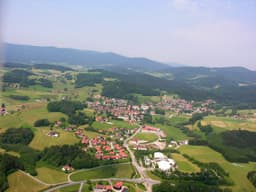
Bavaria is Germany's largest state, and one of its most varied. In the south, the land rises into the Alps, with peaks above Berchtesgaden and Garmisch-Partenkirchen, and lakes such as the Chiemsee and the Königssee nearby. Further north, the hills flatten into the Franconian wine country, where Silvaner and Müller-Thurgau vines cover slopes above the Main river. Between these two landscapes sit market towns, river cities, and castle villages that reward slow attention. Munich, the state capital, has its beer gardens, its baroque churches, and its markets selling Weißwurst in the morning. But much of Bavaria's character lives outside the capital, in places built for a quieter pace. Regensburg, on the Danube, keeps a medieval old town of narrow lanes, stone bridges, and merchant houses that once served river trade. Bamberg spreads across seven hills and several arms of the Regnitz river, and is known for its smoked Rauchbier, brewed in local taverns much as it always has been. Rothenburg ob der Tauber sits inside its own medieval walls, with half-timbered houses and a walkway along the ramparts that circles the whole old town. Franconia, in the north, is Bavaria's wine country. Vineyards climb the terraces above Würzburg and along the Main, and small wine villages sell their own vintages from cellar doors and courtyard taverns. The wine here is usually bottled in the round Bocksbeutel flask, a shape associated with the region. Cycling paths follow the river through the vines, linking one village to the next at an easy, level pace, past chapels, wine presses, and stone crosses set among the rows. In the Allgäu, close to the Austrian border, the town of Füssen sits below the castle hill of Neuschwanstein, built by King Ludwig II in the nineteenth century. The castle draws attention, but the surrounding countryside holds its own appeal: lakes, foothills, and villages where farming and dairy traditions continue much as before. Bavaria's lakes add another layer of slowness. The Chiemsee, the largest, can be crossed by boat to its island monasteries, where former royal buildings and quiet cloisters sit surrounded by water and reed beds. Smaller lakes near the Alpine foothills, such as the Staffelsee and the Ammersee, are ringed by paths used for walking and cycling rather than for speed. Food and drink run through the region's identity. Beer gardens, some centuries old, work on a simple principle: food brought from home, a beer ordered at the counter, a seat under chestnut trees for as long as the weather allows. Franconian taverns serve local wine alongside dishes built around potatoes, dumplings, and river fish. Bakeries sell pretzels still warm from the oven, and markets in towns like Nuremberg keep old traditions of spiced gingerbread and roasted sausages. A morning market in Regensburg, an afternoon among the Franconian vines, an evening in a Bamberg tavern: each has its own pace. Villages across Bavaria keep their own customs — wine festivals in Franconia, woodcarving and dairy traditions in the Alpine foothills. Mountains and vineyards, river cities and castle villages: Bavaria fits them into a single state, each within reach of the next.

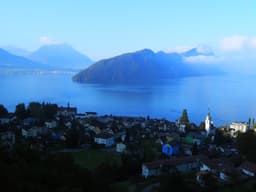
Nestled by Lake Lucerne, this region is surrounded by stunning mountains, including the iconic Pilatus and Rigi. The area is renowned for its rich history, notably the Chapel Bridge, a covered wooden bridge dating back to the 14th century. Lucerne serves as a gateway to nearby villages like Weggis and Vitznau, which offer breathtaking views and hiking trails. The region's culture is reflected in its local festivals, such as Fasnacht, a vibrant carnival celebrated with elaborate masks and costumes. Known for its traditional Swiss cuisine, don't miss the chance to try local specialties like rösti and fondue. Lucerne's blend of natural beauty and cultural heritage makes it a unique destination for exploration.

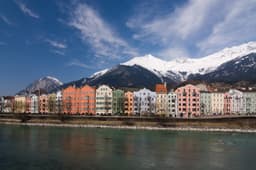
Nestled in the heart of the Alps, this region is renowned for its stunning landscapes and traditional alpine culture. Innsbruck, the capital, is famous for its historic architecture and the iconic Golden Roof. Smaller towns like Hall in Tirol and Rattenberg showcase medieval charm and rich local traditions. The region is known for its outdoor activities, including hiking in summer and skiing in winter, along with unique culinary offerings such as Tyrolean dumplings and apple strudel. Tyrol is also home to numerous historic castles and museums that reflect its rich heritage. Off the beaten path, the Ötztal Valley offers breathtaking trails and authentic mountain huts, ideal for a deeper connection with nature and local life.

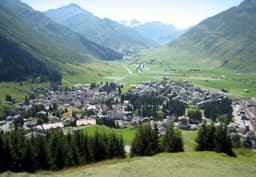
Uri sits at the very centre of Switzerland, wrapped around the long southern arm of Lake Lucerne that locals call Lake Uri. Steep forested slopes rise straight from the water here, and behind them the valley narrows and climbs toward the Gotthard massif, one of the great watersheds of the Alps. Uri is one of the original cantons that formed the Swiss Confederation in 1291, and the region still moves at the pace that history left it: small villages in side valleys, cattle grazing on steep meadows, and church bells marking the hours rather than traffic. This is a canton built for slow days rather than long checklists. Altdorf, the cantonal capital, keeps the legend of William Tell alive with a statue in its main square and a small museum on the story, but it is otherwise a quiet market town where the pace suits a morning coffee more than a rushed photo stop. Further down the lake, Flüelen sits right on the water. Bürglen, Tell's supposed birthplace, keeps its own chapel and archive dedicated to him. Higher up the valley, Andermatt has grown from a farming village into a small alpine resort without losing its old stone-house core. Farming still shapes daily life across Uri. Alpine terraces above the villages are used for haymaking in summer, and many families still move their cattle up to high pastures for the warmer months, following a rhythm called Alpaufzug. Small dairies on these alps turn the summer milk into mountain cheese, often sold directly at the farm or at village markets. Local restaurants tend to keep menus short and seasonal, built around this cheese, cured meat, and whatever vegetables the short alpine summer allows. The Gotthard Pass has shaped Uri's history more than almost anything else. For centuries it was the main route linking northern and southern Europe, and the old cobbled road still climbs over the summit past stone bridges and staging posts built for mule trains and early travellers. Away from the pass, Uri's side valleys hold quieter walking country: the Schächental below the Klausen road, the Maderanertal with its glacier views, and countless smaller trails linking one village to the next through larch forest and open alp.