Saucisson vaudois IGP
A smoked pork sausage from Vaud, poached with leeks
- Local name
- Saucisson vaudois
- Served with
- Papet vaudois (leeks, potatoes)
- Best eaten at
- A Vaud bistro
- Pairs with
- Chasselas
What it is
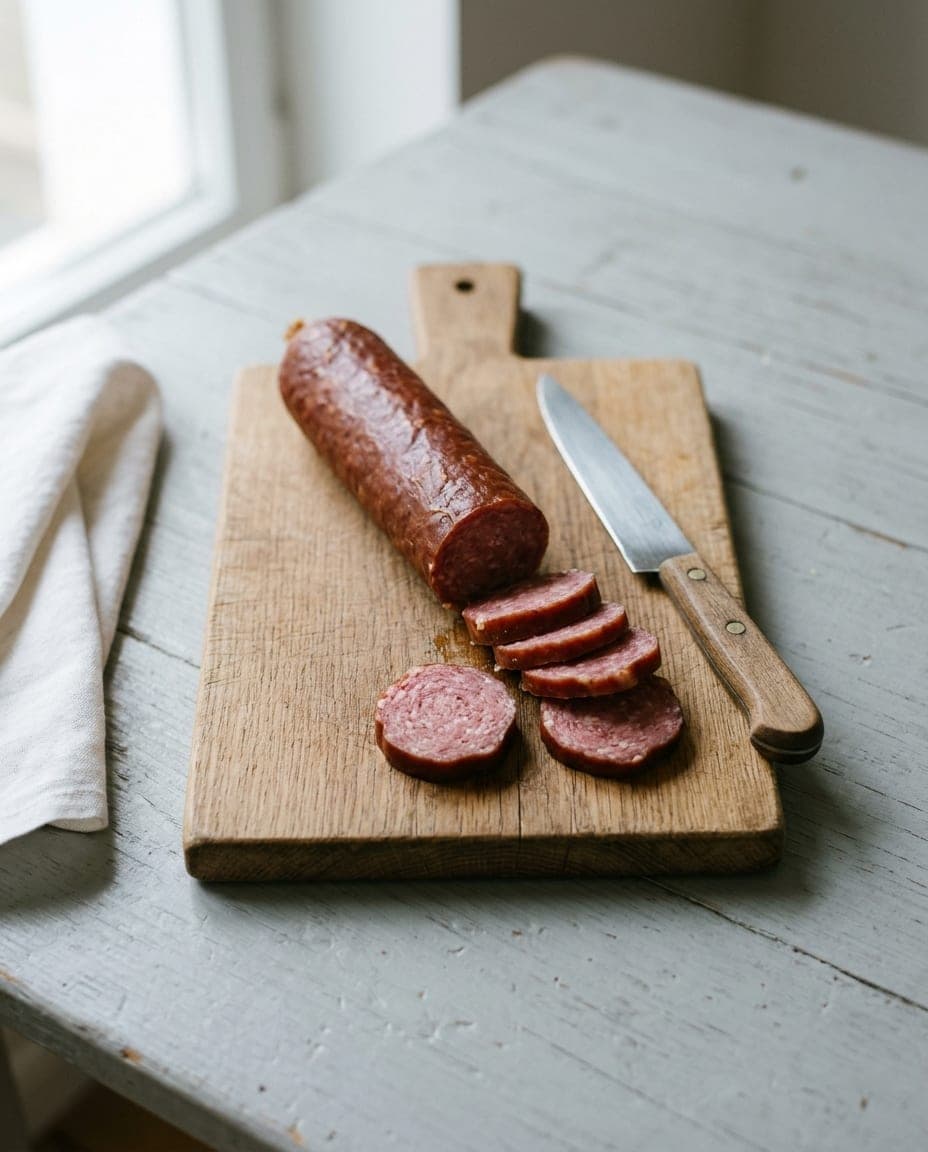
The saucisson vaudois IGP is a smoked pork sausage originating from the canton of Vaud in western Switzerland. Unlike many cured meats that are eaten raw or thinly sliced as a cold appetiser, this sausage is mostly cooked whole (a longer-dried version is also sliced and eaten raw). It features a coarse texture of pork and fat, encased in a natural pork casing, and carries Swiss IGP (protected geographical indication) status.
The dish arrives at the table hot and steaming. The cooking method is specific: the sausage is simmered gently in water or broth until it reaches the desired temperature. Boiling it vigorously is avoided, as the heat can cause the casing to split and the filling to dry out. Once cooked, the skin is often removed before slicing, revealing a dense, moist interior that retains its smoky aroma. It is a substantial item, typically served as a main component of a meal rather than a light snack.
The context of Vaud
This sausage is a regional speciality, bound up with the agricultural traditions of the canton of Vaud. It is not a product found on menus throughout all of Switzerland, but rather a local staple that defines the culinary identity of the region around Lake Geneva and its hinterlands. Its origins are traced to the Middle Ages, when smoking and cooking sausages became a way to preserve pork in Vaud, and production was long tied to the autumn slaughtering season, when households preserved meat for the winter months.
The IGP label ensures that the meat comes from pigs raised in Switzerland and is processed within the canton of Vaud. This geographical link protects the traditional methods used in the region, preventing mass-produced imitations from diluting the character of the local product. While industrial producers exist, the most respected versions remain those made by small-scale butchers who adhere to the traditional recipe.
The sausage fits naturally into the landscape of Vaud, where farming has long relied on a mix of livestock and arable crops. The region is known for its vineyards along the lake, and some butchers season the sausage with white wine or wine lees. Its character comes less from where the pigs are raised than from the recipe and smoking techniques used in the canton.
How it is eaten
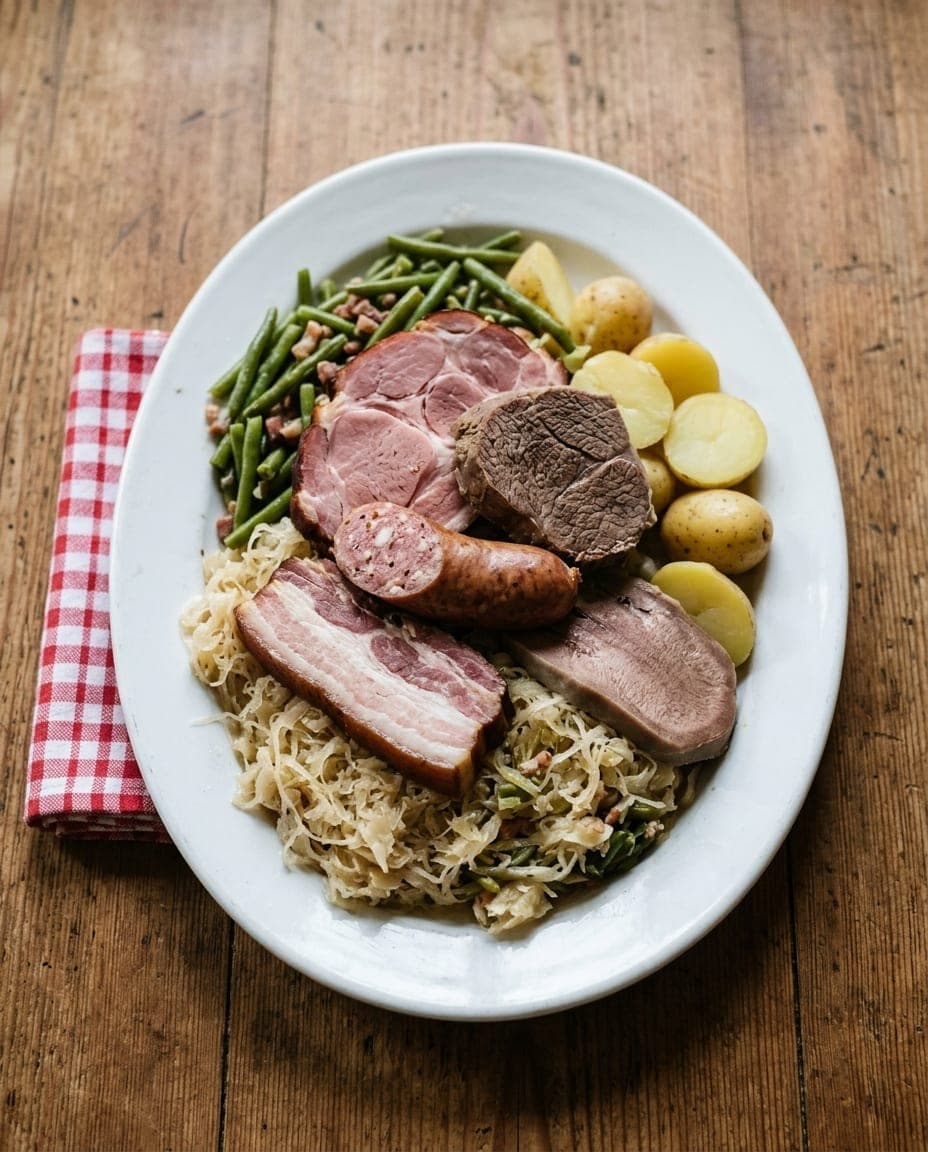
The saucisson vaudois is rarely served on its own. Its true purpose is to be paired with simple, hearty sides that complement its richness. The most traditional accompaniment is papet vaudois, a dish of leeks and potatoes cooked together until tender. It is also served with lentils or simple boiled potatoes, with the sausage as the central protein.
In a Vaud bistro it comes sliced into thick rounds on top of the leeks and potatoes. The meat is often served with its own cooking juices or a light gravy made from the broth it was simmered in. A glass of Chasselas, the dry white wine that dominates the local vineyards, is the standard beverage pairing. The crisp acidity of the wine cuts through the fat of the sausage and balances the earthy sweetness of the leeks.
It is lunch food more than dinner food, and the portions assume a working appetite.
What goes into it
The composition of the sausage is straightforward, relying on high-quality ingredients without complex additives:
- Pork, coarsely chopped to create a textured filling rather than a smooth paste.
- Pork fat, roughly two parts fat to three parts lean, added to ensure moisture and richness during cooking.
- Salt and pepper, sometimes with garlic, coriander, white wine or wine lees, though the seasoning remains subtle.
- Natural pork casings, closed with string at both ends, which hold the meat together and firm up when smoked and poached.
The sausages are cold-smoked for at least a day over sawdust or wood, imparting a distinct aroma that varies slightly depending on the butcher's wood and technique. The final product is firm yet tender, with a golden-brown colour from the smoke before it is even cooked.
Curious facts
- A protected name. The IGP status guarantees Swiss pork and manufacture in Vaud; the canton's butchers had already won protection for the name in a Geneva court case in 1983.
- Not boiled hard. Traditional cooks insist on simmering the sausage gently to prevent the casing from bursting and losing its juices.
- The leek connection. While cabbage appears in some Swiss sausages, the Vaud version is most famously linked to leeks in the papet dish.
- A local staple. Unlike festival foods that appear only once a year, this sausage is available year-round in shops and restaurants across the canton.
- Simple pairings. The taste relies on the contrast between the smoky meat and the mild sweetness of leeks or potatoes.
Where to try it
A bistro in Vaud cooking regional food — Lausanne has several, and the village pintes through the Lavaux and the Gros-de-Vaud have it as standard from autumn onwards.
Butchers across the canton sell it raw to poach at home, and the markets in Lausanne, Vevey and Yverdon all have stalls carrying it. The IGP on the label is the mark that the pig was Swiss and the sausage was made in the canton.
Where to try it
1 destination
 Boat Rentals
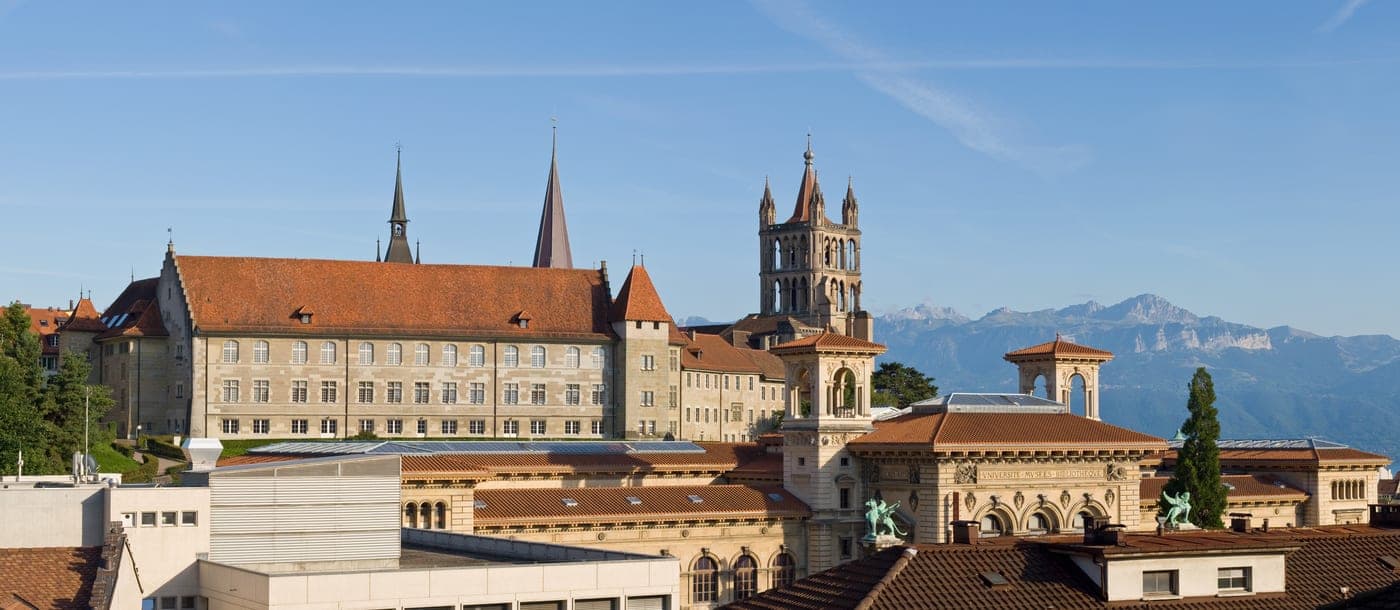
Lausanne
Lakeside city known for its Olympic Museum and vibrant cultural scene.
Boat RentalsHikingLocal Cuisine
1 region
 Boat Rentals10 destinations
Vaud
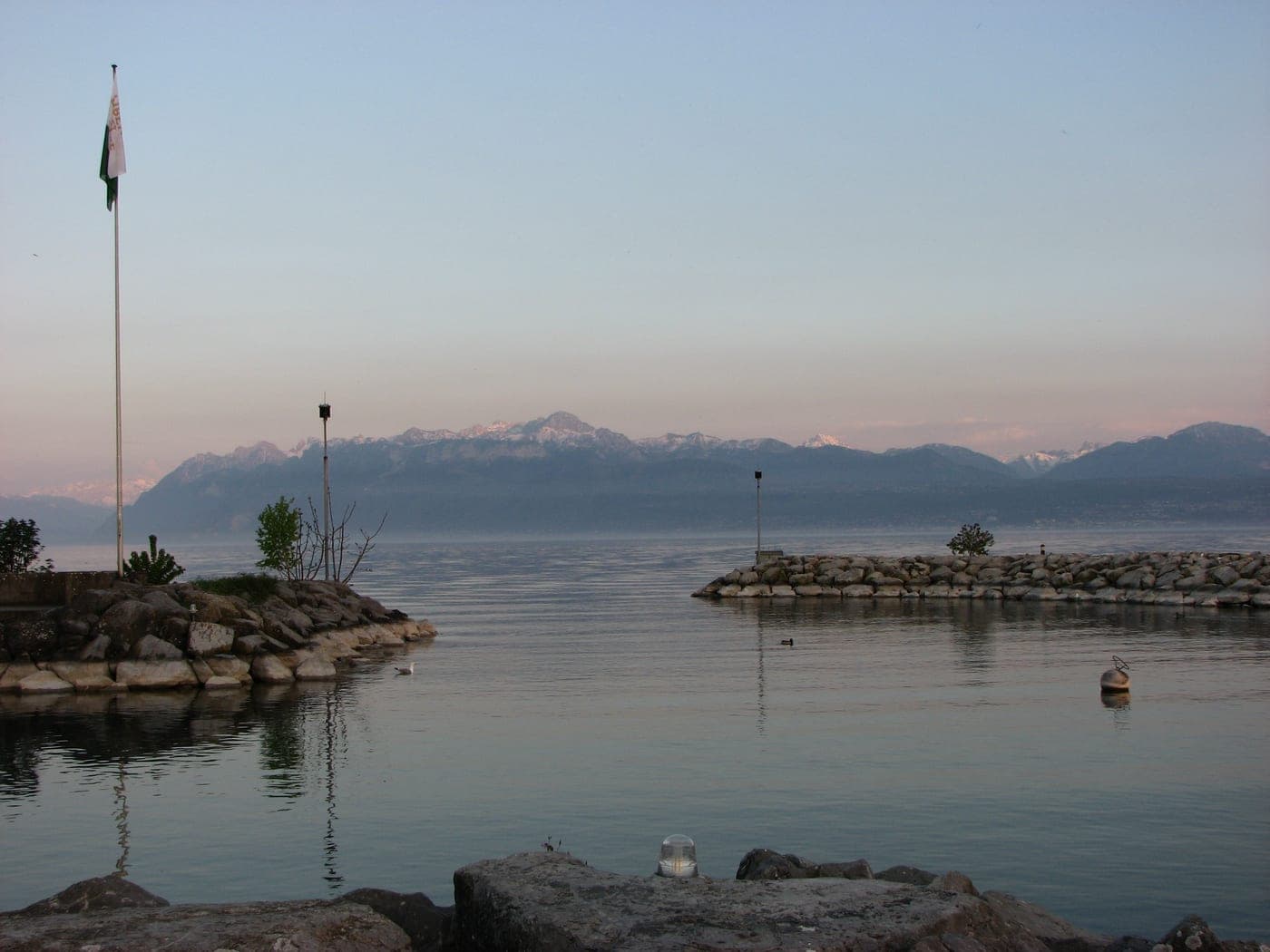
Vaud is a diverse region known for its stunning landscapes and rich cultural heritage. Nestled along the shores of Lake Geneva, it features the city of Lausanne, home to the Olympic Museum and a vibrant cultural scene. The region is famous for its vineyards, particularly the Lavaux vineyards, a UNESCO World Heritage site, offering breathtaking views and local wine tastings. Montreux, known for its jazz festival, sits nearby, while the medieval town of Yverdon-les-Bains boasts historical thermal baths. Vaud also offers numerous hiking trails in the Jura mountains, providing a glimpse into Swiss natural beauty. With a blend of urban and rural experiences, Vaud is ideal for those seeking to explore Switzerland's lesser-known gems.
Boat RentalsHikingLocal CuisineWine Tasting