Meringues
Crisp meringues claimed by Meiringen, served with double cream
- Vegetarian
- Local name
- Meringues
- Served with
- Gruyère double cream, berries
- Best eaten at
- A Gruyères village restaurant
- Pairs with
- Coffee
What it is
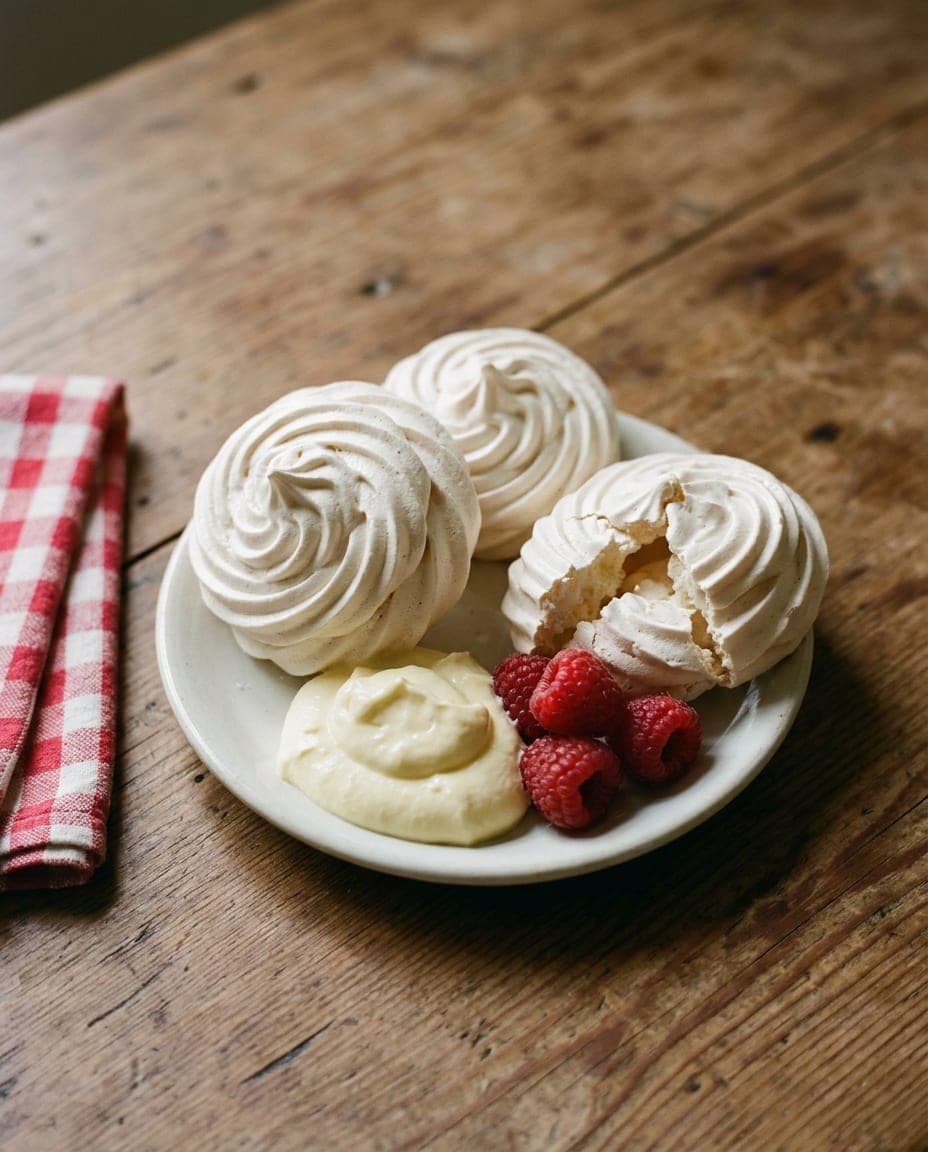
Meringues are the crisp, pale sweets of Switzerland's Bernese Oberland, most closely associated with the small town of Meiringen. They are not merely a light confection but substantial, dry discs that require patience to make and a steady hand to break. Unlike the soft mounds found in many countries, Swiss meringues are large, hard throughout and intensely sweet, shattering into crumbs at the first bite.
The defining feature of these pastries is their texture. A proper Swiss meringue must be dry from the centre to the edge, offering a sharp crackle that gives way to a fine, sandy powder. This specific quality distinguishes them from softer varieties that might melt in the mouth. They are a regional speciality of the Bernese Oberland, with strong traditions also in the neighbouring cantons of Fribourg and Vaud.
In the Gruyère district of Fribourg, the sweetness of the meringue is balanced by a single, traditional accompaniment: crème double de la Gruyère. This thick, rich local cream is spooned generously over the hard white shells, softening their surface just enough to make them edible while retaining their structural integrity. In summer, fresh local berries are often added to the plate, a tart contrast to the sugar and the cream.
The Meiringen claim
The village of Meiringen in the Bernese Oberland has long claimed that it is the birthplace of this specific style of meringue. Local tradition holds that the recipe was developed there around 1720 by an Italian-born confectioner named Gasparini, who named it after the village. The town's identity is tied to the sweet, with the name Meiringen often appearing on menus alongside the word Meringues.
However, the origin story remains disputed. There is no surviving documentation that confirms the inventor, the date, or a single bakery as the source, and recipes for whipped and dried egg white and sugar already appear in English manuscripts of the early 1600s, a century before the Meiringen date. Because the historical record does not support it, the claim made by Meiringen remains a local assertion rather than a verified fact.
What is not in doubt is that the Bernese Oberland and the dairy country west of it eat a great many of them, and that the hard, dry version is the local standard.
The making of the sweet
Swiss meringues are defined by their ratio of ingredients rather than complex techniques. The standard composition is roughly two parts sugar to one part egg white by weight. This high proportion of sugar is what gives the pastry its characteristic hardness and intense sweetness. The mixture is whipped until it reaches a stiff consistency, then slowly dried in an oven at a low temperature for several hours.
The slow drying process is critical. If the heat is too high or the time too short, the centre may remain soft or sticky, which is considered a failure. The goal is a uniform dryness that allows the meringue to be broken cleanly and stored without becoming soggy. Once dried, the result is a large, firm shell that can be quite heavy for its size.
No flour, no butter, no flavouring: egg white, sugar, and hours of low heat.
How it is eaten
The standard way to enjoy meringues in Switzerland is as a dessert served at the end of a meal or as a sweet treat during an afternoon break. They are rarely eaten plain. The Gruyère custom is to spoon crème double de la Gruyère over the top, allowing the thick cream to seep into the cracks and soften the surface slightly. This creates a contrast between the hard, sugary shell and the smooth, fatty cream.
In summer, fresh berries such as strawberries, raspberries, or blackcurrants are often added to the plate. The tartness of the fruit cuts through the sweetness of the meringue and the fat of the cream, creating a balanced bite. The combination is a staple in the Fribourg and Vaud countryside, where it is considered a classic way to finish a lunch or a tea break.
The texture requires a specific approach. One does not simply bite into a dry meringue; instead, one allows the cream to work on the surface before taking a bite. The result is crumbling sugar held in cream. It is often accompanied by a cup of black coffee, which helps to cleanse the palate between bites.
Curious facts
- A hard texture. Unlike soft meringues found elsewhere, Swiss meringues are dry throughout, requiring a slow drying process to achieve the correct consistency.
- The cream is essential. In Gruyère, crème double is not an optional topping but the component that transforms the pastry from a brittle sweet into a balanced dessert.
- Summer berries. Fresh local berries are added in summer to provide tartness, creating a seasonal variation on the standard cream-and-sugar combination.
- Meiringen's claim. The village of Meiringen asserts that a confectioner called Gasparini invented the sweet there, though no historical records confirm the story.
- Coffee companion. Black coffee is a common drink alongside meringues, helping to balance the intense sweetness of the sugar and cream.
Where to try it
A tea room in Meiringen offers the best chance to taste the local version, where the meringues usually come with whipped cream, fruit or ice cream. For the crème double version, go west to the Gruyère district of Fribourg, where it is made.
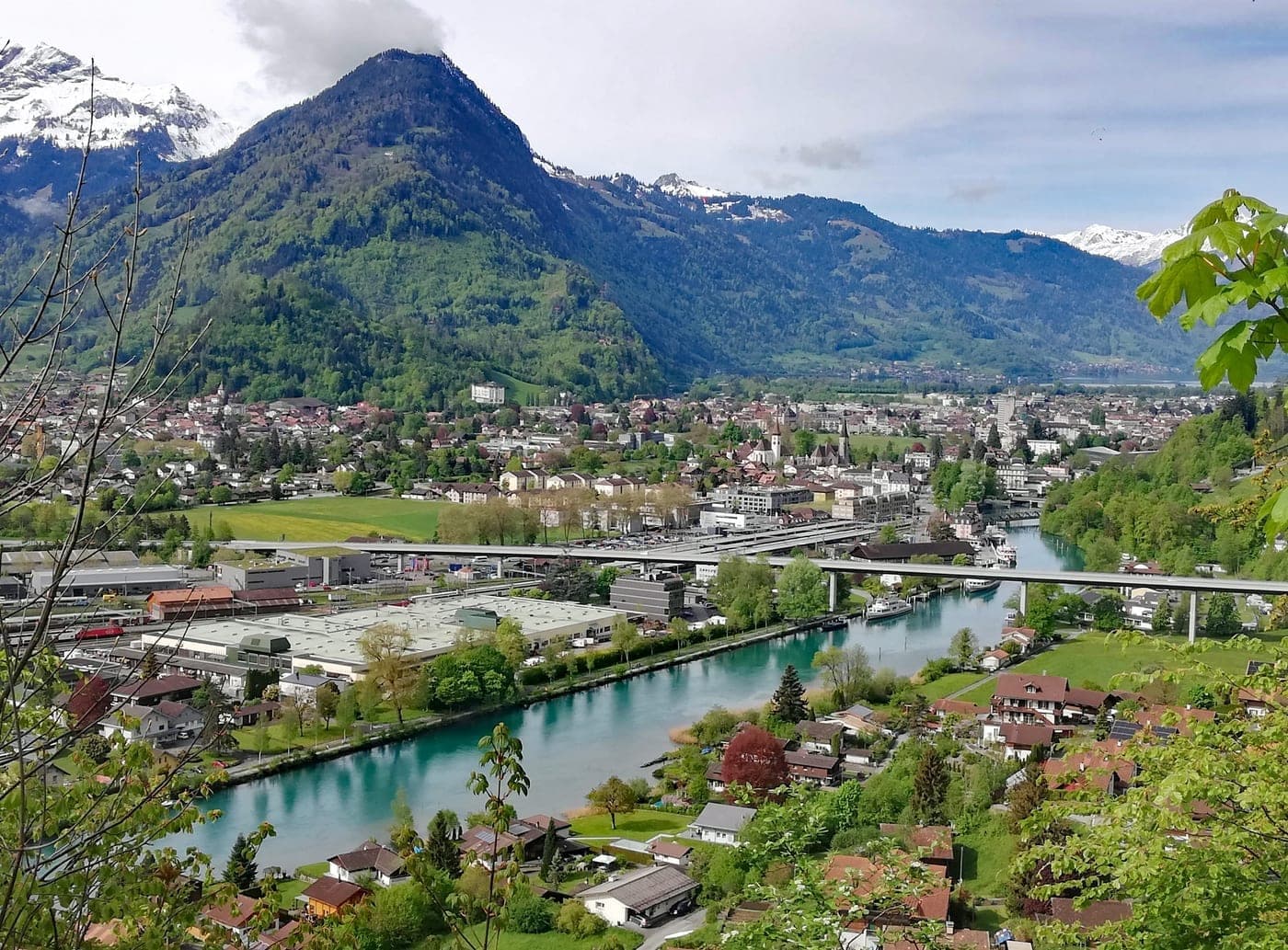
Other towns in the area also serve excellent versions. Château-d'Oex, a village known for its cheese and dairy traditions, is a popular stop for those seeking this sweet. Interlaken, situated at the foot of the Bernese Alps, offers meringues in many local cafés, often with a view of the surrounding mountains. Montbovon, a small village in the Gruyère district, also has a tradition of serving these pastries alongside their local cheeses.
They are also sold by the bag in bakeries across the Bernese Oberland and Fribourg, to be taken home and eaten with cream bought from the same counter.
In Gruyère the meringues are served with double crème de la Gruyère, the region's thick, high-fat cream.
Where to try it
3 destinations
 Panoramic Trains
Interlaken
Alpine resort town between two lakes with access to the Jungfrau region.
Panoramic TrainsBoat RentalsHiking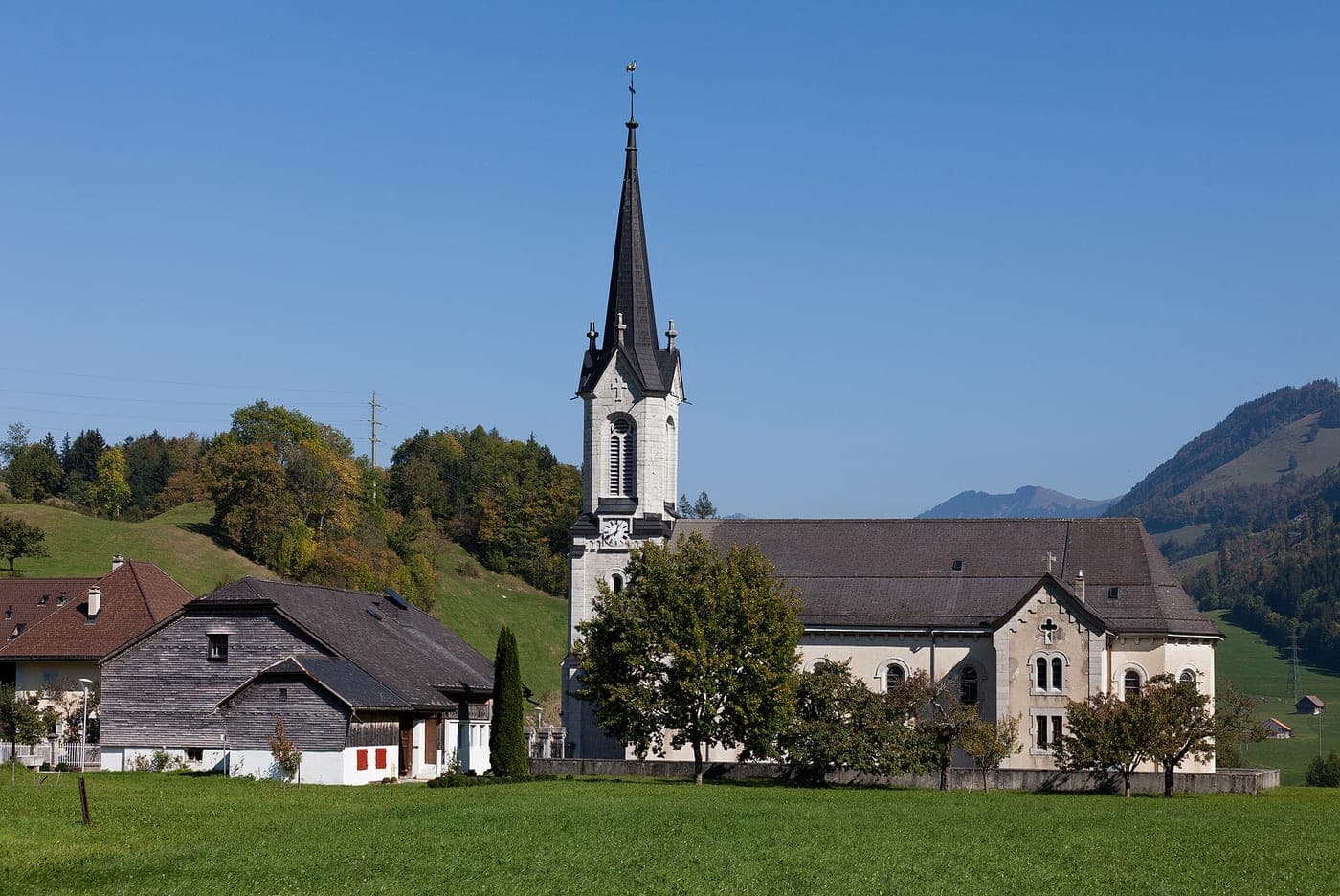 Panoramic Trains
Montbovon
Mountain village where the Golden Pass and Chocolate Train routes meet.
Panoramic TrainsHiking Panoramic Trains
Château-d'Oex
Picturesque alpine village known for its annual hot air balloon festival.
Panoramic Trains
2 regions
 Camper Van Rentals13 destinations
Bern
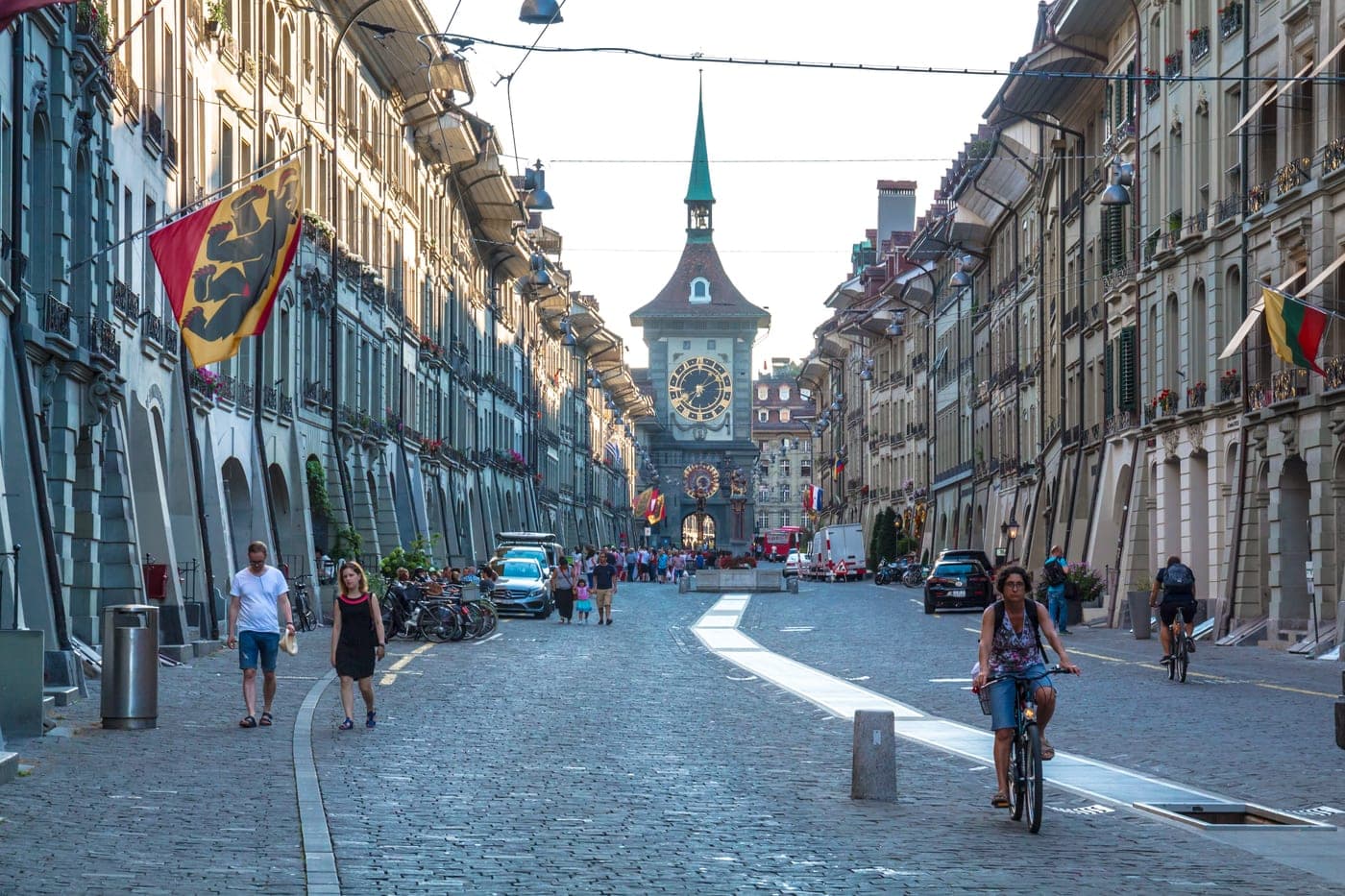
Bern is the capital of Switzerland, known for its well-preserved medieval architecture and unique UNESCO World Heritage site status. The old town features the iconic Zytglogge clock tower and the Federal Palace, showcasing the city’s political significance. Beyond Bern, the Emmental region is famous for its rolling hills and the production of Emmental cheese, with local farms offering tasting experiences. The Aare River provides opportunities for nature walks and swimming in summer. Nearby, the picturesque town of Thun offers stunning views of Lake Thun and the Alps. The region is less frequented by tourists, allowing for a deeper connection with Swiss culture and traditions.
Camper Van RentalsHikingPanoramic TrainsBoat Rentals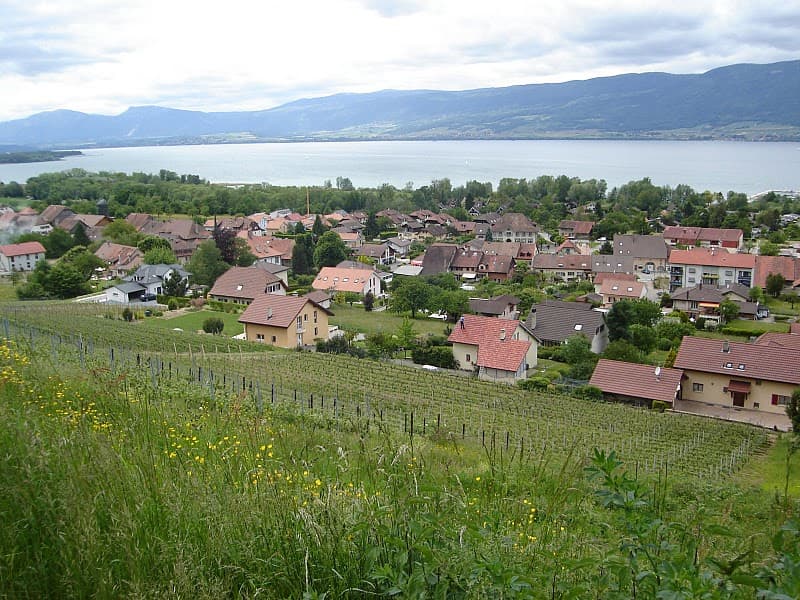 Boat Rentals3 destinations
Fribourg
Fribourg is a Swiss region built for a slower pace. It sits between the French- and German-speaking parts of the country, and that mix still shapes daily life here — road signs change language partway through the canton, and the same cheese is sold under two names at the same market stall. The regional capital, also named Fribourg, sits on a sandstone hill above a bend in the Sarine river. Its old town is one of the larger medieval centres in Switzerland, with covered wooden bridges, a Gothic cathedral, and streets so steep that some are built as steps rather than roads. From the ramparts, the river loops below and the rest of the canton spreads out towards the hills. South of the city, the land softens into rolling dairy country. This is Gruyère territory, named after both the cheese and the small walled town of Gruyères that still gives it its name. Around Gruyères and the nearby town of Bulle, farms and mountain huts still make cheese by hand through the summer months, when herds move up to the high pastures. Several dairies open their doors to visitors watching a wheel of Gruyère being pressed and salted, a process that has changed very little over generations. The landscape rises further south into pre-alpine terrain: green terraces, scattered timber barns, and villages built from wood that has weathered dark over centuries. Walking paths here follow old cattle tracks between pasture and forest, gentle enough for an unhurried afternoon rather than a full day's climb. In autumn, cattle are led back down from the alpine pastures in a tradition still marked with flowers, bells, and a village gathering — one of the few moments when the summer's quiet farm work becomes a public event. To the north and west, the canton reaches Lake Neuchâtel and Lake Murten. Murten itself is a walled medieval town on the water, small enough to circle on foot within the hour, with a lakeside promenade that fills with café tables in summer. In warmer months, passenger boats cross the lake to nearby towns, a pleasant way to spend an afternoon without hurrying. One of the quieter pleasures of the region is its local railway, which climbs from the lowland towns into the hills in short, unhurried stages, following the river through farmland before a hilltop town's towers come into view above the tracks. These are working regional trains rather than tourist rides, and that is much of their charm — riders share the carriage with people going to market or coming home from the fields. Food shapes much of what there is to do here. Beyond cheese, the region is known for its double cream, for meringues eaten with that cream, and for a dried, air-cured meat found across French-speaking Switzerland. Village markets, especially in Bulle and Fribourg itself, are where these products change hands directly between maker and buyer, often with a taste offered first. A comfortable way to see Fribourg is over three to five days: a day or two in the old town and along the Sarine, a day around Gruyères and its cheese dairies, and a day or two further into the hills or out to Murten and the lake. Trying to fit it into a single day usually means choosing between the city and the countryside, and both reward more time than that. What makes the region worth this pace is less any single sight than how its parts connect — a cathedral town, a cheese-making valley, alpine pastures, and a lakeside village, all within a canton small enough to move between slowly and still see plenty. Fribourg does not have the scale of the Bernese Oberland or the fame of Lake Geneva, but it holds a quieter version of the same Swiss countryside, with fewer crowds and more time to notice the details: the smell of a cheese cellar, a wooden bridge underfoot, the particular green of a pasture after rain.
Boat RentalsHikingPanoramic Trains