Malakoff
Deep-fried cheese fritters from the La Côte villages of Vaud
- Vegetarian
- Local name
- Malakoff
- Served with
- Gherkins, pickled onions
- Best eaten at
- A La Côte village auberge
- Pairs with
- La Côte Chasselas
What it is
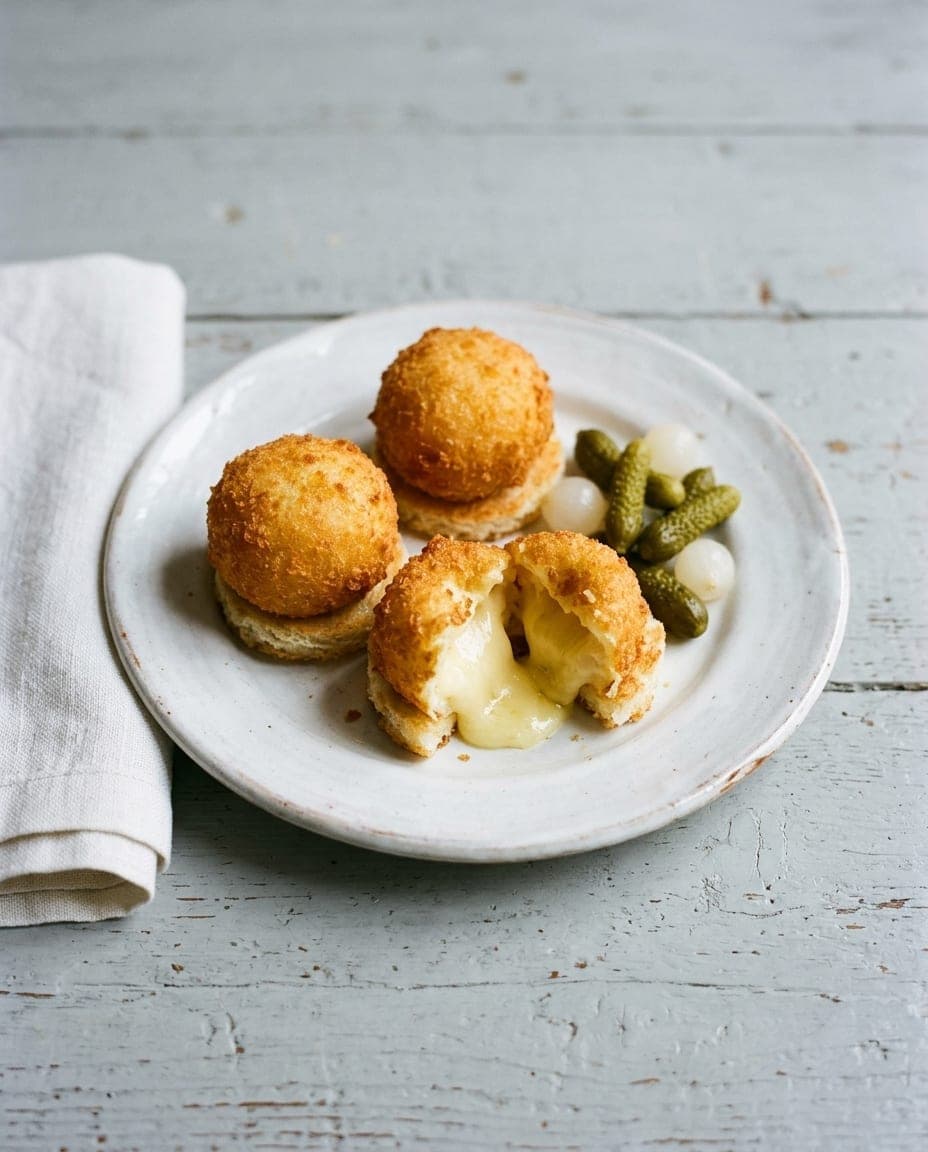
Malakoff are deep-fried cheese fritters that belong to a small cluster of villages along the northern shore of Lake Geneva in the canton of Vaud. Known locally as malakoffs or sometimes as beignets de Vinzel, these golden domes are a regional speciality rather than a dish found across Switzerland. What arrives is a fried golden crust around cheese that has gone completely liquid, sitting on a round of bread that has taken up the fat.
At its core, the dish is simple: grated Gruyère cheese mixed with egg, a little flour, garlic and a splash of white wine and kirsch. This mixture is piled into a dome on a round slice of bread and deep-fried until the cheese inside becomes liquid and the exterior turns a deep golden brown. The heat causes the bread to soften while the cheese expands, creating a texture that is both substantial and airy.
The story behind the name
The origin of the name Malakoff is tied to a specific historical event, though the exact path from battlefield to kitchen remains part of local tradition rather than documented history. The term refers to the Malakoff redoubt, a fortified position near Sevastopol in Crimea that was stormed by French troops in September 1855, sealing the fall of Sevastopol in the Crimean War.
Swiss mercenaries from the La Côte area are said to have served with the French army in this conflict. According to the most common account, these soldiers fried cheese in their camps and, back home, named the dish after the famous redoubt where they had fought. Another version credits the cooks of Prince Napoléon's villa at Prangins, who later opened a restaurant in Eysins. While the story is widely repeated in the region, there is no surviving written record confirming the exact date or the specific individual who introduced the dish to the villages of La Côte. It remains a traditional narrative that connects the local cuisine to a moment in European military history.
Where it comes from
The dish is strictly associated with the La Côte region, a narrow strip of land between Lake Geneva and the Jura foothills. Specific villages such as Vinzel, Luins, Bursins and Eysins are known for their long-standing tradition of serving the dish. In these places, the preparation has been passed down through generations, often within family-run establishments or village auberges.
The local geography influences the ingredients. The area is famous for its vineyards, particularly those producing Chasselas, a dry white wine that pairs naturally with the fat of the fried cheese. The Gruyère itself comes from the dairy country further inland. Neighbouring villages have their own variations (some fry sticks of cheese in batter rather than domes on bread), but the version served in the La Côte villages maintains a consistent character.
What goes into it
The components are few, yet each plays a vital role in the final flavour:
- Gruyère cheese, grated finely to ensure it melts evenly without separating.
- Egg and a little flour, used to bind the cheese into a firm paste.
- White wine and kirsch, added in small quantities with garlic and a pinch of nutmeg or cayenne to enhance the aroma.
- Bread slices, cut into rounds, which serve as the base for the cheese mound.
The dish is not served plain. It arrives on a plate accompanied by sharp pickles to cut the fat. Gherkins and pickled onions are standard, often served with a dollop of mustard. These acidic elements balance the heavy, savoury notes of the fried cheese.
How to eat it
Malakoff is traditionally eaten as a main course or a substantial snack at lunch or early dinner. The setting is a village pinte or auberge on the La Côte, and it arrives straight from the fryer.
It is cut with a knife and fork and the cheese runs out immediately; left standing, it sets again and the moment has gone. The accompanying pickles are eaten alongside or on top to provide a necessary contrast in texture and taste. A glass of La Côte Chasselas is the customary pairing; the crisp acidity of the wine complements the deep-fried cheese without overpowering it.
Curious facts
- A military connection. The name links the dish to the Crimean War, specifically the French capture of the Malakoff redoubt in 1855, where local tradition places Vaudois mercenaries.
- A handful of villages, not a canton. The dish belongs to a short run of villages on the La Côte and is seldom cooked outside the region.
- The cheese runs hot. Because the Gruyère melts completely during frying, the interior can be extremely hot, requiring care when cutting into the fritter.
- A specific pairing. The dish is usually served with pickled gherkins, small onions, mustard or a green salad, which balance the richness.
- Village pride. Specific auberges in villages like Vinzel and Luins have served the dish for generations, becoming known primarily for this single item on their menu.
Where to try it
The La Côte villages between Nyon and Rolle — Vinzel, Luins, Bursins, Eysins — where several pintes have served the dish for generations.
It is ordered by the piece and two is a meal. The wine is the village's own Chasselas, grown on the slope outside, and the pickles come without being asked for.
Where to try it
2 destinations
 Boat Rentals
Founex
Charming lakeside village known for beautiful vineyards and historic architecture.
Boat Rentals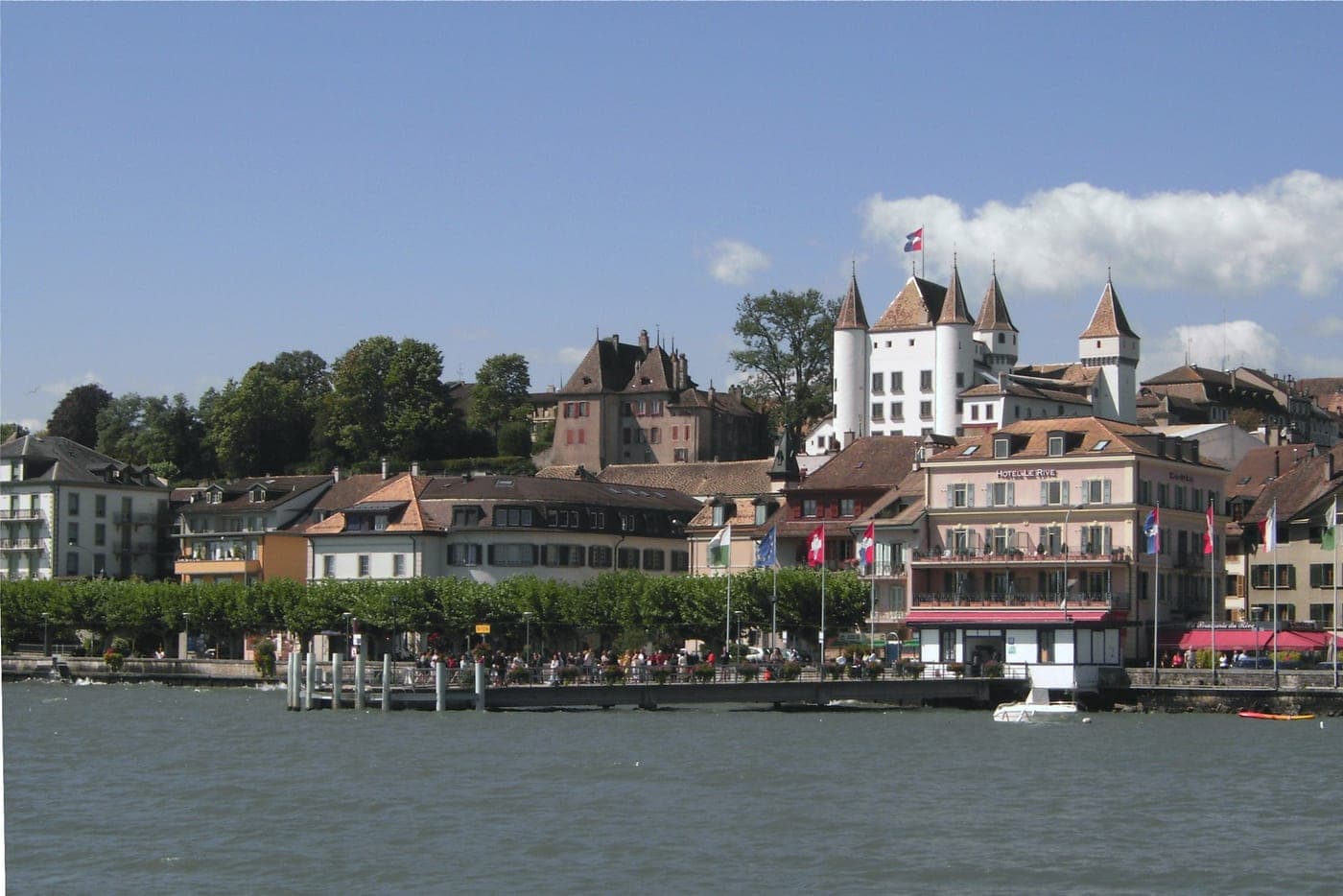
1 region
 Boat Rentals10 destinations
Vaud
Vaud is a diverse region known for its stunning landscapes and rich cultural heritage. Nestled along the shores of Lake Geneva, it features the city of Lausanne, home to the Olympic Museum and a vibrant cultural scene. The region is famous for its vineyards, particularly the Lavaux vineyards, a UNESCO World Heritage site, offering breathtaking views and local wine tastings. Montreux, known for its jazz festival, sits nearby, while the medieval town of Yverdon-les-Bains boasts historical thermal baths. Vaud also offers numerous hiking trails in the Jura mountains, providing a glimpse into Swiss natural beauty. With a blend of urban and rural experiences, Vaud is ideal for those seeking to explore Switzerland's lesser-known gems.
Boat RentalsHikingLocal CuisineWine Tasting