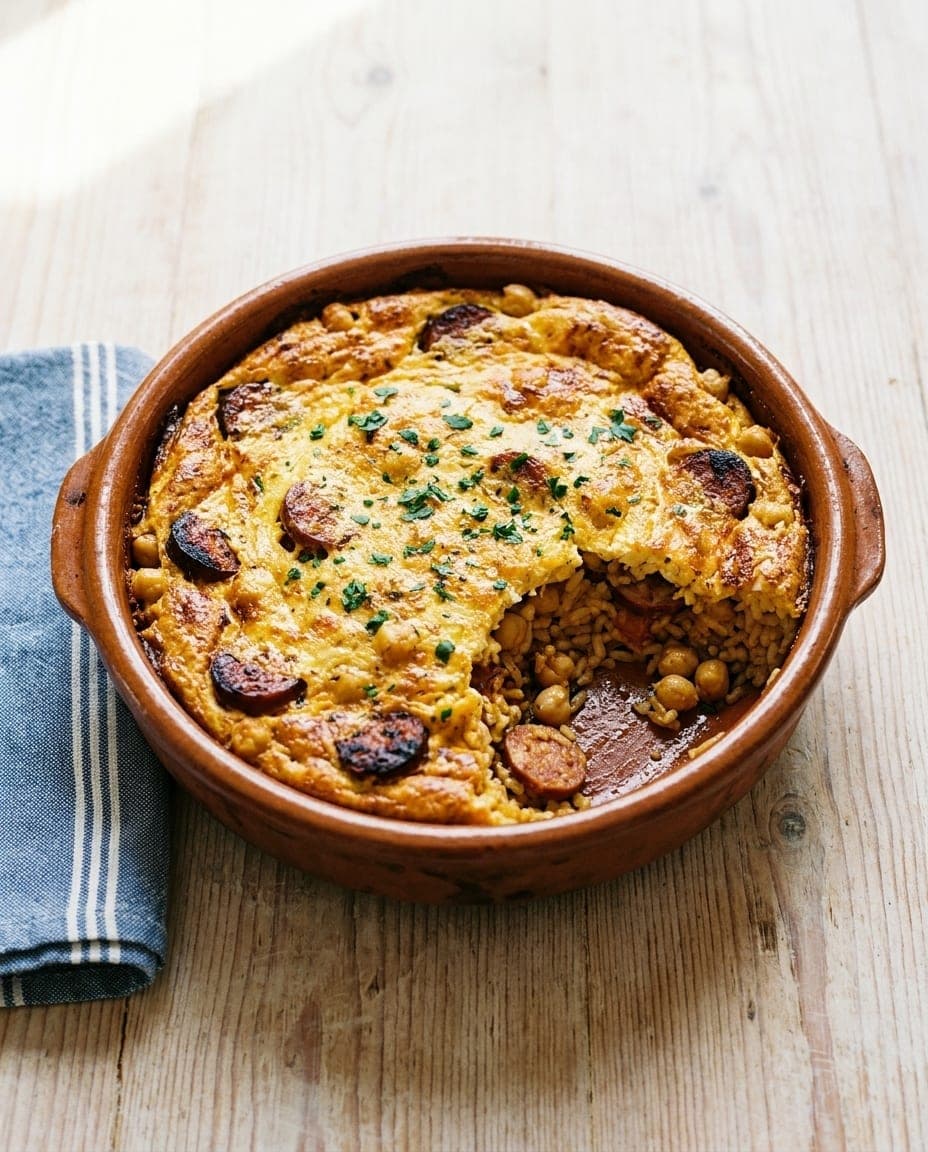
Llonganissa de Vic
PGI dry-cured pork sausage from Catalonia's Vic plain, sliced thin with tomato bread
- Local name
- Llonganissa de Vic
- Served with
- Pa amb tomàquet
- Best eaten at
- A Vic market or bar
- Pairs with
- Catalan red or cava
What it is
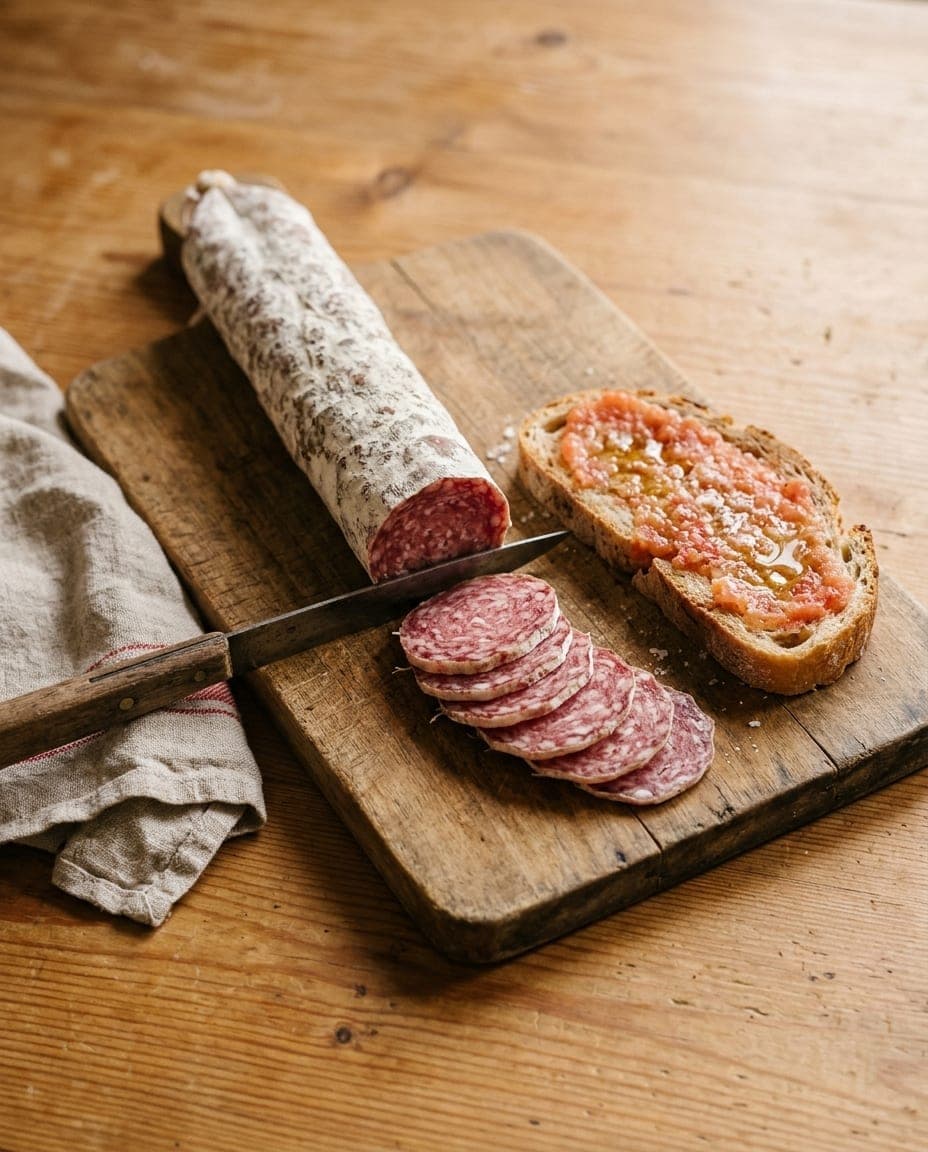
Llonganissa de Vic is a dry-cured pork sausage from the town of Vic in the province of Barcelona. It holds Protected Geographical Indication (PGI) status, registered as Salchichón de Vic / Llonganissa de Vic, meaning the name can only be used for sausages made in the defined area following the traditional method. The sausage is long and fairly slender, with a deep red interior flecked with small white pieces of fat when sliced, and an outer casing dusted with a whitish bloom.
Unlike many other Spanish sausages, llonganissa de Vic has a minimalist profile. It contains no paprika, which distinguishes it clearly from chorizo, and it is not smoked. The flavour comes from the lean pork, the fat, salt and black pepper. The result is a firm, dry product that requires no cooking before eating.
Where the curing happens
The history of this sausage is tied to the geography of the Vic plain, known as the Plana de Vic, in the comarca of Osona. This basin lies between the Montseny, the Guilleries and the Collsacabra in central Catalonia. For centuries, local producers have relied on its climate to dry the meat naturally. The winters here bring cold temperatures and frequent fogs, conditions that allow the sausages to lose moisture slowly and develop their characteristic flavour.
The Spanish name salchichón de Vic is also used, but in Catalonia the Catalan form is standard. While similar cured sausages exist across Catalonia, the combination of climate and local tradition has made the Plana de Vic the recognised home of this variety.
What goes into it
The recipe is defined by what is absent as much as by what is present. A traditional llonganissa de Vic contains only a few elements:
- Lean pork, carefully selected and trimmed.
- Pork fat, chopped and mixed through the meat, visible as small white flecks.
- Salt and black pepper, whole and ground, used to season the mixture without masking the natural flavour of the pork.
- A natural casing of pork intestine, which holds the filling during drying.
There are no herbs, no garlic and no paprika. The drying takes place over several weeks or months in well-ventilated rooms where the cool air circulates around the hanging sausages, and during this time the whitish bloom forms on the casing. This slow dehydration concentrates the flavour while preserving a tender texture.
How it is eaten
A common way to enjoy llonganissa de Vic is at a bar during vermouth hour, known as l'hora del vermut in Catalan, or as part of a hearty Catalan breakfast. It is sliced very thinly, often on the diagonal, and served alongside pa amb tomàquet, bread rubbed with ripe tomato, olive oil and salt.
It is not cooked or grilled; the texture is intended to be firm yet tender when eaten as it is. A glass of Catalan red wine or a dry cava complements the salt and pepper and cuts through the richness. In Vic, it is often served as part of a larger selection of cured meats from the area.
Curious facts
- No paprika. The absence of paprika is the defining feature that separates this sausage from chorizo and the many Spanish sausages coloured with pimentón.
- A climate-dependent cure. The cold, foggy winters of the Plana de Vic have long been considered ideal for the traditional drying process.
- The white bloom. The fine whitish coating on the casing is not a flaw but a natural part of the curing, contributing to aroma and flavour.
- A regional focus. While similar sausages exist elsewhere in Catalonia, the PGI restricts the name to products made in the designated area around Vic.
Where to try it
The most authentic experience of llonganissa de Vic is in the town of Vic itself, particularly at its weekly market, held on Tuesdays and Saturdays in and around the large Plaça Major, or at a local bar serving vermut. The market offers a chance to see the sausages hanging in the stalls and to buy them from local charcuteries. A bar in the town centre is the place to taste the sausage with the classic tomato bread pairing in the setting where it is most commonly eaten.
Related: Fuet, its thinner, faster-curing Catalan cousin.