Ajoblanco
The cold white soup of almonds and garlic from Málaga
- Vegetarian
- Local name
- Ajoblanco
- Served with
- Grapes or melon
- Best eaten at
- A Málaga tapas bar
- Pairs with
- Montilla-Moriles fino
What it is
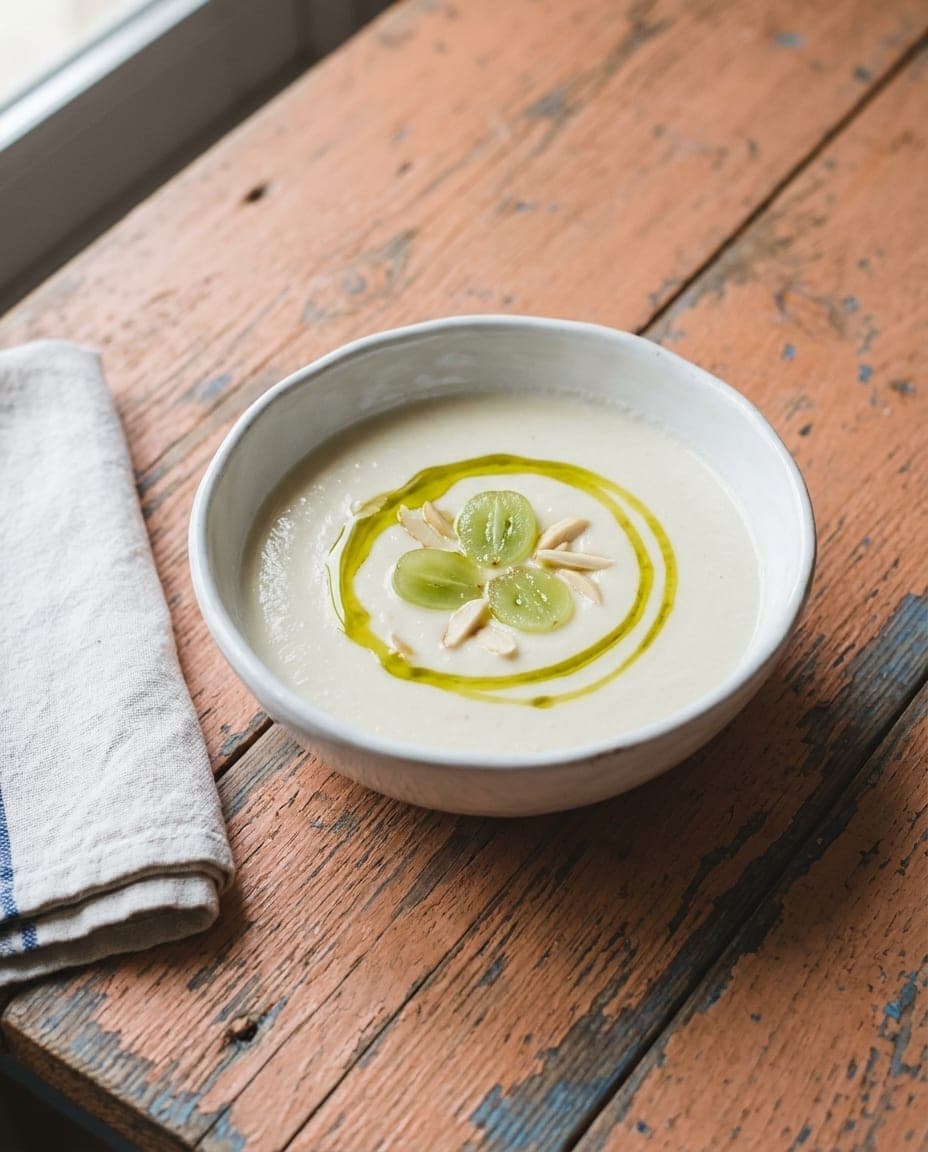
Ajoblanco, sometimes called gazpacho blanco or the "white gazpacho", is a cold soup native to Andalusia that stands apart from its more famous red cousin. While the world knows gazpacho for its tomatoes, this dish belongs to an older tradition that predates the arrival of the tomato in Europe. It is a smooth, pale emulsion of blanched almonds, stale bread, garlic, olive oil, water and a little vinegar, served ice-cold. The texture is thinner than the thick tomato cream of salmorejo from nearby Córdoba, allowing the raw flavour of the garlic and the nutty richness of the almonds to shine through without heaviness.
It is a dish of summer, most often served in the hottest months between June and September when the Andalusian sun turns the air into a heavy blanket. The cold temperature is not merely a preference but the point; the soup was made to refresh in the intense heat of the inland valleys and the coastal plains. It arrives as a pale, milky liquid, often garnished with muscat grapes or cubes of sweet melon that float on the surface like jewels.
The history of white soup
The origins of ajoblanco lie in the old culinary traditions of the Mediterranean, where pounding nuts and bread into a paste made a filling meal from limited resources. In Andalusia, the dish evolved alongside the cultivation of almonds and the production of olive oil, two pillars of the regional diet. Before tomatoes arrived from the New World in the 16th century, cold soups in the region relied on bread, water, garlic and whatever nuts were available.
The recipe is most closely associated with Málaga and Granada, where the climate suits almonds and grapes. It is a dish that reflects the agricultural rhythm of the area: almonds harvested in late summer could be stored and used through the year, while the heat of July and August demanded a cooling meal. Over centuries, it became a staple of rural households and later found its way to the tables of the city.
While some food historians trace similar preparations back to Roman times, when bread soaked in water and oil was a common peasant dish, ajoblanco is more commonly linked to the Arab period of Andalusian history. The Arabs spread almond cultivation in Spain, and the use of almonds pounded into a smooth liquid is often seen as part of that legacy.
What goes into it
There is no single fixed recipe, as each cook adjusts the ratio of water to oil or the amount of garlic to suit their taste, but the core components remain constant.
- Blanched almonds: The primary ingredient, often soaked in hot water to remove the skins before being ground into a fine paste.
- Stale bread: Usually the crustless white part of a day-old loaf, soaked in water until soft.
- Garlic: Raw cloves are essential for the sharp, bracing flavour that defines the dish.
- Extra virgin olive oil: High quality is crucial, as it forms the emulsion and carries the flavours.
- Vinegar: A small amount, often sherry vinegar (vinagre de Jerez) or wine vinegar, adds acidity to balance the richness.
- Water: Added gradually to achieve the desired consistency, thinner than a dip but thicker than a broth.
The result is a pale, creamy liquid that feels cool on the tongue and leaves a lingering warmth from the garlic. Though it contains no meat, it is far from light: the oil and almonds make it a substantial dish.
How to eat it
Ajoblanco is served as a starter or a light lunch, typically in a deep bowl or a shallow plate. It is poured ice-cold so that the soup remains chilled throughout the meal. The traditional accompaniment in Málaga is fresh muscat grapes, often grown locally, which are dropped into the soup just before serving. As the diner eats, the sweet juice of the grapes mixes with the sharp garlic and nutty almond base, creating a balance of sweet, salty and sour notes.
Cubes of fresh melon, or less often apple, are used in place of grapes in some versions. The sweetness of the fruit cuts through the intensity of the raw garlic, making the soup more approachable for those who might find the flavour too strong on its own.
A glass of fino from Montilla-Moriles in neighbouring Córdoba province is a natural pairing, the dry, nutty wine complementing the almond notes in the soup without overpowering them. The combination of the cold soup and the cool wine offers relief from the afternoon heat.
Curious facts
- A pre-Columbian recipe. This dish predates the introduction of tomatoes to Europe, representing an older style of Andalusian cold soup that relied on bread and nuts.
- The grape connection. The grapes are not merely a garnish; their juice blends with the oil and vinegar to create a taste that changes as the meal progresses.
- A festival of its own. The village of Almáchar in Málaga's Axarquía holds a Fiesta del Ajoblanco on the first Saturday of September, timed with the local grape harvest.
- No tomato allowed. Adding tomatoes would make it a different dish entirely; true ajoblanco remains white and relies on almonds for its body.
- The oil matters. The quality of the olive oil is critical; a poor-quality oil can make the emulsion break or leave a greasy aftertaste that ruins the experience.
Where to try it
The best place to eat ajoblanco is in Málaga, where it is a point of local pride and a summer staple.
While Málaga is the heartland of the dish, versions also appear in other parts of Andalusia, particularly in the provinces of Granada and Almería where almond cultivation is widespread. However, it is in Málaga and its Axarquía villages that the tradition is most deeply rooted. July and August, when the sun is at its peak, are when the cold soup feels most like a gift from the earth itself.
Where to try it
1 destination
 Camper Van Rentals
Malaga
Coastal city with beaches, Picasso museum, and Moorish fortress.
Camper Van RentalsHiking
1 region
 Wine Tasting12 destinations
Andalusia
Andalusia stands as Spain's largest autonomous community, renowned for its diverse landscapes, from sun-soaked beaches to rugged mountains. The region is famed for its rich Moorish heritage, best exemplified in cities like Granada, home to the Alhambra, and Seville, known for its cathedral and flamenco culture. Cordoba boasts the stunning Mezquita, while Ronda captivates with its dramatic gorge. Unique local festivals such as Feria de Abril and Semana Santa highlight Andalusian culture. The region produces excellent wines, particularly from Jerez, and is the birthplace of tapas. Off the main tourist paths, towns like Grazalema and Mijas offer authentic experiences amid beautiful natural settings.
Wine TastingHikingLocal CuisineBoat Rentals