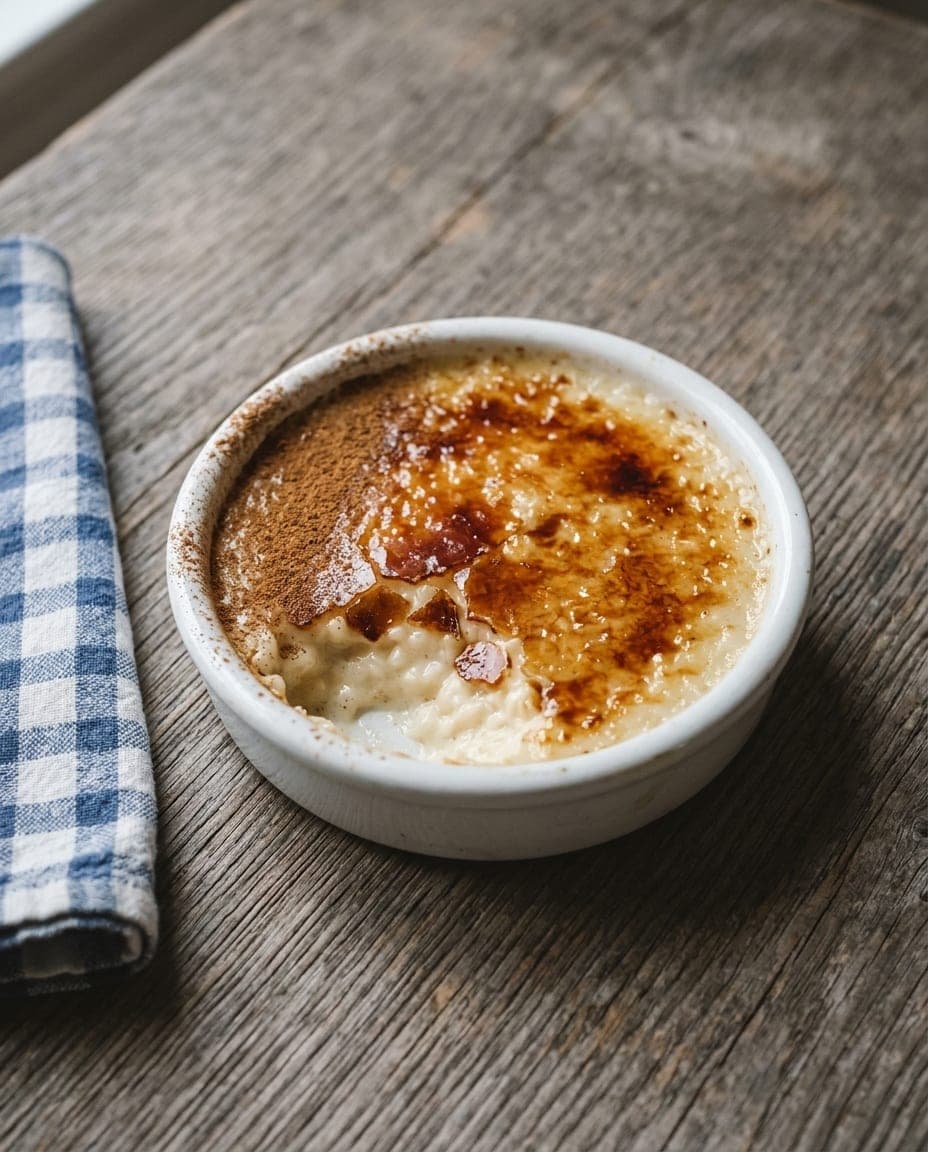
Arroz a banda
Rice cooked in fish stock from Alicante, served with alioli on the side
- Local name
- Arròs a banda
- Served with
- Alioli
- Best eaten at
- An Alicante beach arrocería
- Pairs with
- Valencian white
What it is
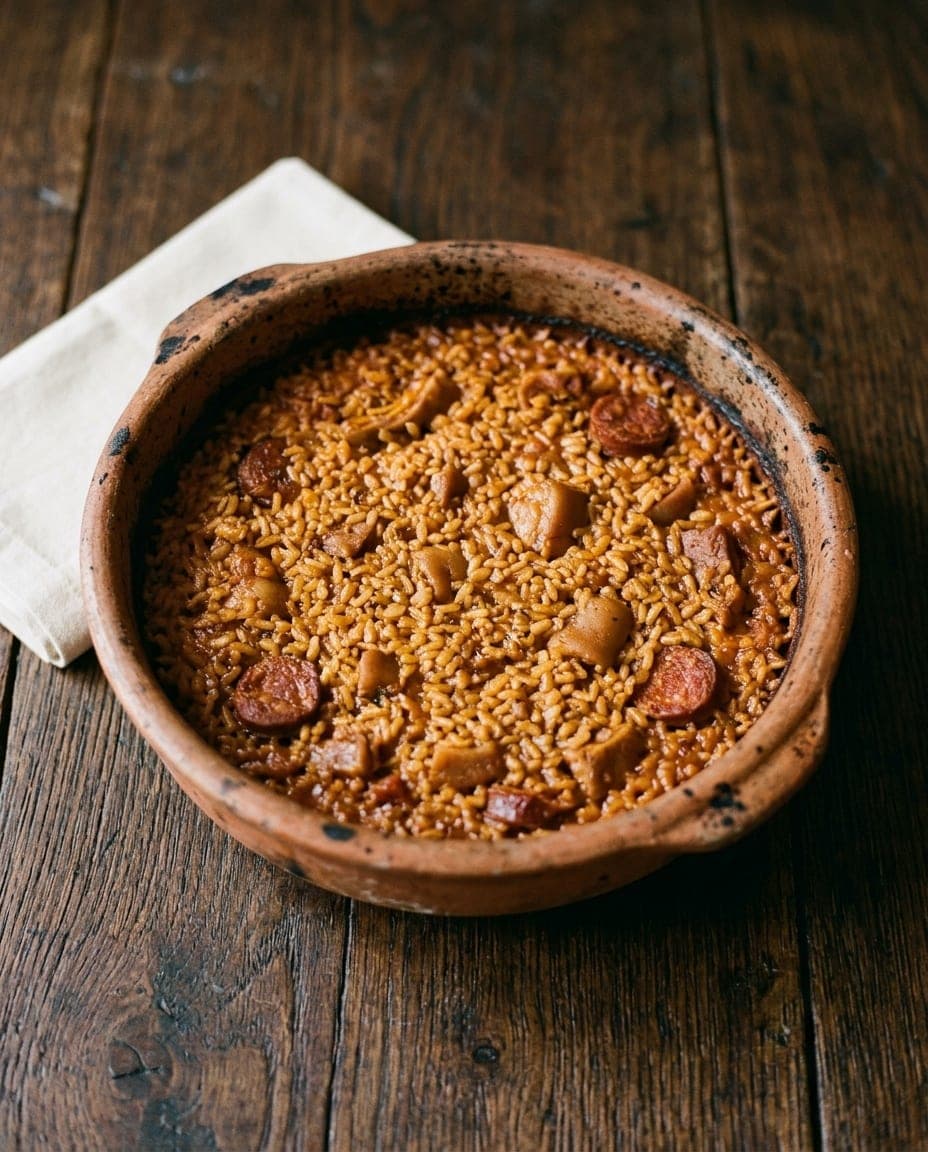
Arroz a banda is a distinctive rice dish from the Spanish coast, particularly associated with the provinces of Alicante and Valencia. The name, from the Valencian arròs a banda, translates as "rice on the side" or "rice apart", referring to the way the seafood is served. In its traditional form, the fish is cooked first in a strong stock, then removed. The rice is then cooked in that same concentrated broth until it absorbs the deep flavour of the sea, while the fish is eaten separately.
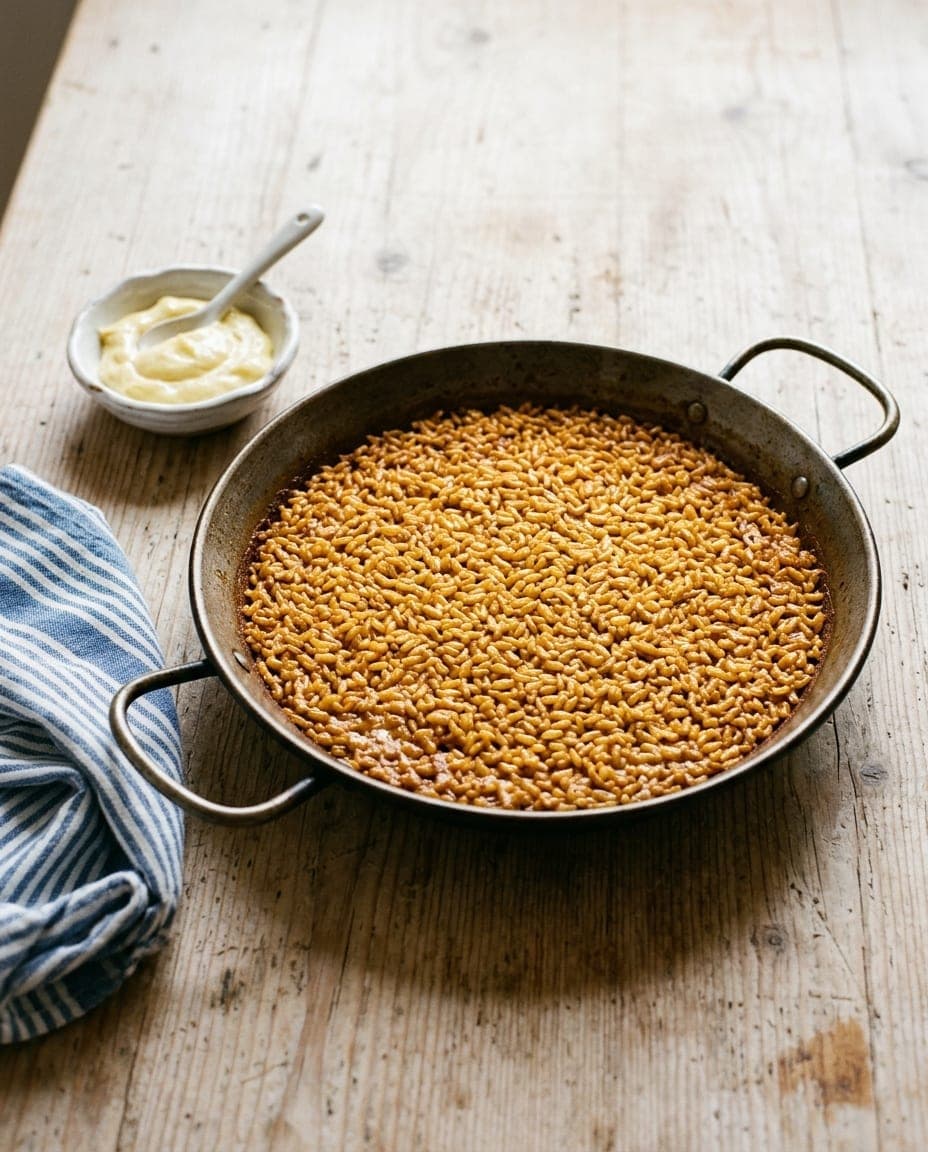
The result is a dry, loose rice with a golden hue from saffron and paprika. Every grain is distinct and coated in the essence of the stock. Traditionally the dish arrives at the table as two separate elements: the rice and a plate of cooked fish, accompanied by alioli, a thick emulsion of garlic and oil. It is a meal that prioritises the flavour of the grain over the presence of the seafood within it.
The fishermen's method
The origin of arroz a banda lies in the practical routine of the fishermen of Alicante. They sold their best fish and kept the cheap, bony catch known as morralla, which had little market value, to make a robust stock. The fish and potatoes were boiled in it and eaten as one course, and the remaining broth was then used to cook the rice.
The grains absorbed the full intensity of the seafood, and the fish was served alongside, allowing diners to enjoy the flesh separately from the flavour-infused rice. This method ensured that nothing went to waste and that the final dish carried the complete essence of the catch.
Today many restaurants serve the rice on its own, sometimes with a few pieces of peeled seafood such as squid or prawns, and the separate fish course is less common. It is a clean, intensely flavoured rice with little on it, which is the point: everything is in the grain.
How it is made
The preparation relies on the quality of the stock and the technique used to cook the rice. A sofrito of tomato and garlic, often with dried ñora pepper, forms the base. The strained fish stock is then added along with saffron and often a touch of paprika, which gives the rice its characteristic colour.
The rice is cooked in a wide paella pan, allowing the liquid to evaporate evenly so the grains remain dry and separate. There is no stirring once the liquid is added; the rice simply absorbs the flavour while cooking over the heat. The final texture should be loose, with each grain distinct and coated in the golden stock. The dish is not vegetarian, as the broth is made from fish.
How to eat it
Arroz a banda is typically served as a main course, often at lunch in coastal towns. A small bowl of alioli sits nearby, ready to be stirred into the rice by the diner.
Alioli is the essential accompaniment. This emulsion of garlic and oil, traditionally made without egg, adds a creamy texture and a sharp, aromatic bite. Diners stir the alioli directly into their portion of rice, blending the garlic flavour with the savoury grain. Where fish is served, it is eaten alongside, either plain or with the remaining alioli.
A glass of Valencian white wine pairs well with the dish, offering a crisp contrast to the rich flavours of the rice. In many beachside restaurants, the pan is shared among a group, which encourages slow eating and conversation.
Where it comes from
Arroz a banda is a regional speciality. Its heart lies along the coast of Alicante, and it is cooked across much of the Valencian Community, where the fishing tradition is strong. In seaside towns such as Santa Pola, Altea and Dénia, the dish remains a staple on the menus of traditional arrocerías, or rice houses.
The coastal landscape shapes the dish. The availability of fresh fish and the presence of small, family-run eateries near the harbour keep the method of making stock from the catch alive. While modern restaurants may adapt the presentation, the core principle remains: the rice must carry the full weight of the fish flavour without the flesh being mixed in during cooking.
Curious facts
- The name explains the method. A banda means "on the side", referring to the fact that the fish is served separately from the rice after the stock has been used.
- Alioli is key. The garlic emulsion is not just a condiment but an essential component, often stirred in by the diner.
- No egg in traditional versions. Traditional alioli relies on garlic and oil alone, emulsified into a thick sauce without eggs.
- Dry texture is standard. Unlike soupy rice dishes, arroz a banda is intentionally dry, with each grain absorbing the stock fully.
- A fishermen's thrift dish. The stock was originally made from the low-value fish left after the best of the catch had been sold.
Where to try it
2 destinations
 Boat Rentals
Altea
Picturesque whitewashed coastal town with marina and boat charter services.
Boat RentalsHiking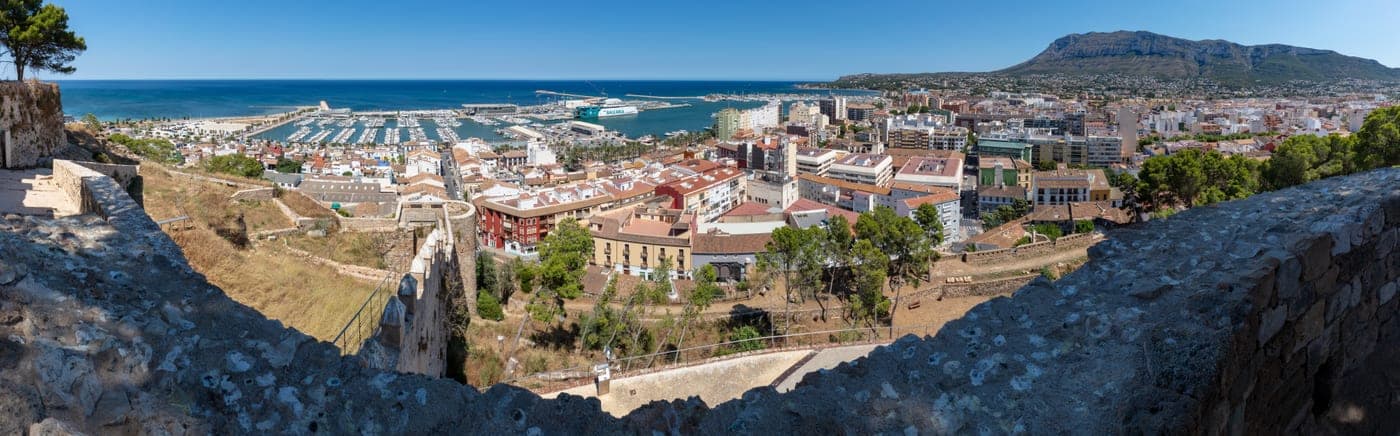 Boat Rentals
Dénia
Historic coastal town known for its castle, beaches, and gastronomy.
Boat RentalsHiking
1 region
- Boat Rentals3 destinations
Alicante
Alicante rewards travellers who slow down. This is a province where the Mediterranean coast and the inland mountains sit close together, so a short stay can move from white villages perched on limestone ridges to rice fields and salt lakes without ever feeling rushed. The pace here has always been unhurried: fishing towns that still mend their nets in the morning, market squares that empty for the midday heat, and hill villages built for shade rather than speed. The city of Alicante sits at the centre of it all, its old quarter climbing toward Santa Bárbara Castle above the harbour. Below the castle walls, the Barrio de Santa Cruz is a maze of narrow lanes and flower-filled balconies, best explored on foot with no fixed plan. From here, the province spreads out in two directions: south toward Elche, known for its extensive palm groves, and north toward the Marina Alta, where the land folds into sharper peaks. That northern stretch is where Alicante's white villages cluster. Guadalest is well known, its houses stacked below a ruined castle with views over a turquoise reservoir, but smaller places like Tàrbena keep the same rhythm without the crowds. Whitewashed walls, tiled roofs, and steep stone streets are the constant here, built to stay cool through long summers. Above the villages, old paths climb toward hilltop hermitages and sanctuaries, still walked each year by local processions that carry a saint or a Virgin from the valley up to her chapel. On the coast, Villajoyosa is worth slowing down for on its own: a working fishing port with houses painted in deep blues, ochres, and pinks. Nearby Altea has a whitewashed old town crowned by a blue-domed church, popular with painters for its light. Further north, Xàbia and Dénia keep a gentler pace than the bigger resorts, with fish markets, old salt works, and views across to the island of Ibiza on clear days. Alicante's food and wine follow the same unhurried logic. The Alicante DO wine region grows Monastrell for deep, dark reds and Moscatel for sweet, aromatic whites, much of it still on small family estates in the hills around Pinoso and Villena. Rice is the other constant: arroz a banda, cooked in fish stock and served separately from its seafood, and arroz del senyoret, the same dish with everything already shelled for lazy eating. Inland, the town of Xixona has made turrón, the almond and honey nougat, for centuries, and its workshops are still small and family-run. Local food festivals mark the calendar through the year, from spring almond-blossom gatherings in the hills to autumn wine harvests. Inland, the Sierra de Aitana rises over the vineyards, its ridgeline visible from much of the province on a clear day. Villages at its foot, like Sella and Confrides, keep orchards of cherry and almond trees and offer walking paths that link one hamlet to the next through terraced hillsides. This is the Alicante that rarely appears in beach brochures: quieter, higher, and built around the seasons rather than the tourist calendar. A few days is enough to get a real sense of the region — a day in Alicante city, a day or two among the white villages of the interior, and a day on the coast between Villajoyosa and Dénia. Longer stays allow for slower detours: a wine estate visit near Pinoso, a walk into the Sierra de Aitana, or simply a morning spent doing nothing in a village square while the town wakes up. Alicante does not need to be rushed to be understood — if anything, it asks the opposite.
Boat RentalsHiking