Arroz a la zamorana
Winter rice of Zamora with pig's ear, snout and paprika
- Local name
- Arroz a la zamorana
- Best eaten at
- A Zamora mesón
- Pairs with
- Toro red
What it is
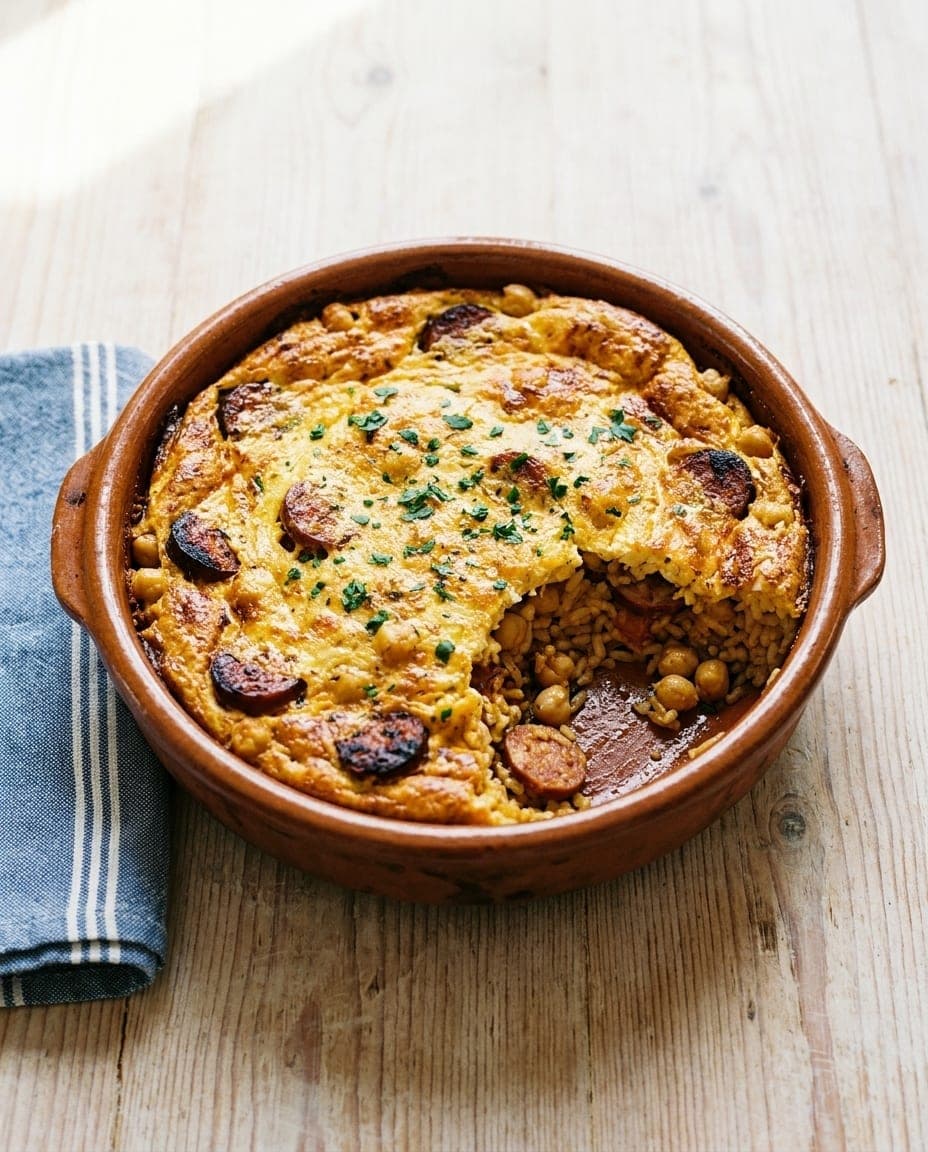
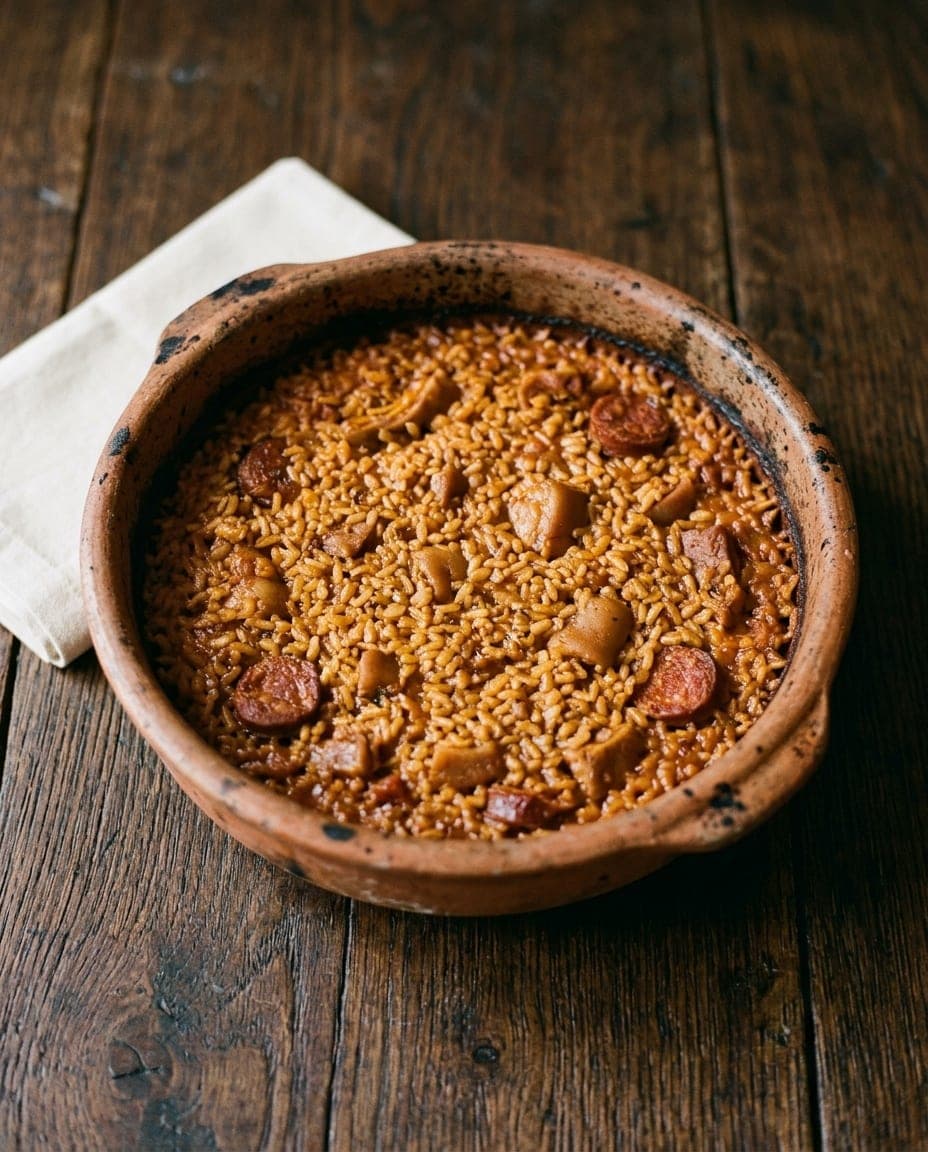
Arroz a la zamorana is a seasonal dish of the province of Zamora in western Spain, part of the larger region of Castile and León. It is not a national staple but a local speciality tied to the winter months, when the traditional pig slaughter takes place. The dish consists of rice cooked with the humblest cuts of the pig, above all ear and snout, often with trotters, ribs, ham or chorizo, alongside paprika, garlic, onion, turnip and herbs.
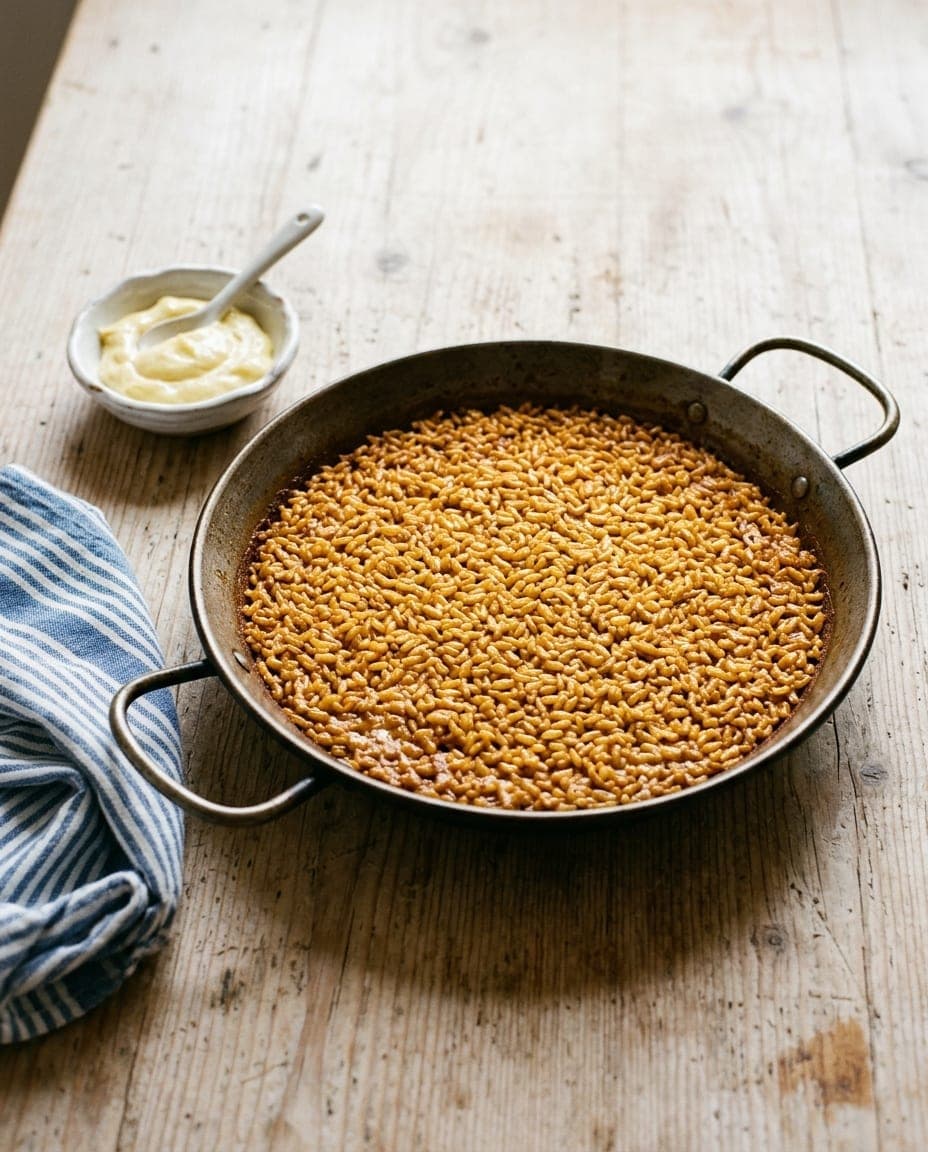
Unlike the dry, saffron-coloured paellas of Valencia, this rice is prepared to be soft and juicy, more akin to a thick stew or a caldoso dish than a crisp bake. Its deep red, almost rusty colour comes from generous amounts of paprika, and the texture clings to the spoon rather than standing apart. It is a meal designed for cold weather: heavy, inexpensive and deeply satisfying, born from the need to use every part of the animal during the matanza, or pig-slaughter season.
The winter ritual of the matanza
The origins of arroz a la zamorana are rooted in the agricultural calendar of the Castilian plateau. In the cold months of late autumn and winter, rural households across Zamora traditionally slaughtered their pigs to preserve meat for the year ahead. This process, known as the matanza, generates an abundance of offal and cheaper cuts that are too tough for roasting but perfect for slow cooking.
Villagers would take these tough parts (ears, snouts, trotters) and simmer them with turnip, onion, garlic and herbs until they yielded their gelatine and flavour. Once the meat was tender, rice was lightly fried, coloured with paprika and cooked in the broth. A characteristic finish is a layer of thin bacon slices laid over the rice and crisped under a hot grill or in the oven, though it is equally common to find it cooked entirely on the stovetop. The dish served as a way to feed large families or groups of workers without wasting anything, turning the hardest parts of the pig into something rich and warming.
How it tastes and what goes into it
The character of arroz a la zamorana is defined by its simplicity and the specific ingredients that make up its base. The rice absorbs the gelatinous liquid from the pork, becoming soft and slightly sticky rather than separate grains. The deep red hue comes from the paprika, which is essential to the dish's identity, while cured pork adds a smoky, savoury note.
Key elements include:
- Pig's ear and snout, often with trotters, which provide the body and gelatinous texture.
- Cured pork, such as ham, bacon or chorizo, adding salt and smoke.
- Paprika, used generously to colour the dish and give it its earthy warmth.
- Aromatics such as garlic, onion, turnip, parsley and thyme, which form the flavour foundation.
The final dish is not dry; it should be moist enough to soak up with bread. It is a heavy meal, best suited for lunch when the air outside is cold.
How to eat it
Arroz a la zamorana is traditionally eaten in a Zamora mesón, a traditional tavern that serves local food and wine. These establishments are often family-run and focus on regional dishes. The rice is typically served in earthenware dishes, often meant for sharing among a table of diners.
The dish pairs naturally with a red wine from Toro, the wine town that lies east of Zamora in the same province. A robust Toro red, with its dark fruit and firm tannins, stands up to the heavy pork and smoky paprika. The combination is practical: the wine helps cut the fat of the meat, while the rice provides a warming base.
Curious facts
- A winter dish above all. While rice is common in Spanish cooking, this version is most closely tied to the cold months and the pig-slaughter season.
- Heavy on the offal. The dish relies on tough cuts like ear and snout, which elsewhere might go into stock, but here they provide the body of the rice.
- Not a paella. It is distinct from Valencian paella in texture and colour, aiming for a stew-like consistency rather than a dry finish.
- A local wine match. Both the dish and Toro wine come from the province of Zamora, which makes the pairing a natural one.
Where to try it
The most authentic versions of arroz a la zamorana are found in Zamora itself, particularly in traditional mesones that specialise in local cuisine, many of which serve it mainly in the colder months. It is rarely a standard offering on menus in Madrid or Barcelona; it remains a regional speciality of Castile and León, best enjoyed where the cold air outside matches the warmth of the bowl.
Where to try it
1 destination
 Wine Tasting
Zamora
Historic city near Toro wine region with Romanesque architecture and wine tourism.
Wine TastingHiking