Photo by Fotografiamartincaballero · license: CC BY-SA 3.0
Romanesque churches, riverside paths, and the wines of Toro nearby.
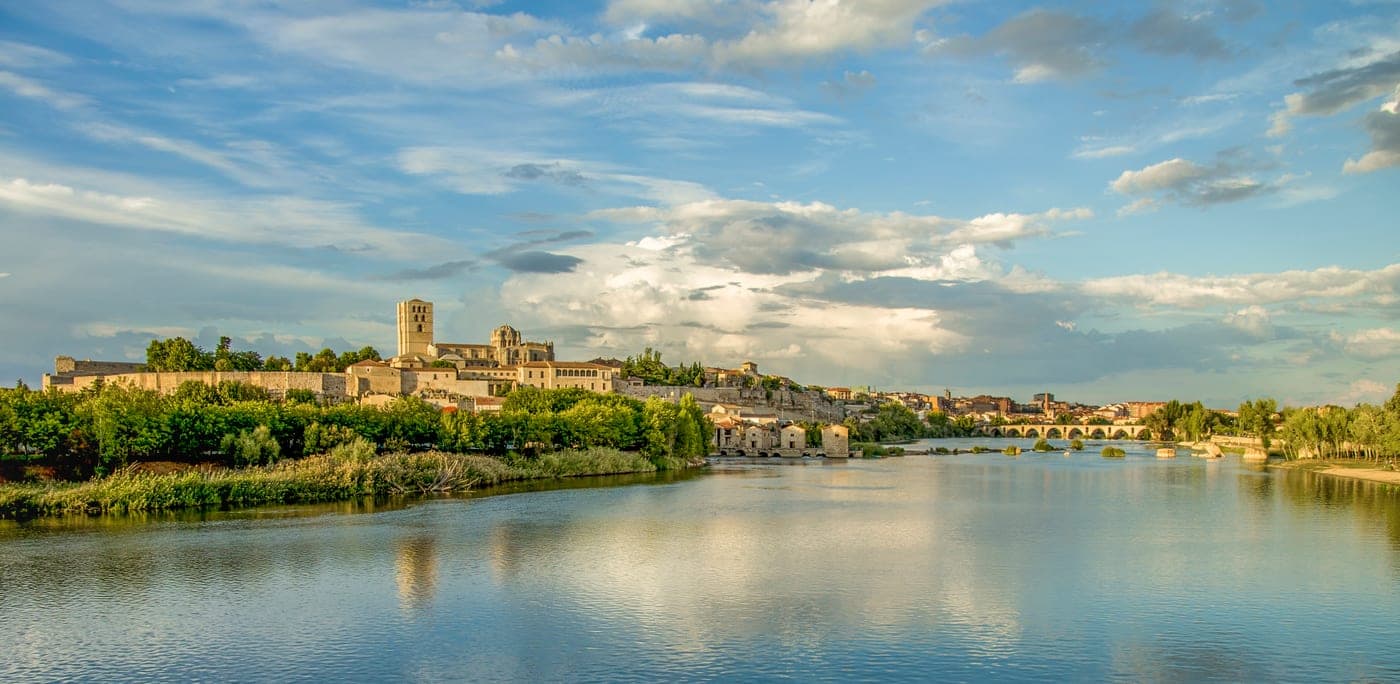
Zamora sits above the Duero river in Castile and León, its old town lined with Romanesque churches built mostly in the twelfth and thirteenth centuries. The number and condition of these buildings, from small parish churches with carved portals to the domed cathedral, give the city a distinct architectural character rarely matched elsewhere. Below the walls, a medieval stone bridge crosses the river, and paths along the banks link the historic centre to green spaces on both sides of the water.
The city lies close to the Toro wine region, where the Tempranillo grape, known locally as Tinta de Toro, grows on old, low-trained vines and produces some of Spain's fuller-bodied reds. Wine bars and shops in Zamora's centre carry these local labels alongside regional dishes such as bacalao (salted cod) and roasted lamb.
Holy Week in Zamora draws visitors for its solemn, long-standing processions, among the most respected in Spain. Outside that week, the pace is unhurried: stone squares, small museums, and quiet views over the Duero reward slow exploration of the old town.
Drop the places you like into one list. The planner orders them by day and works out the distances.
Get slow travel tips delivered to your inbox
A short message when something worth the trip lands. Reply STOP anytime.
By subscribing, you agree to be contacted via WhatsApp. Privacy policyOccasional letters in your inbox — with recommendations, maps and routes.
By subscribing to newsletter, you agree to our privacy policy.