Fuet
A thin Catalan sausage with a white bloom, named after the whip
- Local name
- Fuet
- Served with
- Pa amb tomàquet
- Best eaten at
- A Catalan vermouth bar
- Pairs with
- Cava or vermouth
What it is
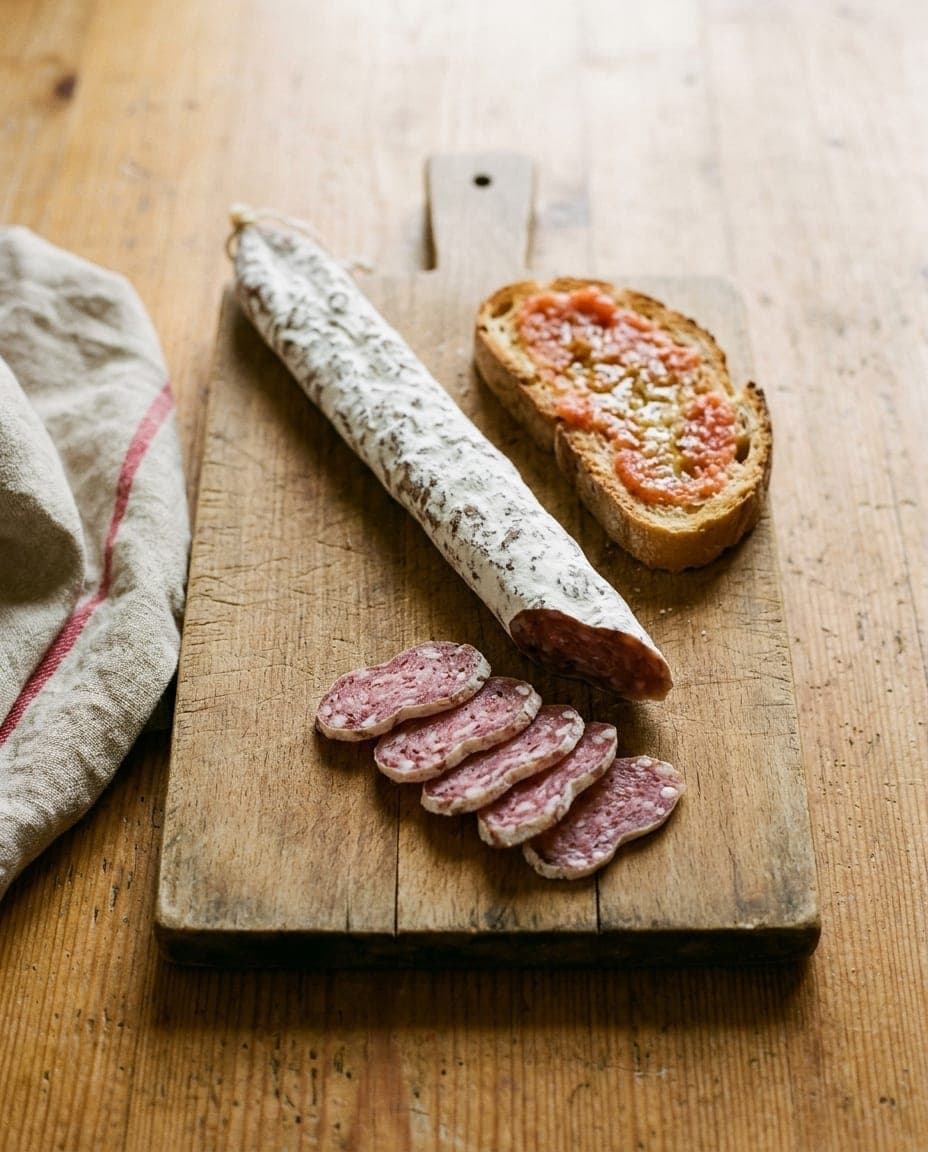
Fuet is a thin, dry-cured sausage from Catalonia, the autonomous community in the north-east corner of Spain. It is not smoked like many other cured meats, but rather air-dried until firm and concentrated. The sausage has a distinctive white bloom of mould covering its casing, which is part of the curing process.
The name fuet means "whip" in Catalan, a reference to the long, thin shape of the sausage. In the hand it feels like a slender rope rather than a thick block of meat. The texture is firm yet yielding, and the flavour is clean and savoury, relying on salt and black pepper rather than the smoky or spicy notes found in other Spanish sausages. It is typically eaten sliced into small coins as a snack or appetiser, often accompanied by bread rubbed with tomato.
The shape and the name
The origin of the name fuet is straightforward and visual. In Catalan, fuet is a whip, and the sausage earned the name because of its slender profile and the way it hangs in rows during drying. It is distinct from other pork products of the region, such as botifarra, which is usually thicker and cooked rather than dry-cured.
The white mould on the casing is not a sign of spoilage but a deliberate part of the process. This layer, typically formed by Penicillium species such as P. nalgiovense, protects the meat from unwanted microbes while allowing it to dry slowly. The mould also contributes to the development of the sausage's flavour, adding a subtle earthiness that complements the salt and pepper inside. Many people peel off the casing before eating, though the bloom itself is harmless.
How it is made
The production of fuet relies on simplicity and patience. The main ingredients are lean pork and back fat, which provide the necessary fat content for flavour without making the sausage greasy. Salt and black pepper are the defining seasonings; some makers add a little garlic, sugar or wine, but the profile stays sharp rather than aggressive. Unlike chorizo, which contains paprika for its red colour and spicy heat, fuet remains pale on the inside because it lacks this spice entirely.
The meat is minced and stuffed into narrow casings, traditionally natural pork intestine. Each sausage is tied at the ends and hung in rows to cure in cool, dry rooms with good air circulation for several weeks. The duration of the drying process varies with the humidity and temperature of the curing room, but the goal is always to remove enough moisture to preserve the meat while keeping a supple texture.
The result is a sausage that is milder than many other cured meats in Spain. Its flavour comes from the quality of the pork and the careful control of the drying environment, which makes fuet an easy companion for bread and wine.
The Catalan tradition
Fuet is bound up with Catalan food culture, particularly in the region's vermouth bars. These establishments, known as vermuteries, serve as social hubs where people gather before lunch. Here, fuet is a staple of the menu, often served alongside other small plates like olives, anchovies and cheese.
A favourite way to eat fuet is with pa amb tomàquet, bread rubbed with ripe tomato and drizzled with olive oil. The acidity of the tomato balances the saltiness of the sausage, while the fat from the fuet adds body to the bread.
Fuet itself does not carry an EU protected designation, but its close relative from the Osona comarca does: Llonganissa de Vic (Salchichón de Vic), a thicker dry-cured pork sausage, has been a Protected Geographical Indication since 2001. Vic and the surrounding Plana de Vic are the heartland of Catalan cured-sausage making, and many fuets are produced in the same area.
What goes into it
The ingredients of fuet are minimal by design:
- Lean pork: The primary meat, providing a clean base for the flavour.
- Back fat: Added to keep the sausage moist and rich during drying.
- Salt: Used to draw out moisture and preserve the meat.
- Black pepper: Provides a subtle heat without overpowering the other flavours.
- White mould: The bloom on the casing, which develops during curing.
Curious facts
- The name comes from a whip. Fuet is Catalan for whip, a nod to the sausage's long, thin shape.
- No paprika means no red colour. Unlike chorizo, fuet contains no paprika, so it remains pale inside and relies on salt and pepper for its flavour.
- The mould is part of the cure. The white bloom on the casing is not a sign of spoilage but a controlled part of the curing process that protects the meat.
- A protected neighbour. Fuet has no protected name of its own, but the Llonganissa de Vic from the same part of Catalonia has been an EU PGI since 2001.
- It pairs with cava. The sparkling wine from Catalonia is a classic companion to fuet, cutting through the fat of the sausage.
Where to try it
The best place to eat fuet is in a Catalan vermouth bar, particularly in cities like Barcelona or in the towns of Osona. These bars are often unassuming, with wooden counters and simple menus featuring small plates.
The bubbles in cava cut the fat of the sausage, while vermouth complements its savoury notes. In the colder months, fuet often appears as part of a larger spread of cured meats and cheeses.
For a closer look at the craft, Vic and the surrounding Osona countryside are the natural destination. The town's markets and charcuteries sell fuet alongside llonganissa, and comparing the two side by side shows how the same curing tradition produces quite different sausages.
Related: Llonganissa de Vic, the larger cured sausage from fuet's home county of Osona.
Where to try it
1 region
 Wine Tasting21 destinations
Catalonia
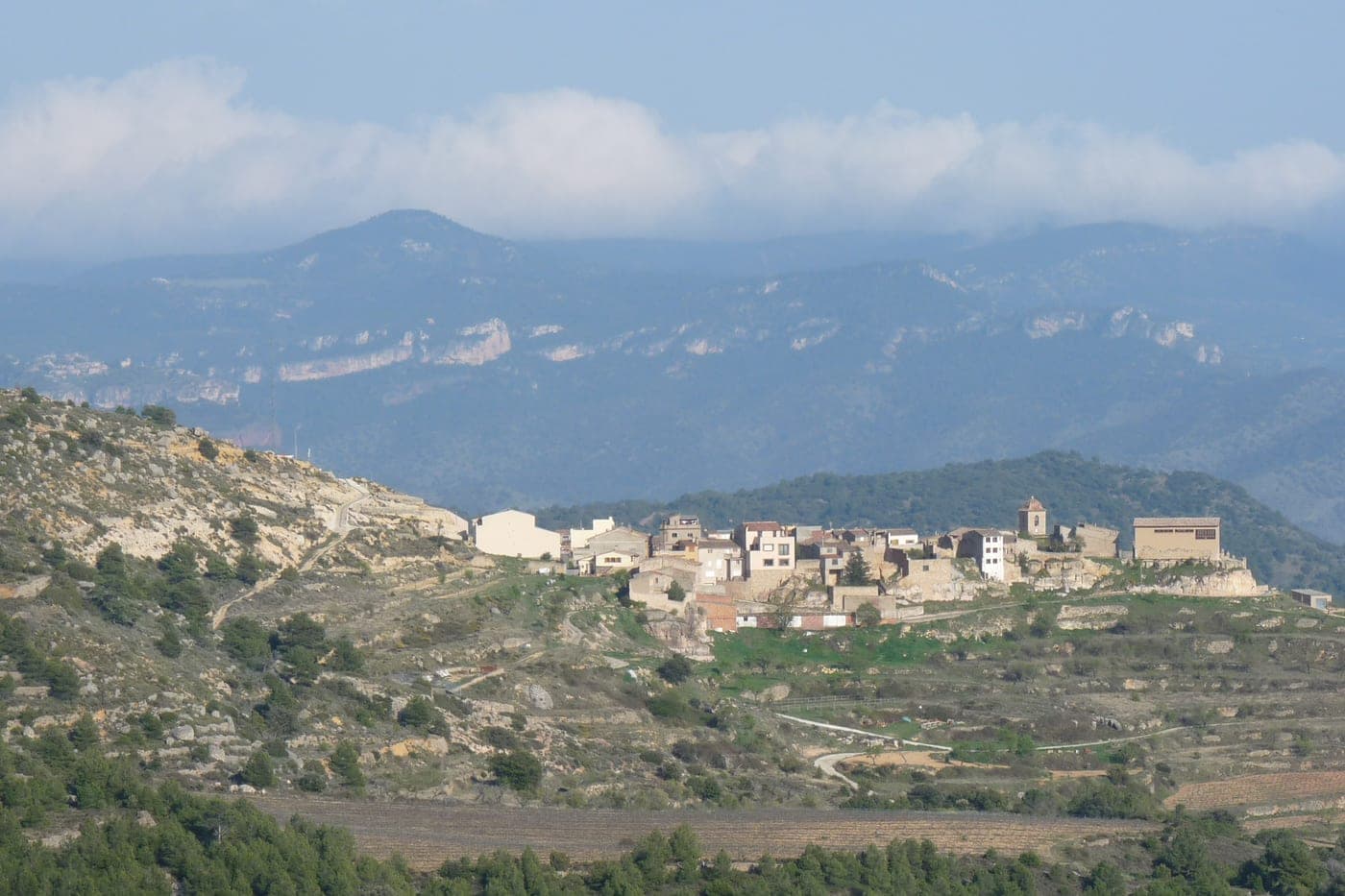
Catalonia stretches from the high Pyrenees down to the Mediterranean, and that range gives it a slow-travel character all its own: stone villages tucked into mountain valleys, a jagged coastline of small harbours, and an inland plain still shaped by farming and pilgrimage. Barcelona sits at one edge of the region, but Catalonia's quieter identity is built elsewhere — in places most visitors reach only if they choose to look beyond the capital. In the north, the Pyrenean valleys hold Romanesque churches and hamlets built from dark local stone, many still working farming communities. Villages like these keep a rhythm set by the seasons and the land, and walking between them reveals bell towers and hay meadows. Further south and inland, the Camí de Sant Jaume, a Catalan branch of the Camino de Santiago, crosses rolling wheat country and passes through small towns built around a church square. The coast has its own version of slowness. Cadaqués, with its whitewashed harbour houses and steep lanes, once drew Dalí and other artists. The Costa Brava's smaller coves still keep this feel in the off-season: fishing boats pulled up on shingle, a handful of restaurants serving the day's catch, cliff paths connecting one cove to the next. Inland from the coast, medieval towns like Besalú preserve their fortified bridges and Jewish quarters largely intact. Catalonia's regional cuisine reflects this pace. Cava is made using the same traditional method as Champagne, and small family cellars around Sant Sadurní d'Anoia still open their doors for tastings. Calçotada season, when charred spring onions are dipped in romesco sauce and eaten by hand, is a communal meal built around fire and patience. Elsewhere, pa amb tomàquet, botifarra sausage, and mountain cheeses reflect a cuisine shaped by both the sea and the high pastures. History runs close to the surface here. Poblet Monastery, one of Catalonia's Cistercian foundations, still follows a monastic routine largely unchanged for centuries, and some of Gaudí's early works outside Barcelona show the same architectural language in quieter settings. A handful of Catalan paradors occupy restored castles and monasteries — the one at Cardona, built into a medieval fortress on a hilltop, is among the most striking examples of this in Spain. Mountain villages, pilgrim paths, whitewashed coves, cava cellars, and monastery towns give Catalonia a landscape suited to slow travel: a dialect (Catalan) still spoken in daily life, a cuisine tied closely to what grows and grazes nearby, and villages that have kept their own pace as the region around them has modernised.
Wine TastingBoat RentalsHikingCamper Van Rentals