Sericaia
Elvas cinnamon pudding with syrupy greengage plums
- Vegetarian
- Local name
- Sericaia
- Served with
- Elvas plums in syrup
- Best eaten at
- An Elvas pastelaria
- Pairs with
- Port or Moscatel
What it is
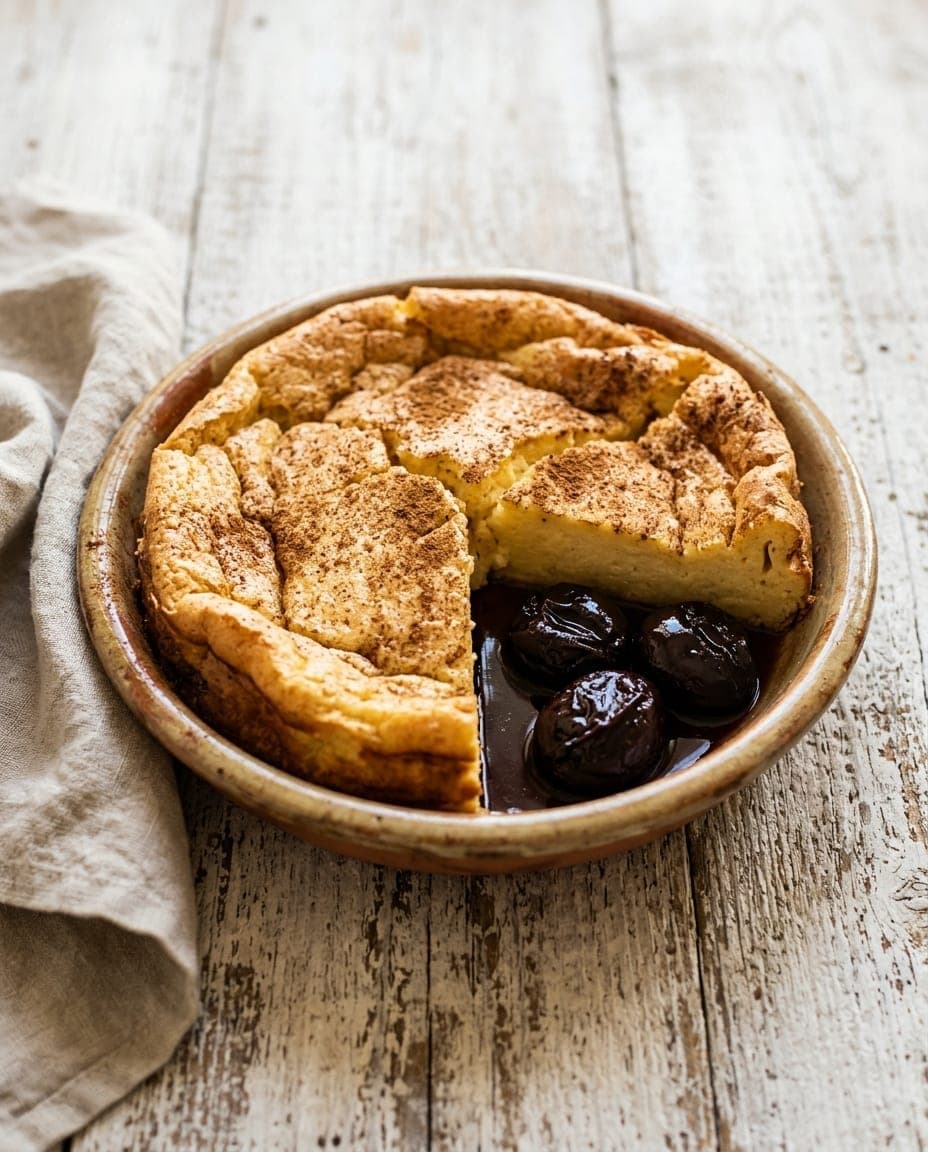
Sericaia is a sweet pudding from the city of Elvas in the Alentejo region of southern Portugal. It is not a cake or a tart, but rather a baked pudding made from eggs, milk, sugar, a little flour and lemon peel, finished with a generous dusting of cinnamon. The mixture is spooned into a shallow clay dish and cooked until the surface rises, cracks and then settles into deep, irregular folds. This cracked top is its signature.
The pudding is almost always served with ameixas de Elvas, greengage plums from the same region that are preserved in syrup. The plums carry their own protected designation of origin (DOP). The combination is fixed: the spiced pudding and the sweet plums appear together on a plate so often that one rarely sees either without the other.
How it is made
The method relies on the behaviour of the eggs as they heat in the clay dish. Milk is infused with lemon peel and a cinnamon stick, then mixed with egg yolks, sugar and a little flour, and stiffly beaten egg whites are folded in. The batter is spooned into the dish, dusted heavily with ground cinnamon and placed in a hot oven. As the mixture cooks, the surface puffs up and breaks apart. The result is a rough, uneven top darkened by the cinnamon, with deep crevices between the folds.
The clay dish is traditional and is said to play a role in the final texture, as it retains heat well. Once baked, the pudding is usually left to cool and is often eaten at room temperature or chilled. The cracks are not filled or smoothed over; they are the defining feature of the presentation.
Where it comes from
Elvas is an ancient border city in the Alentejo, known for its massive fortifications and a long history of trade between Portugal and Spain. The sericaia is a local speciality that does not appear widely outside this part of the region. It is usually linked to the convents of Elvas, Santa Clara among them, and one popular theory traces it to a recipe brought back from Portuguese India in the 16th century and reworked by the nuns.
The pairing with ameixas de Elvas suggests a regional logic. The plums grow well in the local soil and climate, and their syrupy sweetness balances the strong cinnamon flavour of the pudding. This combination is so characteristic of the city that it is the dessert most visitors to Elvas end up ordering.
How to eat it
The pudding arrives in its clay dish or on a plate, topped with a generous portion of the plums in syrup. A spoonful captures both the custard and the plums together.
It is common to drink a glass of Port or Moscatel with the pudding. The sweet wine complements the cinnamon and the plum syrup without overpowering them. Some people prefer to eat it as a dessert after a meal, while others enjoy it as a treat in the afternoon. The soft, spiced pudding and the syrupy plums create a contrast that works well at any time of day.
Curious facts
- The cracks are the point. The deep folds are the mark of a well-baked sericaia; a smooth top would look wrong.
- Protected plums. The ameixas de Elvas served with this pudding carry their own protected name (DOP), ensuring they come from the area around Elvas.
- Clay matters. Traditional bakers use shallow clay dishes, and the pudding is often served in them.
- A possible Asian cousin. Some food historians link sericaia to seri kaya, a Malay egg custard, though the direction of influence is disputed.
- A local pairing. While cinnamon puddings exist elsewhere in Portugal, the fixed combination with ameixas de Elvas belongs to this city.
- No single recipe. Every pastelaria has its own version of the batter, but the cracked surface and plum topping remain constant across all versions.
Where to try it
Elvas, in a pastelaria or a restaurant in the walled town, where it is made in the morning and sold through the day with a spoonful of plums beside it. The city sits a few kilometres from the Spanish border and its fortifications are a World Heritage site, so there is a steady trade and a reason for the pastry shops to keep it on.
It appears across the Alentejo as well — Estremoz, Borba, Portalegre — and on the dessert list of many restaurants cooking regional food. What varies is the plums: shops in Elvas use the local greengages in syrup, and further away the pudding sometimes arrives with something else on the plate, which is not the same dish.
Where to try it
1 region
 Wine Tasting14 destinations
Alentejo
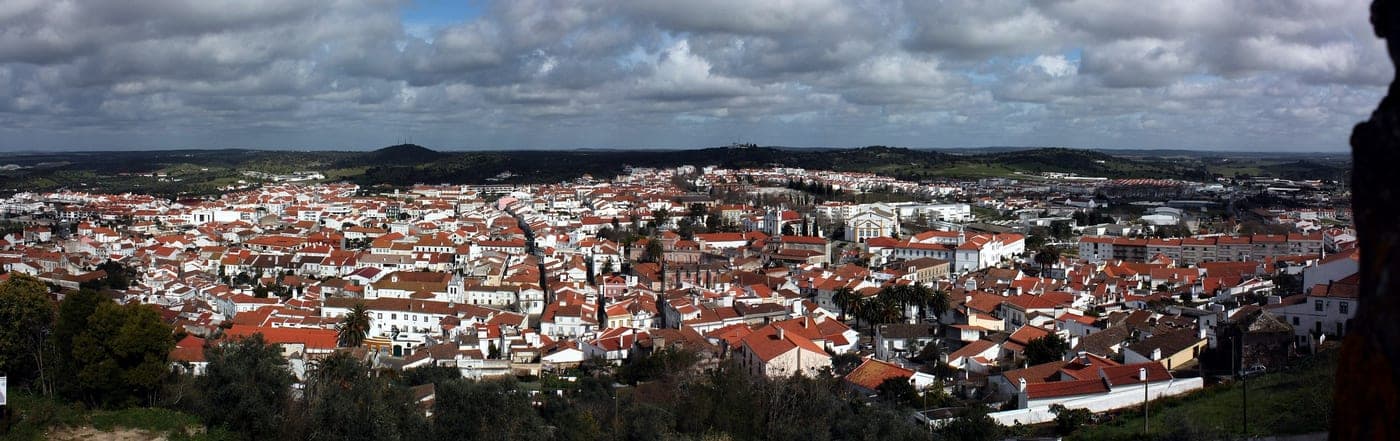
Alentejo, the largest region in Portugal, features a rich agricultural landscape dotted with vineyards and olive groves. It is known for its unique wines, particularly the robust reds from the Alentejo DOC. The region is home to Évora, a UNESCO World Heritage site with Roman ruins and medieval architecture, and Monsaraz, a hilltop village offering stunning views of the surrounding plains. Alentejo’s coastline, though less frequented, boasts beautiful beaches like Praia da Amália. Additionally, the region is famous for its traditional festivals, such as the Festa de São João in Évora, where locals celebrate with music and dance. Travelers will find a slower pace of life here, with opportunities to explore local markets and sample regional delicacies like açorda and queijos.
Wine TastingHikingLocal Cuisine