Amêndoas cobertas de Moncorvo
Almonds under a thick, spiked sugar crust
- Vegetarian
- Local name
- Amêndoas cobertas de Moncorvo
- Best eaten at
- A Moncorvo confeitaria
- Pairs with
- Port
What it is
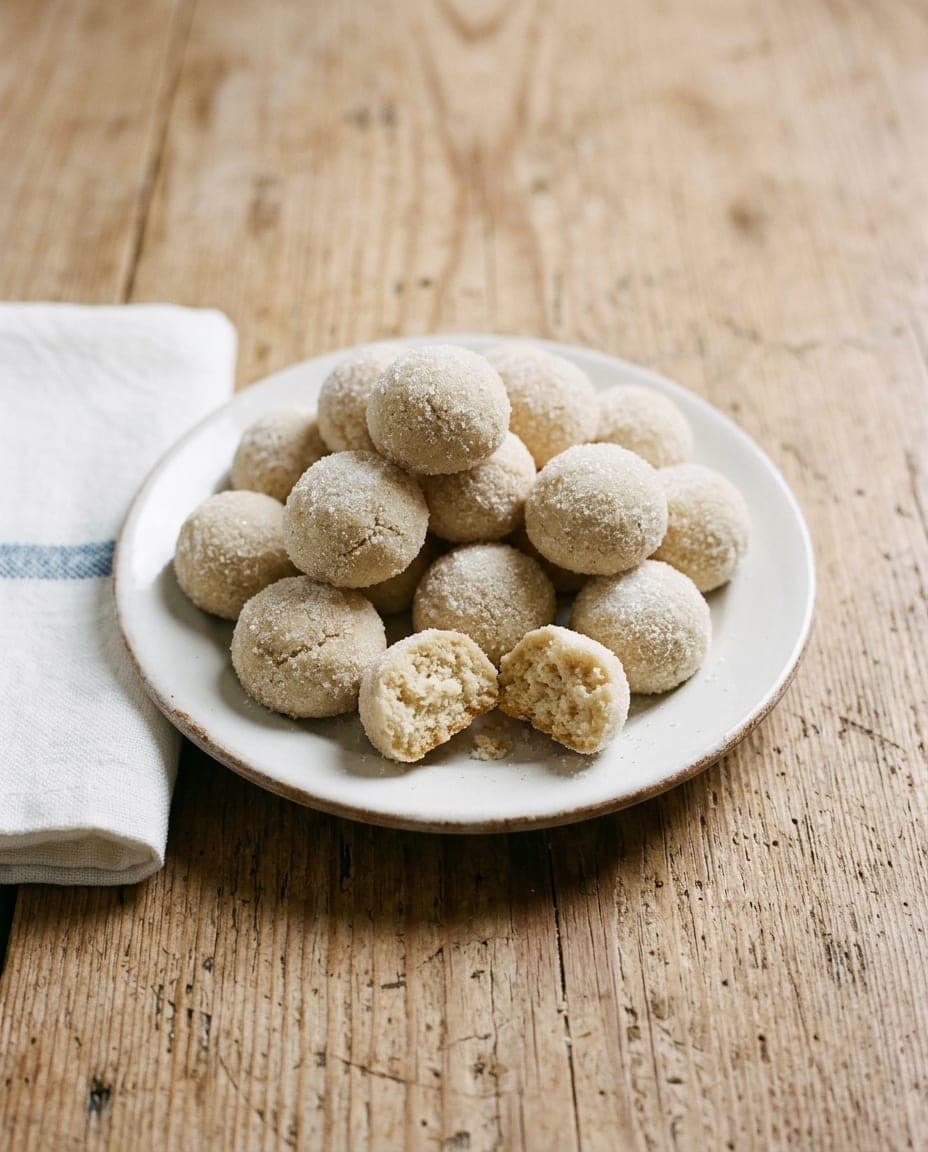
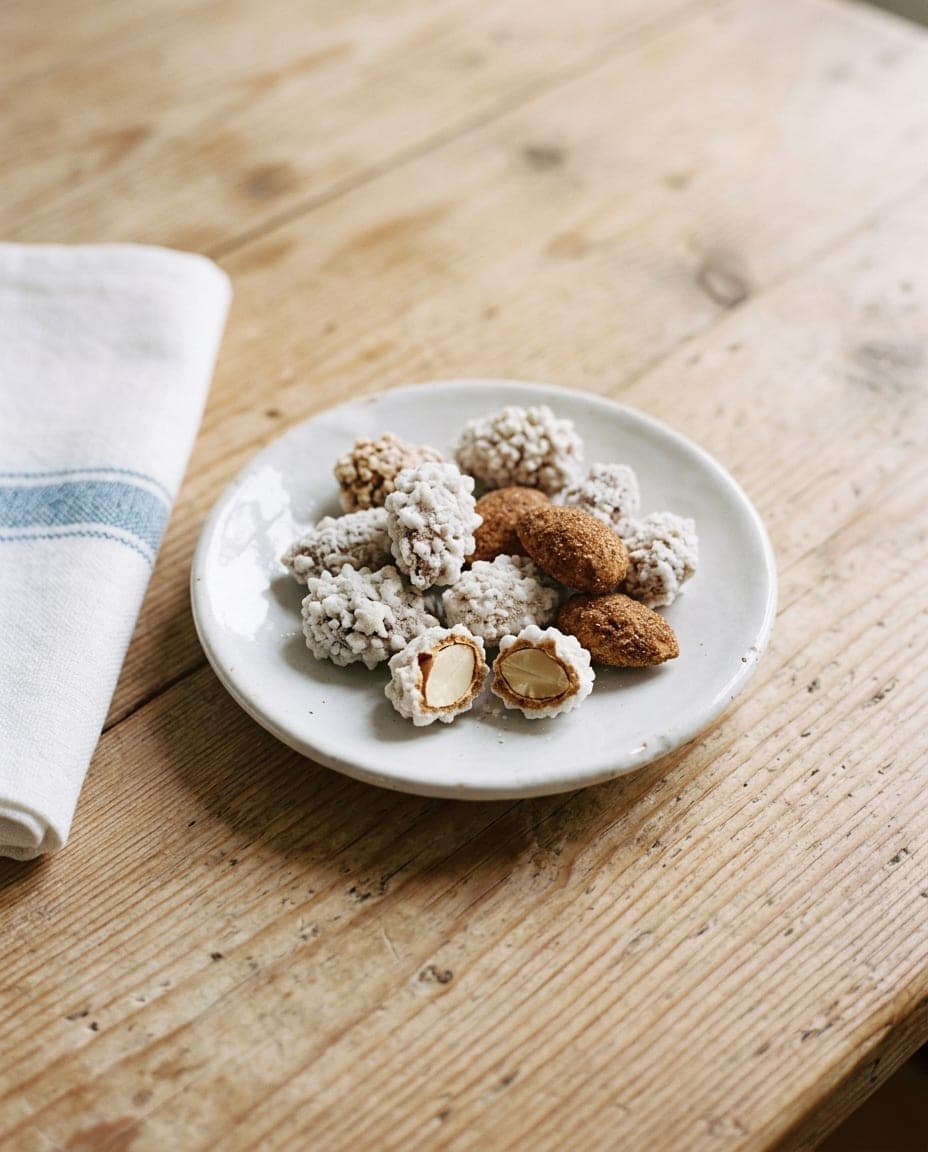
Amêndoas cobertas de Moncorvo are sugar-coated almonds from the town of Torre de Moncorvo, located in the north-eastern part of Portugal's Douro region. They are a regional speciality rather than a dish found across the whole country. The almonds keep their almond shape, a little larger once coated, but they are defined by their coating: a thick, white crust that is rough to the touch and covered in tiny sugar granules. Cobertas simply means covered, and the covering is the whole craft: layer on layer of sugar built up until the surface is white and spiked.
The almonds are not eaten as a snack from a packet. They are a traditional sweet made for Easter and other festivities, and they remain tied to the almond country of the Douro. The almond trees in this part of Portugal flower in February and March, and the arrival of the blossom is a visible event in the orchards, though the nuts themselves are not harvested until late summer. The coated almonds are an edible marker of the spring, at their most visible in the shops and on tables in the weeks around Easter.
How they are made
The creation of amêndoas cobertas de Moncorvo relies on a specific method that is difficult to replicate without experience. The almonds are first peeled and toasted, then spread in a large copper pan kept over a low fire. The cobrideira, the woman who does the coating, pours sugar syrup over them and stirs continuously by hand. This process takes several hours.
The skill lies entirely in managing the temperature of the syrup. If the heat is too low, the sugar does not crystallise correctly; if it is too high, the almonds burn or the sugar turns into a hard caramel. As the water evaporates, the sugar begins to coat the nuts. The confectioner must keep stirring until the sugar forms a thick, white layer around each almond. This layer grows in thickness with each pour of syrup and develops the characteristic granular texture. The result is a shell that is hard and brittle, breaking cleanly when bitten into.
What goes into them
There are very few ingredients involved in making amêndoas cobertas de Moncorvo, but each plays a vital role in the final result. The core of the sweet is the almond itself, sourced from the orchards surrounding Torre de Moncorvo. The almonds are peeled in hot water and toasted before coating, which gives a nutty base flavour that contrasts with the sweetness of the sugar.
The second ingredient is sugar, specifically refined white cane sugar. The classic white version has no added colouring or flavouring. The white appearance comes purely from the way the sugar crystals form around the nut during the slow cooking process. Water is used to dissolve the sugar and create the syrup, but it does not remain in the final product. Besides the classic white, there is a brown version coated with a chocolate syrup and a plainer peladinha with only a thin, smooth layer of sugar, but the defining feature remains the white sugar coating.
How they are eaten
Amêndoas cobertas de Moncorvo are traditionally served during Easter celebrations. They appear on tables as part of the festive meal, often placed in small bowls alongside the other sweets of the season. Because the sugar crust is hard and rough, they are not soft to bite into; instead, they require a firm crunch that releases the nut inside.
The confeitarias of the town make them for the season and sell them by weight from the counter. A glass of Port from the valley below is the usual accompaniment, the sweetness of the sugar against the darker notes of the wine.
Curious facts
- The texture is intentional. The granular surface is not an accident but the result of the specific way the sugar crystallises around the nut during the slow heating process.
- A regional name. While sugar-coated almonds exist elsewhere, the specific term amêndoas cobertas de Moncorvo refers only to those made in this town using this method.
- A protected name. Amêndoa Coberta de Moncorvo has been an EU Protected Geographical Indication since 2018; toasting, syrup-making and coating must all happen in the municipality of Torre de Moncorvo.
- A spring sweet. They belong to Easter above all, and that is when the shops are fullest of them.
- Hand-made craft. The process requires constant manual stirring in a copper basin for hours, making it impossible to mass-produce without losing the characteristic texture.
Where to try it
Torre de Moncorvo, in the confeitarias of the town, in the weeks around Easter. The copper pans are worked in the back of the shops and the almonds are sold by weight over the counter, loose or boxed.
The town sits above the Douro in the almond country of the north-east, and February and March bring the blossom, which fills the hillsides white before the fruit that goes into the sugar is anywhere near ready. Outside the district they are hard to find; the work does not scale.
Where to try it
1 destination
1 region
 Wine Tasting18 destinations
Douro
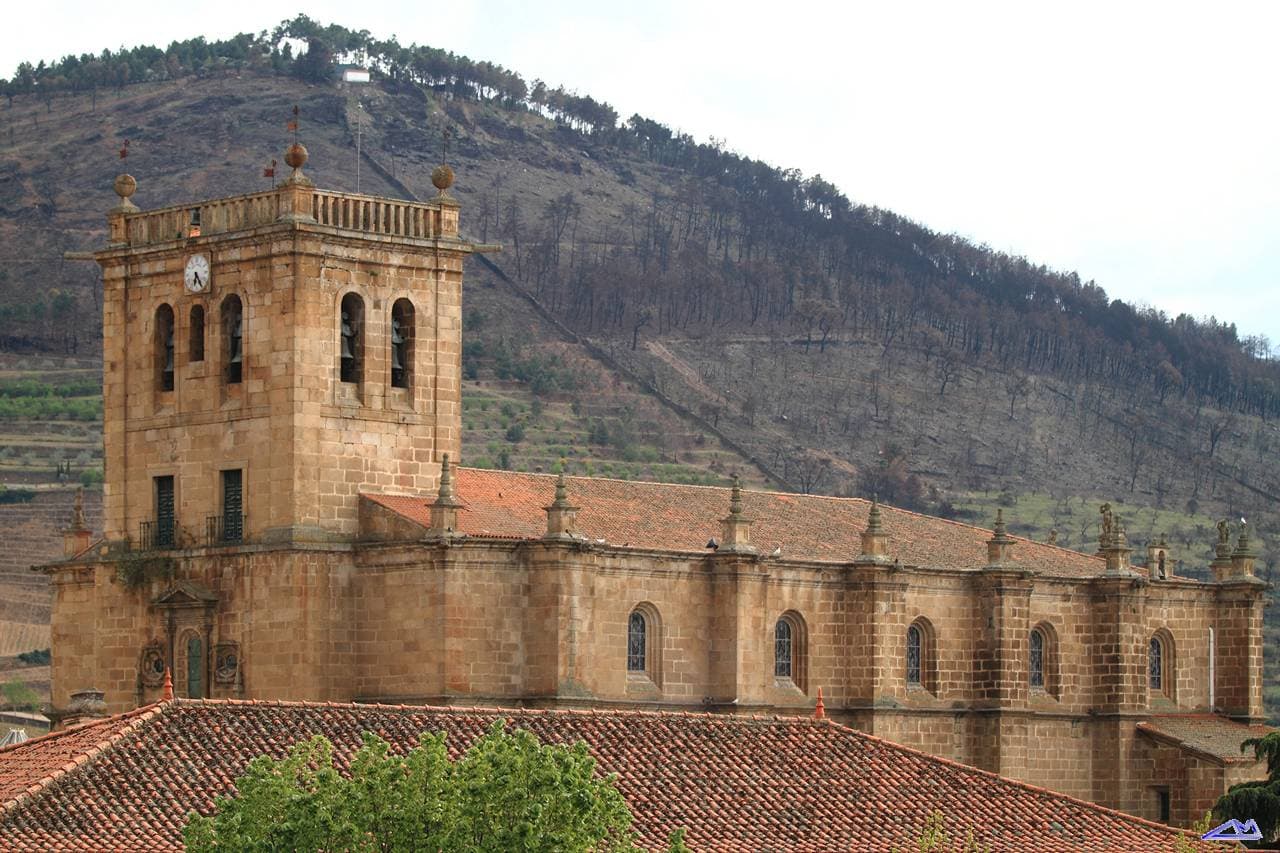
The Douro region, one of Portugal's oldest wine-producing areas, is famous for its terraced vineyards along the Douro River, a UNESCO World Heritage site. Its most notable cities include Peso da Régua, the heart of Port wine production, and Pinhão, known for its picturesque river views and traditional wine estates. The region's unique microclimate supports the growth of the indigenous grapes used for Port and Douro red wines. Off the beaten path, small villages like Lamego feature baroque architecture and ancient pilgrimage routes. Scenic boat trips and hikes reveal breathtaking landscapes, while local festivals celebrate wine and harvest traditions, providing an authentic glimpse into the region's rich culture.
Wine TastingHikingLocal Cuisine