Migas alentejanas
Fried bread pressed into a cake, with pork
- Local name
- Migas alentejanas
- Served with
- Fried pork
- Best eaten at
- An Alentejo tasca
- Pairs with
- Alentejo red
What it is
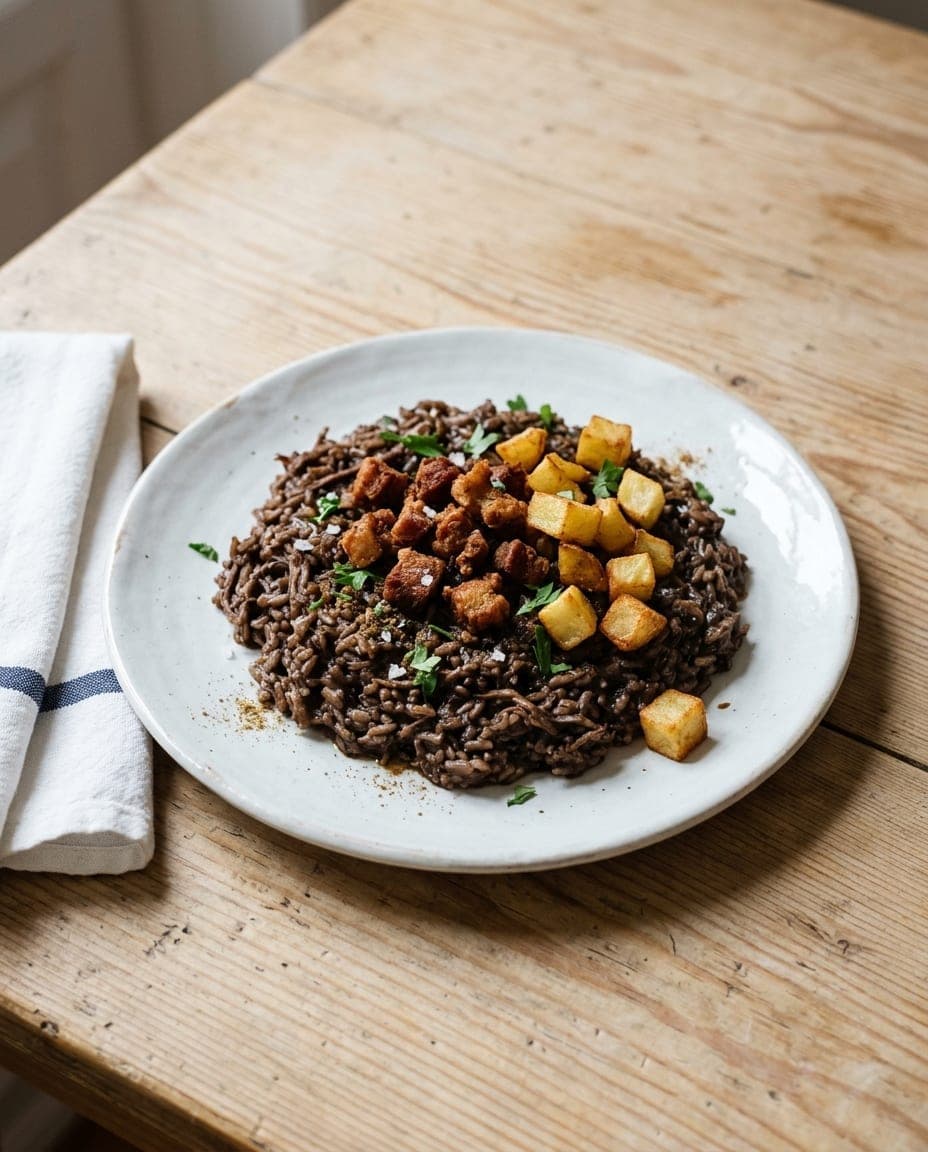
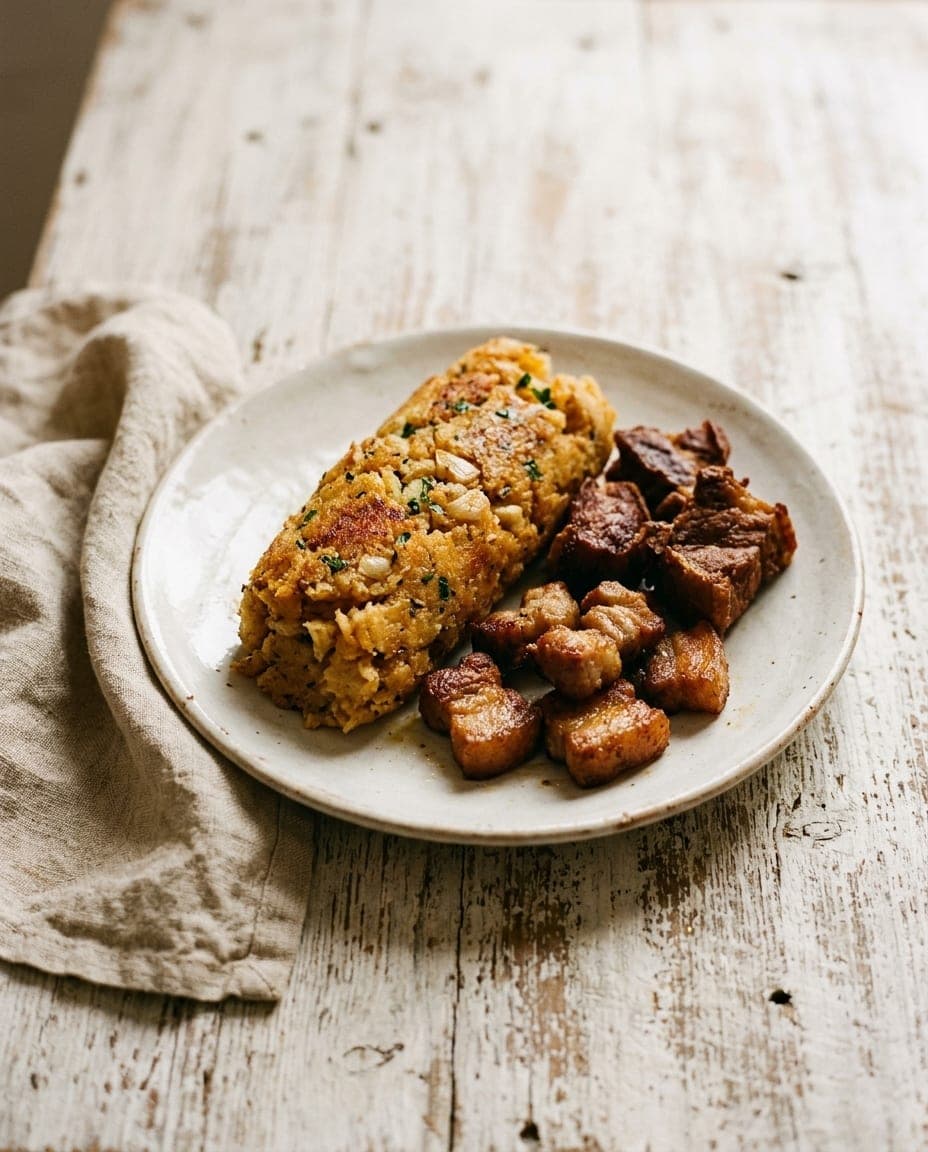
Migas alentejanas are a substantial dish of the Alentejo region, found also in parts of Setúbal. They are not a soup and not a scattering of dry crumbs. The base is stale bread from the region, soaked briefly in water, then worked in a pan with garlic, olive oil and pork fat over heat until it binds into a single soft mass.
The cook rolls the mixture over on itself and serves it in a shape that resembles a thick omelette or a flat cake. It accompanies fried pork — entrecosto, the ribs, or secretos, a small cut hidden in the back fat — and takes the fat from that pan. The dish is hearty, savoury and bound up with the farming life of the Alentejo plains.
A family of bread dishes
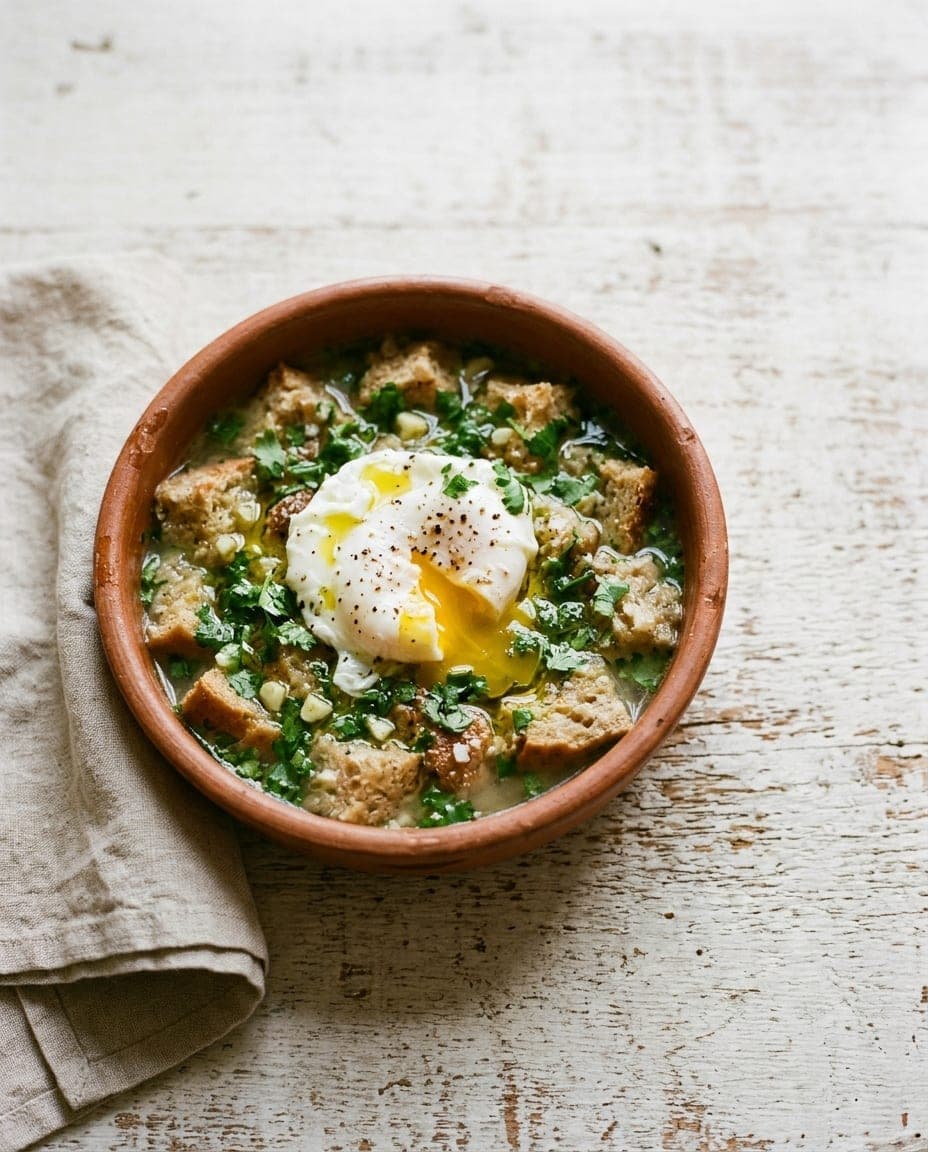
The Alentejo built a whole family of dishes on hard bread and this is the driest of them. It is often confused with açorda, which uses the same bread but soaks it until it softens into a soup-like consistency with broth and herbs. Migas alentejanas are distinct because the bread is cooked until it holds its shape, absorbing the fat rather than dissolving in liquid.
They also differ from Spanish migas, which are usually fried into loose, separate crumbs. The Alentejo version is moist, cohesive and served as a proper side to meat. It is a dish that relies on the quality of the bread and the care with which it is worked in the pan.
How it is made
There is no single official recipe, and every cook guards their own version, but the building blocks are always similar:
- Stale Alentejo bread, usually from a round loaf that has dried out over a day or two, soaked briefly to soften without falling apart.
- Garlic, crushed or sliced, which forms the aromatic base of the dish.
- Olive oil and pork fat, used together to fry the garlic and cook the bread until it binds.
- Pork cuts, such as entrecosto or secretos, fried in the same pan so the bread absorbs their flavour and fat.
- Water or a little broth, added sparingly to help the bread come together into a soft mass.
The result holds its shape when cut. In most versions the pork fat is what binds the bread and what the dish tastes of, along with the garlic.
How to eat it
Migas alentejanas are best eaten at an Alentejo tasca, a small neighbourhood tavern where the kitchen focuses on local produce. They are served alongside fried pork, with the meat often cut into large pieces so the diner can take bites of bread and meat together. The dish is substantial enough to be a main course for lunch or a late dinner.
An Alentejo red is the traditional glass, and a cold beer does the same job in summer. The bread and the meat are meant to be eaten in the same mouthful rather than one after the other.
The work happens in a large iron skillet in sight of the room: the cook turns the bread over on itself until it comes together, and the smell of garlic and pork fat reaches the table well before the plate does.
Curious facts
- A regional speciality. While similar dishes exist across the Iberian Peninsula, migas alentejanas are specific to the Alentejo and parts of Setúbal. They are not found as a standard dish in Lisbon or northern Portugal.
- Not a soup, not crumbs. The dish sits between açorda (a bread soup) and Spanish dry crumbs. It is the only one that forms a cohesive, omelette-like shape.
- The bread must be stale. Fresh bread does not work; it needs to be dry enough to soak up fat without turning into mush. This is why the dish relies on the day-old loaf from local bakeries.
- Water is the variable. How much goes in, and when, decides whether the bread binds or breaks. It is judged by eye and by sound in the pan.
- A shared history. The story of bread and pork is common across rural Europe, but the Alentejo version is distinctive in binding the bread into a single mass rather than scattering it.
Where to try it
An Alentejo tasca in Grândola or Montemor-o-Novo, where the kitchens cook local pork and bake the bread that goes with it. The portions assume a working appetite, the pork comes from the same pan, and the glass beside it is Alentejo red.
Where to try it
2 destinations
 Wine Tasting
Montemor-o-Novo
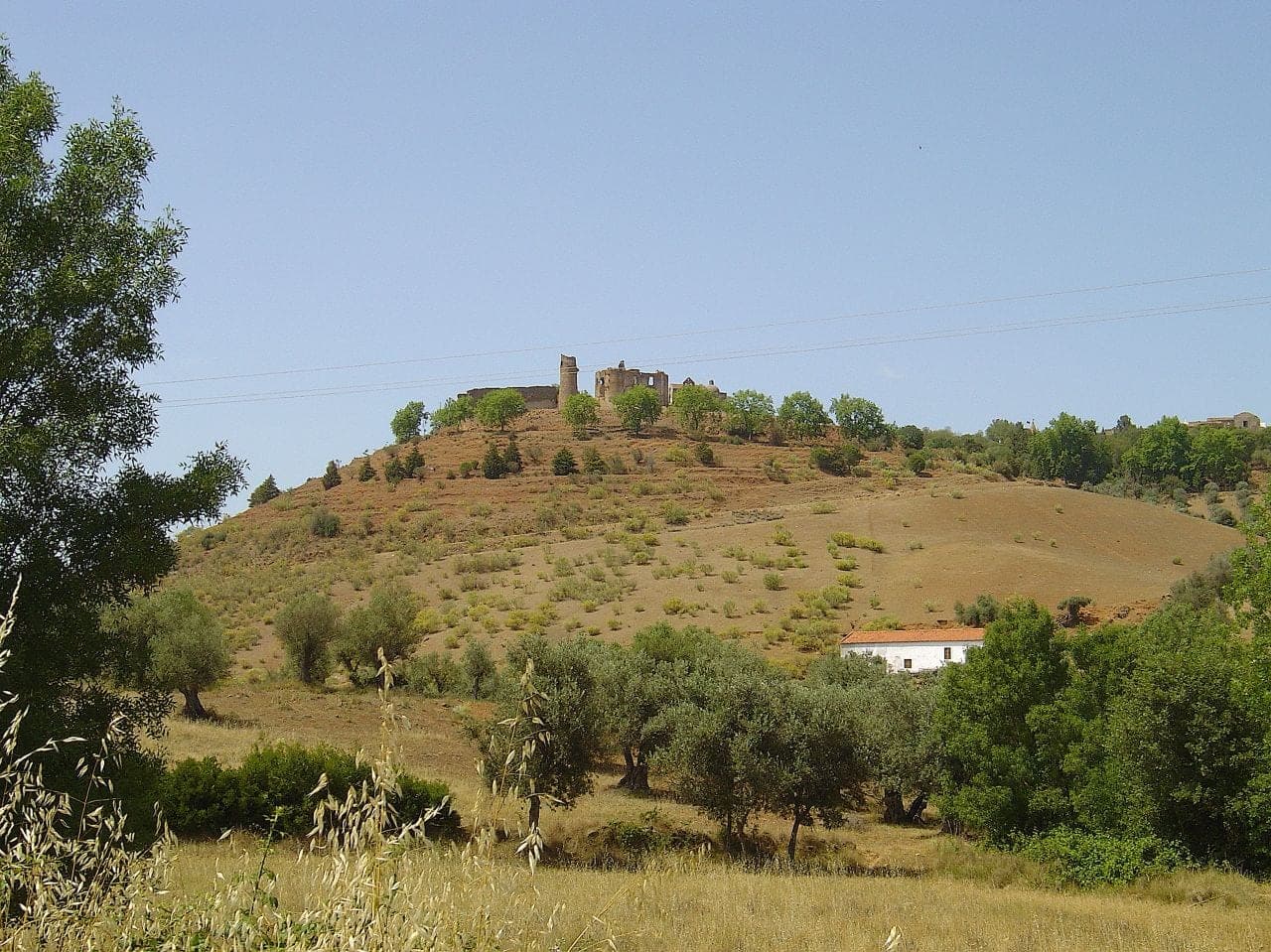
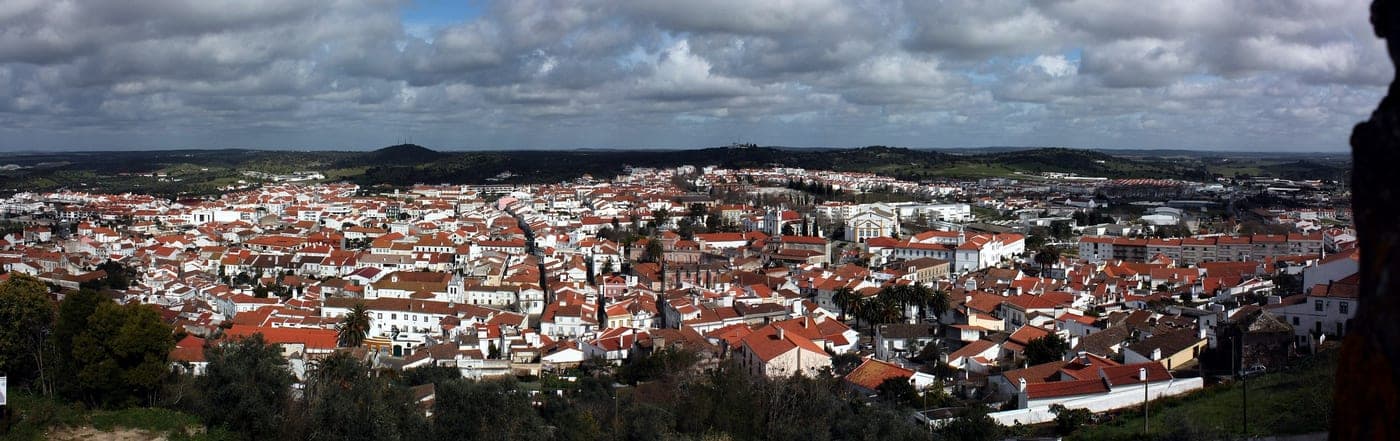
Historic Alentejo town with wine estates and castle ruins.
Wine TastingLocal Cuisine
1 region
 Wine Tasting14 destinations
Alentejo
Alentejo, the largest region in Portugal, features a rich agricultural landscape dotted with vineyards and olive groves. It is known for its unique wines, particularly the robust reds from the Alentejo DOC. The region is home to Évora, a UNESCO World Heritage site with Roman ruins and medieval architecture, and Monsaraz, a hilltop village offering stunning views of the surrounding plains. Alentejo’s coastline, though less frequented, boasts beautiful beaches like Praia da Amália. Additionally, the region is famous for its traditional festivals, such as the Festa de São João in Évora, where locals celebrate with music and dance. Travelers will find a slower pace of life here, with opportunities to explore local markets and sample regional delicacies like açorda and queijos.
Wine TastingHikingLocal Cuisine