Dom Rodrigo
Egg threads and almond, twisted in foil
- Vegetarian
- Local name
- Dom Rodrigo
- Best eaten at
- An Algarve pastelaria
- Pairs with
- Moscatel de Setúbal
What it is
Dom Rodrigo is a small sweet from the Algarve, the southernmost region of Portugal. It belongs to the family of fios de ovos, or egg threads, which are found in many Portuguese convents. Local tradition says the name honours D. Rodrigo de Menezes, who commanded the military garrison at Lagos, though the link rests on lore rather than documents.
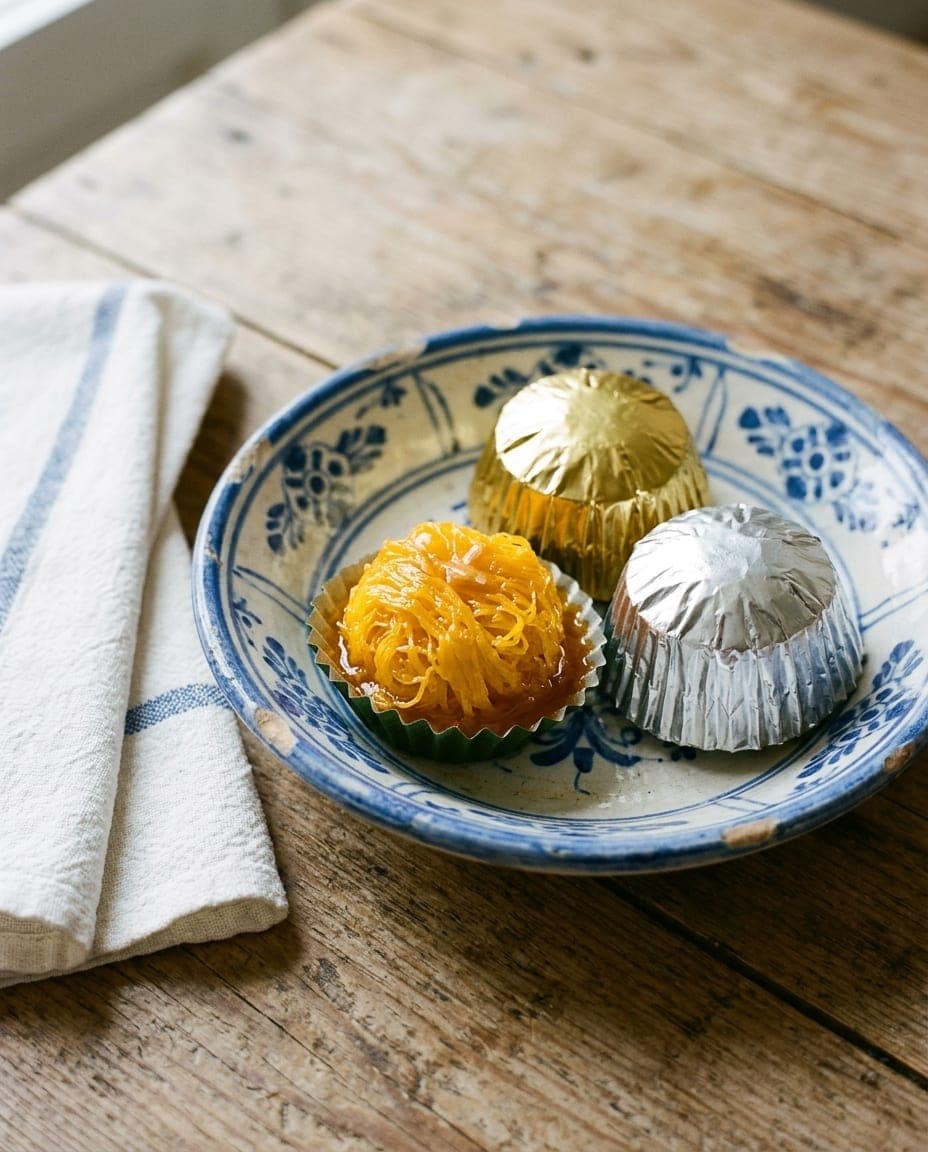
It is made by trickling beaten egg yolk into hot sugar syrup, where it sets into fine golden threads, then combining those threads with a soft cream of yolks, sugar and almonds (ovos-moles com amêndoa) and cinnamon. The sticky mass is shaped into small bundles, given a final heating known as the queima, and wrapped first in greaseproof paper and then in brightly coloured foil. The foil is not just packaging; it is part of the dish's identity. A bowl of Dom Rodrigo looks like a collection of tiny, colourful ribbons rather than a traditional dessert. They are sold by the handful at pastelarias, local pastry shops, and in markets across the region.
How they are made
The technique relies on the specific texture of egg yolks. The yolks are strained and then passed through a funnel with fine spouts into boiling syrup, where they solidify into thin, golden threads. These threads are drained and combined with a thick cream of yolks, sugar and ground almonds, plus a pinch of cinnamon.
The final step involves shaping the sweet mass by hand into small balls, like a ball of yarn. Each one is wrapped in greaseproof paper and then in foil, usually in bright shades of red, blue, green or yellow. The foil prevents the sticky threads from sticking to other sweets or to each other. This method ensures they remain separate until the moment they are unwrapped and eaten.
Where it comes from
Dom Rodrigo is a regional speciality of the Algarve and is not found as widely in other parts of Portugal. It belongs to the convent tradition, where the yolks left over from clarifying wine and starching linen with the whites were turned into sweets rather than thrown away. Tradition places its origin with the Carmelite nuns of the Convento de Nossa Senhora do Carmo in Lagos, probably in the 18th century, and Lagos and Tavira are the towns most associated with it. In 2025 "Dom Rodrigo do Algarve" was entered on Portugal's national list of Protected Geographical Indications, with EU recognition the next step.
The Algarve has long been known for its pastelarias, small neighbourhood bakeries that focus on traditional recipes. These shops are the primary place where Dom Rodrigo can be found. They are often simple in decor, with glass cases filled with trays of various sweets. The region's history of trade and agriculture influenced the ingredients used: almonds from the local orchards and eggs from nearby farms.
How to eat it
They are sold loose or in small packets at a pastelaria and eaten in the hand. Unwrapping the foil reveals a cluster of soft golden threads holding together in a small ball. The texture is chewy and dense, with the sweetness of the sugar balanced by the nuttiness of the almonds.
The flavour is mild but distinct, with the cinnamon adding a warm note that complements the fat of the egg yolks. It is very sweet, a treat best savoured in small amounts. One pairing is Moscatel de Setúbal, a sweet fortified wine from the Setúbal peninsula south of Lisbon, which cuts through the density of the pastry. Some locals also enjoy it with a cup of coffee or a glass of milk.
Curious facts
- The foil is essential. Without the coloured wrapping, the sticky threads would clump together and lose their individual form. The foil is part of the dish's identity, not just packaging.
- A local name only. While fios de ovos are made in many parts of Portugal, the name Dom Rodrigo is specific to the Algarve and does not appear elsewhere.
- No single recipe. Every pastelaria has its own version of the sweet, varying slightly in the ratio of almonds to egg threads or the intensity of the cinnamon.
- A protected name. Since 2025 "Dom Rodrigo do Algarve" has been a nationally registered PGI, which ties production to the region's 16 municipalities.
- It travels as a gift. The foil bundles survive a journey, which is why they are sold boxed in Algarve shops and carried home by the dozen.
Where to try it
A pastelaria anywhere in the Algarve, coast or inland. Lagos has several in the old centre, and the almond country behind the coast — where the trees flower in February — has its own.
They are rarely seen outside the region, even in Lisbon, which is unusual for a Portuguese convent sweet and is mostly a matter of the Algarve keeping it.
Where to try it
1 destination
 Boat Rentals
Lagos
Beautiful coastal town with boat rentals to explore dramatic cliffs, grottoes, and golden beaches.
Boat Rentals
1 region
 Wine Tasting14 destinations
Algarve
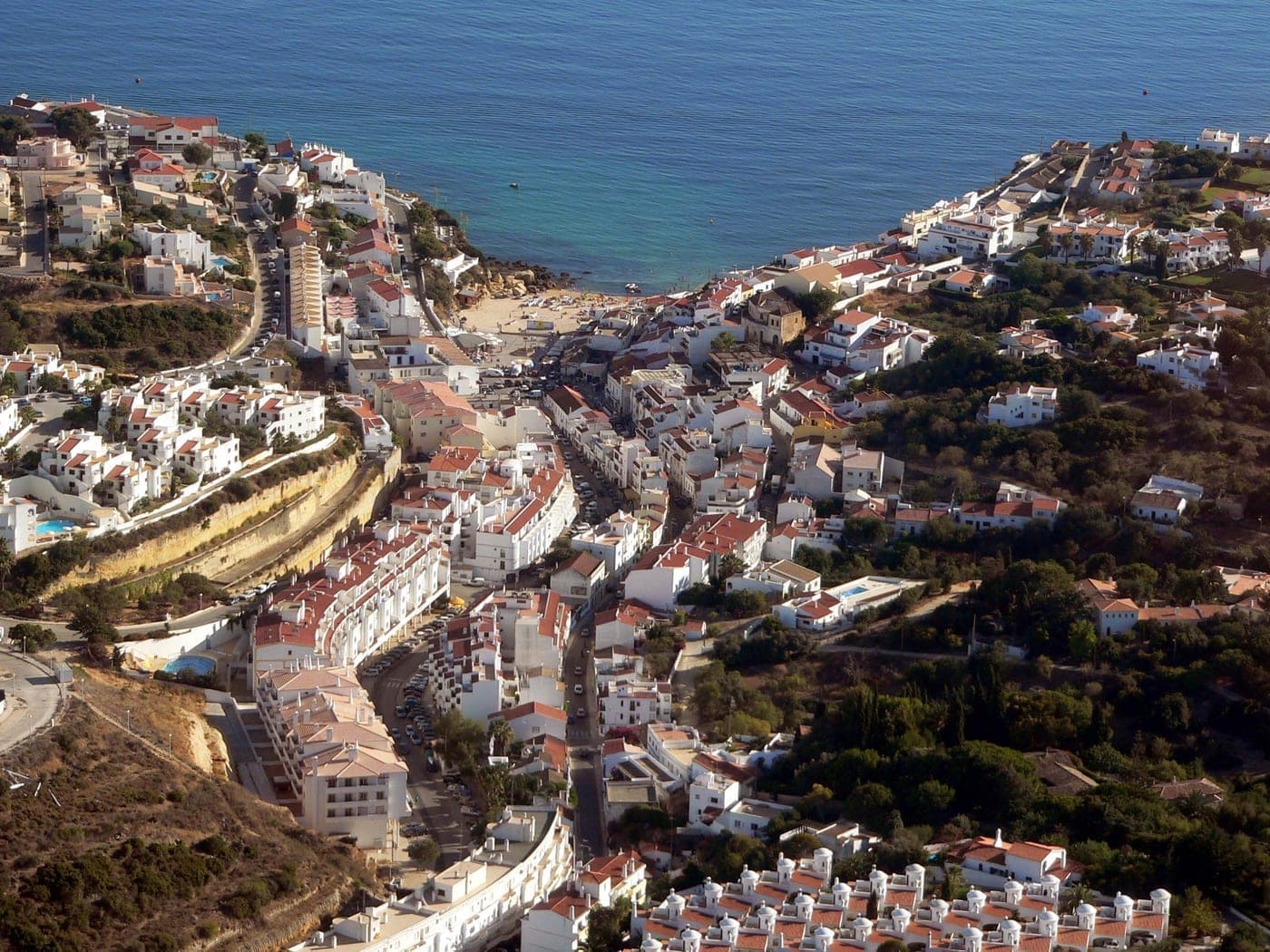
The Algarve, Portugal's southernmost region, is famed for its stunning coastline and rich cultural heritage. Known for its picturesque cliffs and golden beaches, the area also boasts a unique blend of Moorish and Portuguese architecture. Lagos offers historical significance with its ancient fortifications, while Silves features a well-preserved castle reflecting its past as a Moorish stronghold. The region is celebrated for its local gastronomy, particularly fresh seafood and traditional dishes like cataplana. Off the beaten path, small towns like Tavira and Aljezur showcase authentic Portuguese life, with traditional festivals and local artisan markets. The Algarve is a treasure trove of natural parks, hiking trails, and charming villages, perfect for a deeper exploration of Portugal's diverse landscape.
Wine TastingHikingBoat RentalsLocal Cuisine