Pierogi
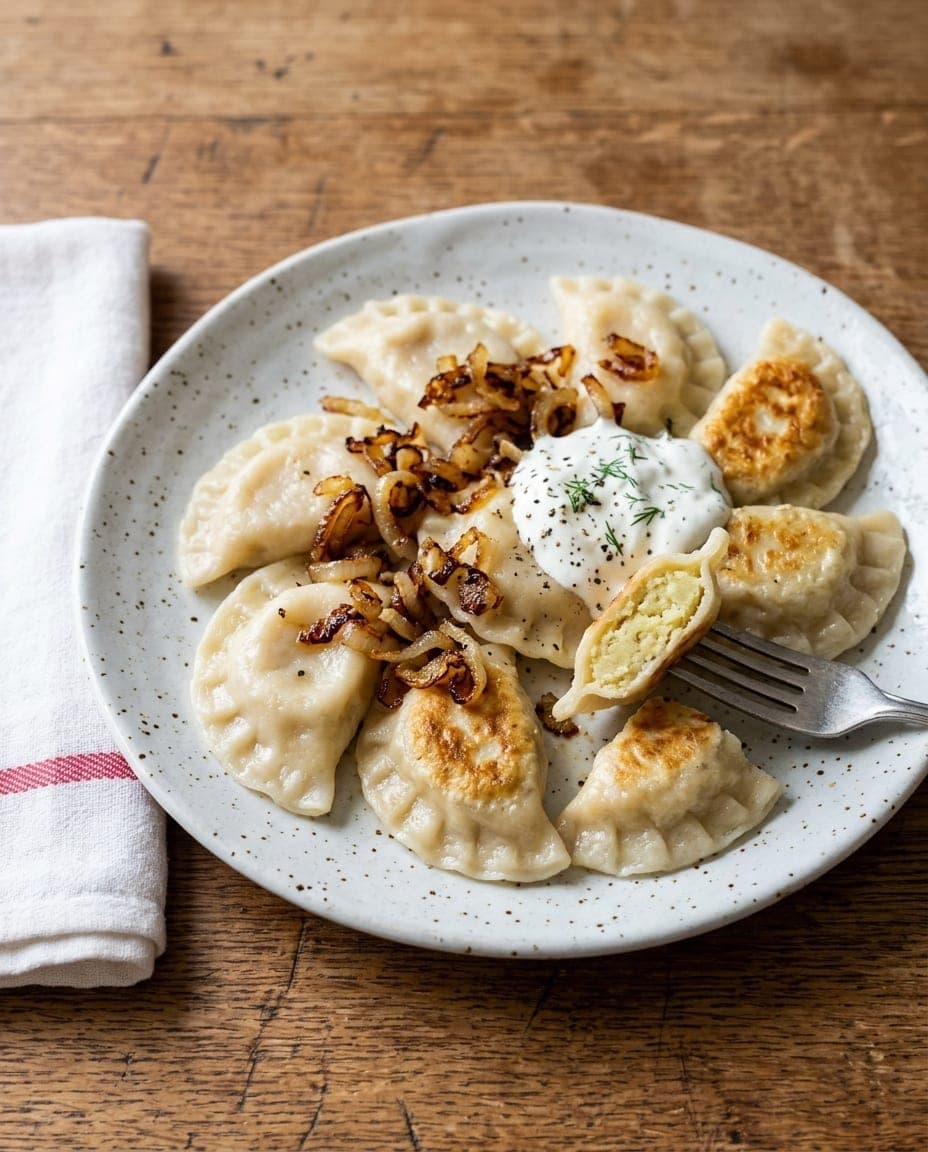
Poland's beloved filled dumplings
- Local name
- Pierogi
- Served with
- Fried onions, sour cream
- Best eaten at
- A milk bar (bar mleczny)
- Pairs with
- Kompot or a cold lager
What they are
Pierogi are half-moon-shaped dumplings made from a thin, soft dough wrapped around a filling, then boiled and often finished in a pan. They are eaten everywhere in Poland, from grandmothers' kitchens and student canteens to elegant restaurants, and they are probably the country's best-known dish abroad. If Poland had a single comfort food, this would be it.
The word itself is already plural. One dumpling is a pieróg, several are pierogi, so in Polish you never say "pierogis". The dough is simple, the shape is familiar, but the variety is enormous. Pierogi can be savoury or sweet, filled with potatoes and cheese, meat, cabbage and mushrooms, buckwheat, spinach or summer fruit. Every region and every family has its favourites.
Where they come from
Filled dumplings are found across much of Central and Eastern Europe and Asia, and nobody can say exactly when or how they arrived in Poland. The idea most likely travelled along trade routes from the east, and pierogi have been part of Polish cooking for many centuries.
Poland does have its own legends, and they centre on Saint Hyacinth (Święty Jacek), a 13th-century Dominican friar from Silesia who travelled widely, including to Kyiv, and is often credited in popular tradition with bringing pierogi to Poland. One story tells how, in 1238, a hailstorm destroyed the crops in the village of Kościelec. Hyacinth told the villagers to pray, the crops were restored overnight, and the grateful villagers served him pierogi made from the harvest. Another has him feeding the hungry with pierogi during the famine that followed the Mongol invasion of 1241. The saint and his dumplings live on in an old Polish exclamation, "Święty Jacku z pierogami!", "Saint Hyacinth with his pierogi!", a cry for help in a hopeless situation.
For centuries pierogi were associated with special occasions and with particular seasons. Certain types were made for weddings, Christmas Eve or the end of the harvest, and some regional varieties are still tied to specific holidays today.
What goes into them
The dough is usually just flour, water and sometimes egg or a little oil, rolled thin, cut into circles, filled and pinched closed. The filling is where pierogi become personal. The most popular types include:
- Pierogi ruskie – the classic. Potato, twaróg (Polish curd cheese) and fried onion. Despite the name, "ruskie" does not mean "Russian" but refers to Ruthenia, a historical region in today's western Ukraine. They are vegetarian and the most widely eaten pierogi in Poland.
- Pierogi z kapustą i grzybami – sauerkraut and wild mushrooms, a traditional dish for Wigilia, the meatless Christmas Eve dinner.
- Pierogi z mięsem – minced meat, often made from leftover roasted or boiled meat.
- Pierogi z serem – sweet curd cheese, sometimes with raisins or vanilla, served with sugar and cream.
- Pierogi z owocami – summer fruit such as blueberries, strawberries, cherries or plums. Blueberry pierogi (pierogi z jagodami) are a seasonal favourite, topped with sweetened sour cream.
Whether pierogi are vegetarian depends entirely on the filling and the topping, so it is always worth asking.
How to eat them
Pierogi are first boiled until they float, then served right away or fried in butter until golden at the edges. Both versions are common, and many Poles will tell you that pierogi reheated in a pan the next day are even better than fresh ones.
Savoury pierogi are usually topped with fried onions, melted butter or skwarki, crispy little cubes of fried pork fat. A spoonful of sour cream on the side is almost obligatory. Sweet pierogi come with sour cream, sugar, or a mix of both, and sometimes a dusting of cinnamon.
In restaurants, pierogi are usually served as a main course in portions of eight to twelve, and many places offer a mixed plate so you can try several fillings at once. In a traditional milk bar (bar mleczny), a type of simple, inexpensive canteen the first of which opened in Warsaw in 1896, pierogi are one of the most popular orders and a great introduction to everyday Polish food.
Curious facts
- A festival of their own. Every August, Kraków holds a pierogi festival on the Mały Rynek square near the Old Town, where cooks from across the country compete with traditional and inventive fillings and visitors taste their way through stall after stall.
- Shaped by hand. The crimped edge of a pieróg is traditionally pinched by hand, and in many families making pierogi is a collective event, with several generations around the kitchen table folding hundreds of dumplings at once before the holidays.
- A Christmas Eve fixture. Sauerkraut-and-mushroom pierogi are among the twelve meatless dishes traditionally served at Polish Christmas Eve dinner, together with beetroot soup and carp.
- Many cousins. Pierogi have relatives all over the world, from Ukrainian varenyky and Russian pelmeni to Italian ravioli and Chinese jiaozi. Each has its own shape and fillings, but all share the same simple idea: a little parcel of dough with something good inside.
- Poland's diaspora favourite. Polish emigrants carried pierogi to North America, where they became a staple in places with large Polish communities. Some towns there celebrate them with festivals and even giant pierogi sculptures.
Where to try them
You can eat pierogi almost anywhere in Poland, but a few experiences stand out. Visit a milk bar in Warsaw or Kraków for an honest, everyday plate. In summer, look for blueberry pierogi in the countryside and lake regions, when the berries are fresh from the forest. Around Christmas, ask for sauerkraut and mushroom pierogi, and in the eastern regions try pierogi made with buckwheat or local cheeses. Wherever you go, order a mixed plate and decide for yourself which filling is the best.
Where to try it
1 destination
4 regions

Lodz
Lodz is a significant cultural hub in Poland, known for its rich textile industry history. It's the third-largest city in the country and features a unique blend of industrial heritage and modern art. The city is famous for being the birthplace of filmmaker Andrzej Wajda and has numerous museums, including the Museum of the Factory, which showcases its industrial past. The vibrant Piotrkowska Street, lined with eclectic architecture, is ideal for leisurely strolls. Nearby, the Lodz Hills Landscape Park offers scenic hiking trails. The region is also known for its street art scene, with murals that tell stories of the city's history. This area has a unique atmosphere, distinct from typical tourist destinations.
 Castles1 destination
Masovia
Masovia, the largest region in Poland, is known for its rich history and cultural heritage. Warsaw, the capital city, showcases a blend of modernity and tradition, particularly in the UNESCO-listed Old Town, reconstructed after WWII. The region features picturesque landscapes, including the Vistula River and numerous parks. Off the beaten path, towns like Płock, with its historic cathedral, and the idyllic Kampinos National Park offer a quiet retreat. Masovia also hosts various local festivals celebrating traditional music and cuisine, such as pierogi and żurek. The region's rural areas are dotted with charming villages that highlight local craftsmanship and agriculture, making it a rewarding area for deep exploration.
Castles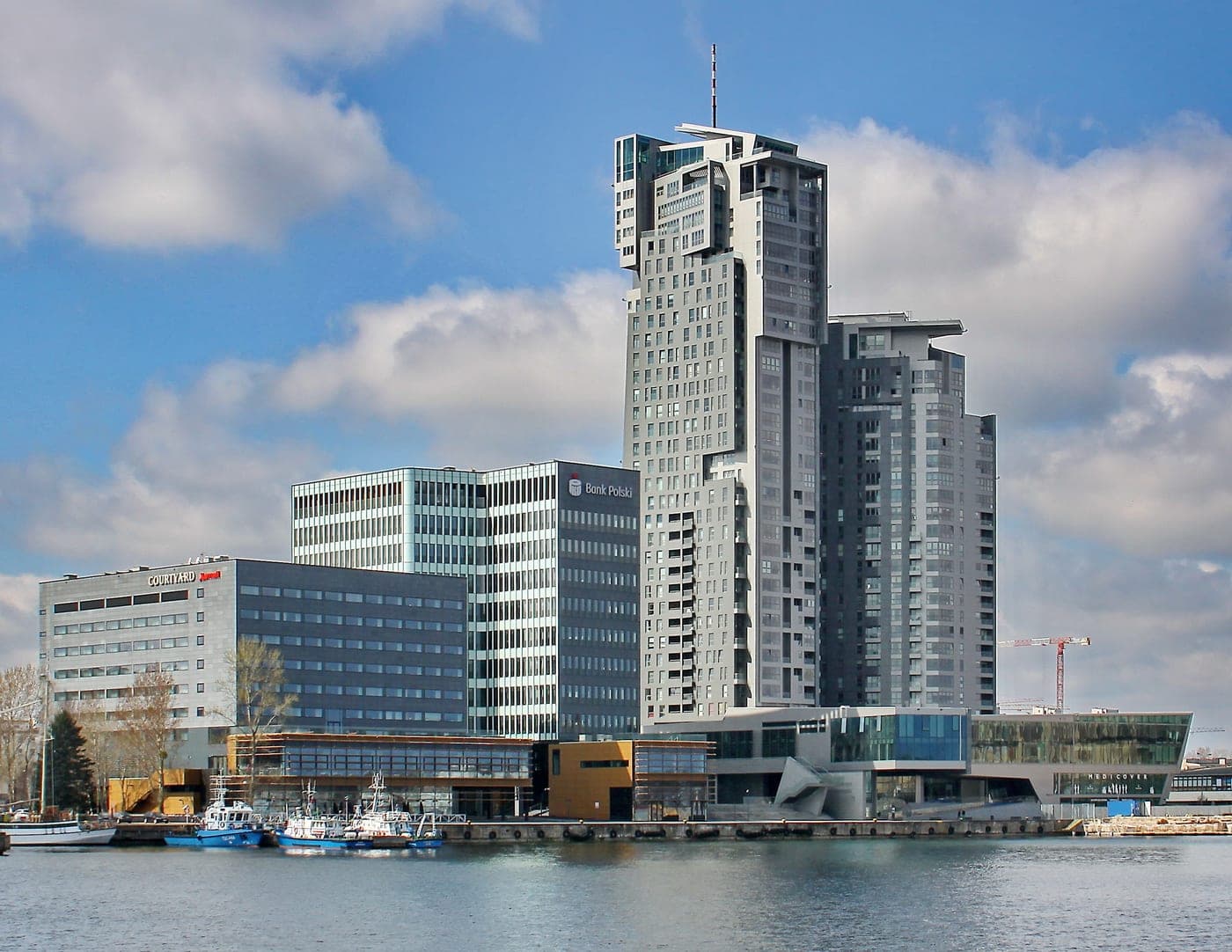 Boat Rentals4 destinations
Pomerania
Pomerania stretches along Poland's only sea coast, from the brick gables of Gdańsk to the pine forests and lake country further inland. The pace here follows the water and the season: fishing boats going out at dawn, amber traders setting up their stalls, wooden chairs filling the promenade cafés as the light turns gold in the evening. It is a region built for slow movement, with old town cores small enough to know by foot and a landscape that rewards attention rather than speed. Gdańsk sits at the heart of it, a Hanseatic port whose merchant houses, granaries and long waterfront still trace the shape of a medieval trading city. Its streets open onto the Motława river, where grain barges once queued and where cafés now spill onto the cobbles. A short distance along the coast, Sopot keeps a different rhythm: a wooden pier reaching into the Baltic, spa villas from the belle époque, and a beach that fills slowly through the day rather than all at once. Gdynia, younger and built largely in the interwar decades, shows a different Pomerania again — clean modernist lines, a working harbour, and a seafront that mixes cargo ships with sailing boats. Inland, the region softens into Kashubia, a landscape of lakes, birch groves and villages where wooden architecture and folk crafts have survived largely intact. Painted furniture, embroidery and lace are still made here in small workshops, often in the same families for generations. The land rises gently into a range of low hills known locally as the Kashubian Switzerland, a name that says more about local pride than actual altitude — but the effect, with lakes appearing between wooded ridges, is genuinely striking. Wooden churches, some dating back centuries, stand in villages across this belt of countryside, their dark shingled roofs and plain interiors a quiet counterpoint to the brick grandeur of the coastal cities. The coast itself has its own slow attractions. West of Gdańsk, the Hel Peninsula narrows to a thin strip of dunes and pine, with fishing villages that still land herring and cod each morning. Further west, Słowiński National Park protects a belt of shifting sand dunes, some tall enough to bury trees, pushed steadily inland by wind off the Baltic. Between the dunes and the sea, lagoons and reed beds shelter a variety of birdlife, and the whole stretch feels closer to a desert than to a typical northern coastline. Market squares across Pomerania's smaller towns — Kartuzy, Kościerzyna, Puck — keep a rhythm built around weekly markets, church bells and the changing light off nearby lakes or the sea. Food here leans on what the coast and forests provide: smoked fish sold straight from the smokehouse, dumplings filled with blueberries or mushrooms, and rye bread served everywhere from village bakeries to city cafés. Amber, washed up on Baltic beaches for centuries, is worked into jewellery in workshops that still line Gdańsk's old streets, a craft as tied to the region as the fishing itself. What ties Pomerania together is this contrast held in balance: Hanseatic brick against wooden village churches, open sea against quiet inland lakes, a working harbour against a folk-art tradition that has barely changed. Towns are close enough to link into a single, unhurried route, yet distinct enough that each one adds something the last did not — a port, a spa town, a lake, a stretch of dune. It rewards a traveller willing to slow down to the region's own pace: to sit with a coffee by the Motława, walk a pier at low tide, or watch a Kashubian potter shape clay the same way it has been shaped here for generations.
Boat RentalsHikingLocal Cuisine
Swietokrzyskie
Swietokrzyskie is a region in south-central Poland known for its unique landscapes and rich cultural heritage. Recognized for the Świętokrzyskie Mountains, it features the oldest mountains in Europe, offering diverse hiking trails and stunning natural vistas. The region's capital, Kielce, is home to historic sites such as the Palace of the Kraków Bishops. Additionally, the area boasts the intriguing Krzyżtopór Castle, which reflects the grandeur of its past. Local traditions include crafts like pottery and weaving, with festivals celebrating folk culture. Swietokrzyskie's natural parks, such as the Świętokrzyski National Park, provide opportunities for eco-tourism and immersion in local flora and fauna, making it a hidden gem for those seeking authentic experiences away from mainstream tourism.