Babka ziemniaczana
A baked grated-potato cake from Podlasie
- Local name
- Babka ziemniaczana
- Served with
- Sour cream, bacon cracklings
- Best eaten at
- A Podlasie family table
- Pairs with
- Kefir or Polish lager
What it is
Babka ziemniaczana is a substantial baked cake made from grated raw potato, fried onions and pieces of bacon or smoked pork. It is not a sweet pastry despite the name babka, which usually refers to a sweet yeast cake in Polish cuisine; this one is savoury and dense, and belongs to the farm cooking of Podlasie, the north-eastern borderland of Poland.
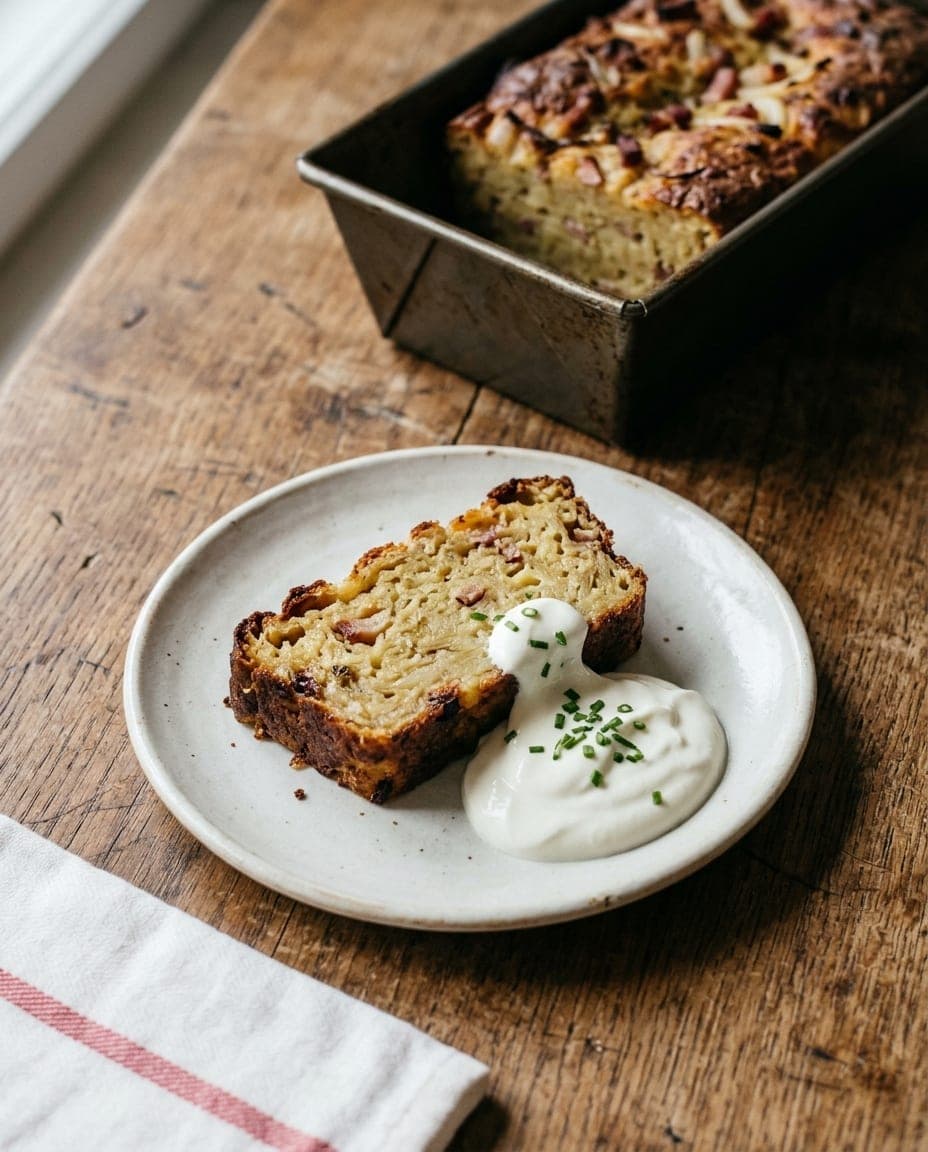
The dish arrives as a thick slab with a dark, crusted top and a moist, creamy interior. It is cut into portions and eaten hot from the baking tin, often accompanied by a generous spoonful of sour cream and crisp bacon cracklings. The texture is key: the potatoes are grated finely to release their starch, which binds the mixture together as it bakes, while the meat adds a smoky saltiness that cuts through the earthy potato flavour.
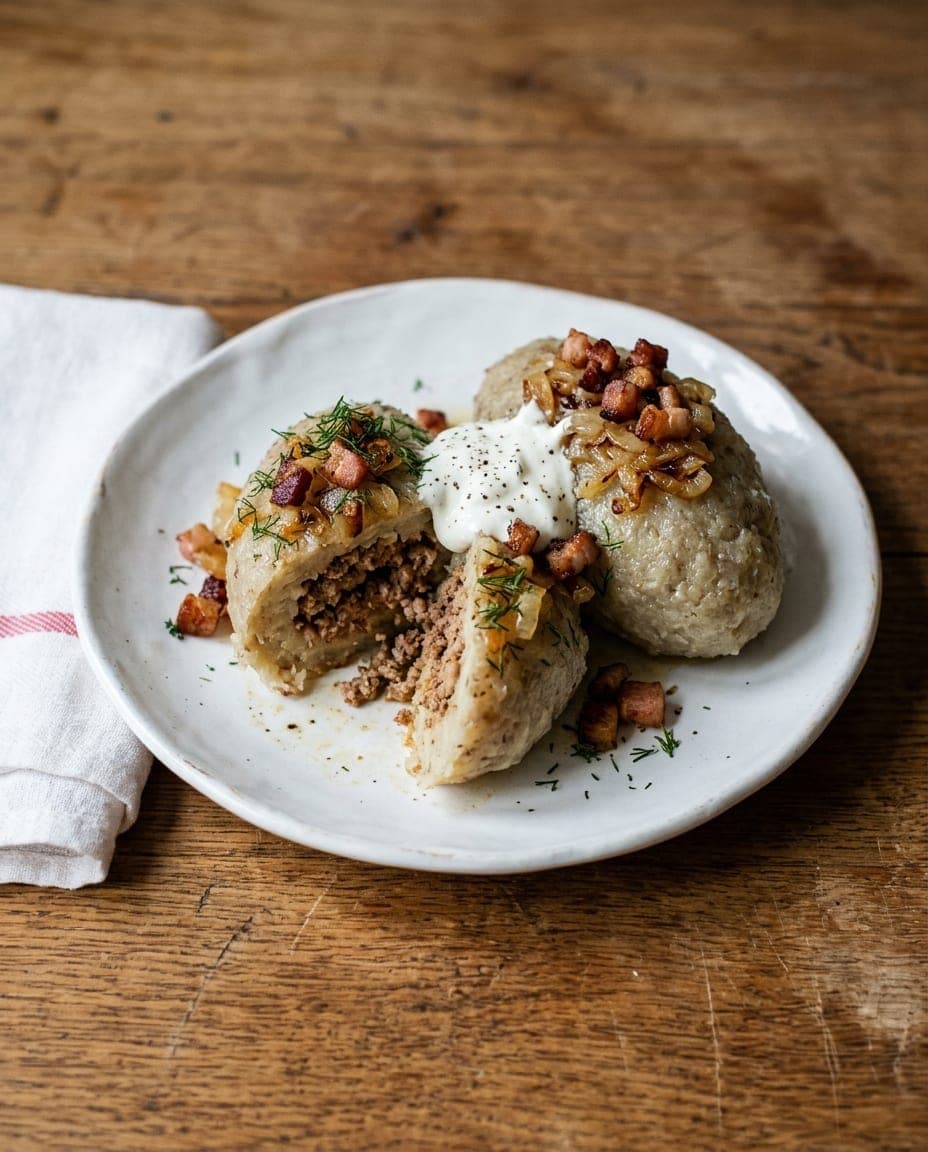
This is not a dish found on every menu across Poland. It is a regional speciality, closely tied to the traditions of Podlaskie and the wider north-east, an area where the climate once favoured hardy crops like potatoes over wheat or rye. The cooking style shares DNA with other potato-heavy dishes from the region, such as kartacze (potato dumplings) and kiszka ziemniaczana (grated potato baked in a pork casing), all relying on pork fat to carry the flavour in a landscape where fuel was once scarce and calories were essential.
The history of the north-east kitchen
The potato arrived in Poland centuries ago and spread through peasant farming in the 18th and 19th centuries. In the north-east, the potato proved reliable where other grains struggled with the soil or the short growing season. Farming households needed a way to stretch their meagre supplies of meat and flour, so they turned to the root crop that grew abundantly in the local fields.
Babka ziemniaczana likely emerged from this practical need rather than a specific invention. It is a dish of the chata, the rural farmhouse, where large baking dishes were common in traditional hearth ovens. The recipe was passed down through generations of women who cooked for large families and farmworkers, adapting the proportions of potato to meat based on what was available that week.
The region's culinary identity is a blend of Polish, Lithuanian and Belarusian influences, reflecting the complex history of the borderlands; close cousins of the dish are the Belarusian babka and the Lithuanian kugelis. In this kitchen, the potato is not just a side vegetable but the main event. The dish remains a staple in family tables during the colder months, when fresh produce is limited and warm, filling food is a necessity.
What goes into it
The preparation is straightforward, relying on the quality of the raw ingredients rather than complex technique:
- Raw potatoes, grated finely to create a dense batter that holds its shape when baked.
- Fried onions, cooked until soft and sweet to add moisture and depth to the potato base.
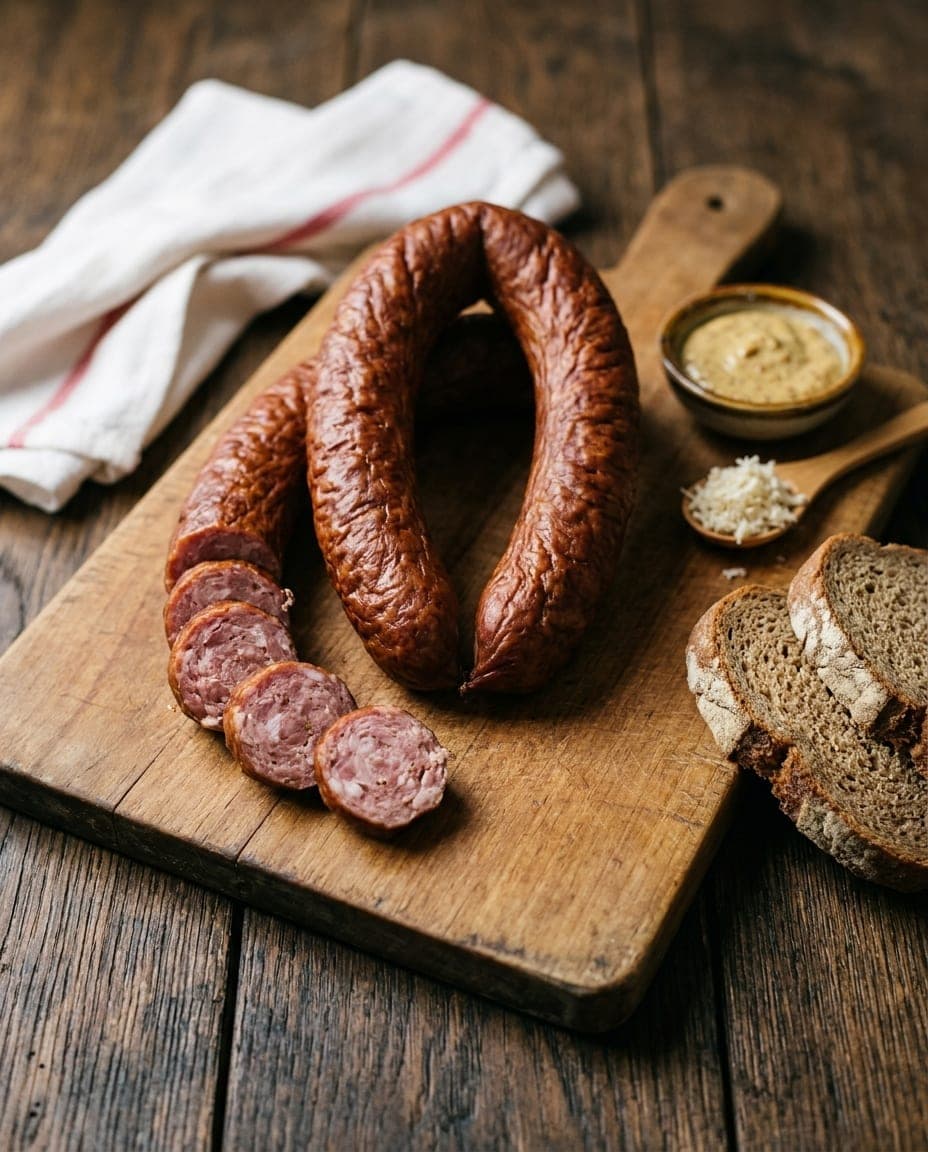
- Bacon or smoked pork, chopped into small pieces to provide salt, fat and a smoky aroma.
- Egg and a little flour, used as binders to hold the grated potato and meat together in the dish.
- Seasoning, typically just salt and pepper, allowing the flavour of the potato and pork to dominate. Some cooks add forest mushrooms.
The mixture is spread in a deep baking tin or earthenware dish and cooked until the top forms a dark, crispy crust while the inside remains soft. It is often served directly from the pan it was baked in, preserving the warmth and the texture of that crust.
How to eat it
Babka ziemniaczana is most commonly eaten as a main course for lunch or dinner, particularly on chilly days when a hot, filling meal is required. It is cut into portions while still warm and served with a dollop of sour cream on top or on the side, often with a sauce of sour cream and fried bacon spooned over.
The dish pairs well with a glass of kefir, a fermented milk drink that is common in the region, or a cold Polish lager. The acidity of the kefir or the bitterness of the beer cuts the pork fat and the starch of the potato. It is also traditional to save the leftovers; once cooled, the cake can be sliced and fried again until crisp, turning it into a quick second meal.
Curious facts
- A name that confuses. The word babka usually means a sweet yeast cake in Poland, yet this savoury potato dish carries the same name, probably for its dense, cake-like texture.
- Not a national dish. Unlike pierogi or bigos, this cake is rarely found outside the north-east; it is a specific marker of Podlasie identity, and it is on Poland's official List of Traditional Products for Podlaskie.
- A cold weather staple. The dish is cooked all year but feels most at home in autumn and winter, when the need for high-calorie food is greatest.
- Leftovers reappear. It is common practice to fry the cooled cake the next day, turning it into a crispy snack or light lunch.
Where to try it
The most authentic version of this dish is found in a family-run restaurant or a guesthouse in Podlaskie, particularly in villages around Białystok or in the rural areas near the borders with Belarus and Lithuania. It turns up on the menu of the small agroturystyka farms that cook for guests in the forest-and-lake country of the north-east.
The sign to watch for is kuchnia regionalna — regional cooking — on the board outside. Restaurants elsewhere in Poland rarely bother with it; in Podlasie it also turns up in delis and Białystok restaurants, but it belongs above all to the rural kitchen, where it is still baked in the same heavy tins.
Where to try it
1 region

Podlaskie
Podlaskie, the largest region in northeastern Poland, is characterized by its lush landscapes, diverse wildlife, and rich cultural heritage. The Białowieża Forest, a UNESCO World Heritage site, is home to the European bison and offers extensive hiking trails. The region's unique mix of Polish, Belarusian, and Lithuanian influences is evident in its architecture and local traditions. Cities like Białystok, the capital, feature historic market squares and vibrant parks. Notably, the area is known for its wooden Orthodox churches, and the nearby Tykocin offers a glimpse into the past with its well-preserved synagogue. Podlaskie's natural beauty is complemented by its traditional cuisine, including regional specialties like sękacz, a unique cake made from a rotating spit.