Fafernuchy
Kurpie peppery biscuits with honey and carrot
- Vegetarian
- Local name
- Fafernuchy
- Best eaten at
- A Kurpie home at New Year
What it is
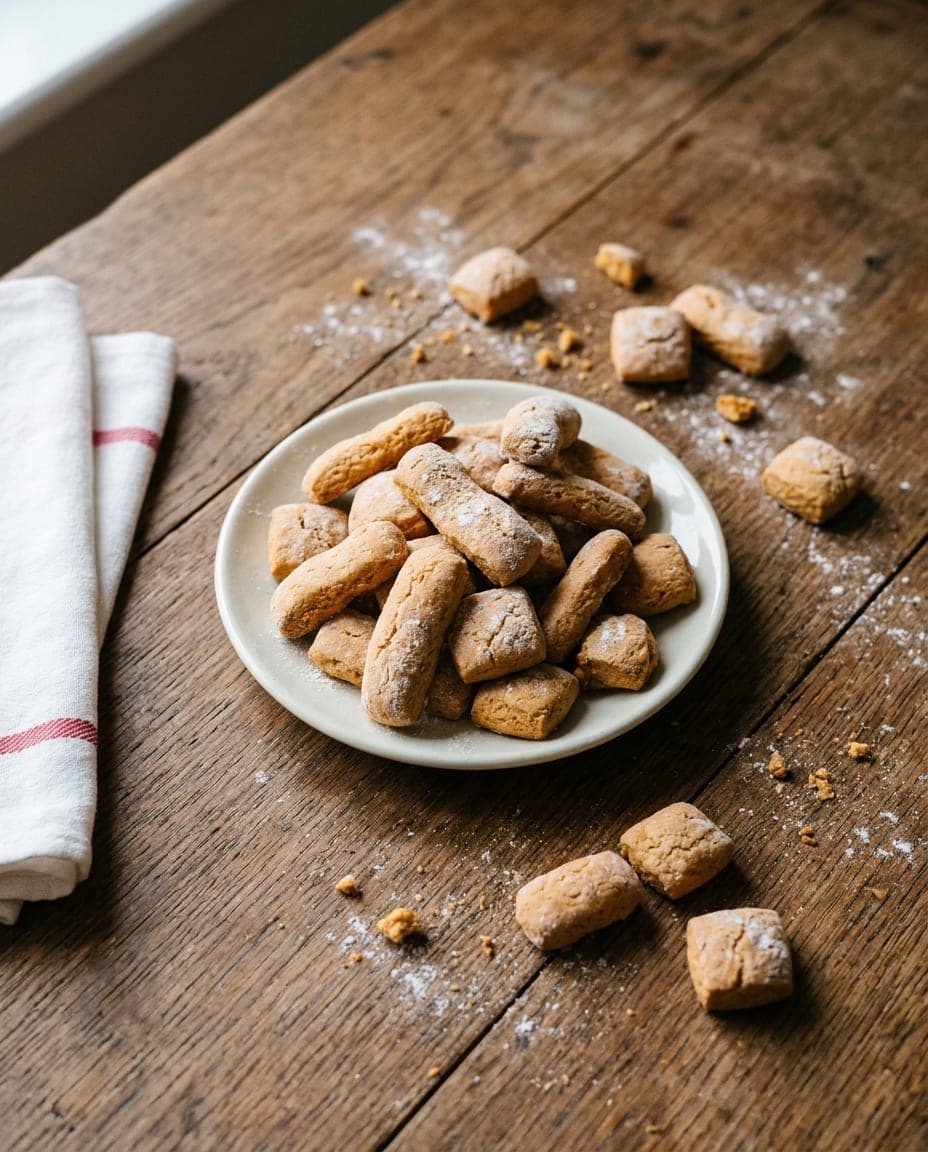
Fafernuchy are small, firm biscuits from Kurpie, the old forest country of north-east Masovia, traditionally baked around the turn of the year. They belong to a family of spiced cookies known across Europe, but they carry a specific identity tied to this area, where the Kurpie people kept their own customs for centuries. The name itself hints at their character: it is usually linked to the German Pfeffernüsse, or pepper nuts, though a local explanation ties it to the white tufts of cotton-grass that grow on the Kurpie bogs.
These are not soft, cake-like treats. They are dense and dry, made to keep well in the pantry. In some villages grated carrot goes into the dough, which distinguishes them from generic gingerbread found elsewhere in Poland. The texture is that of a sturdy biscuit, good for dipping into hot tea or coffee. They are shaped into small, elongated pieces, rather like tiny kopytka dumplings, about three centimetres long.
Where they come from
Fafernuchy belong specifically to Kurpie, the area of the former Green and White Forests (Puszcza Zielona and Puszcza Biała) around Ostrołęka and Myszyniec, on the border between Masovia and Masuria. The version from the White Forest of southern Kurpie is on Poland's official List of Traditional Products. While spiced biscuits are common throughout the country, this peppery Kurpie version is a local speciality that rarely appears outside the region.
The biscuits are part of a broader winter tradition in the region: they were baked at the beginning of the new year to bring luck and plenty in the months ahead. The recipe reflects the ingredients available in the local larder: flour from home-grown grain, honey from the forest beekeeping (bartnictwo) the Kurpie were famous for, and spices bought at market. Each part of Kurpie had its own recipe; in the White Forest they were sweet and spicy with cinnamon, while in the Green Forest carrot, and sometimes beetroot, went into the dough. There is no single village of origin for the dish, nor a specific founder attributed to it. It is simply the kind of cookie Kurpie families have made for generations, often handed down without written instructions.
What goes into it
The dough is simple, built on flour and a sweetener, with honey a natural choice in a region of forest beekeepers. The spice blend is generous, and pepper is the one spice no recipe leaves out, which gives the biscuit its name in spirit if not in literal translation.
- Flour, which provides the base structure and a dense texture.
- Honey or sugar, giving a deep, sticky sweetness.
- Grated carrot, in the Green Forest version, adding moisture during baking and a subtle earthy note.
- Spices, above all pepper, which gives the cookies their peppery edge, often with cinnamon.
- A pinch of salt to balance the sweetness and spices.
The dough is rolled into thin ropes and cut into small pieces before baking until firm and dry. The result is a biscuit that feels almost like a cracker, but one that keeps well as the flavours meld together.
How they are eaten
Fafernuchy are not meant to be eaten in large bites. They are good dipped into hot tea, coffee or sometimes warm milk, which softens the biscuit quickly, turning it into a sweet, spiced mouthful. This is the usual way with hard biscuits in the region, letting the diner enjoy the flavour without the challenge of biting through the hardness.
They are set out at home around New Year, often in a bowl alongside other festive bakes like makowiec or pierniki, letting guests help themselves through the holiday season.
Curious facts
- The carrot is key. While many spiced biscuit recipes use only flour and spices, grated carrot is the detail that marks the Green Forest version of Kurpie fafernuchy.
- They are meant to last. The biscuits are baked until dry so they keep well, a practical necessity in a region with long winters before modern refrigeration.
- The name speaks of pepper. The word fafernuchy is usually traced to the German Pfeffernüsse, literally "pepper nuts", though the official traditional-product entry links it to the white tufts of bog cotton-grass.
- A regional speciality. The biscuits rarely travel to Warsaw or Kraków; they stay in Kurpie.
- Baked for luck. Kurpie households baked them at the start of the new year to bring good fortune for the months ahead.
Where to try it
The best place to eat fafernuchy is in a Kurpie home or at a traditional guesthouse in the Kurpie villages around the turn of the year. Regional fairs and folk festivals in Kurpie, and local bakers in season, are the likeliest places to find them. There are no specific restaurants that claim to be the originators; the dish is simply part of the regional holiday rhythm, available wherever traditional baking continues.
Where to try it
1 region
 Boat Rentals6 destinations
Warmia-Masuria
This region, known for its numerous lakes and forests, is the largest in Poland by area. It is characterized by an abundance of waterways, making it a paradise for canoeing and sailing enthusiasts. Olsztyn, the capital, boasts a rich history with its medieval castle and vibrant cultural scene. The area is also renowned for its wildlife, including rare bird species and diverse flora. Off the beaten path, visit the small town of Mrągowo, famous for its folk culture and music festivals. The region's unique blend of natural beauty and historical significance offers a rich experience for those willing to explore beyond typical tourist routes. Local dishes featuring freshwater fish and mushrooms highlight the culinary offerings of Warmia-Masuria, enhancing the journey into this lesser-known part of Poland.
Boat RentalsHiking