Kiełbasa
Smoked pork sausage, eaten grilled or in soups across Poland
- Local name
- Kiełbasa
- Served with
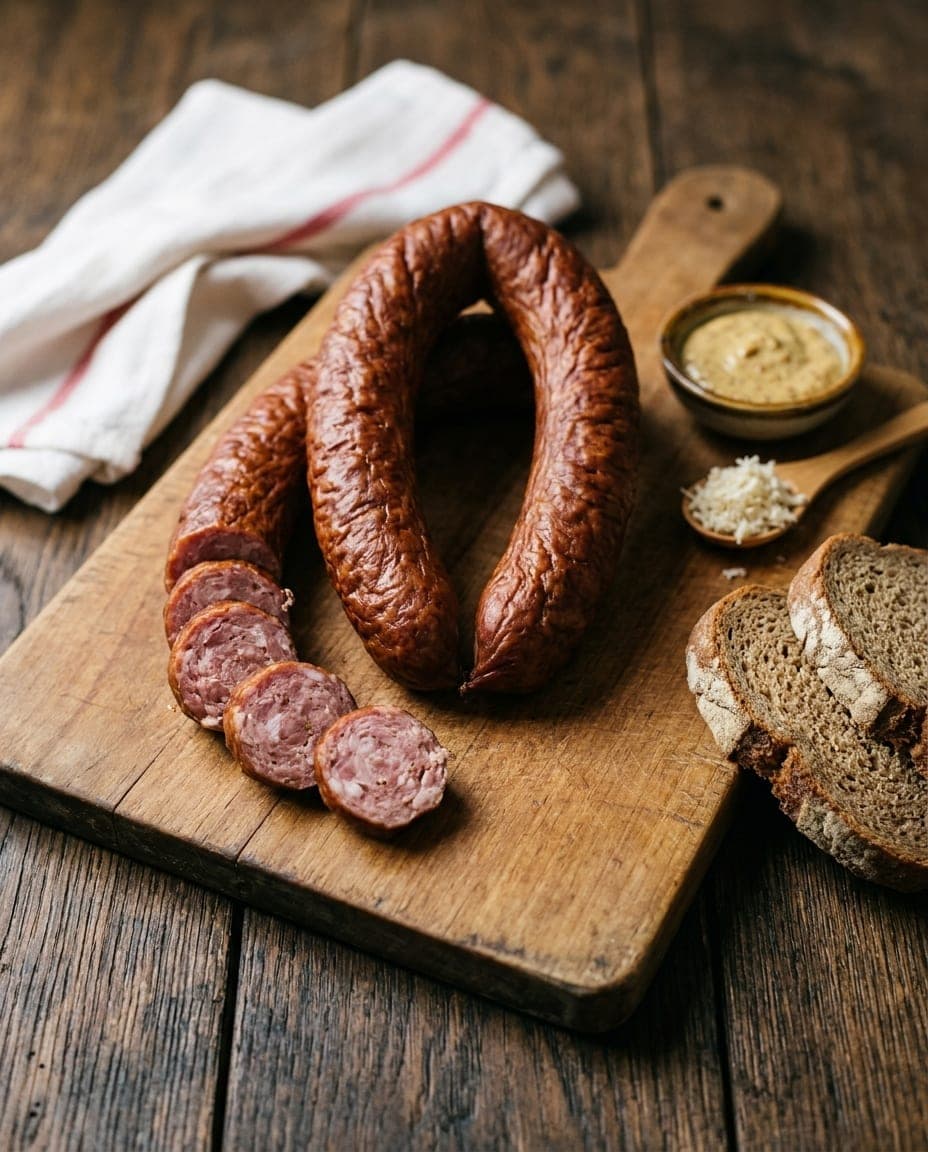
- Mustard, rye bread, horseradish
- Best eaten at
- A Polish summer grill party
- Pairs with
- Polish lager or vodka
What it is
Kiełbasa is the Polish word for sausage, yet in practice it describes a specific category of cured meat that dominates the national diet. While other countries might distinguish between fresh sausages, smoked links and dry hams, Poland treats kiełbasa as a broad family of products united by their preparation method and ingredients. The most common version is a coarse-ground pork sausage, heavily seasoned with garlic, marjoram and black pepper, stuffed into natural casings and smoked over hardwood such as beech, alder or fruitwood until the skin turns a deep golden-brown.
It is not a single dish but a spectrum of textures and flavours. Some are soft and moist, meant to be boiled in soups; others are firm and dry, sliced cold on rye bread; still others are thick and hearty, designed for the open flame. The defining characteristic of most is the smoke, which imparts a distinct aroma and, in the drier types, helps the meat keep for weeks. Every region of Poland makes it, from the northern plains to the Świętokrzyskie hills and the mountains, and small country smokehouses still keep to the older methods.
The many names of one word
Because kiełbasa simply means sausage, the name applies to hundreds of regional varieties. A visitor might encounter kabanosy, thin dry sticks often eaten as a snack; krakowska, a thick, dry sausage of coarse pork pieces that is usually sliced and served cold; or biała kiełbasa, the white, unsmoked variety, usually sold raw and boiled before eating. The best-known form for the general traveller is kiełbasa wiejska, or country sausage. It is typically shaped into a thick horseshoe, heavily smoked and rich with garlic.
Several varieties also carry EU protection. The best known is kiełbasa lisiecka, from the communes of Liszki and Czernichów just west of Kraków, which has held a Protected Geographical Indication (PGI) since 2010; others include kiełbasa pradziada z Dukli (PGI), while kabanosy, kiełbasa krakowska sucha staropolska, myśliwska and jałowcowa are protected as Traditional Specialities Guaranteed. To bear the lisiecka label, a sausage must be made in the defined area to the registered method, though the name itself is not restricted to a single producer. The variety distinguishes itself through lean pork ham seasoned only with salt, fresh garlic and white pepper, and smoking over beech and alder that creates a firm texture and a subtle smoke flavour.
How it is made and what goes into it
The core of every traditional kiełbasa remains consistent, even as the ratios shift from one village to another. The base is always pork, often including cuts like shoulder or belly to ensure enough fat for moisture. The meat is coarsely ground rather than finely emulsified, giving the sausage a rustic texture that holds its shape when cooked. The seasoning profile is fairly constant: garlic, marjoram and pepper are the usual trio, with some regional variations adding nutmeg or allspice, and some, like lisiecka, leaving out the marjoram.
Once the mixture is seasoned and stuffed into natural casings, usually made from the small intestine of pigs, the sausage enters the smoking chamber. The smoke comes from hardwoods such as beech or fruitwood like apple or cherry, which impart a distinct aroma without overwhelming the meat. The smoking process can take several hours or even days depending on the desired level of cure and the thickness of the link. Most smoked versions are cooked and ready to eat cold; others, like white sausage, are sold raw and need cooking before consumption.
How it is eaten
The way kiełbasa is served depends entirely on its type and the occasion. In the summer, the most common sight is a Polish grill party, where thick links of smoked sausage are cooked over hot coals until the skin is crisp and the inside is steaming hot. This is not a formal dinner but a social gathering, often held in gardens or on balconies, where the meat is served simply with mustard, horseradish and dark rye bread. The contrast between the smoky, salty sausage and the sharp, pungent horseradish is a standard combination that defines the summer season.
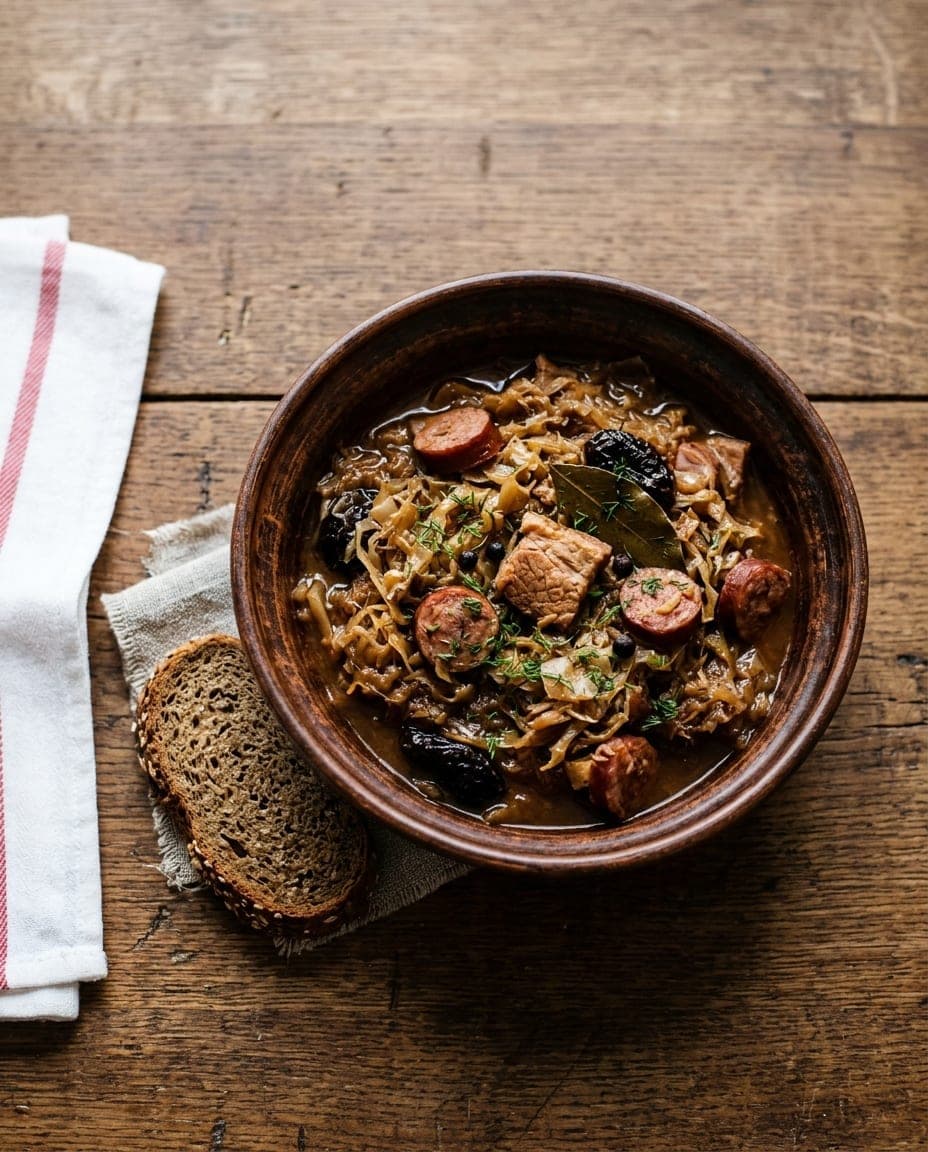
In winter and during religious holidays like Easter, the role of kiełbasa shifts. It is often added to soups or stews, such as żurek, a sour rye soup, or bigos, the hunter's stew made with sauerkraut and various meats. In these dishes, the sausage is sliced into chunks and simmered until it infuses the broth with its smoky flavour. The white sausage, biała kiełbasa, is simmered before being eaten, and is a fixture of the traditional Easter breakfast, either in żurek or on its own with horseradish and mustard.
When eaten cold, the meat is sliced thickly and placed on dark rye bread, often topped with a dollop of creamy horseradish or a spoonful of spicy mustard. This simple combination serves as a substantial snack or a light meal. It is rarely accompanied by complex sauces; the strength of the smoked pork is intended to stand alone.
The dividing line between smoke and white meat
A crucial distinction for any visitor concerns the difference between the smoked sausage and the white variety. The smoked kiełbasa found in markets or on grill plates has been cured, smoked and usually cooked, so it only needs heating. The white kiełbasa, however, is usually sold raw and must be cooked before eating.
The white sausage belongs to Easter. It is often simmered for the Easter table, where it sits beside the blessed eggs, and is served warm or cold with horseradish. The contrast between the dark, smoky links of summer and the pale, boiled links of spring highlights the seasonal rhythm of Polish eating. While the smoked version is available year-round in shops, the white variety is most prominent during the Easter season, when households prepare it specifically for the holiday table.
Curious facts
- A word for everything. Kiełbasa is the generic term for sausage, covering hundreds of regional types from thin dried sticks to thick dry-cured links.
- The protected name. Kiełbasa lisiecka holds Protected Geographical Indication (PGI) status, requiring it to be made to the registered method in the Liszki and Czernichów area near Kraków.
- The white rule. Biała kiełbasa is usually sold raw and must be cooked before eating, unlike its smoked cousins which only need heating.
- The summer ritual. The primary way to eat smoked kiełbasa is at a backyard grill party, where it is served simply with horseradish and rye bread.
- Soup partner. Sliced chunks of the sausage are a standard addition to soups like żurek and stews such as bigos, adding smoky depth to the broth.
- The drink match. A glass of Polish lager or a shot of vodka is the traditional companion to a plate of smoked sausage, cutting through the richness with crisp coldness.
Where to try it
To experience kiełbasa in its most authentic form, visit a local butcher or a traditional food shop in any Polish town. The counters sell fresh links daily, and will often cut a sample to show the difference between the smoked and the white. In the Świętokrzyskie region and other rural areas, look for small producers who still use traditional smoking methods over hardwood.
For the full summer experience, attend a local grill party or visit a casual outdoor eatery in Warsaw, Kraków or smaller towns where grilling is a common social activity. The meat is also widely available in supermarkets and deli counters across the country, often sold pre-sliced with mustard and horseradish ready to go. Whether boiled in soup or grilled over coals, the sausage stays at the centre of the Polish table.
Where to try it
1 region

Swietokrzyskie
Swietokrzyskie is a region in south-central Poland known for its unique landscapes and rich cultural heritage. Recognized for the Świętokrzyskie Mountains, it features the oldest mountains in Europe, offering diverse hiking trails and stunning natural vistas. The region's capital, Kielce, is home to historic sites such as the Palace of the Kraków Bishops. Additionally, the area boasts the intriguing Krzyżtopór Castle, which reflects the grandeur of its past. Local traditions include crafts like pottery and weaving, with festivals celebrating folk culture. Swietokrzyskie's natural parks, such as the Świętokrzyski National Park, provide opportunities for eco-tourism and immersion in local flora and fauna, making it a hidden gem for those seeking authentic experiences away from mainstream tourism.