Kartacze (cepeliny)
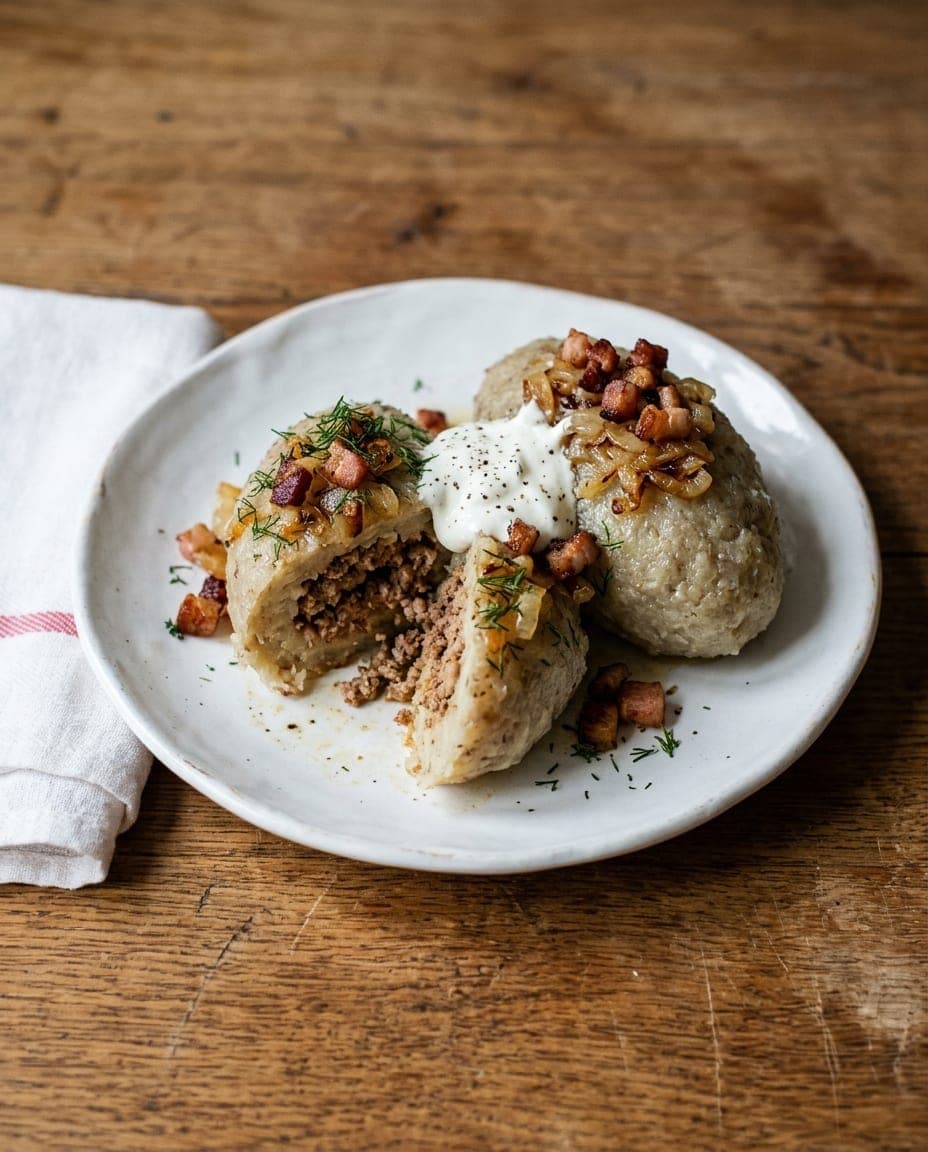
Large potato dumplings with bacon and sour cream
- Local name
- Kartacze
- Served with
- Bacon cracklings, sour cream
- Best eaten at
- A Suwałki region inn
- Pairs with
- Polish lager
What it is
Kartacze, known elsewhere as cepeliny, are large dumplings from the north-east corner of Poland, where the regions of Podlaskie and Warmia-Masuria meet the borders of Lithuania and Belarus. They are substantial, elongated ovals of potato dough, about the size of a fist and 10 to 12 centimetres long, stuffed with a filling of minced pork. The name kartacze comes from the Polish word for canister shot, a reference to their shape and weight, while cepeliny is the Polish form of the Lithuanian cepelinai, named after the Zeppelin airship.
These dumplings are not a standard item on menus across all of Poland. They belong above all to the Suwałki region and the neighbouring corner of Masuria. Here, the culinary tradition reflects a complex history where Polish, Lithuanian, Belarusian and Tatar communities have lived side by side for centuries. The dish belongs to this borderland culture rather than to any single nation, moving with the people who crossed these shifting lines.
A serving usually consists of two dumplings, which is enough for one person as a full meal. They are boiled until tender and then served under a layer of fried bacon cracklings and onions, often with a generous ladle of sour cream. They are heavy food, built for outdoor work in a cold corner of the country.
A shared borderland history
The story of kartacze is not one of invention but of movement. It belongs to both Lithuania and Poland, with the Lithuanian name cepelinai and the Polish kartacze referring to the same culinary form. The recipe crossed borders as families migrated, traded and married across the region. No single inventor or origin date is known; the dish evolved from local potato farming traditions.
The border between Poland and Lithuania has shifted more than once over the last century, often changing the political map without altering the kitchen. In the Suwałki region, this history is visible in the food. The dumplings are made with raw grated potato mixed with boiled potato to bind the dough, a technique that allows the dumpling to hold its shape during boiling while remaining soft inside. This method is common in the wider Baltic and Eastern European regions where potatoes became a staple crop.
Kartacze are on Poland's official List of Traditional Products for Podlaskie, and they remain a point of local pride on both sides of the regional line: Gołdap, a small town in Warmia-Masuria just west of Suwałki, holds a summer borderland food festival called Kartaczewo and has staged kartacze-eating championships. Because they take so much work, households traditionally made them once a week or once a fortnight, and they were never a festive dish. The recipe has not changed much over the decades, though every cook may have their own preference for the ratio of raw to boiled potato or the type of pork used.
What goes into it
The preparation requires speed. Once the potatoes are grated, they begin to oxidise and turn grey within minutes, so the dough must be formed quickly before boiling. The filling is typically minced pork neck or shoulder, sometimes mixed with a little onion for flavour; versions with mushrooms, sauerkraut or curd cheese also exist.
- Potato dough: A mix of raw grated potato and boiled, mashed potato, kneaded into a firm ball.
- Minced pork: Seasoned simply with salt and pepper, forming the core of the dumpling.
- Fried bacon or pork fat: Crisp cracklings scattered over the top.
- Onions: Fried until golden to add sweetness and texture.
- Sour cream: A thick, cool layer that balances the warmth of the meat and potato.
The dish is not vegetarian, as the pork and often the bacon are essential components. It is a meal of substance, meant to be eaten with a knife and fork rather than just a spoon.
How to eat it
Kartacze are served hot, usually as a main course at lunch or dinner. They arrive in a deep bowl or plate, covered by the fried bacon and onions, with sour cream pooled around the edges. Two dumplings make a complete meal for one person; three might be too much for most diners.
The texture is soft and creamy inside, with the outer layer of potato dough holding its shape well. The bacon adds a salty crunch, while the sour cream cools the palate. A slice of dark rye bread often accompanies the dish to soak up the juices. In a Suwałki region inn or a small tavern in Gołdap, it is common to pair kartacze with a glass of Polish lager, which cuts the fat of the meat and potato.
Curious facts
- The name is military. Kartacz is the Polish word for canister shot, describing the dumplings' heavy form, while cepeliny comes from the Lithuanian cepelinai, after the Zeppelin airship they resemble.
- A borderless recipe. The dumpling appears in Lithuania, Poland and parts of Belarus, with no single country claiming exclusive invention.
- Two is a full meal. The size of the dumplings means that two are usually sufficient for one adult as a main course.
- Speed matters. Grated potato turns grey quickly, so cooks must work fast to form the dough before boiling.
- A regional staple. While known in parts of Eastern Europe, kartacze remain most strongly associated with the Podlaskie and Suwałki regions of Poland.
Where to try it
The best place to eat kartacze is in the north-east corner of Poland, specifically in the Suwałki and Sejny area or nearby Gołdap. Small inns and taverns in these areas serve the dish as a daily special, often with variations passed down through families. Pairing the meal with a cold Polish lager completes the experience.
Where to try it
1 destination
2 regions

Podlaskie
Podlaskie, the largest region in northeastern Poland, is characterized by its lush landscapes, diverse wildlife, and rich cultural heritage. The Białowieża Forest, a UNESCO World Heritage site, is home to the European bison and offers extensive hiking trails. The region's unique mix of Polish, Belarusian, and Lithuanian influences is evident in its architecture and local traditions. Cities like Białystok, the capital, feature historic market squares and vibrant parks. Notably, the area is known for its wooden Orthodox churches, and the nearby Tykocin offers a glimpse into the past with its well-preserved synagogue. Podlaskie's natural beauty is complemented by its traditional cuisine, including regional specialties like sękacz, a unique cake made from a rotating spit.
 Boat Rentals6 destinations
Warmia-Masuria
This region, known for its numerous lakes and forests, is the largest in Poland by area. It is characterized by an abundance of waterways, making it a paradise for canoeing and sailing enthusiasts. Olsztyn, the capital, boasts a rich history with its medieval castle and vibrant cultural scene. The area is also renowned for its wildlife, including rare bird species and diverse flora. Off the beaten path, visit the small town of Mrągowo, famous for its folk culture and music festivals. The region's unique blend of natural beauty and historical significance offers a rich experience for those willing to explore beyond typical tourist routes. Local dishes featuring freshwater fish and mushrooms highlight the culinary offerings of Warmia-Masuria, enhancing the journey into this lesser-known part of Poland.
Boat RentalsHiking