Trøndersodd
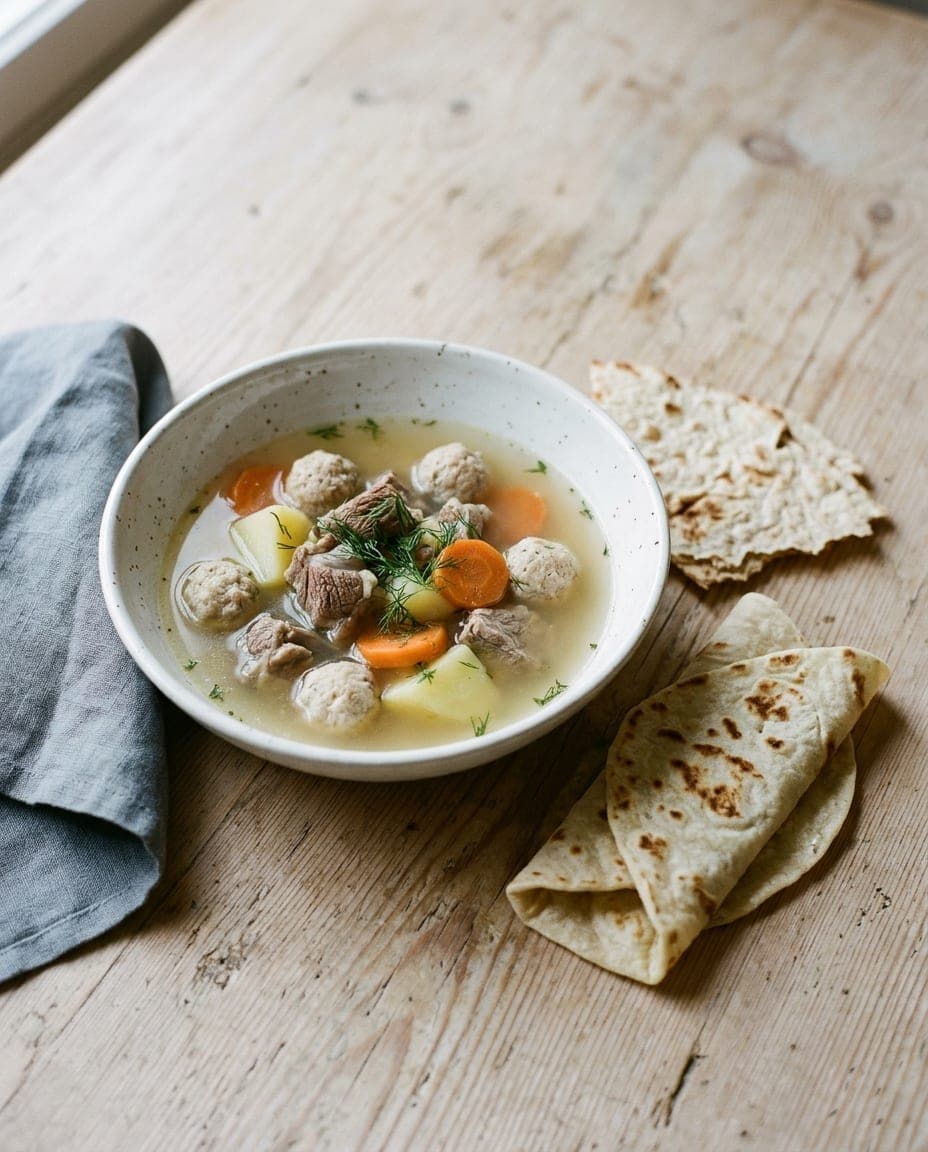
A clear mutton broth with meatballs and roots
- Local name
- Trøndersodd
- Served with
- Boiled potatoes, flatbread
- Best eaten at
- A Trøndelag family celebration
What it is
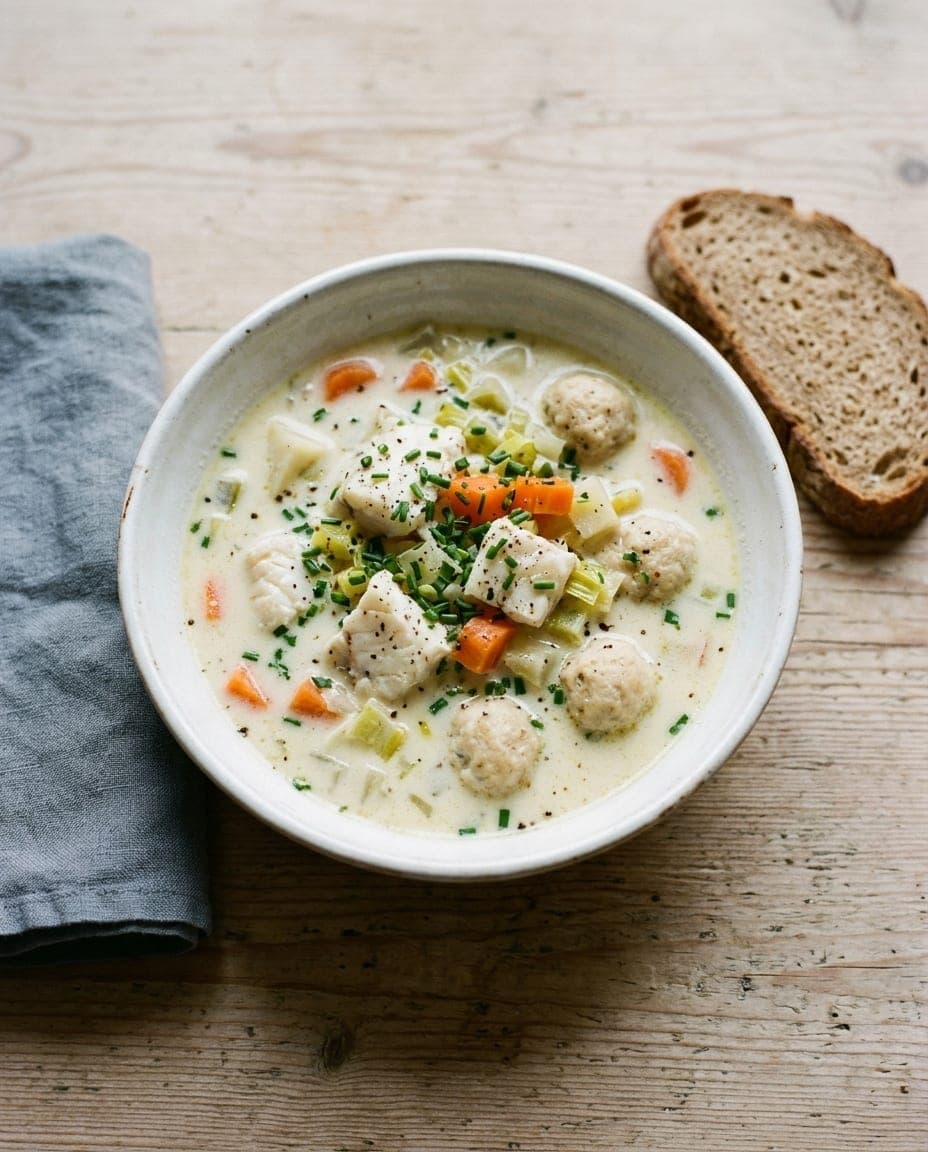
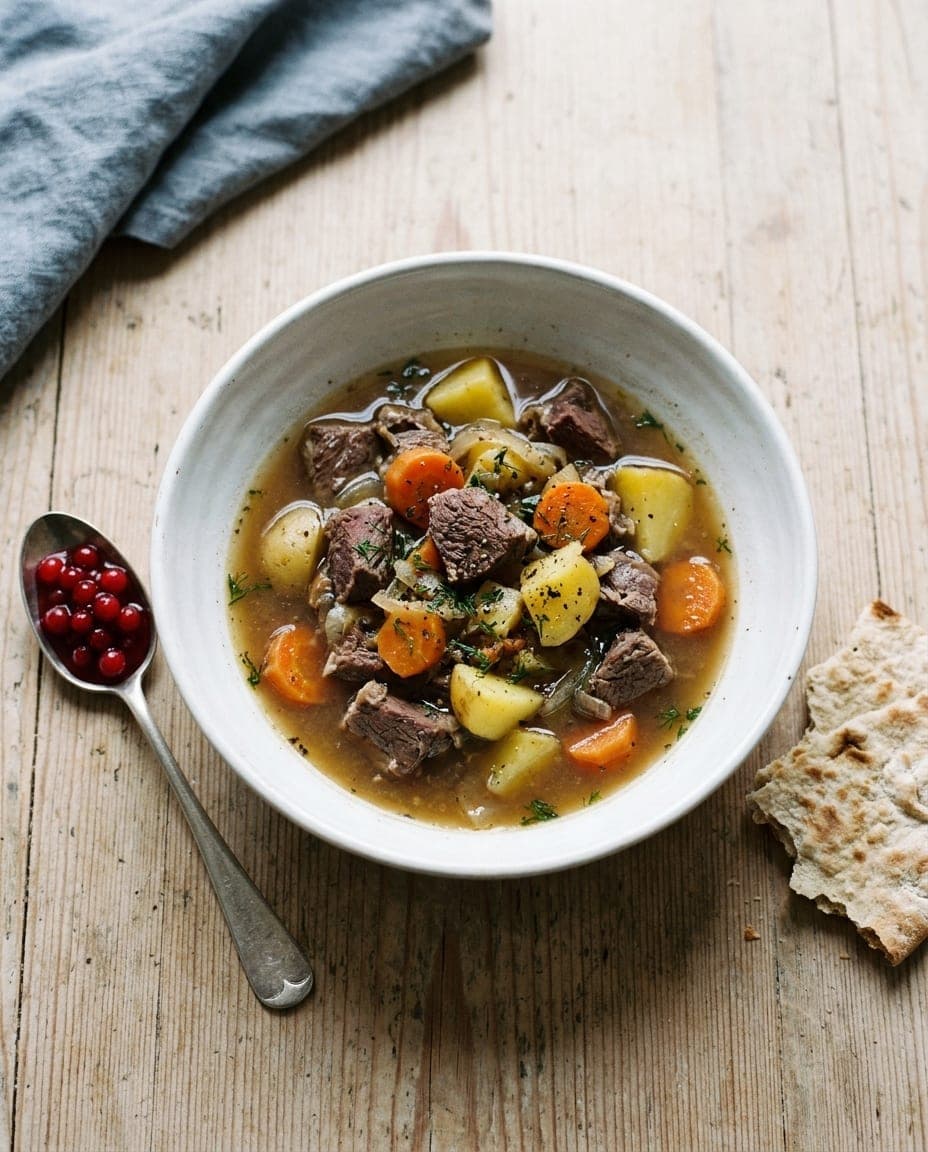
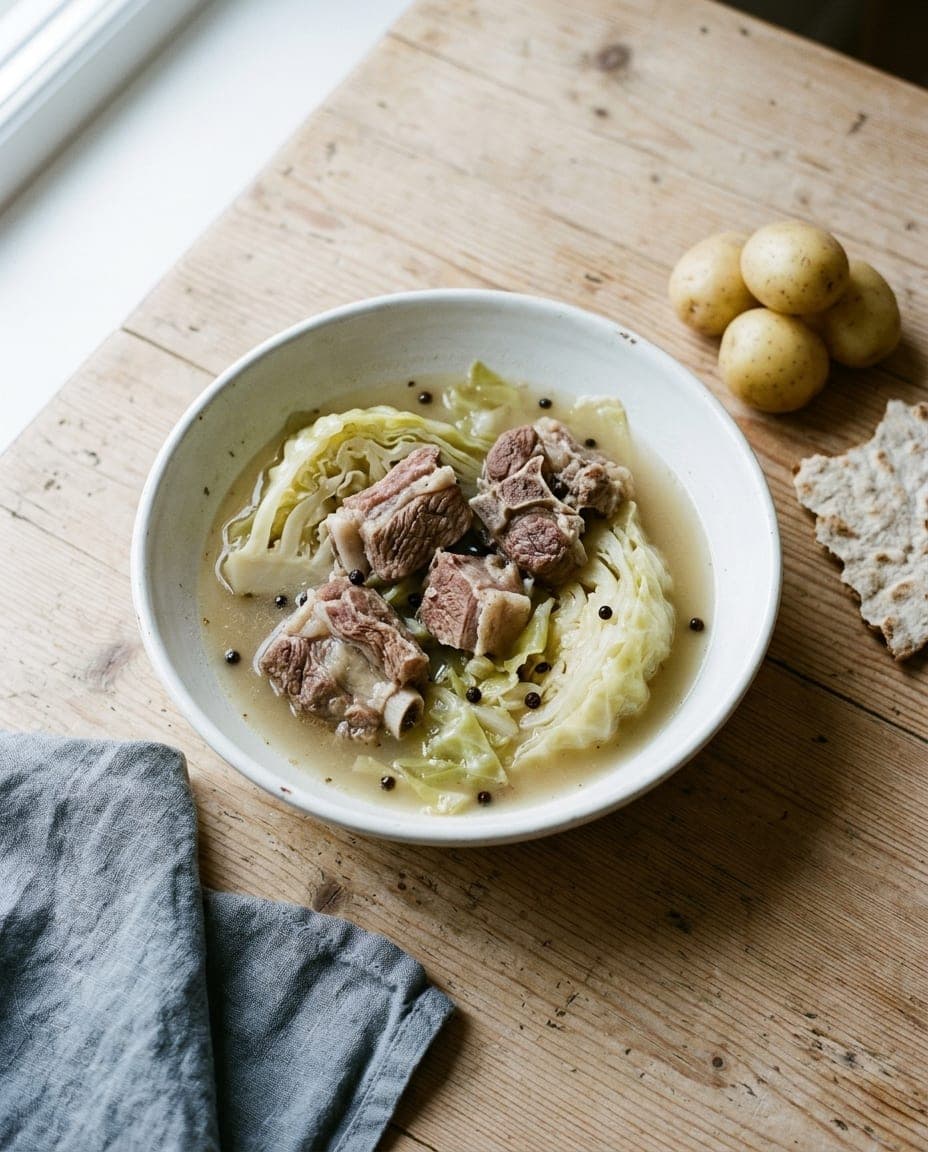
Trøndersodd is the name given to a simple but significant soup from Norway's central region of Trøndelag. It is a clear broth of mutton and beef, with cubes of the meat, small meatballs and neatly cut pieces of carrot, with boiled potatoes alongside. The liquid is pale and unadorned, designed to be light rather than heavy. This dish does not appear on the menu of every restaurant in Norway; sodd is eaten in many parts of the country, but trøndersodd is the speciality that belongs firmly to Trøndelag and the city of Trondheim.
The soup is defined by its clarity. A cook is judged on how well the broth is skimmed, leaving no fat or sediment behind. The vegetables are cut into uniform cubes, and the meatballs are small and smooth. There are no chunks of bone or rough herbs floating in the pot. It is a dish of precision rather than abundance, where the quality of the mutton and the transparency of the stock matter more than any complex seasoning.
The role of the gathering
Trøndersodd is not food for a quick lunch or a solitary meal. It is a ceremonial soup, cooked in quantity to feed a large group at once. The tradition is tied to social milestones: christenings, confirmations, weddings, big birthdays and funerals, and some families serve it on the national day, 17 May. On these occasions, families and communities gather in homes or community halls, and the soup is ladled from a large pot into bowls for everyone to share.
The meaning of the dish lies in the act of eating together. It signals that a gathering is taking place. The clarity of the broth reflects the orderliness of the event, while the shared pot emphasises the connection between the guests. In Trøndelag, serving this soup marks the occasion as important enough to warrant the time and effort required to prepare it properly.
What goes into it
The ingredients are straightforward, relying on the natural flavour of the meat and vegetables rather than heavy spices or stock cubes. The base is a clear broth simmered from mutton and beef and then skimmed. Small meatballs of finely minced mutton and beef, often seasoned with ginger and nutmeg, go into the pot alongside cubes of the boiled meat. These are distinct from larger meatballs found in other cuisines; they are designed to be eaten quickly and fit easily into the broth.
Neatly cut cubes of carrot provide texture and a touch of sweetness. The carrots and potatoes are boiled separately, cooked until tender but keeping their shape, and added only when the soup is served. The soup comes with flatbread; around Innherred this is often skjenning, a thin local flatbread spread with sugar and milk and eaten after the sodd. No quantities are fixed, as the amount depends on the size of the gathering.
How it is eaten
When Trøndersodd is served, it arrives in a large tureen or a deep pot placed at the centre of the table. Each guest takes their own bowl and is ladled a portion that includes both the clear broth and the solid ingredients. The meatballs are small enough to be eaten in one or two bites, allowing the diner to appreciate the clarity of the soup alongside the texture of the vegetables.
The flatbread is placed on the side. Diners break off pieces of it to eat with the broth, ensuring no drop is wasted. The experience is communal and unhurried, with conversation flowing as the pot is refilled. It is common to find the soup served alongside other simple dishes, but the mutton broth remains the focal point of the meal.
Curious facts
- A test of skill. The quality of the soup is judged by the clarity of the broth; a cloudy result is considered a failure in traditional cooking.
- Regional identity. Sodd is an old Norwegian word for broth-based dishes, but the festive meatball version is most strongly tied to Trøndelag.
- Ceremonial timing. The dish is traditionally served at christenings, confirmations, weddings and funerals, marking it as a celebratory food rather than everyday fare.
- Protected name. Festsodd fra Trøndelag has been a protected geographical designation in Norway since 2013, made from sheep and beef with meatballs of the same meat.
- Bread accompaniment. The soup is almost always paired with flatbread, and in Innherred with sweet skjenning, turning a simple broth into a satisfying meal.
Where to try it
The best place to eat Trøndersodd is in Trondheim or the surrounding countryside of Trøndelag during a local celebration. The likely settings are a family confirmation, a community-hall celebration, or a regional caterer serving one of those. In Trondheim itself, some establishments serve the dish on festive days or when hosting large group gatherings. On a menu it appears as mutton soup with meatballs and carrots, and a clear broth is the mark of a kitchen that has made it properly.
Where to try it
1 destination
 Boat Rentals
Trondheim
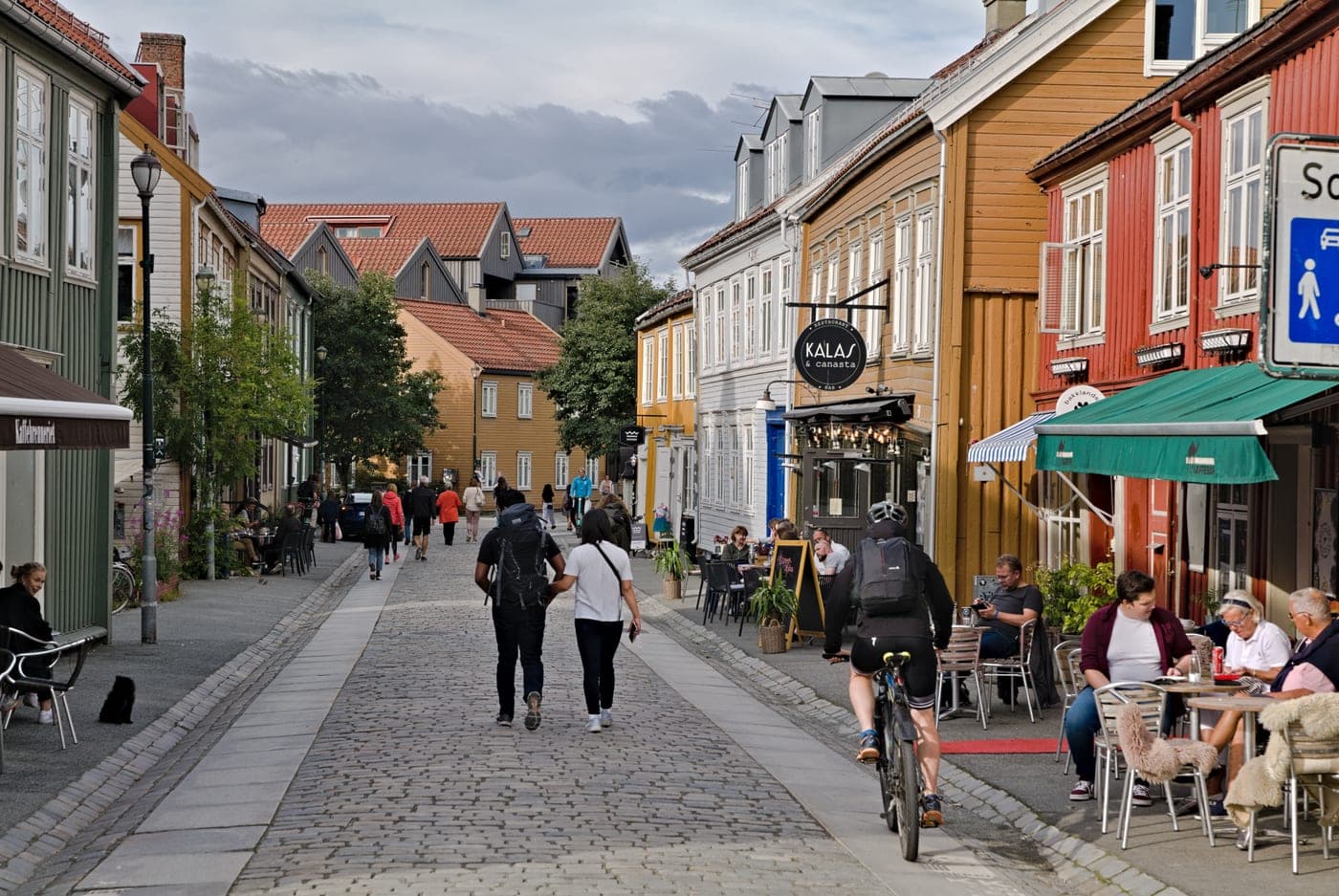
Historic city known for its medieval wooden architecture and rich Viking heritage.
Boat RentalsHikingLocal Cuisine
1 region
- Boat Rentals1 destination
Trøndelag
Trøndelag sits in the middle of Norway, where the coast folds into Trondheimsfjorden and the land behind it opens into some of the country's best farmland. At its centre is Trondheim, a former royal capital built along the curve of the Nidelva river. The city grew around Nidaros Cathedral, a Gothic building raised over the burial place of King Olav Haraldsson and long the destination of pilgrim routes that crossed Norway on foot. The cathedral remains the coronation church of the Norwegian monarchy and the largest medieval building in Scandinavia, its west front covered in carved figures added and restored over many generations. Trondheim itself keeps a layered, working character. Along the river, rows of wooden warehouses on stilts, once used for storing fish and grain, now hold cafés and small businesses, their reflections doubling in the water at low tide. The old town bridge, painted deep red, links the centre to Bakklandet, a district of narrow lanes and timber houses that has kept its scale even as the city around it has grown. Markets and bakeries here still deal in the region's dairy and grain, produced on the flat, fertile land stretching inland from the fjord — some of the most productive farming country in Norway, unusual this far north. Outside the city, Trøndelag's coastline breaks into islands and skerries. Hitra and Frøya, reached across the outer fjord, combine fishing communities with salmon farming, an industry that has shaped the local economy for decades. Further along the coast, smaller harbours still send boats out for cod and other whitefish, continuing a trade that once made dried and salted klippfisk one of Norway's most important exports. Warehouses built for that trade still stand in several fishing villages, their weathered red and white timber a common sight along the shore. Inland, the region changes character again. East of Trondheim, the valley of Gauldalen climbs gently inland, following a route used for centuries by traders and travellers moving between the coast and the interior. Further south, the historic mining town of Røros sits on a high, treeless plateau. Founded around copper deposits and shaped almost entirely in wood, Røros is a UNESCO World Heritage town, its narrow streets lined with blackened timber houses that have survived largely unchanged since mining ended. Winters here are hard and clear, and the town's church, built of stone rather than wood as a mark of the mining company's wealth, still dominates the skyline. Trøndelag's food culture draws on both the coast and the inland farms. Cured and dried fish remain part of the everyday diet in fishing communities, alongside dairy products from the region's grazing land — cheeses and cultured milk that rarely travel far from where they are made. Trondheim's covered market halls and smaller town markets sell this produce directly, often from the same families who have farmed or fished the surrounding area for generations. The region's Viking-era past is visible in scattered burial mounds and place names across the farmland east of Trondheim, part of a landscape that was already settled and cultivated long before the cathedral was built. Later, the pilgrim routes leading to Nidaros drew travellers from across Scandinavia and beyond, a tradition that has been revived in recent decades as walkers again follow the old paths through forest and farmland toward the cathedral doors. Between the fjord, the farmland, and the mining plateau, Trøndelag holds together a working coastline, a historic capital, and an inland mining town that has changed remarkably little, each shaped by what could be grown, fished, or dug from its own ground.
Boat RentalsHikingLocal Cuisine