Bergensk fiskesuppe (Bergen fish soup)
A creamy white fish soup from Bergen, sharpened with vinegar
- Local name
- Bergensk fiskesuppe
- Served with
- Bread
- Best eaten at
- Bergen's fish market
- Pairs with
- Dry white wine
What it is
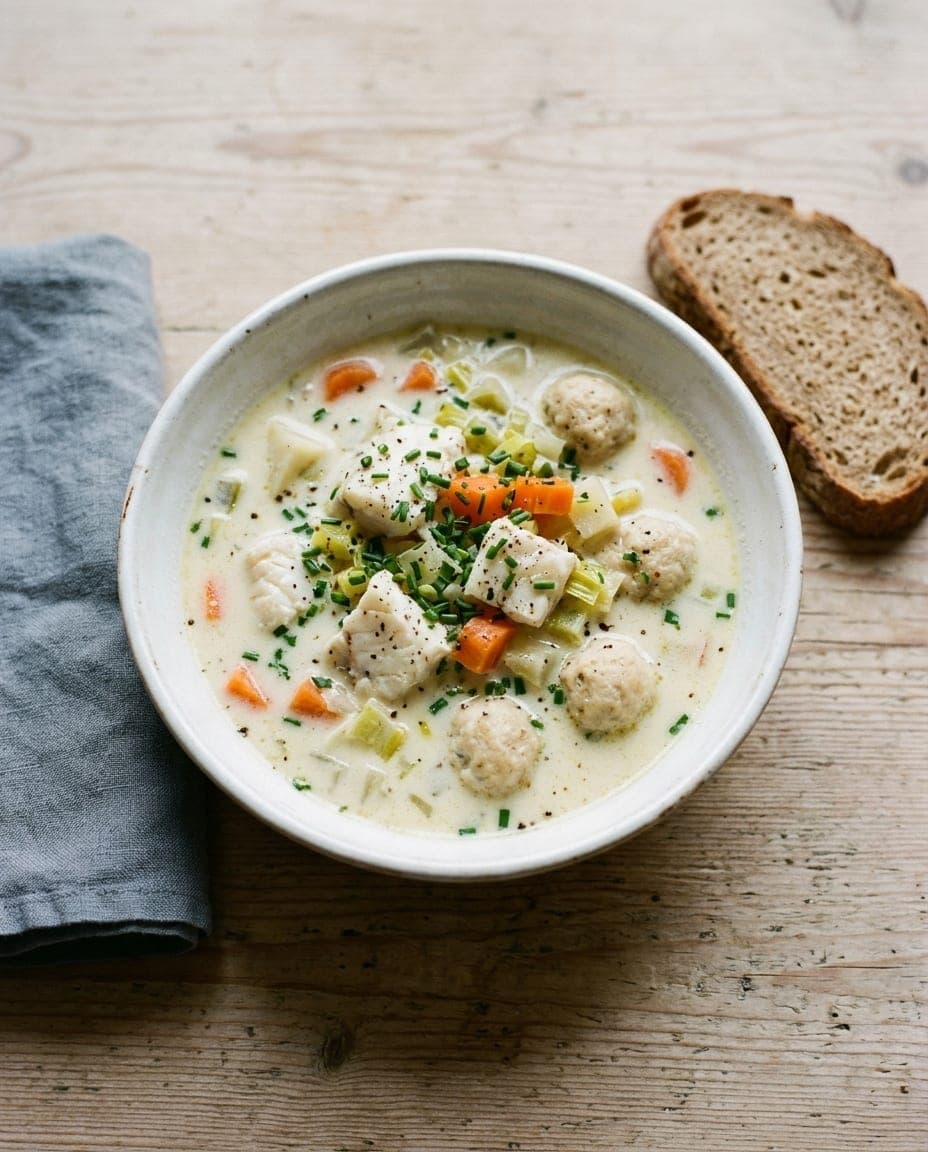
Bergensk fiskesuppe is a creamy white soup that defines the coastal city of Bergen in western Norway. It is a regional speciality of the Vestland county rather than a dish found on menus across the entire country. It is pale and thick, built on a stock made from the bones of cod, haddock or pollock, with root vegetables softened into it, milk or cream stirred through, egg yolk to finish, and usually small fish balls (fiskeboller) floating in it.
The detail that sets this dish apart from other Norwegian soups is its sharp finish. Where most Norwegian fish cookery is plainly savoury, this one has a sweet-sour edge, from a spoonful of vinegar and sour cream, balanced by a little sugar. Cream and acid together is the Bergen signature, and it is often linked to the city's centuries as a trading port.
The soup is traditionally served hot, often in a deep bowl, with a generous side of bread and butter to dip into the broth. It is not a light starter but a substantial meal that can fill a diner completely. The texture is smooth yet substantial, with chunks of fish and vegetables providing substance against the creamy liquid.
The Hanseatic connection
Bergen's food culture bears the mark of its time as a key member of the Hanseatic League, a medieval trading confederation that dominated commerce in northern Europe from the 13th to the 17th century. The city was a central point for German merchants who settled there and brought their culinary traditions with them. These influences seeped into local cooking over centuries, leaving traces in dishes that remain popular today.
The sweet-sour taste of Bergensk fiskesuppe is often said to be one such trace, though the link is more tradition than documented history. It would reflect the trading links that allowed spices and preservation techniques to move through the city. While other parts of Norway favoured simpler preparations based on what was available locally, Bergen's kitchens developed a more complex palette. The soup is a record of that period: fjord fish cooked with imported ideas about seasoning.
It is not merely a way to use up fish bones but a reflection of a city that looked outward for its sustenance and its style. The recipe has changed little in the last few decades.
What goes into it
The ingredients of Bergensk fiskesuppe are straightforward, yet their combination creates a specific result. There is no single official version, and cooks may adjust the ratio of fish to vegetables, but the core elements remain constant. The soup relies on white fish for its base, typically cod, haddock or pollock, which provide a mild flavour that absorbs the other tastes.
- White fish fillets: Cut into bite-sized pieces, these form the main body of the soup.
- Vegetables: Carrots, parsnip or celeriac and leeks are standard, providing sweetness and texture.
- Fish balls: Small, soft fish balls, often made from haddock, are the classic Bergen addition.
- Fish stock: Made by simmering the bones and heads of the white fish to extract flavour.
- Dairy: Milk or cream is added to create a creamy consistency, often enriched with egg yolk.
- Acid and sugar: A splash of vinegar and sour cream, with a little sugar, provide the signature sweet-sour edge.
The result is a soup that balances the fat of the dairy with the brightness of the acid. The vegetables soften into the broth, losing their individual crunch but keeping their flavour. The fish remains tender and flaky, ready to be scooped up with bread. It is a dish that feels warm and substantial, suitable for the cool coastal air of Bergen.
How to eat it
Bergensk fiskesuppe is traditionally eaten at the city's fish market or in the local restaurants that serve it. The best place to experience it is where the ingredients are fresh and the tradition is strongest. At the fish market, Fisketorget, and its indoor hall, visitors can find vendors serving the soup in simple bowls alongside other local treats.
The dish is usually served with a loaf of dark rye bread or a crusty white roll. A slab of butter is placed on the side for spreading, and diners are expected to dip pieces of bread into the soup. The acidity of the vinegar cuts through the cream, making it easy to eat several bowls in one sitting. It is common to order the soup as a main course rather than a starter, especially during the colder months when the weather demands warmth.
A dry white wine from Norway or elsewhere pairs well with the dish, complementing the creamy texture without overpowering the delicate fish flavour. Beer is also an option for those who prefer it, though the acidity of the soup makes wine a natural companion. The bread and butter are essential; they soak up the broth and provide a satisfying contrast to the soft soup.
Curious facts
- A regional identity. Unlike many Norwegian dishes that appear on menus nationwide, this soup is tied specifically to Bergen and the Vestland county.
- The Hanseatic touch. The sweet-sour taste is often credited to the influence of German traders who settled in the city during the medieval period.
- Market tradition. The fish market remains a popular place for eating the soup.
- No heavy spices. Despite its complex history, the soup does not rely on strong spices, focusing instead on the natural taste of fish and vegetables.
- A warming meal. It is traditionally consumed as a substantial lunch or early dinner, particularly during the cooler seasons in western Norway.
Where to try it
The best place to eat Bergensk fiskesuppe is at Bergen's fish market, where the soup is served alongside other local specialities. The market hall offers a lively atmosphere and access to the freshest ingredients from the nearby fjords. Local restaurants in the city also serve excellent versions, often with their own slight variations on the classic recipe.
The soup is available year-round, though it feels most at home when the air outside is cool. A visit to the market in the morning allows diners to see the catch before enjoying a bowl of the finished dish. It is a simple experience that connects the eater to the history and landscape of Bergen.
Where to try it
1 destination
 Boat Rentals
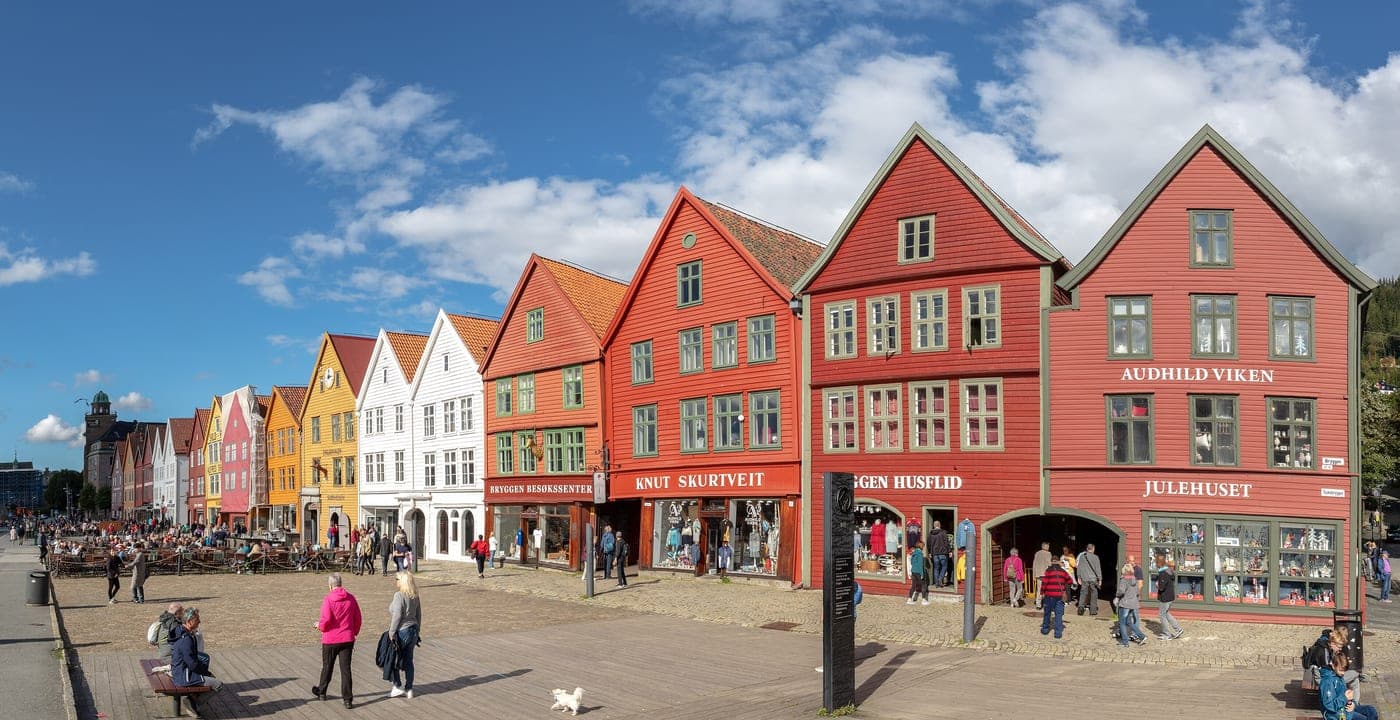
Bergen
Historic harbor city surrounded by mountains and gateway to fjords.
Boat RentalsCamper Van RentalsHiking
1 region
- Boat Rentals1 destination
Vestland
Nestled in western Norway, this is the largest region in the country, renowned for its breathtaking fjords and majestic mountains. Bergen, the only major city, serves as a gateway to the stunning landscapes of the area, including the UNESCO-listed Nærøyfjord. The region is steeped in history, with charming wooden houses dating back to the Hanseatic League. Small villages like Gudvangen and Flåm offer authentic experiences, showcasing local crafts and traditions. Known for its hiking trails, such as the famous Romsdalseggen Ridge, this region invites exploration of its natural beauty and cultural heritage. Local cuisine features fresh seafood and traditional dishes, providing a taste of the coastal culture.
Boat RentalsCamper Van RentalsHiking