Bidos
A Sámi reindeer stew with root vegetables
- Local name
- Bidos
- Served with
- Bread or flatbread, lingonberry jam
- Best eaten at
- A Sámi celebration
What it is
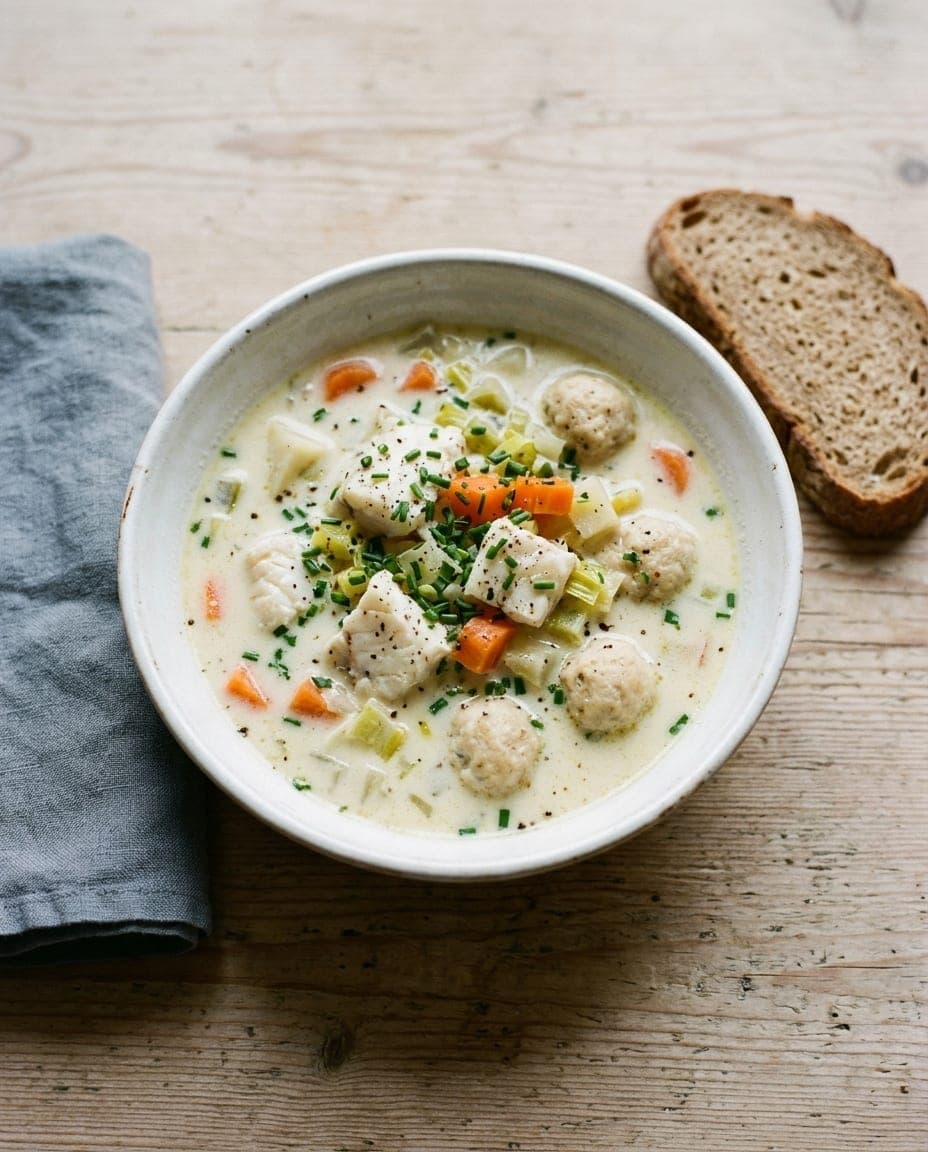
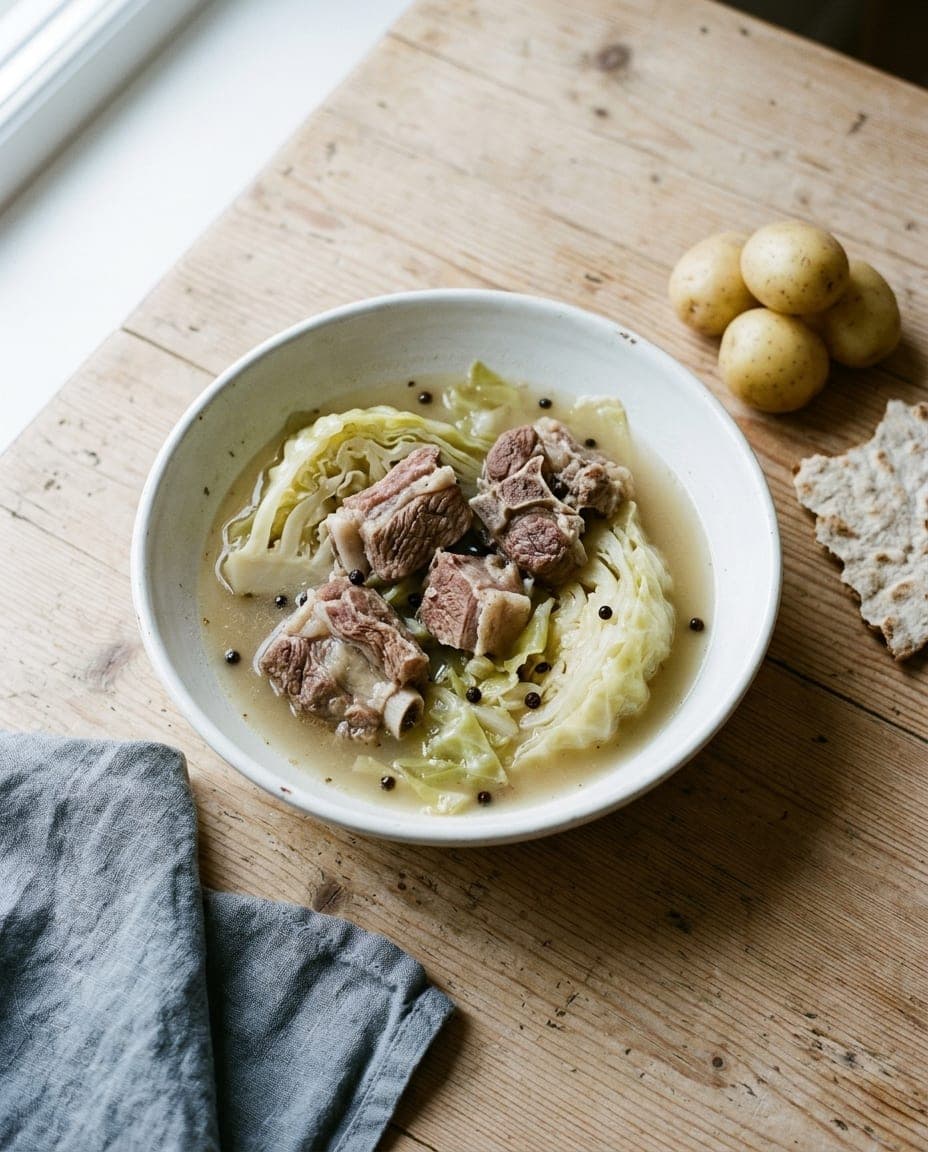
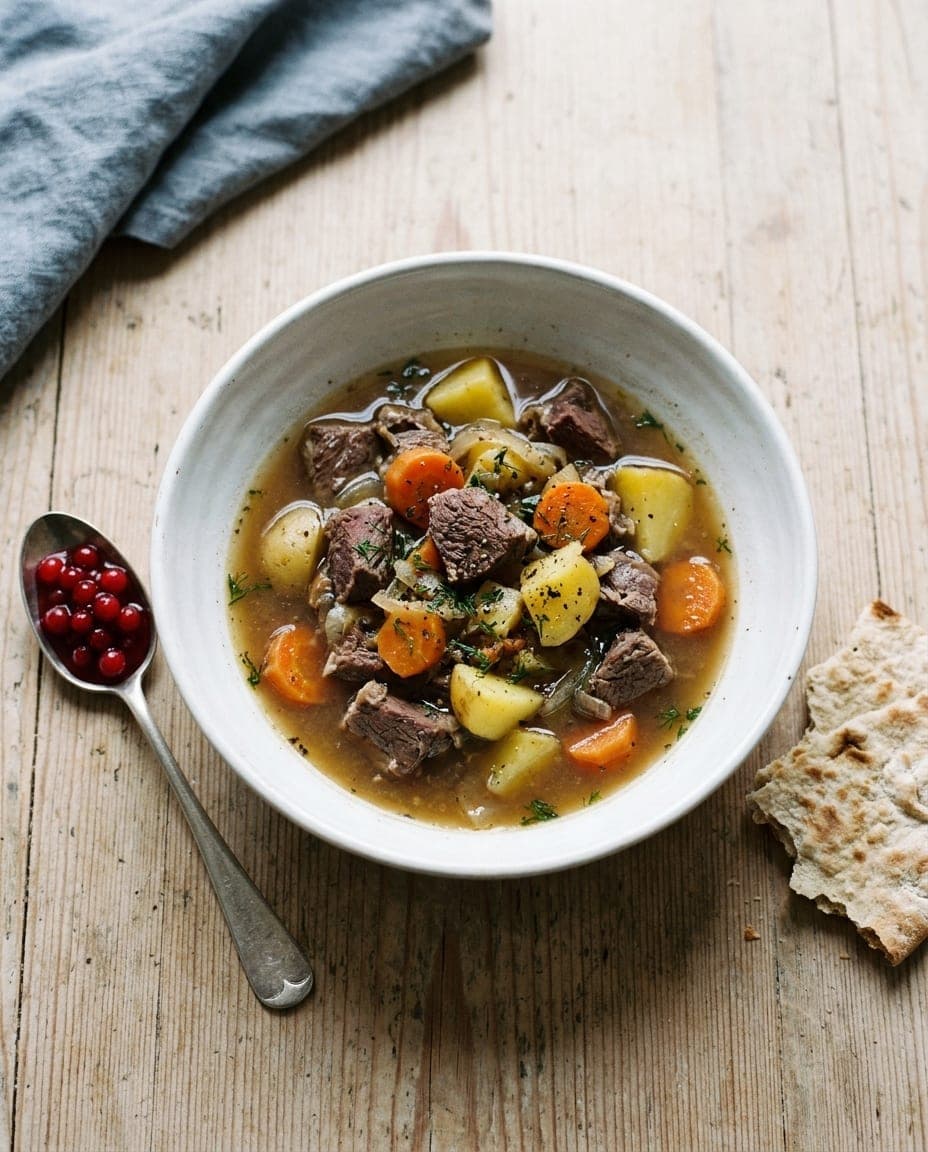
Bidos is a slow-cooked stew that belongs to the Sámi people, the indigenous population of northern Fennoscandia. In Norway it belongs above all to the reindeer-herding communities of the far north, in Finnmark and Troms, where herding has shaped life for centuries. The dish consists of pieces of reindeer, traditionally with the bones cooked into the broth, simmered with potatoes, carrots and onion until the meat is tender. Some cooks leave the broth clear, close to a meat soup; others thicken it with a little flour.
Unlike many everyday meals that rely on quick preparation, bidos requires time and patience. The long, gentle cooking allows the flavours of the meat and the earthy sweetness of the root vegetables to blend without becoming heavy or greasy. It is not a dish found in city restaurants or on standard Norwegian menus outside the north. Instead, it is above all a celebration food, the dish of significant gatherings such as Sámi weddings, confirmations, and Easter festivals.
The stew is served in quantity, intended for a crowd rather than an individual portion. It arrives hot, often in a large communal pot, accompanied by bread or flatbread and lingonberry jam. The combination of the savoury meat broth, the soft vegetables, the bread, and the tart berries creates a balance that has sustained communities through the long northern winters.
A dish for gatherings
Bidos follows the rhythm of the Sámi year. It appears most often during major life events and seasonal festivals, marking moments of community and continuity. In the far north, where the landscape can be vast and the weather severe, sharing a meal like this reinforces social bonds. The preparation usually involves cooking in large batches to ensure everyone present has enough to eat.
The ingredients reflect what is available in the northern climate. Reindeer meat, often from animals raised on traditional grazing lands, forms the base. Potatoes and carrots, relatively recent additions, are added for substance and sweetness. There are no complex spices or heavy creams; the seasoning remains simple, allowing the natural flavour of the reindeer to remain central. This simplicity is not a lack of effort but a deliberate choice that honours the quality of the ingredients.
What goes into it
The composition of bidos is straightforward, with each element playing a specific role in the final dish:
- Reindeer on the bone: Pieces of meat left on the bone provide depth and a deep flavour to the broth as it simmers slowly.
- Potatoes, carrots and onion: These vegetables soften during the cooking process and add sweetness to the savoury stew.
- Bread: Served alongside the stew, often flatbread or gáhkku, the bread is used to scoop up the meat or to soak in the broth. Bread came with bidos before potatoes did.
- Lingonberries: Usually as jam, offering a tart contrast that cuts the fat of the meat.
The result is a clear or lightly thickened broth with tender meat and soft vegetables. It is a dish that relies on the quality of its few components rather than complex techniques.
How to eat it
Bidos is typically served as a main course at a communal table. The large pot is placed in the centre, and diners serve themselves or are served by those preparing the meal. The meat is usually cut into bite-sized pieces, while the vegetables float freely in the broth.
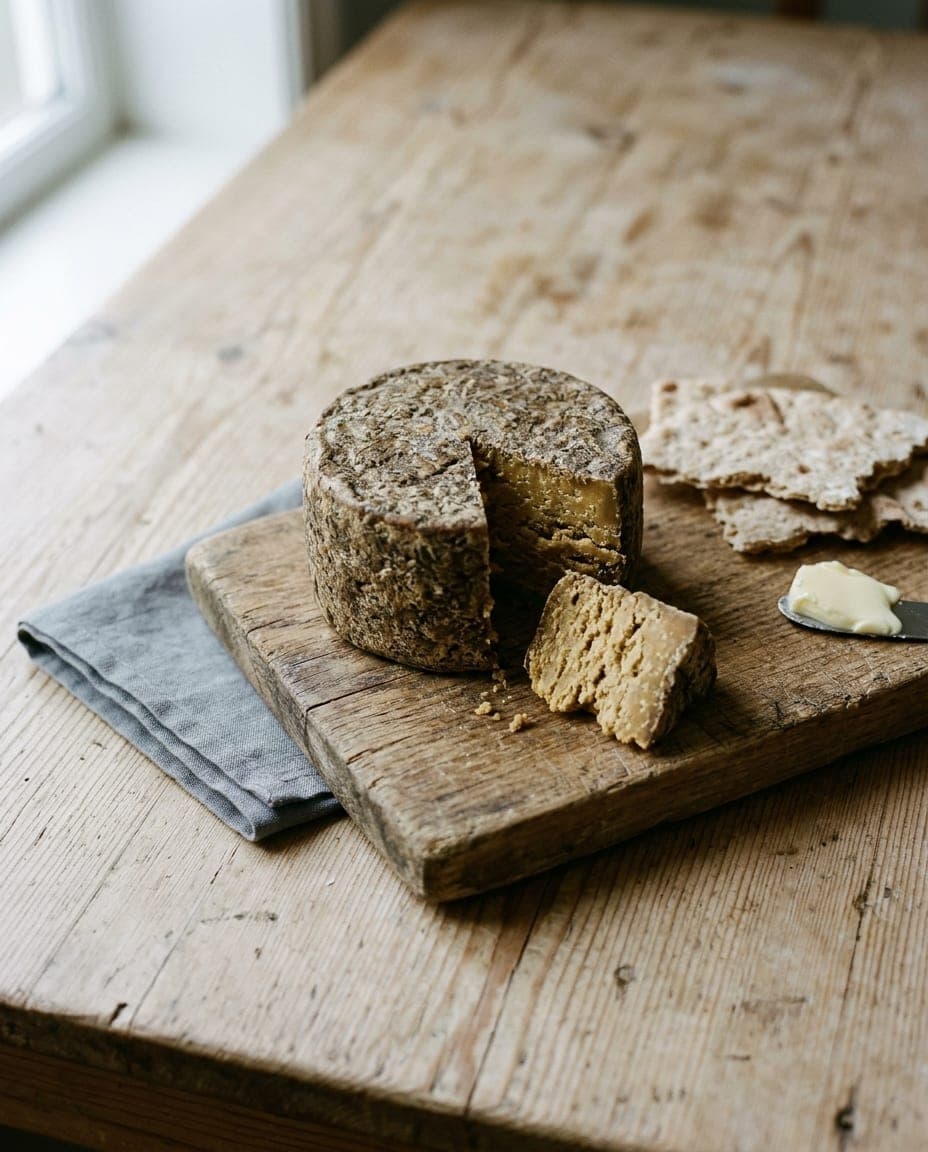
Bread is part of the experience. It is torn by hand and dipped into the stew or used to scoop up the meat. A small bowl of lingonberries sits nearby, often added to the plate or eaten separately to balance the savoury flavours. The dish is best enjoyed in the company of family and friends, during a celebration where the focus is on sharing food and time together.
Curious facts
- A regional speciality. Bidos is not found throughout Norway but belongs to Sámi communities, in Norway chiefly in Finnmark and Troms; related dishes exist elsewhere in Sápmi under other names.
- Celebration food. It is traditionally cooked for weddings, confirmations, and Easter gatherings rather than daily meals.
- Simple seasoning. The stew relies on salt, pepper and time rather than a long list of spices or herbs.
- Bone-in cooking. Simmering the bones for hours gives the broth its depth; quicker modern versions use a stock cube instead.
Where to try it
Inland Finnmark is the place: Kautokeino and Karasjok, where the Sámi parliament and the herding communities are, and where the Easter week festivals draw people from across the north. Bidos belongs to those gatherings rather than to restaurant menus, and the most likely way to meet it is at a wedding, a confirmation or a festival meal where someone has been cooking since morning.
A few restaurants and tourist kitchens in Karasjok, Kautokeino and Alta serve a version year-round, usually leaner and quicker than the one a family would make.
Where to try it
1 region
 Boat Rentals2 destinations
Troms og Finnmark
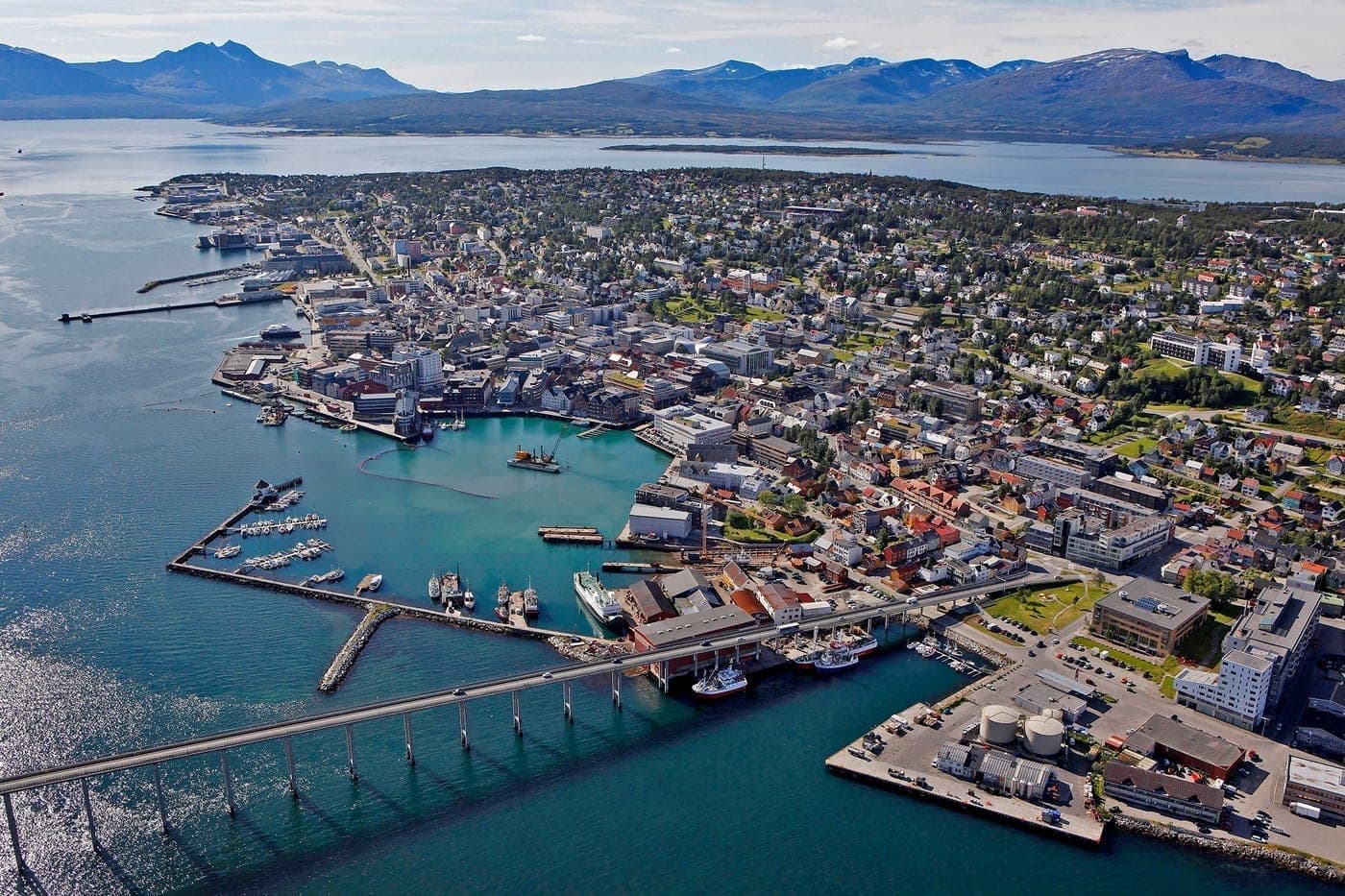
Troms og Finnmark occupies the far north of Norway, where the coastline breaks into thousands of islands, skerries and deep fjords before the land opens into wide tundra. Settlements here are small and spread far apart, and the sea shapes almost everything, from fishing villages tucked into narrow inlets to the way daylight itself behaves through the year. Winter belongs to darkness broken by the aurora borealis, when the sky over the Lyngen Alps or the waters near Tromsø turns green and violet on clear, cold nights. Summer flips the pattern entirely: the midnight sun keeps the sky lit through what would elsewhere be night, and trails across the Finnmarksvidda plateau or the island of Senja stay open at hours that feel both wrong and right at once. Sámi culture runs through the region rather than sitting beside it. Reindeer herding continues across Finnmarksvidda, the great inland plateau Sámi families have used for grazing for generations, and joik singing, duodji handicraft and the lavvo tent remain part of daily life. Kautokeino and Karasjok stand as centres of this culture, home to institutions dedicated to Sámi language, governance and craft. Tromsø is the region's largest city and its cultural anchor: a university town with a lively arts scene, a striking Arctic Cathedral of glass and concrete, and a harbour that has long served Arctic expeditions. Alta, further north, holds one of Europe's most significant collections of prehistoric rock carvings, cut into stone over thousands of years and recognised as a UNESCO World Heritage Site. Further along the coast, the land narrows toward Nordkapp, the dramatic cliff long promoted as the northernmost point of mainland Europe. The plateau above it has drawn travellers for generations, and the wind there carries a sense of having reached an edge of the continent. Fishing villages along the coast still work much as they always have: drying racks for stockfish stand outside small harbours, and boats bring in cod, halibut and king crab that turns up on menus across the region. Skrei, the migratory cod that arrives each winter to spawn along the Finnmark coast, is a seasonal specialty worth planning around. Wildlife rewards patience here. Sea eagles nest along the cliffs, whales pass through fjords in the colder months, and reindeer cross roads and open ground. Inland, elk move through birch forest, and the mountains above the treeline hold ptarmigan. Exploring the region without a car is workable. Coastal ferries and the Hurtigruten route link villages along the fjords, while local buses connect Tromsø, Alta and the interior towns. Friluftsliv, the Norwegian idea of simple outdoor life, fits this pace: a walk along a fjord path, a swim in cold water, an evening watching the sky. An itinerary here tends to follow the coast and its ferry links, moving between Tromsø's museums and cafés, Alta's rock art, and the smaller fishing villages where the working harbour is still the centre of the day. Hiking trails on Senja and around Lyngen offer close views of the fjords without technical difficulty, and the Sámi towns of the interior add a different rhythm, built around herding seasons. Troms og Finnmark rewards those willing to let the region's own clock set the pace: short winter days and long summer light, ferry timetables, and a landscape that changes character between seasons.
Boat RentalsHikingLocal Cuisine