Finnbiff (sautéed reindeer)
Shaved reindeer simmered in cream and juniper
- Local name
- Finnbiff
- Served with
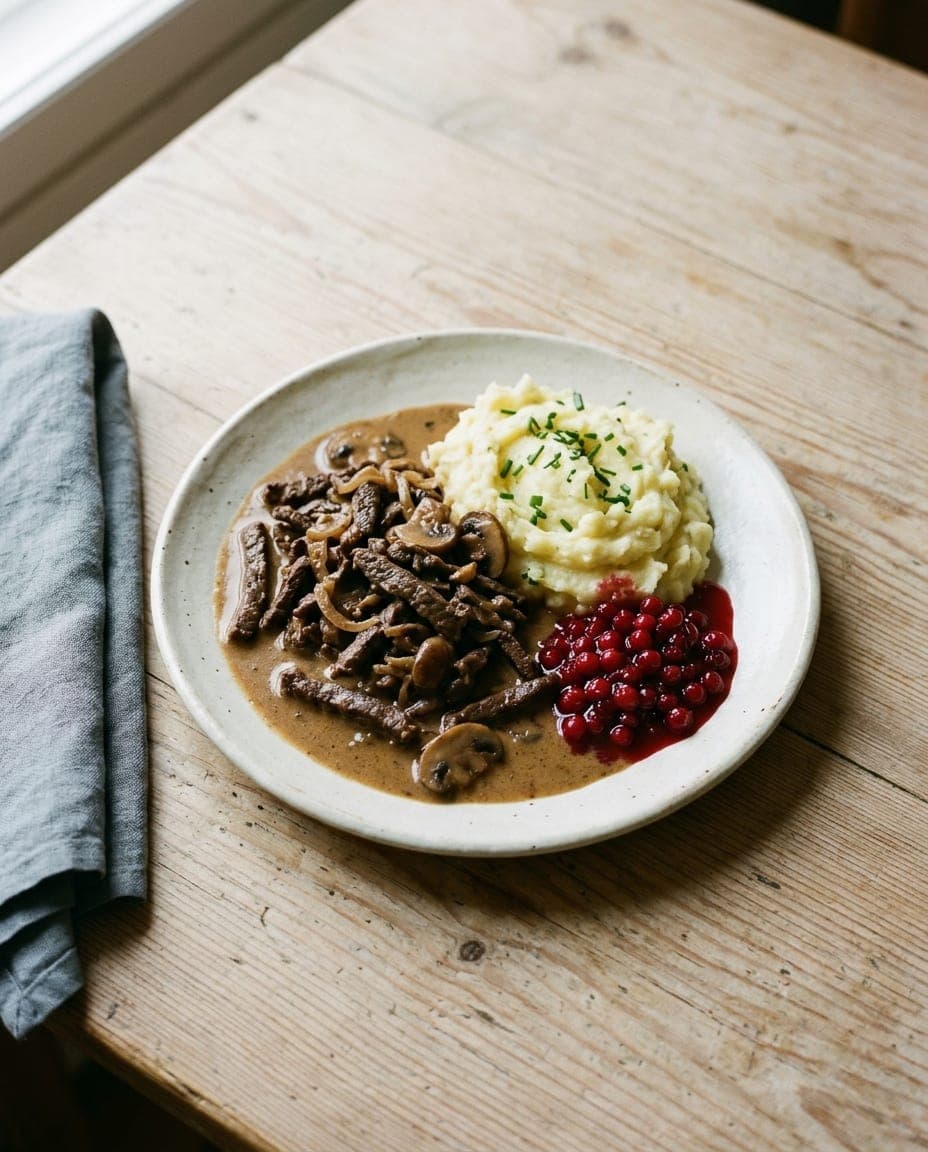
- Mashed potatoes, lingonberries
- Best eaten at
- A northern Norway inn
- Pairs with
- Red wine
What it is
Finnbiff is a dish of thin-shaved reindeer, cooked quickly in butter and finished in a sauce of cream, game stock, juniper berries and sometimes brown cheese. It is a signature meal of Northern Norway, particularly Troms and Finnmark, where reindeer herding has been central to life for centuries. The meat is lean, dark and faintly sweet, with a texture closer to venison than to beef.
The name needs a note. Finn is an old, now outdated Norwegian word for the Sámi, the indigenous people of the far north — the dish keeps it the way old names often do. The herds are largely Sámi-owned and Sámi-herded, and sautéed reindeer itself is a traditional dish across Sápmi; the cream, juniper and brown cheese of the restaurant version are Norwegian additions. Both halves of that are worth keeping straight.
The visual appeal is immediate. The reindeer arrives shaved into translucent slices while still frozen, allowing it to cook almost instantly. This method preserves the delicate flavour and keeps the meat tender. The final dish is a smooth, creamy affair, where the dark meat contrasts with the pale sauce, often dotted with the bright red of lingonberries.
How the meat is prepared
The defining moment for finnbiff happens in the kitchen when the reindeer arrives frozen. It is shaved or sliced into thin ribbons while still cold. This ensures that the slices do not stick together and cook evenly. The meat is then tossed into a hot pan with plenty of butter, where it sears for just a few seconds before the liquid elements are added.
A little game stock, often made from the bones of the animal or other wild game, is poured in to provide depth. Cream follows, creating a thick, velvety coating that clings to every slice. Juniper berries, crushed to release their resinous aroma, are stirred through the sauce, adding a piney note that complements the wild character of the meat. Some kitchens add a knob of brown cheese, or brunost, melting it into the sauce for a touch of caramel sweetness that balances the savoury richness.
The result is not a stew in the traditional sense, but a sautéed dish where the ingredients remain distinct yet united by the sauce. The meat retains its dark colour and firm texture, refusing to turn grey or dry because of the brief cooking time.
What goes into it
The simplicity of finnbiff relies on the quality of its few components. There is no single official recipe, but the core elements are consistent across the north:
- Reindeer meat, shaved thin while frozen, which provides the lean, dark base with a faint sweetness.
- Butter, used generously to sear the meat and form the foundation of the sauce.
- Cream, often heavy or double, which creates the rich, coating texture.
- Game stock, adding a savoury depth that grounds the dairy.
- Juniper berries, crushed to infuse the sauce with a pine-like aroma.
- Brown cheese, sometimes melted into the sauce for a caramel note.
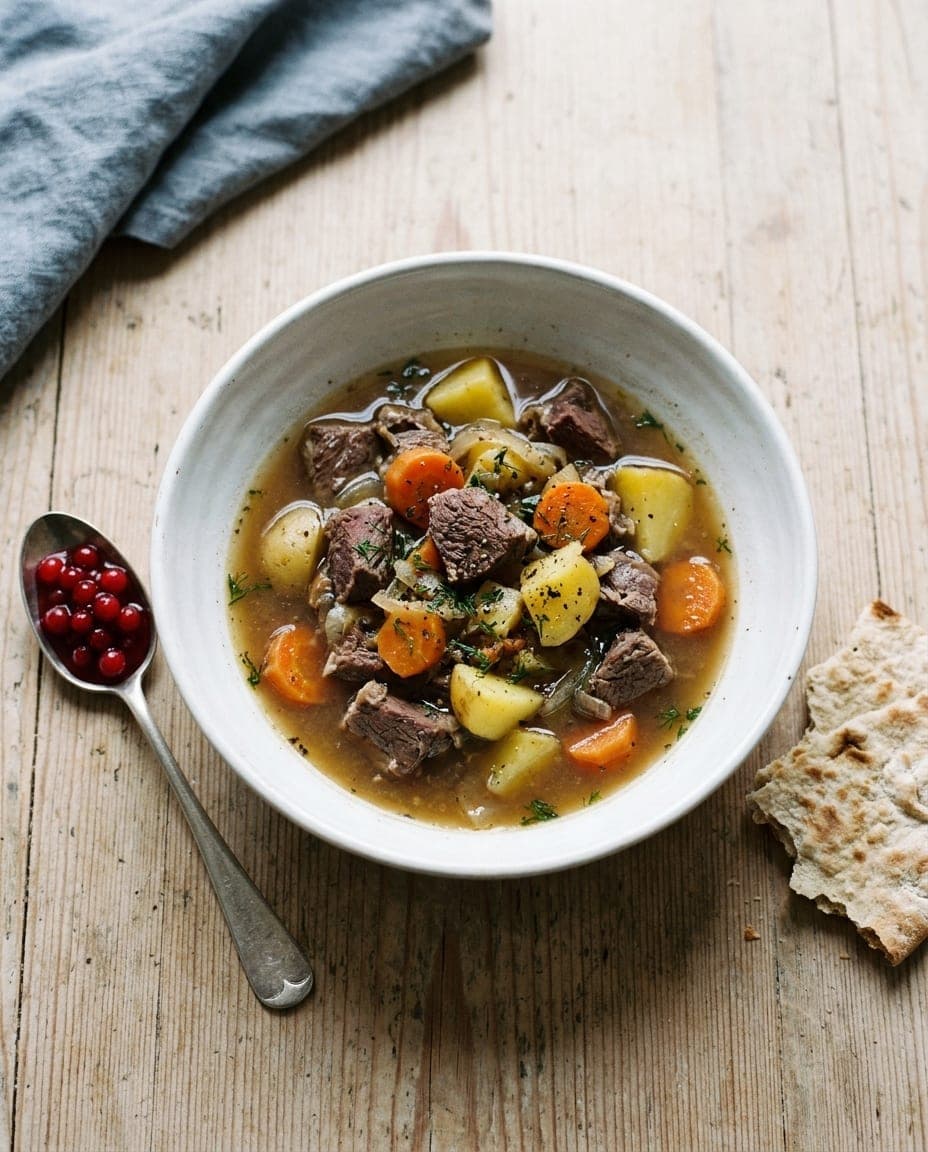
The dish is served alongside two essential accompaniments: creamy mashed potatoes and a generous spoonful of lingonberry jam or fresh berries. The tartness of the berries cuts the fat of the cream and butter, while the potato offers a neutral canvas for the bold flavours.
Where it comes from
Finnbiff belongs to the landscape of Troms and Finnmark, where the mountains rise steeply from the sea and the winters are long. Reindeer herding in Norway is largely the domain of the Sámi people, who manage herds that graze on the open mountain plateaux year-round. The meat comes from these free-roaming animals, which feed on lichens and wild grasses, giving the flesh its distinct character.
Sautéed reindeer is an old dish of the reindeer-herding north, made across Sápmi in Norway, Sweden, Finland and Russia under other names, such as renskav in Swedish and poronkäristys in Finnish. Traditionally it was fried in reindeer fat and simmered with water; cream and butter came later. Today, it is a standard offering at inns and hotels across the north.
The dish reflects the practicality of northern life. In a region where fresh produce is scarce for much of the year, reindeer was the reliable meat, and it cooks quickly over a fire or on a stove.
How to eat it
Finnbiff is best enjoyed at a northern Norway inn, where the atmosphere matches the dish's hearty nature. It is typically served as a main course, plated with a mound of mashed potatoes on one side and a dollop of lingonberries on the other. The creamy sauce should be spooned over the meat and potatoes, ensuring every bite carries the full range of flavours.
A glass of red wine pairs well with the dish, its tannins cutting through the fat of the cream and butter. A light beer is also common, though the boldness of the wine often complements the gamey notes better. The experience is one of warmth and satisfaction, particularly after a day spent outdoors in the cold air of the north.
Curious facts
- The name is Norwegian. Finnbiff uses the old Norwegian term for Sámi people (finn) combined with the word for beef (biff); in Northern Sámi a version is called báistebiđus.
- Frozen slicing is key. The reindeer must be shaved while frozen to ensure thin, even slices that cook instantly without drying out.
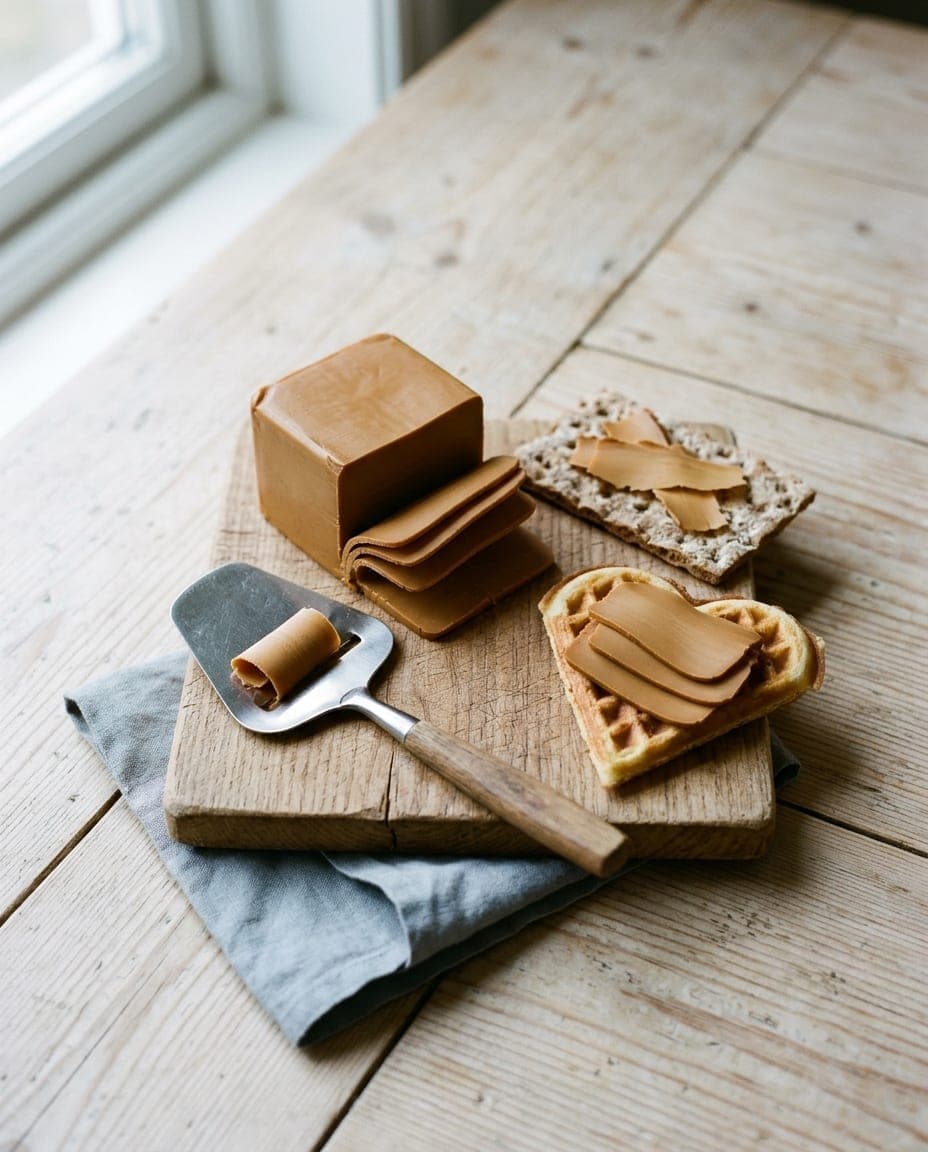
- Brown cheese adds sweetness. Some versions of the sauce include melted brown cheese, a Norwegian staple made from whey, which adds a caramel-like note to the dish.
- A northern speciality. Finnbiff is eaten across Norway, sold frozen in supermarkets, but it is most associated with Troms and Finnmark.
- Lingonberries are essential. The tartness of the berries balances the fat of the cream and butter, making them a standard accompaniment rather than an optional garnish.
Where to try it
The best place to eat finnbiff is in Northern Norway, particularly in Troms and Finnmark. Inns along the coast and in mountain valleys serve consistent versions, often using locally sourced reindeer. The smaller inns of Finnmark and inner Troms buy from nearby herds; city chains mostly do not.
Where to try it
1 destination
 Boat Rentals
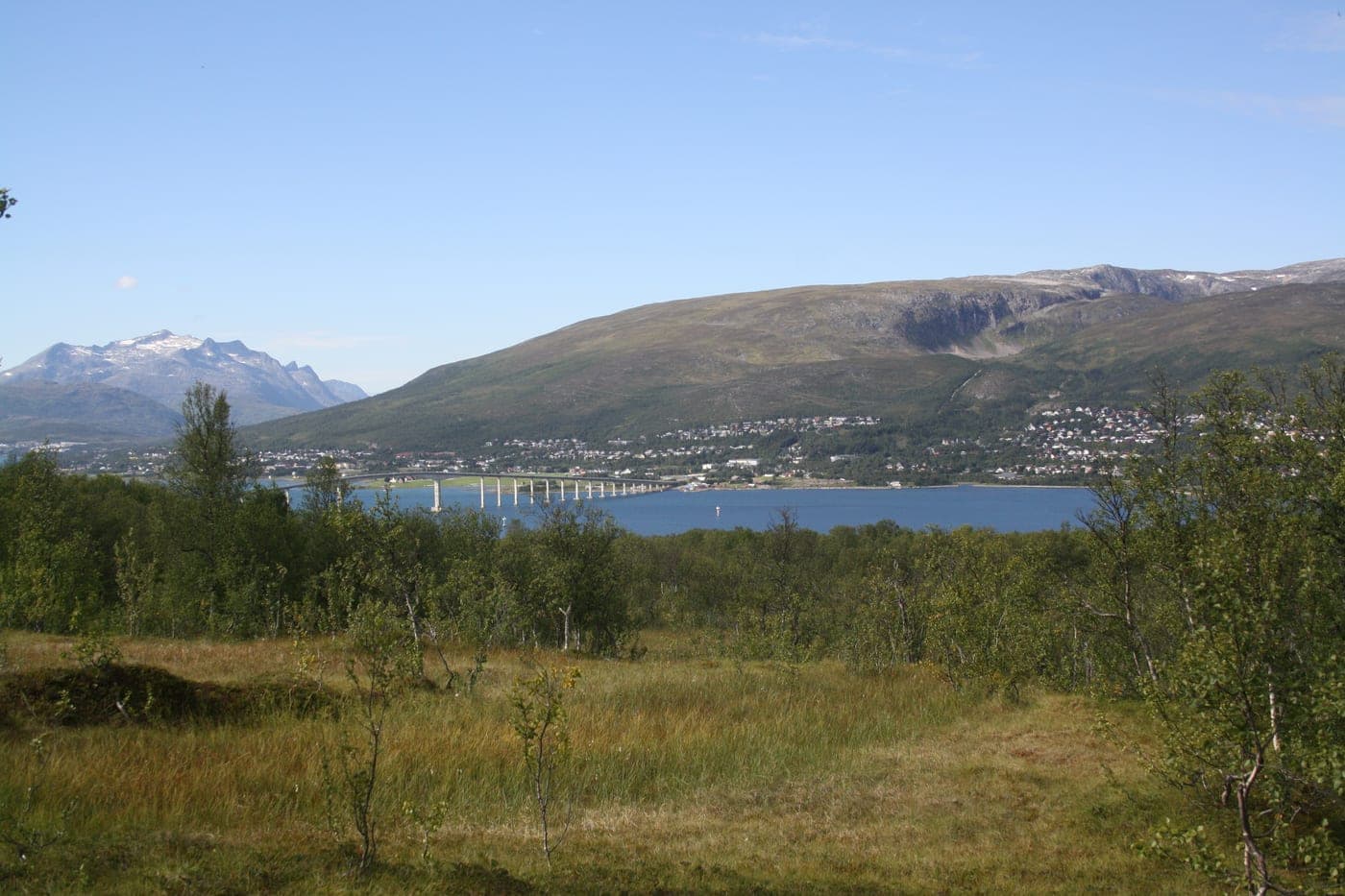
Kvaløysletta
Arctic island near Tromsø with boat access to fjords and midnight sun.
Boat RentalsHiking
1 region
 Boat Rentals2 destinations
Troms og Finnmark
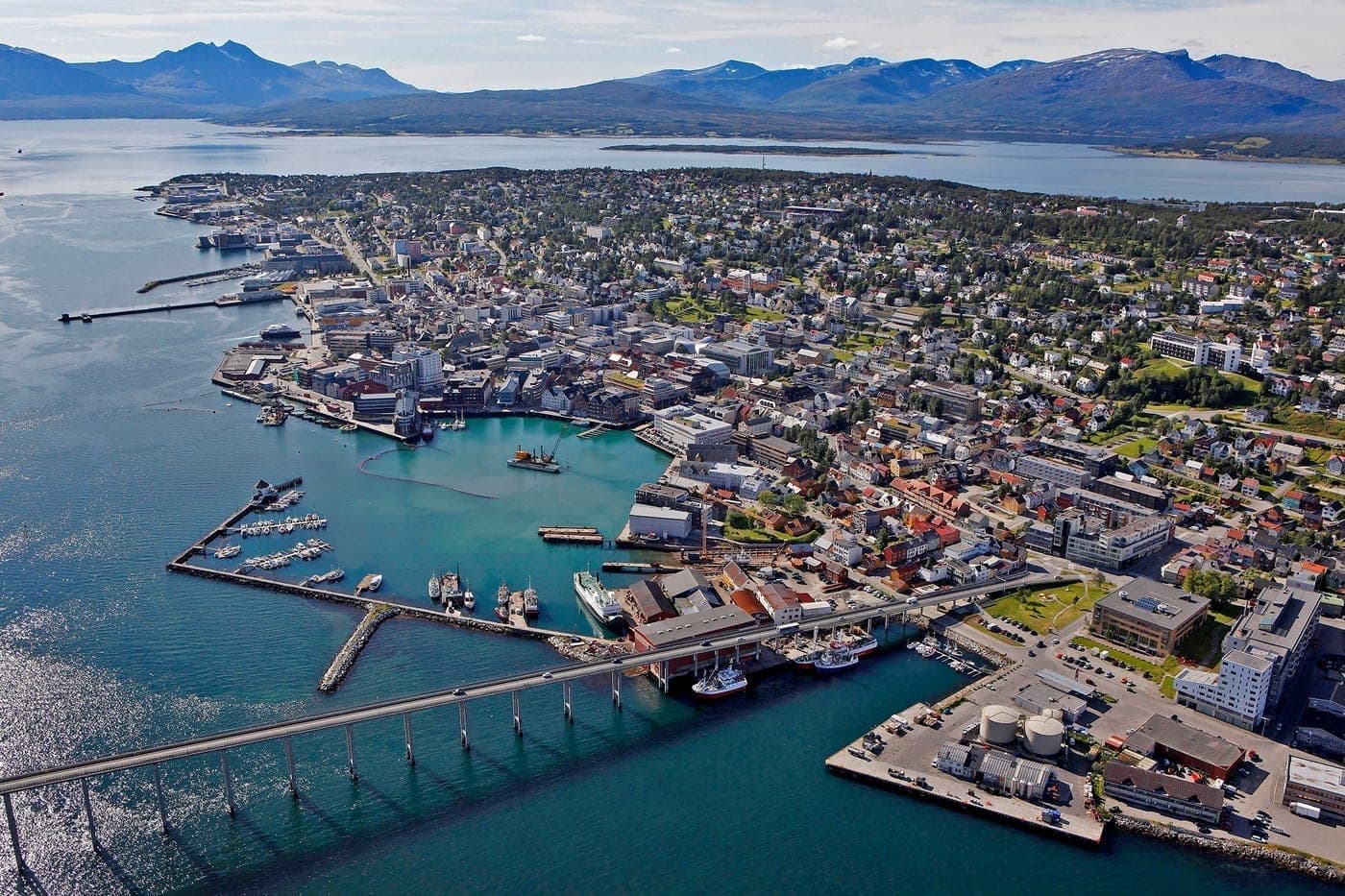
Troms og Finnmark occupies the far north of Norway, where the coastline breaks into thousands of islands, skerries and deep fjords before the land opens into wide tundra. Settlements here are small and spread far apart, and the sea shapes almost everything, from fishing villages tucked into narrow inlets to the way daylight itself behaves through the year. Winter belongs to darkness broken by the aurora borealis, when the sky over the Lyngen Alps or the waters near Tromsø turns green and violet on clear, cold nights. Summer flips the pattern entirely: the midnight sun keeps the sky lit through what would elsewhere be night, and trails across the Finnmarksvidda plateau or the island of Senja stay open at hours that feel both wrong and right at once. Sámi culture runs through the region rather than sitting beside it. Reindeer herding continues across Finnmarksvidda, the great inland plateau Sámi families have used for grazing for generations, and joik singing, duodji handicraft and the lavvo tent remain part of daily life. Kautokeino and Karasjok stand as centres of this culture, home to institutions dedicated to Sámi language, governance and craft. Tromsø is the region's largest city and its cultural anchor: a university town with a lively arts scene, a striking Arctic Cathedral of glass and concrete, and a harbour that has long served Arctic expeditions. Alta, further north, holds one of Europe's most significant collections of prehistoric rock carvings, cut into stone over thousands of years and recognised as a UNESCO World Heritage Site. Further along the coast, the land narrows toward Nordkapp, the dramatic cliff long promoted as the northernmost point of mainland Europe. The plateau above it has drawn travellers for generations, and the wind there carries a sense of having reached an edge of the continent. Fishing villages along the coast still work much as they always have: drying racks for stockfish stand outside small harbours, and boats bring in cod, halibut and king crab that turns up on menus across the region. Skrei, the migratory cod that arrives each winter to spawn along the Finnmark coast, is a seasonal specialty worth planning around. Wildlife rewards patience here. Sea eagles nest along the cliffs, whales pass through fjords in the colder months, and reindeer cross roads and open ground. Inland, elk move through birch forest, and the mountains above the treeline hold ptarmigan. Exploring the region without a car is workable. Coastal ferries and the Hurtigruten route link villages along the fjords, while local buses connect Tromsø, Alta and the interior towns. Friluftsliv, the Norwegian idea of simple outdoor life, fits this pace: a walk along a fjord path, a swim in cold water, an evening watching the sky. An itinerary here tends to follow the coast and its ferry links, moving between Tromsø's museums and cafés, Alta's rock art, and the smaller fishing villages where the working harbour is still the centre of the day. Hiking trails on Senja and around Lyngen offer close views of the fjords without technical difficulty, and the Sámi towns of the interior add a different rhythm, built around herding seasons. Troms og Finnmark rewards those willing to let the region's own clock set the pace: short winter days and long summer light, ferry timetables, and a landscape that changes character between seasons.
Boat RentalsHikingLocal Cuisine