Trøndelag sits in the middle of Norway, where the coast folds into Trondheimsfjorden and the land behind it opens into some of the country's best farmland. At its centre is Trondheim, a former royal capital built along the curve of the Nidelva river. The city grew around Nidaros Cathedral, a Gothic building raised over the burial place of King Olav Haraldsson and long the destination of pilgrim routes that crossed Norway on foot. The cathedral remains the coronation church of the Norwegian monarchy and the largest medieval building in Scandinavia, its west front covered in carved figures added and restored over many generations.
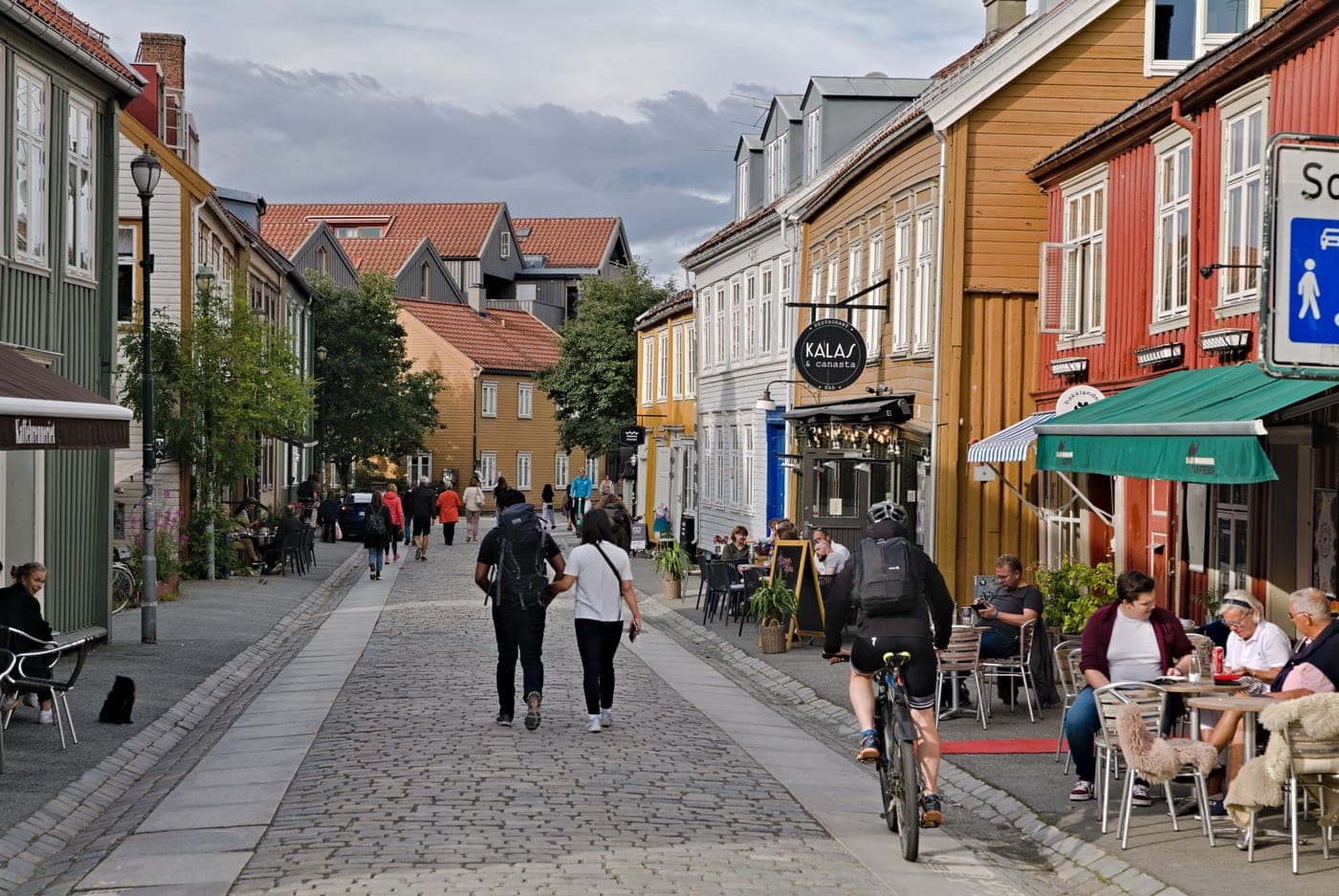
Trondheim itself keeps a layered, working character. Along the river, rows of wooden warehouses on stilts, once used for storing fish and grain, now hold cafés and small businesses, their reflections doubling in the water at low tide. The old town bridge, painted deep red, links the centre to Bakklandet, a district of narrow lanes and timber houses that has kept its scale even as the city around it has grown. Markets and bakeries here still deal in the region's dairy and grain, produced on the flat, fertile land stretching inland from the fjord — some of the most productive farming country in Norway, unusual this far north.
Outside the city, Trøndelag's coastline breaks into islands and skerries. Hitra and Frøya, reached across the outer fjord, combine fishing communities with salmon farming, an industry that has shaped the local economy for decades. Further along the coast, smaller harbours still send boats out for cod and other whitefish, continuing a trade that once made dried and salted klippfisk one of Norway's most important exports. Warehouses built for that trade still stand in several fishing villages, their weathered red and white timber a common sight along the shore.
Inland, the region changes character again. East of Trondheim, the valley of Gauldalen climbs gently inland, following a route used for centuries by traders and travellers moving between the coast and the interior. Further south, the historic mining town of Røros sits on a high, treeless plateau. Founded around copper deposits and shaped almost entirely in wood, Røros is a UNESCO World Heritage town, its narrow streets lined with blackened timber houses that have survived largely unchanged since mining ended. Winters here are hard and clear, and the town's church, built of stone rather than wood as a mark of the mining company's wealth, still dominates the skyline.
Trøndelag's food culture draws on both the coast and the inland farms. Cured and dried fish remain part of the everyday diet in fishing communities, alongside dairy products from the region's grazing land — cheeses and cultured milk that rarely travel far from where they are made. Trondheim's covered market halls and smaller town markets sell this produce directly, often from the same families who have farmed or fished the surrounding area for generations.
The region's Viking-era past is visible in scattered burial mounds and place names across the farmland east of Trondheim, part of a landscape that was already settled and cultivated long before the cathedral was built. Later, the pilgrim routes leading to Nidaros drew travellers from across Scandinavia and beyond, a tradition that has been revived in recent decades as walkers again follow the old paths through forest and farmland toward the cathedral doors.
Between the fjord, the farmland, and the mining plateau, Trøndelag holds together a working coastline, a historic capital, and an inland mining town that has changed remarkably little, each shaped by what could be grown, fished, or dug from its own ground.