Strangolapreti
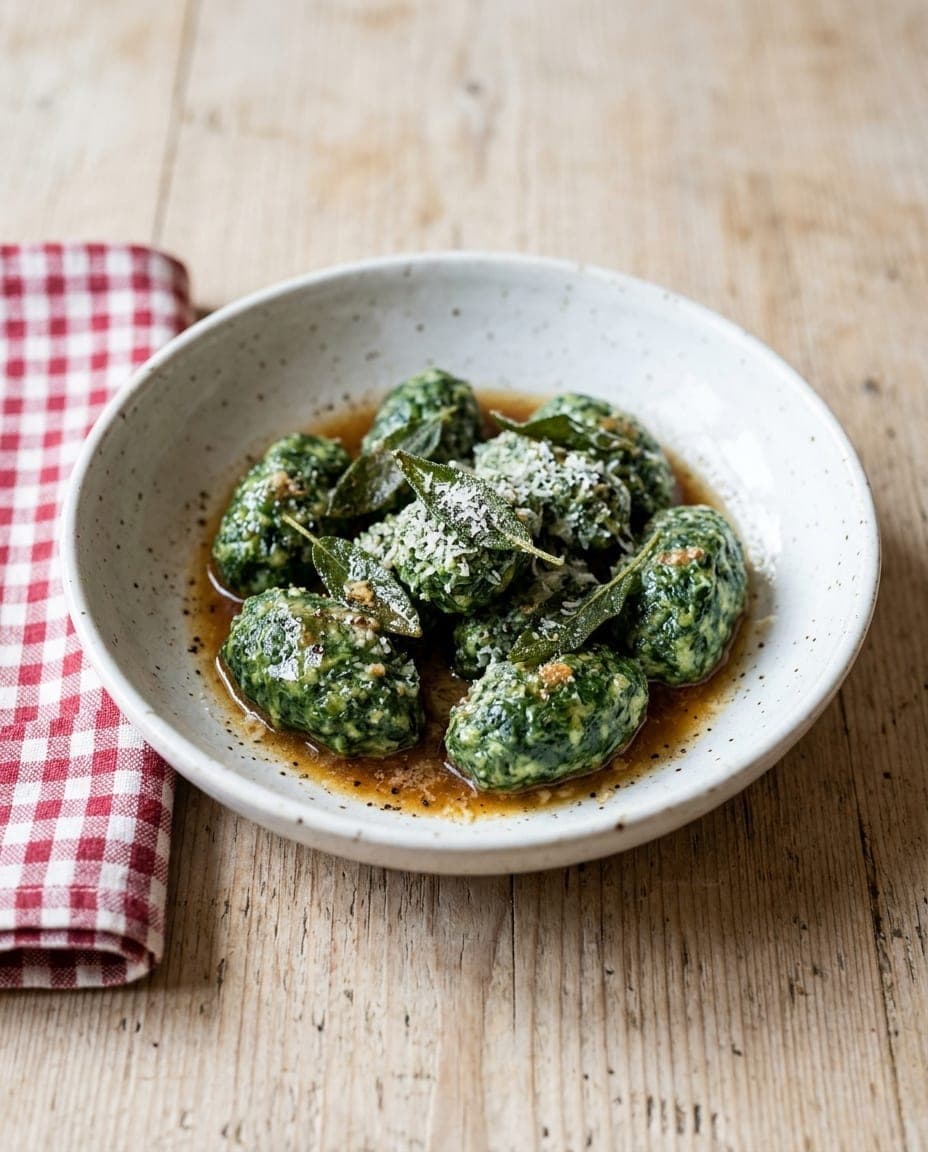
Spinach and stale bread dumplings from Trentino served in brown butter
- Local name
- Strangolapreti
- Served with
- Brown butter, sage, Grana Trentino
- Best eaten at
- A Trentino trattoria
- Pairs with
- Teroldego or Nosiola
What it is
Strangolapreti are soft, green dumplings from Trentino, the Italian-speaking half of Trentino-Alto Adige. They appear on the menu of a traditional Trentino trattoria as a first course or a light main dish, usually accompanied by melted brown butter and fresh sage leaves. The name translates literally as "priest-stranglers", a label that has generated more stories than facts over the centuries.
Unlike the potato gnocchi found in much of northern Italy, these are bread dumplings. The dough is made from stale bread soaked in milk, mixed with cooked chopped spinach or chard, eggs, a little flour and grated cheese. The mixture is shaped into soft, irregular dumplings, often with two spoons, and should be tender enough to fall apart if handled too roughly; a firm texture suggests the wrong balance of ingredients. They are poached gently in barely simmering water, then dressed with the warm butter sauce and more grated cheese before serving.
The green colour comes from the cooked greens, which give the dumplings a subtle earthy flavour and a rustic appearance. The dish is a regional speciality rooted in the frugal farmhouse cooking of Trentino, where nothing, not even stale bread, was wasted. It is not a dish found on every menu across Italy, but it is a staple where it originates.
How the name came to be
The origin of the name strangolapreti remains disputed, and no single explanation has been proven. All accounts are folklore rather than historical record. The best-known Trentino story links the dumplings to the Council of Trent (1545–1563), whose prelates are said to have been so fond of them that they ate them greedily. Another version holds that priests invited to Sunday lunch ate them so quickly they risked choking. A third tells of a hungry priest at a roadside inn who kept asking for more until he choked on a dumpling.
These stories circulate widely, yet none offers a definitive answer. The confusion is compounded by strozzapreti, a name used in Emilia-Romagna, Umbria and other parts of central Italy for a hand-rolled, twisted pasta rather than a dumpling. The names are easily confused, but the Trentino version is distinct in its ingredients and method.
What goes into it
There is no single official recipe, as every kitchen keeps its own variation, but the core components remain consistent:
- Stale bread, usually a day or two old, which provides the base and absorbs the milk.
- Cooked spinach or chard, chopped finely to give the dumplings their green colour and earthy taste.
- Milk for soaking the bread until it is soft but not soggy.
- Eggs, acting as a binder to hold the mixture together without making it dense.
- Grated cheese, usually Grana Trentino, which adds saltiness and depth.
- Brown butter and fresh sage for the final sauce, where the butter is cooked until it turns nutty and golden.
The result is a soft, savoury dumpling that relies on the quality of the bread and the freshness of the greens. It is not a light starter in the modern sense; a portion can be quite filling, especially with the rich sauce.
How it is eaten
Strangolapreti are best enjoyed in a Trentino trattoria, where they are served as a warm first course or a modest main dish. The dumplings arrive loose on the plate rather than tightly packed, and are eaten immediately while the butter is still warm and the sage leaves are fragrant.
A glass of local wine, such as the white Nosiola or the red Teroldego, balances the richness of the brown butter and complements the earthy greens. Bread on the side is unnecessary, as the dumplings are substantial enough on their own.
Curious facts
- The name is a mystery. No historical document confirms who named the dish or why, leaving the "priest-stranglers" label to folklore, including the popular tale of the Council of Trent.
- Bread over potatoes. Unlike most northern Italian gnocchi, these dumplings rely on stale bread rather than potatoes for their structure.
- A regional speciality. The dish is a classic of Trentino, not a standard offering in Rome or Milan.
- Soft texture is key. A properly made strangolapreti should be tender enough to break apart easily; firmness indicates an error in preparation.
- Distinct from pasta. The name often causes confusion with the hand-rolled strozzapreti pasta of central Italy, but the two dishes share only the joke in their names.