'Nduja
Fiery, spreadable pork salami from Spilinga in Calabria

- Local name
- 'Nduja
- Served with
- Crusty bread
- Best eaten at
- A Calabrian antipasto table
- Pairs with
- Cirò red
What it is
Nduja is a soft, spreadable salami from Calabria in southern Italy, most closely associated with the village of Spilinga, in the hills inland from Tropea. It is made from fatty pork cuts that are minced with a very large proportion of Calabrian chilli, packed into a natural casing, smoked and then left to mature. The result is a deep orange-red paste that can be spread directly onto bread or stirred into hot dishes until it melts into the sauce.
Unlike most cured meats that are sliced and eaten as they are, nduja is made to be spread and mixed. Its texture is similar to a thick pâté, soft enough to spread with a knife even when cold. The heat is substantial but rounded by the fat. It is not for the faint of heart, yet its rich, smoky flavour makes it hard to forget once tasted.
The origin of the name is uncertain. It is often traced to the French andouille, a type of sausage, perhaps introduced during the French period in southern Italy in the early 19th century, though other accounts link the product to earlier Spanish rule. Whatever its origin, nduja bears little resemblance to its supposed French namesake.
The history of Spilinga
Spilinga is a small village in the province of Vibo Valentia, on the Monte Poro plateau a short distance inland from the Tyrrhenian coast. Here, making nduja has been part of the local rhythm for generations, though the exact date of its invention is unknown. It emerged from cucina povera: a way of using the less prized, fattier parts of the pig and preserving them with salt and chilli.
The method involves grinding pork fat and meat, typically including cuts such as cheek and belly, together with chilli before stuffing the mixture into casings. Smoking gives the final product its subtle smoky aroma. Unlike salamis that are aged until hard and dry, nduja is matured for a relatively short time, and its high fat content keeps the texture spreadable, a quality that defines it today.
While Spilinga remains the spiritual home of nduja, it is now made throughout the area around Monte Poro and across Calabria, with variations in the chilli used and the length of curing. Despite these differences, the core identity remains the same: a fiery, fatty paste that transforms whatever it touches.
What goes into it
The ingredients of nduja are simple but powerful. There is no single official recipe, and every maker guards their own proportions, but the building blocks are always similar.
- Pork fat and meat, from fattier cuts, which provide the base for the spreadable texture.
- Calabrian chillies, dried and ground or used as a paste, making up a very large proportion of the mixture, often cited as around a third of the total weight.
- Natural pork casings, into which the mixture is packed before smoking and curing.
- Salt, which helps preserve the meat alongside the chilli.
The result is a deep orange-red paste that melts when heated and spreads easily when cold. The heat is intense but balanced by the richness of the fat, creating a flavour that is both aggressive and comforting.
How to eat it
Nduja is rarely eaten in slices. Instead, it is spread, stirred or melted into other dishes. The most traditional way to enjoy it is simply on a thick slice of crusty bread, sometimes warmed so that the fat softens. This allows the full flavour of the chilli and the smokiness to shine without distraction.
In the kitchen, nduja acts as a powerful seasoning. It can be stirred into tomato sauces for pasta, where it melts away to colour the sauce deep red and add a warming kick. It is also melted into bean dishes or vegetable soups, transforming a humble dish into something rich and complex. On pizza, small dollops create pockets of fiery flavour that contrast with the cheese.
At a Calabrian antipasto table, nduja is often served alongside other cured meats, cheeses, olives and preserved vegetables. It pairs well with a red wine from Cirò, the best-known wine area of Calabria, whose fruity notes help balance the heat.
The festival of fire
Every year on 8 August, Spilinga holds the Sagra della 'Nduja, a festival that draws visitors from across Calabria and beyond and is sometimes called the Notte Rossa, the "red night". Stalls line the streets, selling nduja alongside other local products and dishes made with it.
It is a moment when the product moves from the kitchen to the centre of village life, celebrated not just as food but as a symbol of local identity, and a chance to taste nduja in the place most closely associated with it.
Curious facts
- A spreadable texture. Unlike most salamis that dry out into hard slices, nduja remains soft because of its high fat content.
- The colour comes from chilli. The deep orange-red hue is the natural result of using a large quantity of Calabrian chilli in the mixture.
- A disputed name. The word nduja is often linked to the French andouille, yet the two products have little in common.
- A regional icon. While produced in various parts of Calabria, Spilinga remains the heart of nduja production and the place where the tradition is most deeply rooted.
- A red night. Spilinga's August festival is nicknamed the Notte Rossa after the colour of its star product.
Where to try it
The best place to taste nduja is in Calabria itself, particularly in Spilinga and the other villages of Monte Poro. Here it is not a novelty but an everyday product, served in local trattorias and sold by producers and delicatessens.
Nearby coastal towns such as Tropea and Parghelia also make easy bases, with restaurants serving nduja on bread as a starter, in pasta sauces and on pizza. For the full experience, a visit to Spilinga on 8 August coincides with the village's festival, when the streets are given over to tastings and stalls.
Where to try it
2 destinations
 Boat Rentals
Parghelia
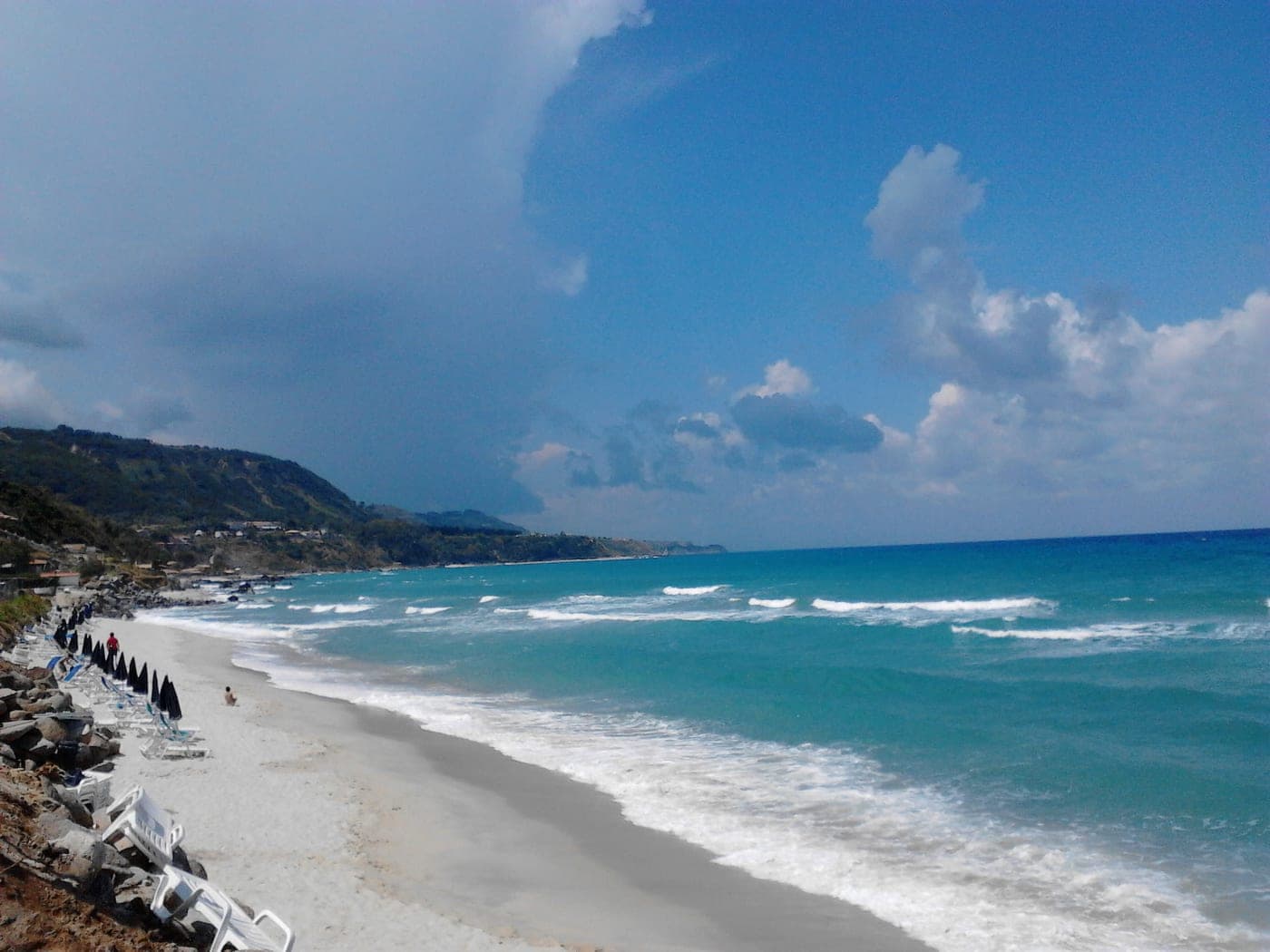
Picturesque coastal town known for stunning beaches and historic architecture.
Boat Rentals Boat Rentals
Tropea
Charming cliffside town with sandy beaches and historic Norman architecture.
Boat Rentals
1 region
- Boat Rentals3 destinations
Calabria
Calabria forms the toe of Italy, a narrow strip of land pinched between two seas and lifted into three mountain ranges. This shape is what makes it a region built for slow travel: an hour's drive from a fishing harbour on the Tyrrhenian coast leads into chestnut forests and mountain pastures; another hour reaches olive terraces above the Ionian Sea. Nothing here rewards rushing. A Calabria itinerary works best as a loop through a handful of towns, with two or three nights in each, rather than a checklist of day trips. Food sets the pace as much as geography does. Calabria is one of Italy's strongholds of Slow Food, the movement that began by defending exactly this kind of small-scale, tied-to-the-land cooking. 'Nduja, the spreadable spicy salami, and the sweet red onion of Tropea are both eaten the way they always have been — with bread, in a kitchen, at a pace nobody is timing. The region's wine road runs through the hills around Cirò, where Gaglioppo grapes have long been grown. Agriturismo stays are the natural base for exploring it: working farms with rooms attached, where dinner is whatever came out of the garden or off the hillside that day. The hill towns are where Calabria's unhurried character is easiest to feel. Gerace sits on a limestone outcrop above the Ionian coast, its medieval streets largely unbothered by modern building. Stilo, tucked into the Serre mountains, is known for the Cattolica, a small Byzantine church that has watched over the town for centuries. Bova, high in the Aspromonte massif, is one of the last places where Greko, an ancient Greek dialect, is still spoken by older residents — a reminder that Calabria was part of Magna Graecia long before it was part of Italy. Pentedattilo, built into a rock formation shaped like a hand, was largely abandoned and is now slowly being resettled by artists and craftspeople. The coast has its own rhythm. Tropea, perched on a cliff above the Tyrrhenian, is Calabria's best-known seaside town, its old centre a tangle of stone alleys leading to a clifftop view over the water and, on clear days, the Aeolian Islands. Scilla, further south, is a fishing village split between a castle-topped headland and a beach lined with pastel houses. On the Ionian side, the Aragonese castle at Le Castella stands on its own small island, connected to shore by a narrow strip of sand. History here goes back further than most of Italy. The Riace Bronzes, two full-size Greek statues pulled from the sea off the Ionian coast, are held in Reggio Calabria's archaeological museum and remain among the finest survivals of classical bronze casting. Locri, nearby, preserves the ruins of an ancient Greek city, its temple foundations and theatre still visible among the olive groves. Inland, three national parks give Calabria a green, cool counterpoint to its coastline. The Sila plateau, with its pine and beech forests and glacial lakes, is grazing land for the black pigs that go into the region's cured meats. Aspromonte, the mountain massif at the very tip of the peninsula, holds waterfalls, chestnut woods and the Greek-speaking villages of the Bovesìa. Pollino, shared with neighbouring Basilicata, is wilder still, home to some of the oldest pine trees in Europe. A week to ten days is enough to move through Calabria properly: a few days on one coast, a few in the hills, a few on the other coast, without ever needing to rush the return. Longer stays simply mean slower mornings and more time in each village square.
Boat RentalsWine Tasting