Anolini in brodo
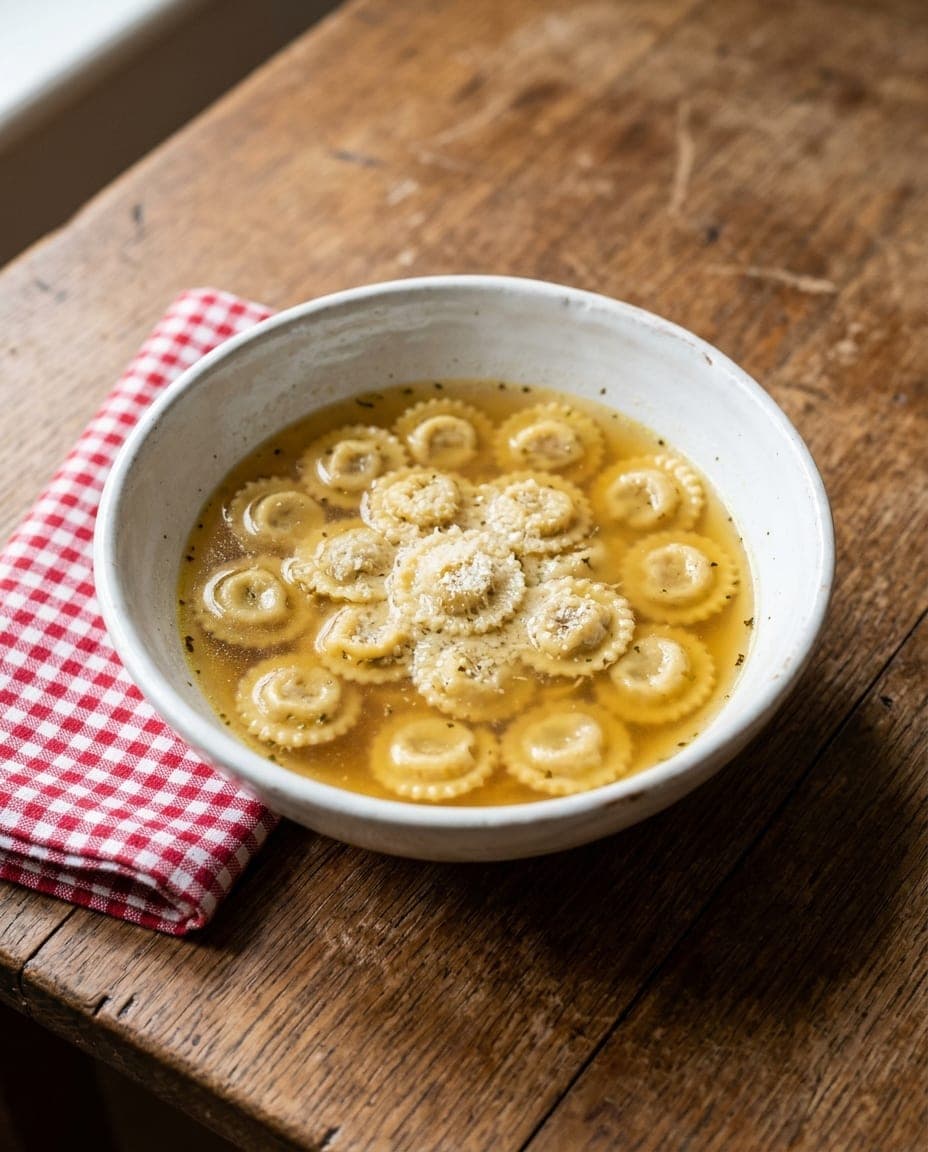
Small stuffed pasta in rich meat broth, Christmas special of Parma and Piacenza
- Local name
- Anolén (Parma), anvein (Piacenza)
- Served with
- Grated Parmigiano
- Best eaten at
- A Parma family Christmas table
- Pairs with
- Lambrusco or Gutturnio
What it is
Anolini in brodo are small parcels of fresh egg pasta with a filling built on a slow-cooked beef braise, served floating in a clear, rich meat broth. They are a defining dish of the provinces of Parma and Piacenza in Emilia-Romagna, where they are above all a Christmas staple and a dish of the winter festivities. In dialect they are anolén in Parma and anvein in Piacenza. The name is often linked to anello, "ring", though this etymology is not certain.
While other parts of the region serve similar stuffed pastas in soup, anolini are distinct in their filling. In Bologna, tortellini in brodo use a filling based on pork loin and cured meats such as mortadella and prosciutto. In Parma and Piacenza, the filling is built around stracotto, beef braised for many hours, often with wine, until it almost falls apart into a thick sauce. Breadcrumbs, grated cheese, egg and a touch of nutmeg complete it. The result is a delicate, savoury filling that relies on the flavour of the braise rather than on cured meats.
The broth is equally critical to the dish. It is typically made from several meats simmered together for hours, such as beef, capon or hen and, in Piacenza, pork. In these provinces the quality of the broth is judged with as much attention as the pasta itself. A bowl of anolini is the opening act of the Christmas feast, warming the appetite before the heavier courses arrive.
The origin of the little rounds
The tradition of serving small stuffed pasta in broth is old in Emilia-Romagna, where wheat and livestock have long formed the basis of local agriculture. The small size of anolini suits a dish meant to be eaten with a spoon, and it lets them cook quickly in the hot liquid while holding their shape.
In Parma and Piacenza, the dish became firmly associated with the Christmas season. Families prepare the stracotto well in advance, since it needs many hours of slow cooking, and the making of the pasta itself is often a shared family task in the days before the holiday.
The two provinces differ in the details. Parma's anolén are round, cut with a small smooth-edged stamp and nicknamed salvagenti, "life rings", while Piacenza's anvein are smaller and half-moon shaped. In Parma the filling is often made with the thick juices of the stracotto rather than the meat itself, mixed with Parmigiano Reggiano; in Piacenza, Grana Padano is commonly used. Each family tends to insist that its own version is the right one.
How it is made without a recipe
The preparation of anolini requires patience rather than complex technique. The dough of flour and eggs is rolled out thin into strips. Small balls of filling are placed along one strip at regular intervals, a second layer is laid on top, and the pasta is pressed down around each mound to seal it. The anolini are then cut out with a small round stamp, traditionally a wooden one.
The filling for the Parma version begins with the stracotto. Beef is braised slowly with vegetables and wine until the meat breaks down and the cooking liquid becomes a dense sauce. This sauce is combined with breadcrumbs, grated Parmigiano Reggiano, egg and a pinch of nutmeg, and the mixture is worked until smooth. Some families also add the finely chopped meat.
The broth is strained before the pasta is added so that it stays clear. It is brought to a boil, and the anolini are dropped in just before serving. They cook very quickly, in a few minutes, and are served as soon as they are ready. Overcooking would cause the delicate pasta to break down.
How it is eaten
Anolini in brodo are served as the first course of the Christmas lunch, typically in deep bowls with a generous portion of broth. The dish is eaten with a spoon, sipping the liquid and scooping up the small parcels. Each bowl is usually finished with freshly grated Parmigiano Reggiano, which melts into the hot broth and adds a final savoury note.
The soup sets the tone for the rest of the feast, offering a moment of warmth and simplicity before the arrival of more elaborate meat dishes. A glass of Lambrusco, a slightly sparkling red wine from the region, or Gutturnio, a red from the Piacenza hills made from Barbera and Bonarda (Croatina), is a common companion. The acidity and bubbles of these wines cut the richness of the cheese and the heaviness of the winter meal.
Outside the home, the dish is found mainly in traditional trattorias that focus on local heritage, especially in winter. The small size of the anolini means a single bowl often contains dozens of them.
Curious facts
- The filling is a braise. Unlike pasta fillings based on cured meats or cheese alone, anolini rely on beef braised until it falls apart, or on its concentrated juices.
- Two distinct styles. Parma's anolén are round and filled with Parmigiano Reggiano, while Piacenza's anvein are smaller, half-moon shaped and often made with Grana Padano.
- Life rings. In Parma the round anolini are nicknamed salvagenti or galleggianti, from the way they float in the broth.
- A broth of several meats. In Piacenza the traditional broth is brodo di terza, made with three meats; in Parma a richer brodo di quarta is also found.
- Wine pairings. It is traditionally accompanied by Lambrusco or Gutturnio, local red wines that balance the richness of the cheese and broth.
Where to try it
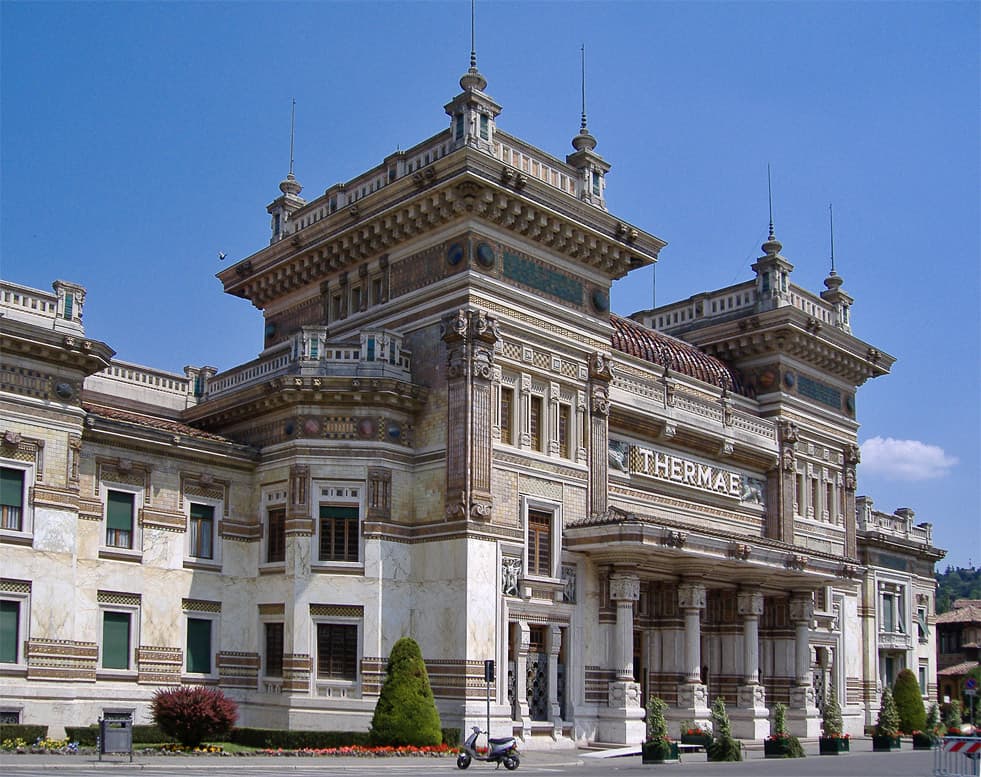
The most authentic experience of anolini in brodo is found at a family table in Parma or Piacenza during the Christmas season. Traditional trattorias in both cities and across their provinces, including spa towns such as Salsomaggiore Terme, serve versions of the soup that honour the regional style.
The broth should be clear, the pasta small and delicate, and the filling rich with the flavour of braised beef and aged cheese. During the holidays, the care taken in its preparation turns a simple bowl of soup into a memory of the season.
Where to try it
1 destination
 Wine Tasting
Salsomaggiore Terme
Art Nouveau spa town famous for thermal baths and wellness.
Wine TastingHiking
1 region
 Wine Tasting9 destinations
Emilia-Romagna
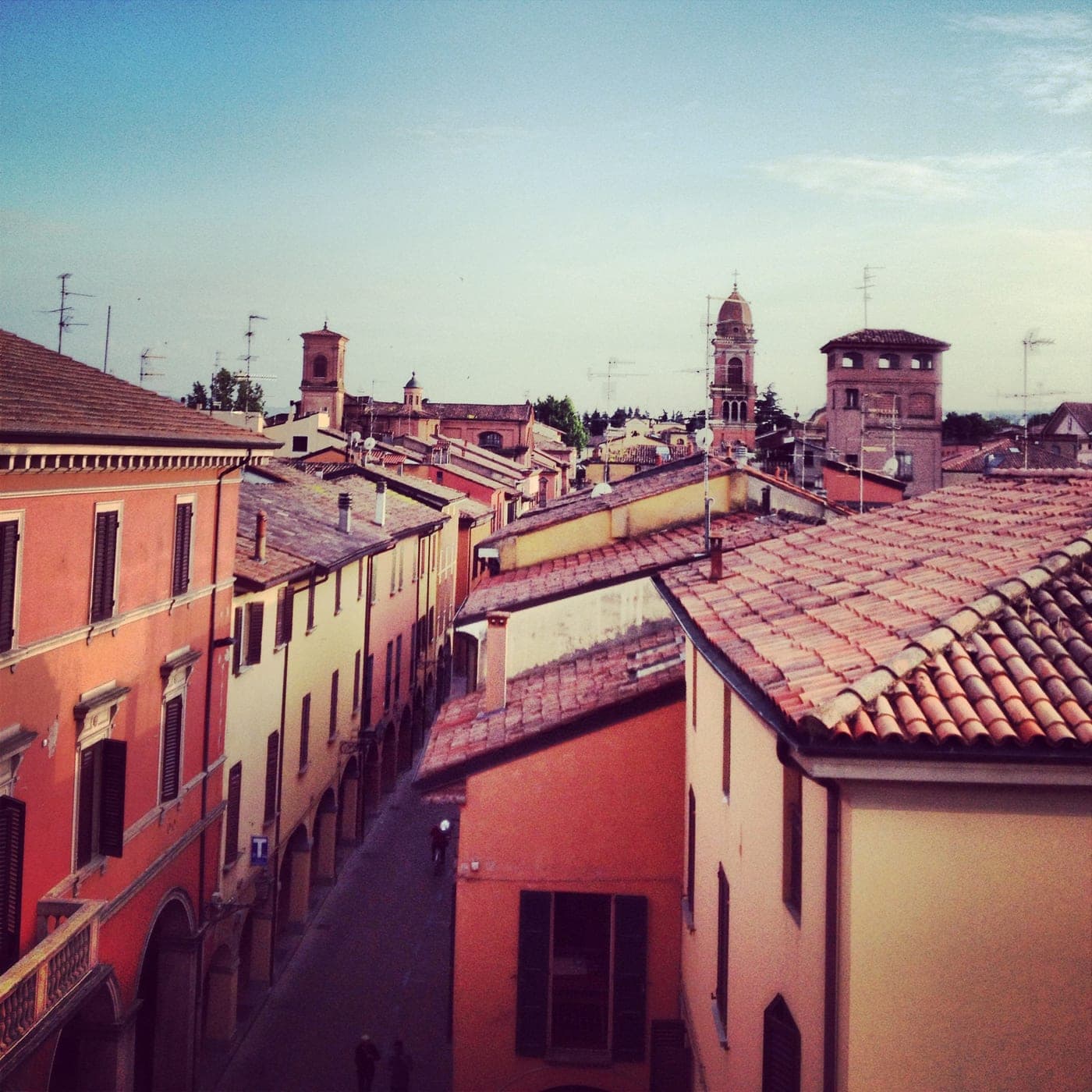
This region in Italy is renowned for its diverse landscapes, ranging from the Apennine Mountains to the Adriatic coastline. It is the only Italian region with a significant stretch of coastline, featuring vibrant seaside towns like Rimini. Bologna, the capital, is famous for its medieval architecture and culinary heritage, being the birthplace of tagliatelle al ragù. The region is also known for its rich history, with towns like Modena showcasing UNESCO-listed sites such as its cathedral and the renowned balsamic vinegar. Slow travelers can explore hidden gems like the medieval village of Dozza, known for its painted walls, or the thermal baths in Salsomaggiore Terme. Emilia-Romagna is the largest region in northern Italy, offering a blend of art, culture, and gastronomy that invites deeper exploration.
Wine TastingHikingCamper Van RentalsLocal Cuisine





