Rheinischer Sauerbraten
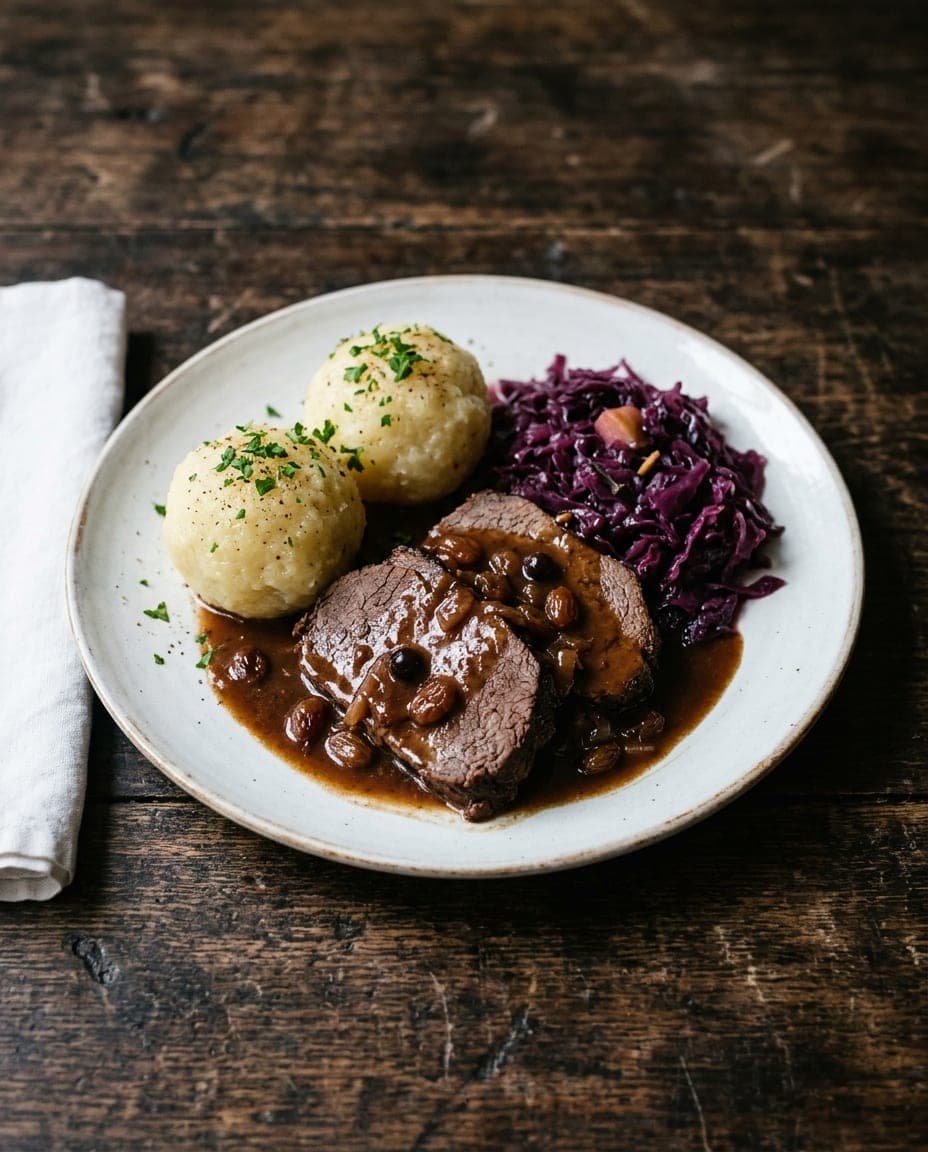
Marinated beef braised in a sweet-sour raisin sauce, served with dumplings and red cabbage
- Local name
- Rheinischer Sauerbraten (Kölsch: Soorbrode)
- Served with
- Potato dumplings, red cabbage, apple sauce
- Best eaten at
- A Rhineland Brauhaus
- Pairs with
- Kölsch or Ahr Pinot Noir
What it is
Rheinischer Sauerbraten is the defining roast of the German Rhineland, the stretch of the Rhine around Cologne, Bonn, Düsseldorf and Aachen. It is not merely a pot-roast but a dish defined by time and patience. Beef is submerged in a sharp, acidic marinade for several days before being browned and then braised slowly until it yields to the fork. The result is meat that is dark, tender and deeply flavoured, served with a sauce that balances vinegar's bite against the sweetness of raisins and spiced gingerbread.
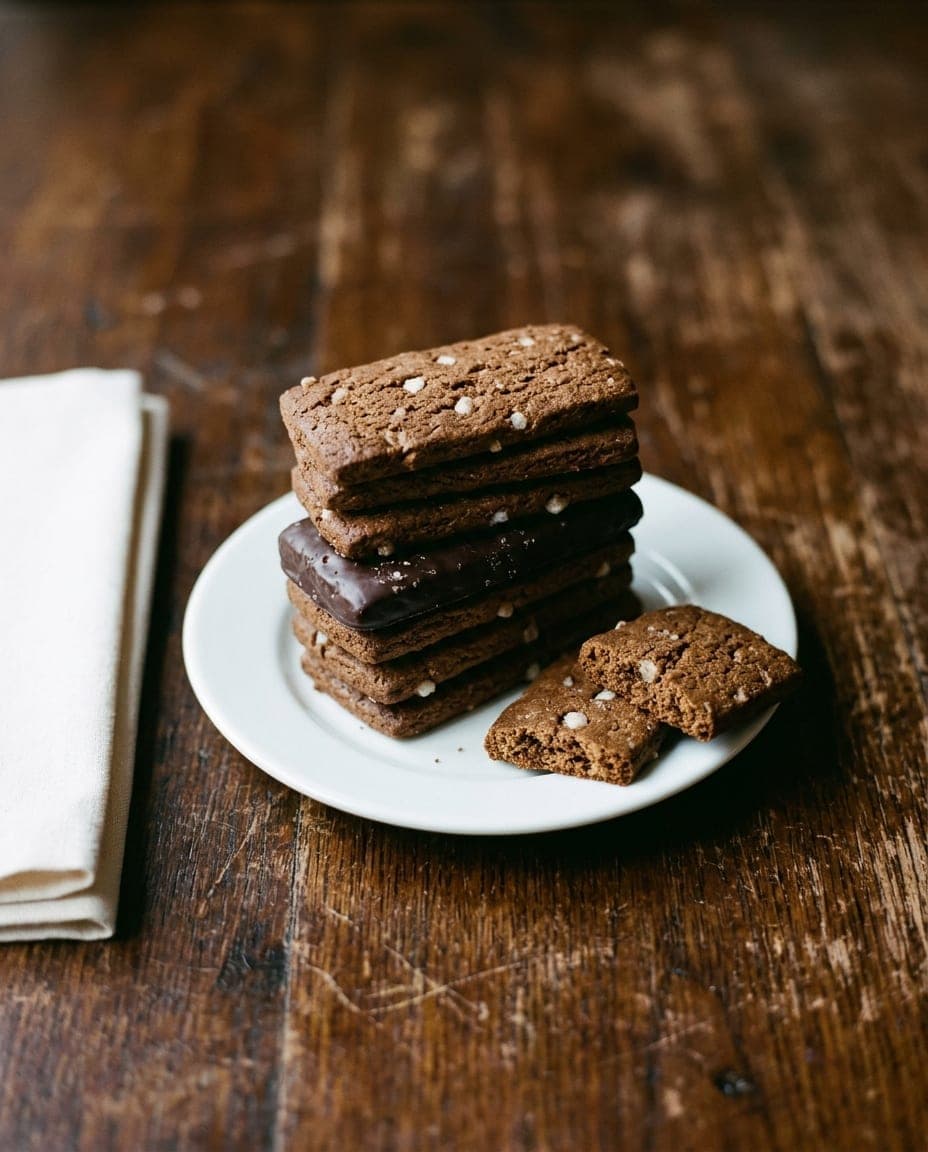
Sauerbraten is cooked across Germany, but the Rhineland version stands apart in how it finishes the gravy. Raisins (often with currants) are braised in the sauce, and cooks stir in crumbled Aachener Printen, the region's spiced gingerbread, sometimes with a spoonful of Apfelkraut (apple syrup) or Rübenkraut (sugar-beet syrup). This turns the sauce dark and glossy, giving it a complex sweetness that clings to the meat. The dish is typically accompanied by potato dumplings and braised red cabbage, often with apple sauce on the side.
The origins of the marinade
Several legends surround Sauerbraten. One credits Charlemagne; another claims Julius Caesar sent wine-marinated beef to the Roman colony at Cologne; a third links its popularity to the 13th-century scholar Albertus Magnus. These tales belong to folklore rather than culinary history, yet they capture the practical roots of the dish. Before refrigeration, marinating in vinegar helped preserve meat and tenderise tougher cuts.
In the Rhineland, the marinade is built from wine vinegar diluted with water, sometimes with red wine. It is infused with aromatics including sliced onions, carrot, bay leaves, juniper berries, cloves and peppercorns. The meat rests in this liquid for at least three days, often closer to a week, turning occasionally while the acidity breaks down the muscle fibres. Once the marinating period ends, the liquid is not discarded; it becomes the foundation of the sauce.
Traditionally, the Rheinischer Sauerbraten was made from horse meat, and the most traditional versions still are. Horse butchers have become rare, however, and only a few restaurants around Cologne still offer it. Beef has since become the standard, though the preparation method remains unchanged.
What goes into it
- The marinade: Wine vinegar, water and sometimes red wine, with onions, carrot, bay leaves, juniper berries, cloves and peppercorns.
- The meat: Beef from the shoulder or topside, or horse meat in the old style.
- The sweeteners and thickeners: Raisins and currants, crumbled Aachener Printen, and sometimes a spoonful of Apfelkraut or Rübenkraut.
- The accompaniments: Potato dumplings (Klöße) and braised red cabbage (Rotkohl), often with apple sauce; potato pancakes are also served.
The final sauce is a study in balance. The sharpness of the vinegar is softened by the sweetness of the raisins, gingerbread and syrup, and some cooks finish it with a little sour cream. It is neither purely sour nor purely sweet but a blend that coats the meat and the dumplings equally. The Printen give the sauce its characteristic dark hue and a spice note that complements the cloves and juniper of the marinade.
How it is eaten
The dish is a fixture of the Rhineland Brauhaus, the traditional beer tavern, where the atmosphere matches the hearty nature of the food. The roast arrives sliced on a plate, covered in the dark, glossy sauce.
The potato dumplings are dense and designed to soak up the rich gravy. A generous spoonful of red cabbage accompanies the meat, offering a contrast to the sweetness of the sauce, and the meat itself should be tender enough to cut with a fork.
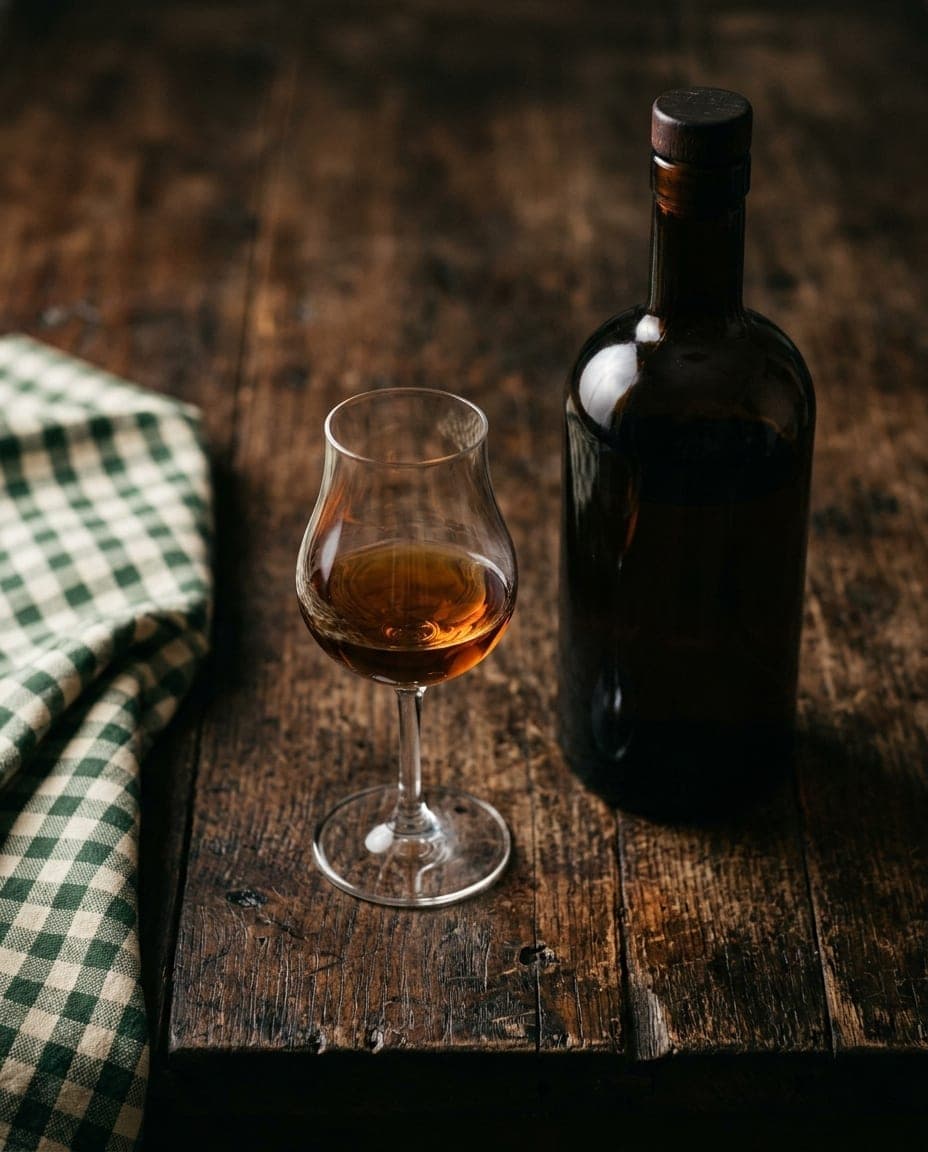
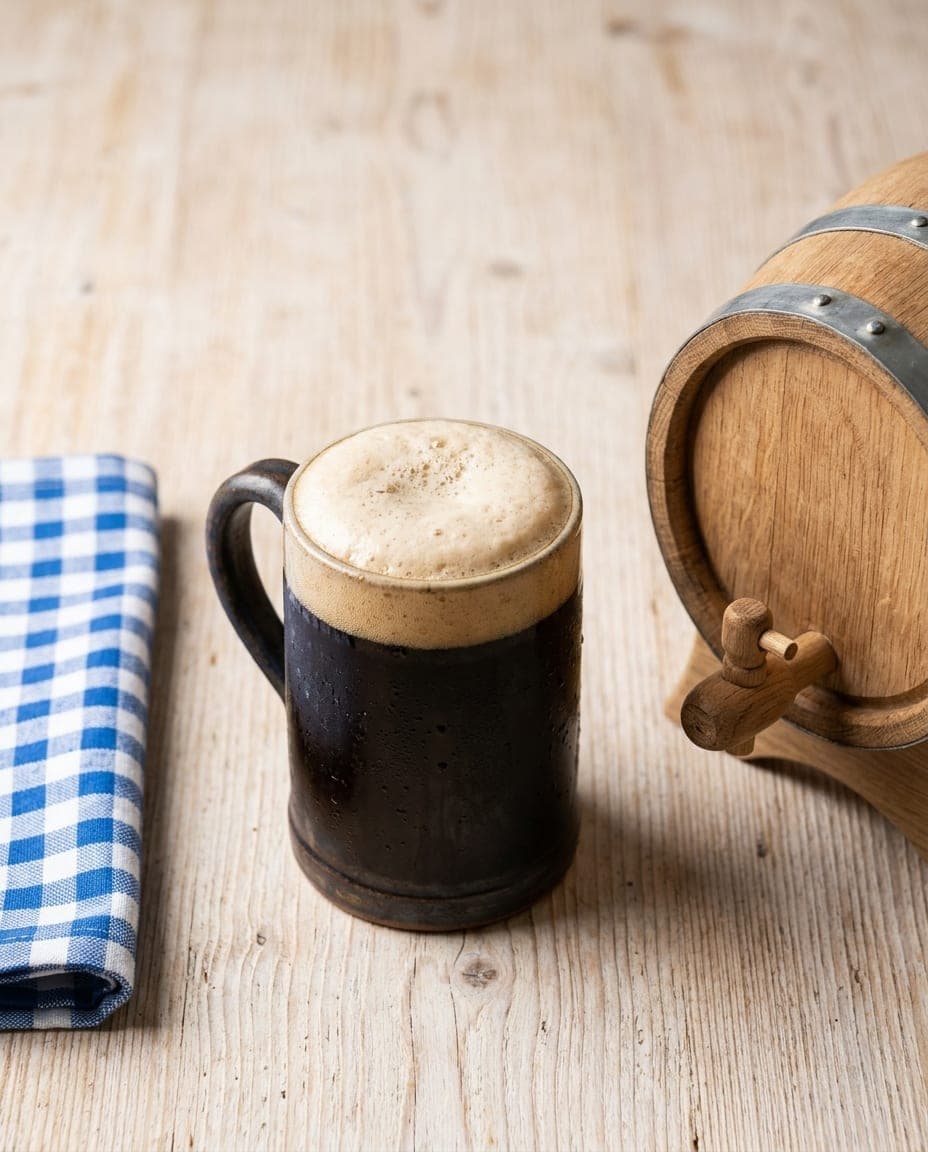
A cool glass of Kölsch, the local pale beer from Cologne, cuts the richness of the roast and cleanses the palate. Alternatively, a light red wine such as an Ahr Pinot Noir complements the wine-vinegar marinade without overpowering the spice notes.
Curious facts
- The meat changes. Horse meat was the traditional choice in the Rhineland; beef is now the standard, and horse Sauerbraten has become a rarity.
- The sauce is the story. The marinade does not get thrown away; it forms the base of the sauce, ensuring the sharp flavours remain central to the dish.
- Gingerbread in the gravy. Crumbled Aachener Printen thicken and darken the sauce; together with the raisins, this sets the Rhineland version apart from other German Sauerbraten.
- A year-round speciality. Unlike many seasonal dishes, Sauerbraten is available throughout the year in the Rhineland, often served as a main course at lunch or dinner.
- Legends from Rome. One story credits Julius Caesar with sending marinated beef to Roman Cologne, though there is no evidence for it.
Where to try it
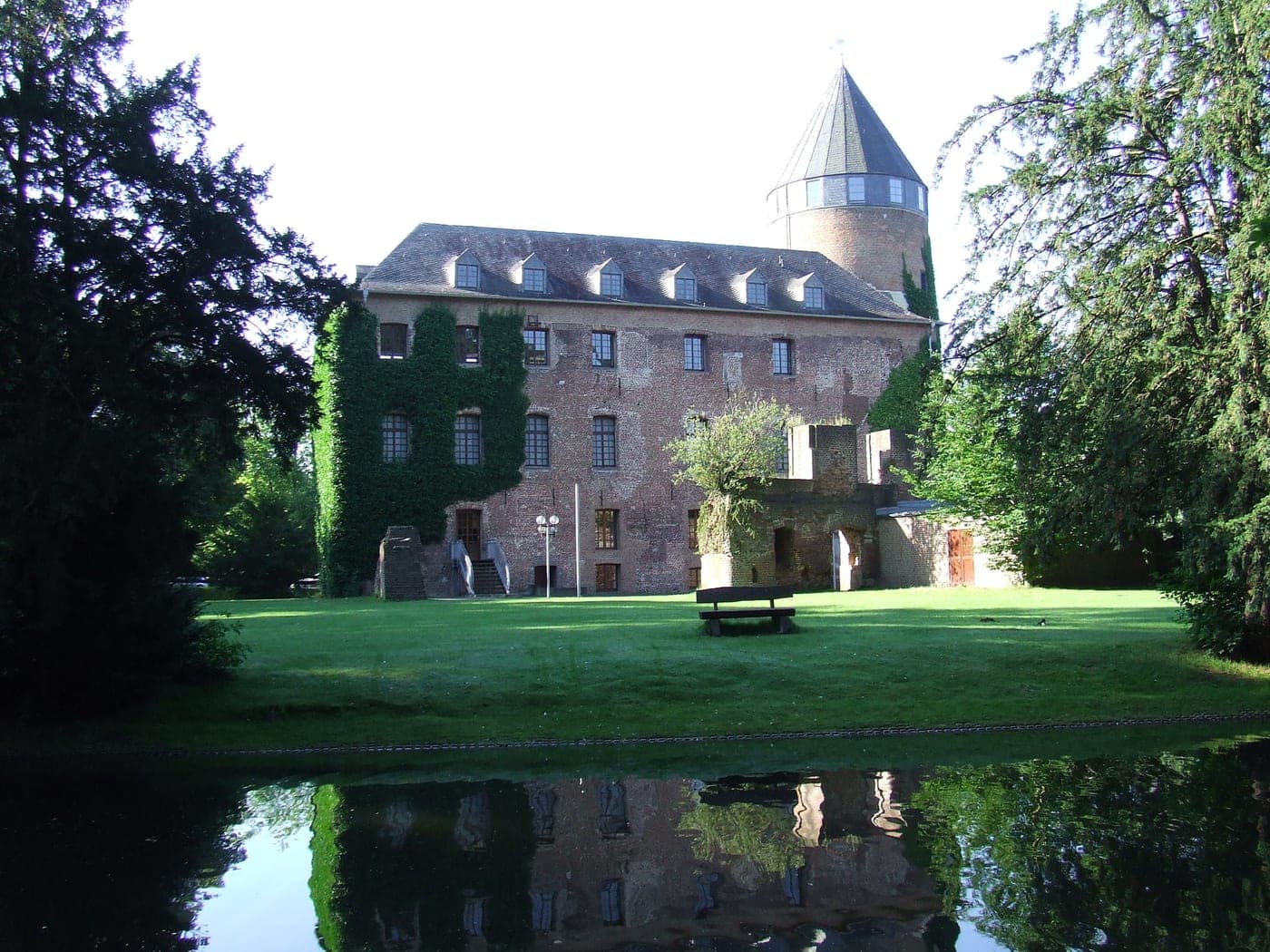
The best-known versions are served in the brewhouses of Cologne and Düsseldorf and in country inns across the Rhineland, including Lower Rhine towns such as Brüggen, Isselburg and Weeze. Here, local butchers and restaurant kitchens still honour the old methods, and the dish often appears as a weekly special or a daily staple, reflecting its status as a regional classic rather than a novelty.
In these places, the dish is not merely a menu item but a point of local pride, served with an understanding of the time required to prepare it properly.
Where to try it
3 destinations
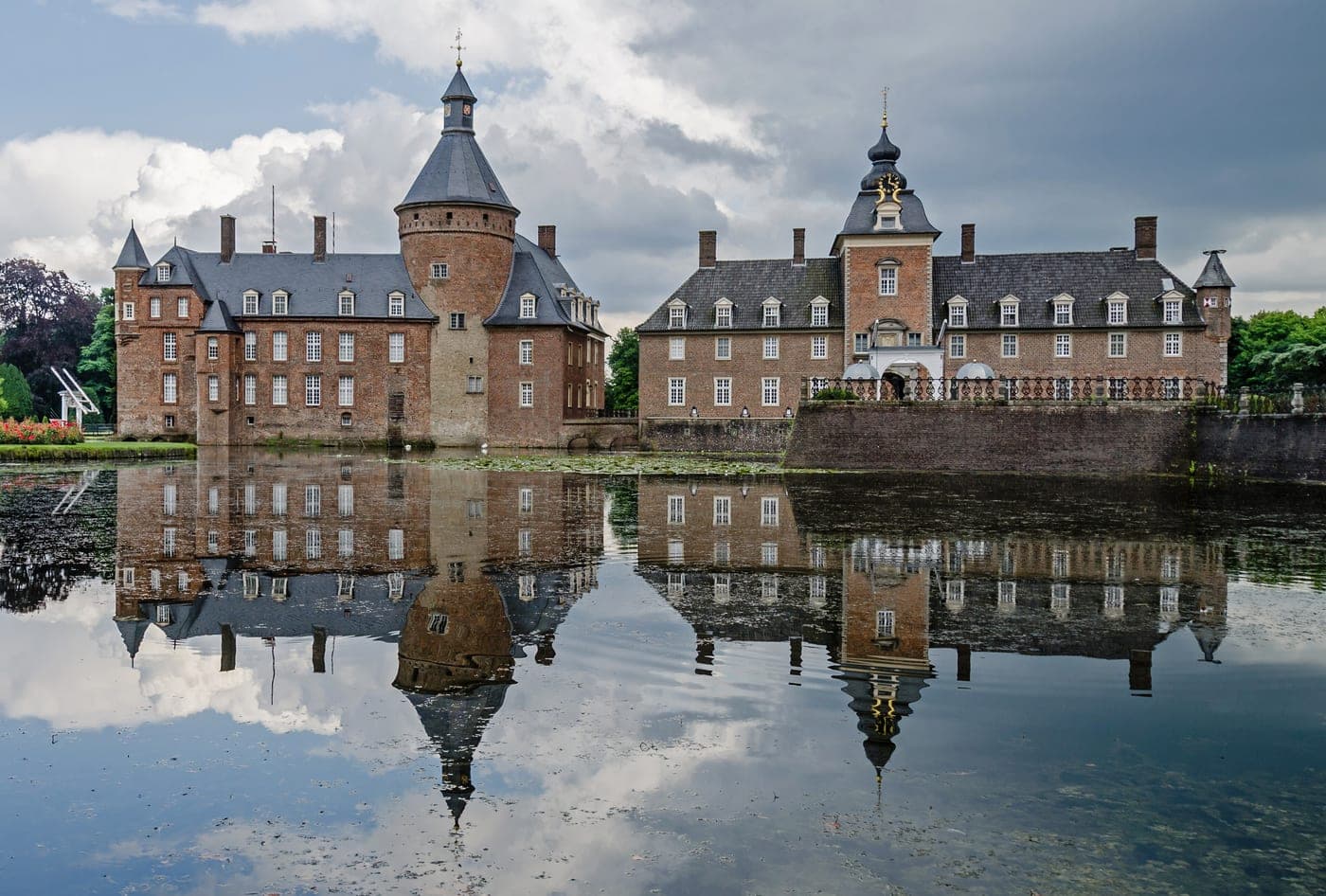 Castles
Isselburg
Lower Rhine border town at the edge of the Netherlands, home to Wasserburg Anholt — one of Germany's most magnificent privately owned baroque moated castles.
CastlesHiking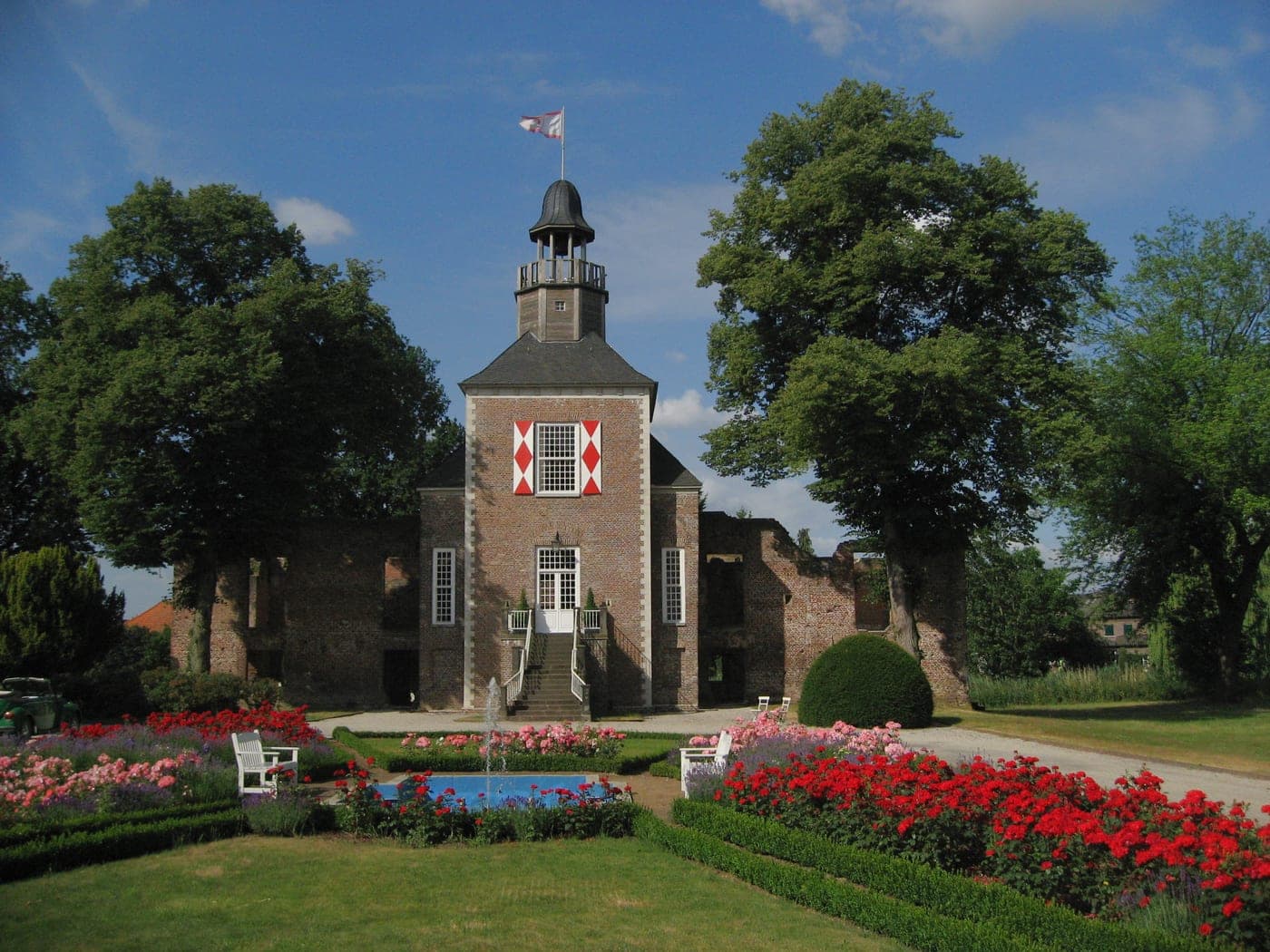 Castles
Weeze
Quiet Lower Rhine village best known for Schloss Wissen, a baroque castle estate with a neo-Gothic chapel, charming guesthouses and cultural events in a lush riverside setting.
CastlesHiking
1 region
- Cabins15 destinations
North Rhine-Westphalia
Located in western Germany, this region is the largest in the country and is known for its diverse landscapes, from the scenic Rhine River valleys to the lush hills of the Sauerland. The area is rich in industrial heritage, with cities like Dortmund and Essen showcasing their transformation from heavy industry to cultural hubs. Düsseldorf offers a vibrant arts scene and innovative fashion, while Cologne is famous for its stunning cathedral. The region also boasts picturesque towns such as Monschau, known for its half-timbered houses, and Bad Honnef, a charming spa town. Unique local dishes and breweries enhance the cultural experience, along with numerous hiking trails that connect visitors to its natural beauty.
CabinsHikingCastlesCamper Van Rentals