Photo by Tuxyso · license: CC BY-SA 3.0
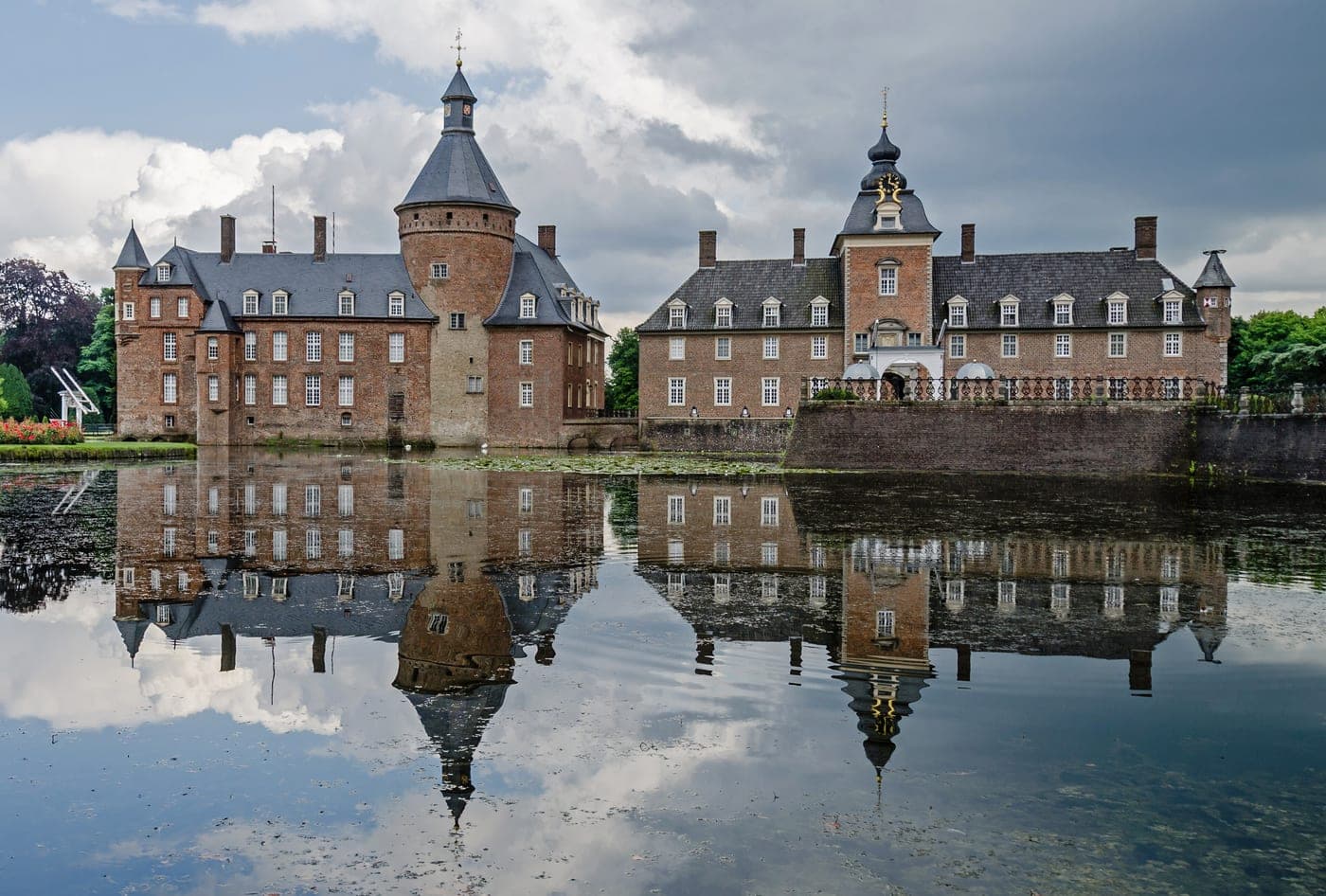
Isselburg is a small town in the Borken district, on the flat plain of the Lower Rhine where North Rhine-Westphalia meets the Netherlands. The landscape here is open and green, cut by slow rivers and quiet field paths, and it holds one of the region's most complete Baroque ensembles: Wasserburg Anholt.
Wasserburg Anholt is a moated castle still in the hands of the Princes of Salm-Salm. Inside, room after room holds paintings, tapestries, porcelain and weapons gathered by the family over generations. The castle is surrounded by a 35-hectare landscape park, including a rose garden that fills with scent and colour through early summer. Paths wind past mature trees and quiet corners where the only sound is water moving through the old moat system.
Beyond the castle, Isselburg sits in cycling country. The Lower Rhine region is largely flat, and a network of signed cycle paths connects the town to surrounding villages, farmland and border crossings into the Dutch Achterhoek. The same paths lead south along the Rhine to Rees, a walled river town, and north to Emmerich, known for its suspension bridge over the river.
The town itself is modest and low-built, arranged around a market square and a parish church, with none of the crowds that gather at better-known Rhine towns further south. Isselburg works as a base for slow exploration of the Lower Rhine border country, where castles, water and cycling paths matter more than any single monument.
The rose garden and main castle rooms are at their best from late spring through summer, when the park is fully in leaf and guided tours run daily. Early autumn brings colour to the park's older trees and thinner crowds, while winter closes the castle interior to visitors, leaving only the cycling routes and the open countryside.
Drop the places you like into one list. The planner orders them by day and works out the distances.
Get slow travel tips delivered to your inbox
A short message when something worth the trip lands. Reply STOP anytime.
By subscribing, you agree to be contacted via WhatsApp. Privacy policyOccasional letters in your inbox — with recommendations, maps and routes.
By subscribing to newsletter, you agree to our privacy policy.