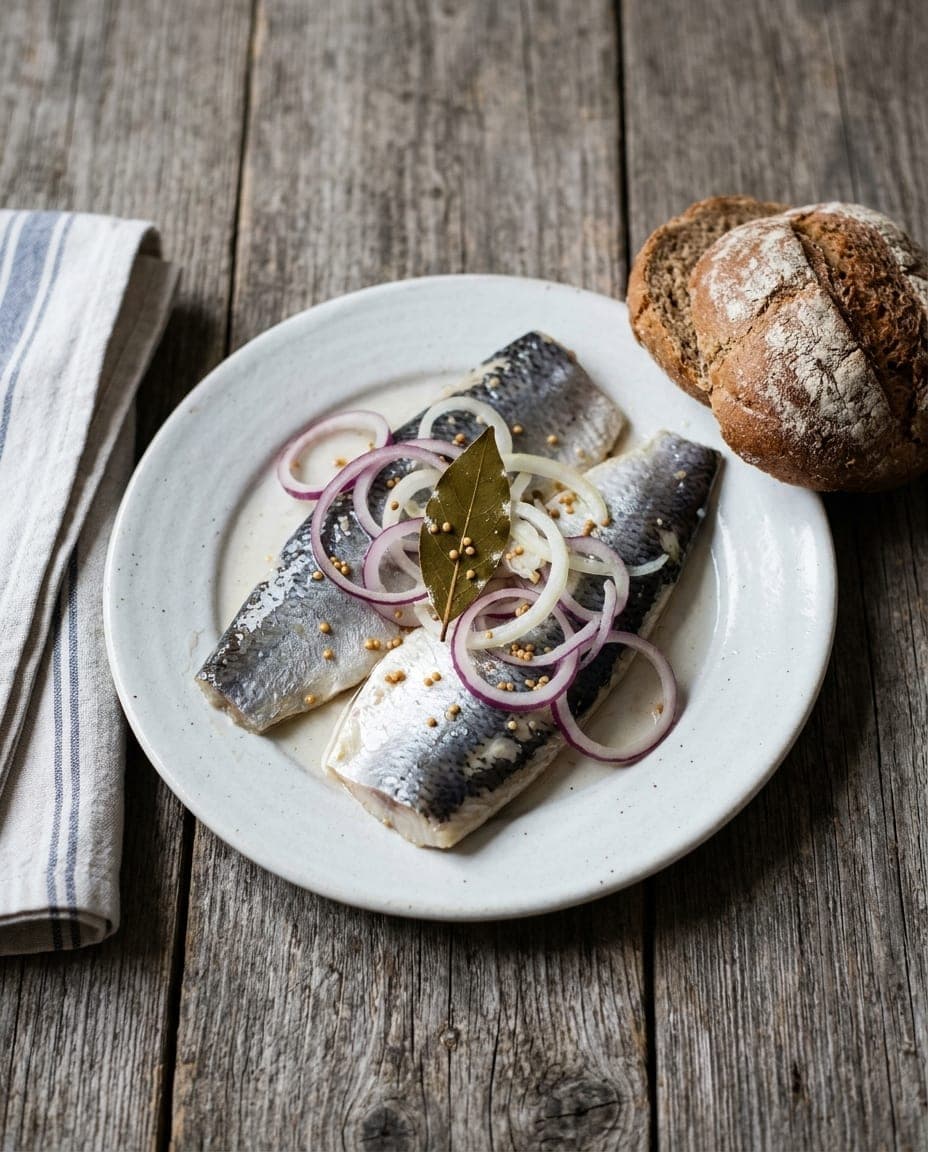
Birnen, Bohnen und Speck
A northern German stew of green beans, whole pears and bacon
- Local name
- Birnen, Bohnen und Speck
- Served with
- Boiled potatoes
- Best eaten at
- A northern German family table
- Pairs with
- Northern German pilsner
What it is
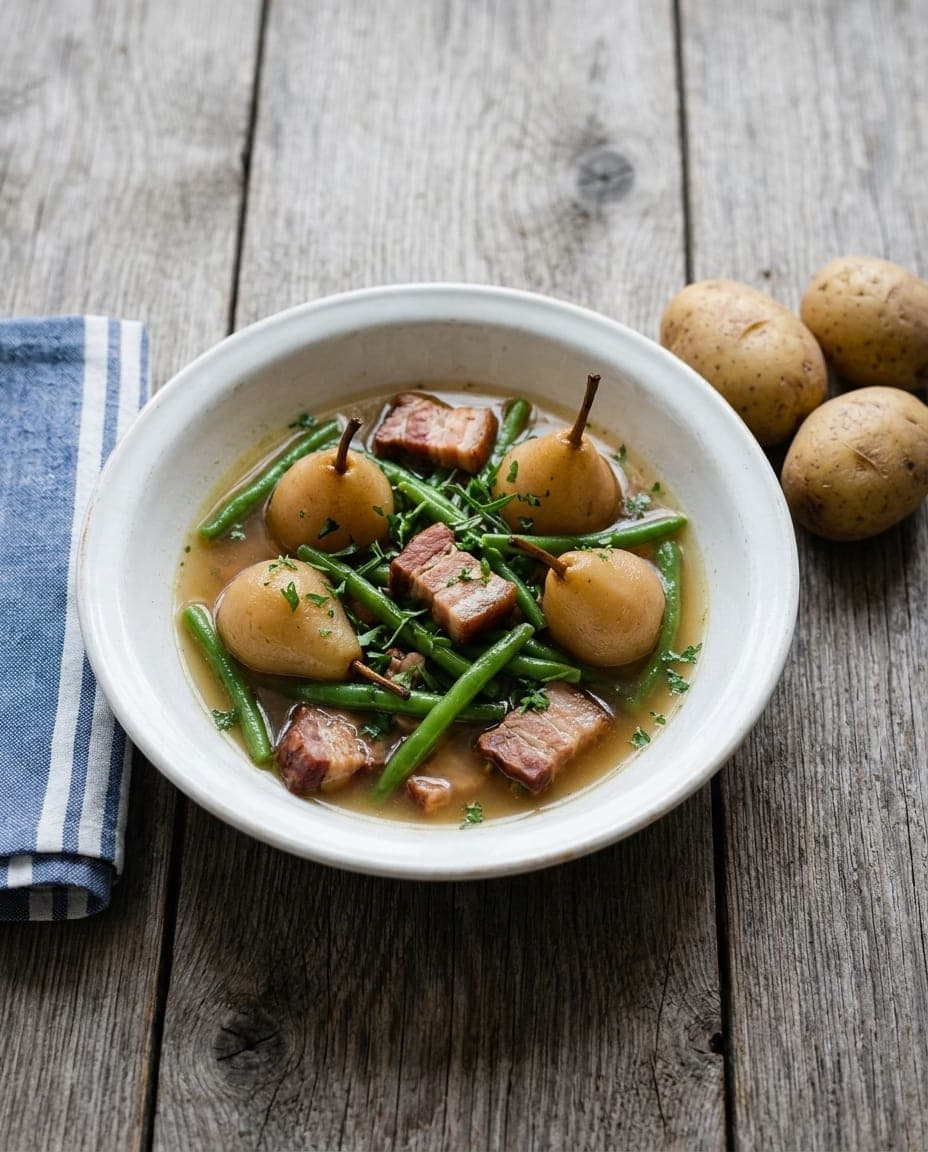
Birnen, Bohnen und Speck, literally "pears, beans and bacon", is a simple one-pot dish rooted in the rural traditions of northern Germany. It belongs to the region stretching from Schleswig-Holstein through Hamburg and into Lower Saxony and Mecklenburg, appearing on tables mainly in late summer. The dish is a stew of sorts, though it lacks the heavy thickening of many southern German meals. Instead, it relies on the slow simmering of three distinct ingredients: fresh green beans, small whole cooking pears, and a piece of streaky bacon.
The defining characteristic is the balance of flavours. The green beans provide a firm, grassy texture that holds its shape through cooking. The pears are usually left unpeeled and cooked whole, often with their stalks still attached, retaining their structure while releasing a gentle sweetness into the pot. This fruitiness cuts through the salt and smoke of the bacon, creating a harmony that is neither sweet nor savoury but entirely balanced. The classic herb is savoury, known in German as Bohnenkraut or bean-herb, which acts as a bridge between the vegetable and the meat.
The seasonal rhythm
This dish belongs to a narrow window of time, mainly August and September. It appears only when the harvest brings together two specific conditions: the arrival of the first tender green beans and the ripening of the hard cooking pears that can withstand boiling without dissolving into mush. In the cool north, this overlap marks a specific moment in the agricultural calendar.
The dish is not a nationwide German staple but a regional speciality of the north. While similar combinations of fruit and meat appear elsewhere, the specific pairing of whole pears with green beans is tied to the harvest traditions of Schleswig-Holstein, Hamburg, Lower Saxony and Mecklenburg. It is a meal that celebrates the end of summer, appearing when the days grow shorter and the need for warming food increases.
How it is eaten
Birnen, Bohnen und Speck is traditionally served as a main course at lunch or early dinner. The stew is ladled into deep bowls, often with the pears still whole and the beans visible floating in the light broth made from the bacon fat and cooking water. It is not a dish of fine dining but of the family table, where the focus is on the shared pot rather than individual plating.
The standard accompaniment is boiled potatoes, usually peeled and served hot alongside the stew. The potatoes absorb the savoury bacon stock, which often pools at the bottom of the serving bowl or is poured over the potatoes separately. A glass of northern German pilsner is a common choice, its crisp hoppy notes complementing the smoky richness of the pork without overwhelming the delicate pear flavour.
In Low German the dish is also known as Grööner Hein or Grönen Heini, "Green Harry", a nickname that shows how familiar it is in the north.
What goes into it
The preparation relies on the quality of the seasonal ingredients rather than complex technique. Every version follows the same basic structure:
- Green beans, fresh and tender, usually snapped into pieces (Brechbohnen).
- Whole cooking pears, small varieties that do not turn soft when boiled, left intact with their stalks to prevent them from breaking apart.
- Streaky bacon, often smoked, simmered in one piece and sliced to serve.
- Savoury (Bohnenkraut), the classic herb, added to enhance the flavour of the beans.
The result is a light yet satisfying stew where the texture of the beans contrasts with the softening fruit and the chewy meat. It is not a vegetarian dish, as the bacon stock forms the base of the liquid, nor is it a heavy cream-based meal.
Curious facts
- The whole pear rule. Unlike many fruit stews where the fruit is peeled or diced, the pears in this dish are cooked entirely whole to maintain their shape and prevent them from disintegrating into the broth.
- The bean herb. Savoury is so closely linked to green beans that German simply calls it Bohnenkraut.
- Regional boundaries. While similar dishes exist in neighbouring areas, the specific combination is most strongly associated with Schleswig-Holstein, Hamburg and the surrounding lowlands.
- A nickname. In Low German the dish goes by Grööner Hein, "Green Harry".
Where to try it
Birnen, Bohnen und Speck appears in traditional restaurants across Schleswig-Holstein, particularly in rural areas and family-run establishments known as Gasthäuser during the late summer months. It is most authentic when served at a northern German family table, where the focus remains on the simple harmony of the ingredients rather than presentation.
Where to try it
1 region
 Boat Rentals6 destinations
Schleswig-Holstein
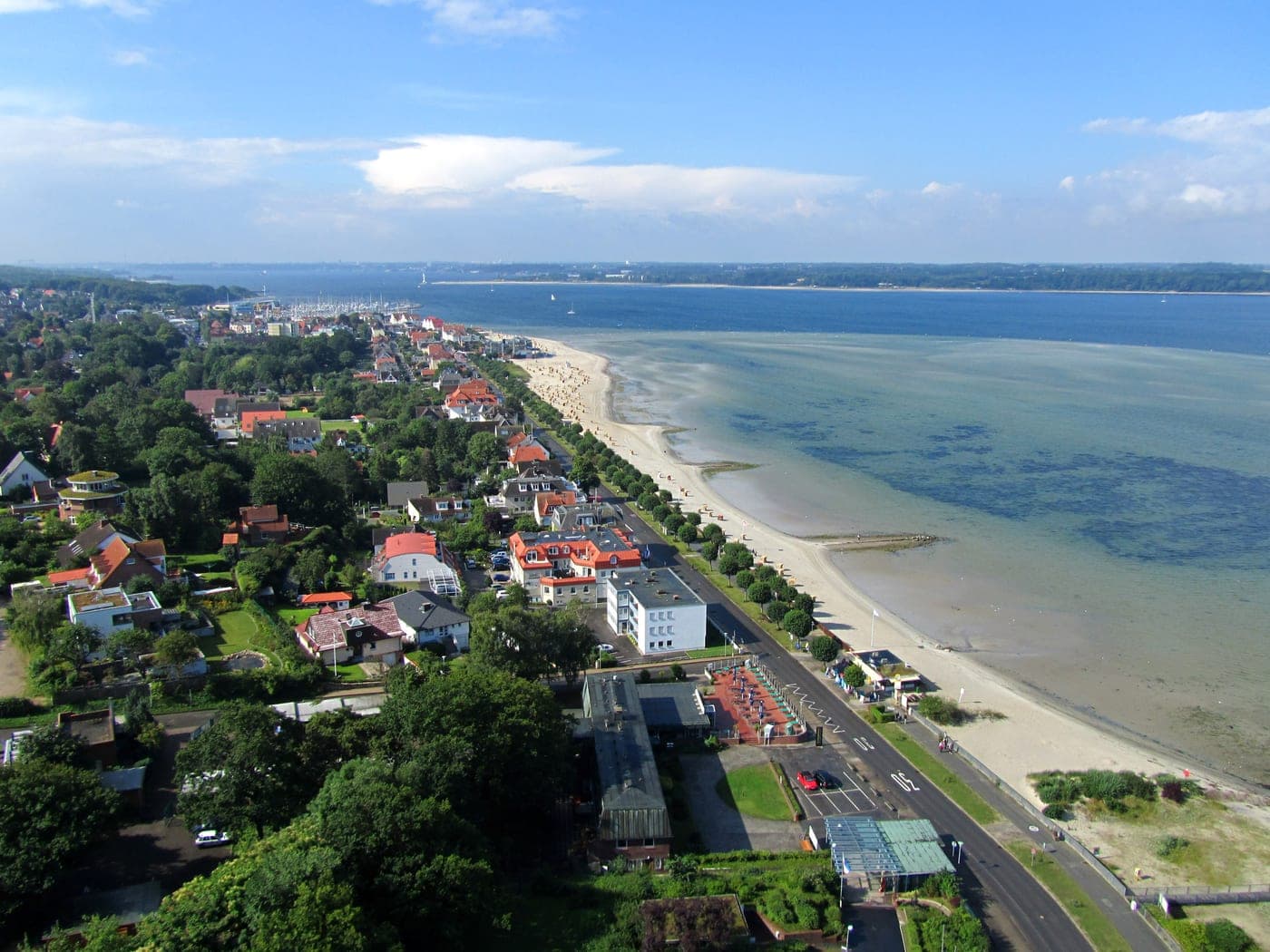
Schleswig-Holstein sits between two seas, and that fact shapes everything about its pace. On the west side, the Wadden Sea pulls back twice a day, leaving wide flats of mud and sand where oystercatchers and seals gather. On the east, the Baltic keeps a calmer shoreline, cut by narrow fjords called Förden that reach inland past reed beds and small fishing harbors. Between the two coasts lies a quieter inland belt of moraine hills, beech woods and lakes known as Holsteinische Schweiz, where the land rolls gently toward small lakes rather than open sea. Lübeck is the region's best-known town, its old core built by Hanseatic merchants and still arranged around brick gabled houses, a river harbor and the twin towers of the Holstentor gate. Marzipan making has been a local craft here for generations, and the smell of almond paste still drifts from shopfronts near the market square. A short distance north, Flensburg carries a different character: its harbor front and old rum warehouses point to centuries of trade with Norway and Denmark, and Danish is still spoken by a minority in town. Schleswig, at the head of the Schlei fjord, keeps an old layer of the region's history, with Gottorf Castle, now home to the state museums, facing the cathedral across the water. Villages in Schleswig-Holstein tend to sit low against the horizon, red brick and thatched roofs blending into flat fields or dike grass. Along the North Sea coast, dikes double as footpaths and cycling routes, running for long stretches with the sea on one side and grazing sheep on the other. The flatness of the land makes cycling an easy way to move between villages, small harbors and the ferry piers that link the mainland to the islands. Sylt, Föhr and Amrum lie offshore within the Wadden Sea National Park, each with its own character: Sylt is known for its dune landscape and thatched Frisian houses, Föhr keeps a quiet, agricultural feel around village greens and old churches, and Amrum holds an extensive dune area. Inland, the lake district around Plön and Eutin offers a different kind of water travel. Small passenger boats cross the lakes between beech forests, and Plön sits below its own castle, overlooking the water from a wooded hill. Eutin keeps a baroque palace and gardens open for slow walking. Further west, the town of Husum sits by its own tidal harbor, and each spring the palace garden there fills with crocus blooms. Kiel, the state capital, faces the Baltic directly and turns into a sailing city every summer during Kieler Woche. Things to do in Schleswig-Holstein tend to build from the coastline itself: watching the tide uncover the Wadden Sea flats, following a dike path between two fishing harbors, crossing an inland lake by small boat, or walking a fjord town's quay while gulls work the fish stalls. Herring and eel appear often on menus near the coast, and Labskaus, a hearty dish of corned beef, potato and beetroot, remains a Baltic port staple. The region rewards attention to weather and tide as much as to any single sight — mudflats change completely between low and high water, and light on the Baltic coast shifts quickly with the wind. Markets, harbor cafés and small guesthouses set the rhythm here more than any schedule does. Whether the starting point is Lübeck's brick lanes, Flensburg's Danish-flavored harbor, or a quiet island church on Föhr, Schleswig-Holstein holds together as one landscape of tide, wind and water, best taken in a village or a shoreline at a time.
Boat RentalsHikingCamper Van RentalsLocal Cuisine