Bismarckhering
The sharp, vinegar-marinated herring fillet from Stralsund named for Otto von Bismarck
- Local name
- Bismarckhering
- Served with
- Bread roll, onions
- Best eaten at
- A Baltic harbour fish kiosk
- Pairs with
- Pilsner
What it is
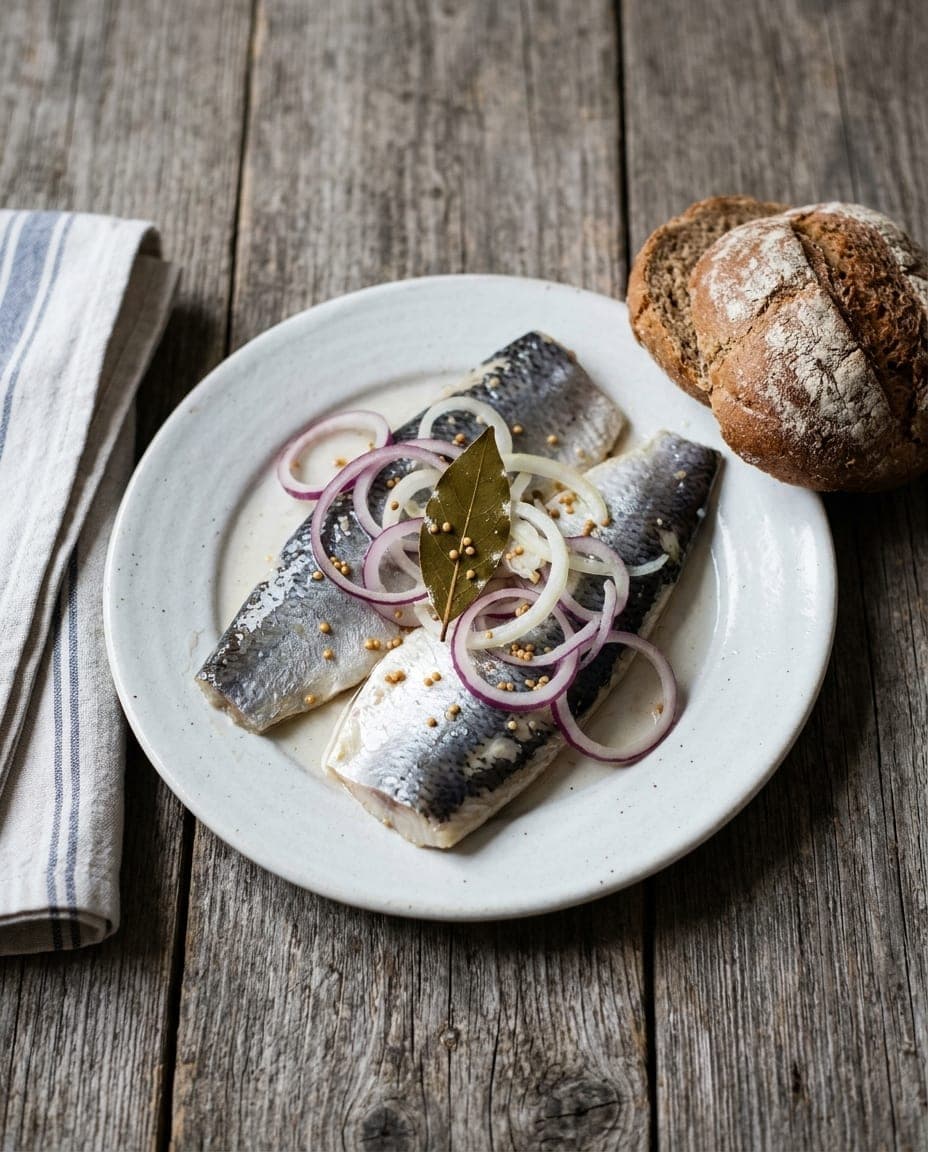
Bismarckhering is a style of pickled herring whose name is traditionally linked to the northern German port city of Stralsund. It consists of herring fillets cured raw in a sharp marinade of vinegar and salt, with onions, mustard seeds, bay leaves and peppercorns. The result is a firm, white flesh with a distinctively sour taste, quite different from the soft, mild texture of Matjes or the smoky flavour of smoked herring.
Today it is sold in jars and at fish counters all over Germany, but its story belongs to the Baltic coast of Mecklenburg-Vorpommern. While pickled herring exists in many forms across Northern Europe, the Bismarckhering has a well-known name story and a specific method of preparation. The fillets are kept in the marinade until ready to serve, ensuring they remain firm and retain their sharp character.
The origin story in Stralsund
The name honours Otto von Bismarck, the Iron Chancellor who unified Germany in the 19th century. The usual account centres on Johann Wiechmann, a Stralsund fish merchant and admirer of Bismarck, who sent the Chancellor a barrel of his marinated herring as a birthday gift. After the founding of the German Empire in 1871 he is said to have sent another barrel and asked permission to sell his product as "Bismarckhering". Bismarck reportedly agreed in writing, but the letter is said to have been destroyed in a bombing raid on Stralsund in 1944, so the story cannot be proven.
Other explanations exist, including a Flensburg innkeeper who supposedly served herring to Bismarck in 1864, and food historians point out that countless products were named after the Chancellor at the time. Even so, Stralsund remains the city most closely tied to the dish.
The tale serves as a reminder of how regional products often gain status through personal connections or clever marketing. In this case, the name provided a level of prestige that helped the dish spread beyond the local markets. Today, the name evokes both the historical figure and the specific culinary tradition of the Baltic coast.
How it is made and what goes into it
The preparation relies on the quality of the herring and the sharpness of the vinegar. The fillets are not smoked or boiled; they are cured raw in the marinade, which preserves their texture while infusing them with flavour. The flesh turns a pale white as it absorbs the vinegar, becoming firm to the bite rather than soft and flaky.
The marinade is simple but essential:
- Vinegar and salt, which provide the sharp acidity and cure the fish.
- Onion rings, often added in large quantities to complement the fish.
- Spices including mustard seeds, bay leaves and black peppercorns for depth.
The ratio of ingredients varies by producer, but the outcome is always a dish that is distinctively sour and firm. The fish is kept in the solution until serving time, ensuring it remains fresh and retains its sharp taste. The acid also softens the small bones, which makes the fish easier to eat.
How it is eaten
Bismarckhering is served cold, often as a quick meal or a snack at a harbour kiosk. One of the most common ways to eat it is in a bread roll, a Fischbrötchen known in this version as a Bismarckbrötchen, where the fish sits alongside raw onion rings.
For a more substantial meal, it is traditionally served with fried potatoes (Bratkartoffeln), and sometimes with boiled potatoes and a creamy sauce. The sharpness of the vinegar cuts the fat of the fish, creating a balanced taste.
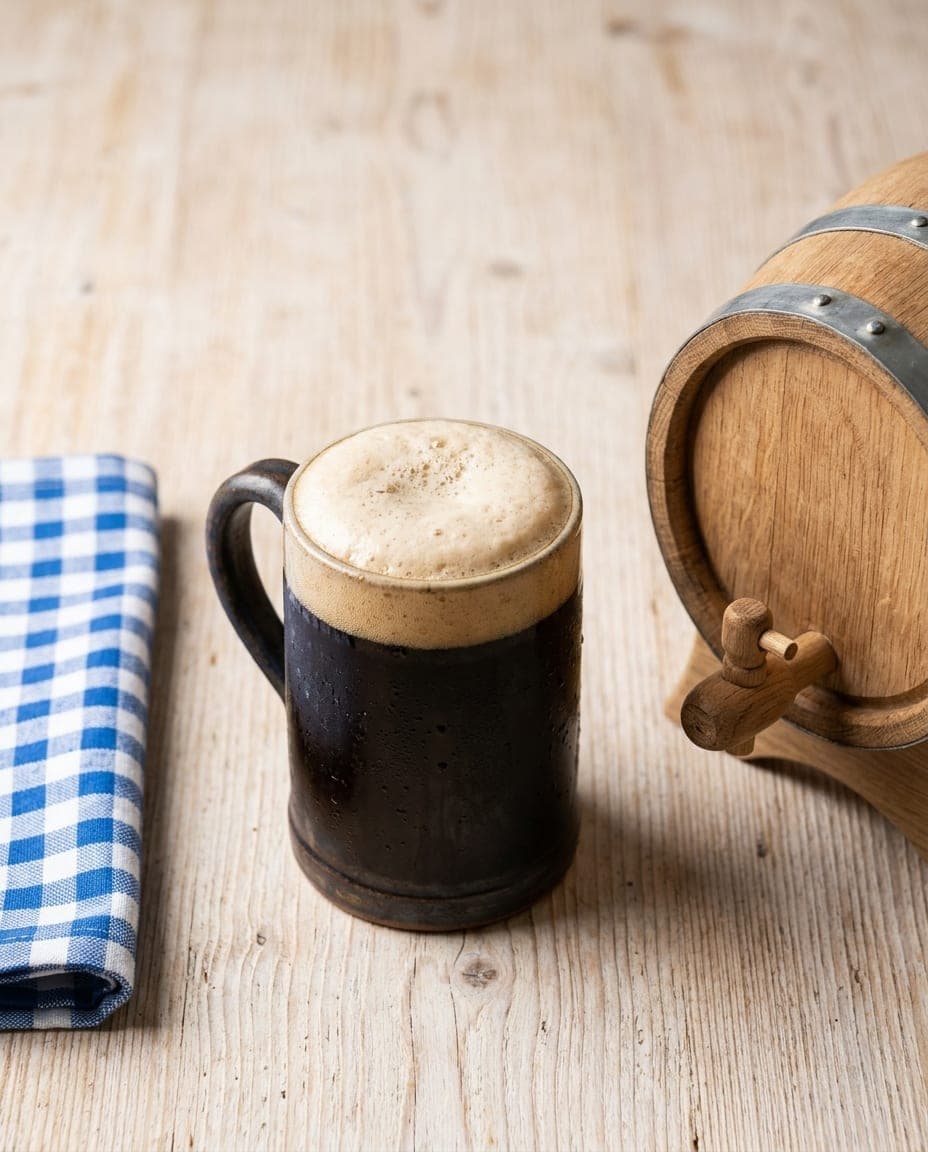
A light Pilsner from the region is the traditional drink to pair with it, washing down the acidity without overpowering the taste. It is also eaten on rye bread, which holds up well against the sharp vinegar.
Curious facts
- A name granted, perhaps. According to the Stralsund story, the herring was named only after the Chancellor gave his permission, though the letter no longer exists.
- Raw curing method. The fillets are cured raw in vinegar, not smoked or boiled, which gives them their firm, white texture and sharp sourness.
- Regional loyalty. While Bismarckhering is now eaten throughout Germany, Stralsund is still regarded as its home.
- No smoke involved. Unlike many fish dishes in Germany, this one contains no smoking process; the flavour comes entirely from the vinegar and spices.
- A seaside snack. On the coast it is most at home at a harbour fish kiosk or a small tavern, rather than in formal dining rooms.
Where to try it
The obvious place to eat Bismarckhering is Stralsund, where harbour fish kiosks and fishmongers serve it in rolls and on plates.
It is also easy to find in the other fishing towns along the coast of Mecklenburg-Vorpommern, but Stralsund has the story, and the connection to the Chancellor's name is still a point of conversation there.
It suits a quick bite before a walk along the harbour, ideally with a glass of Pilsner.
Where to try it
1 destination
 Boat Rentals
Stralsund
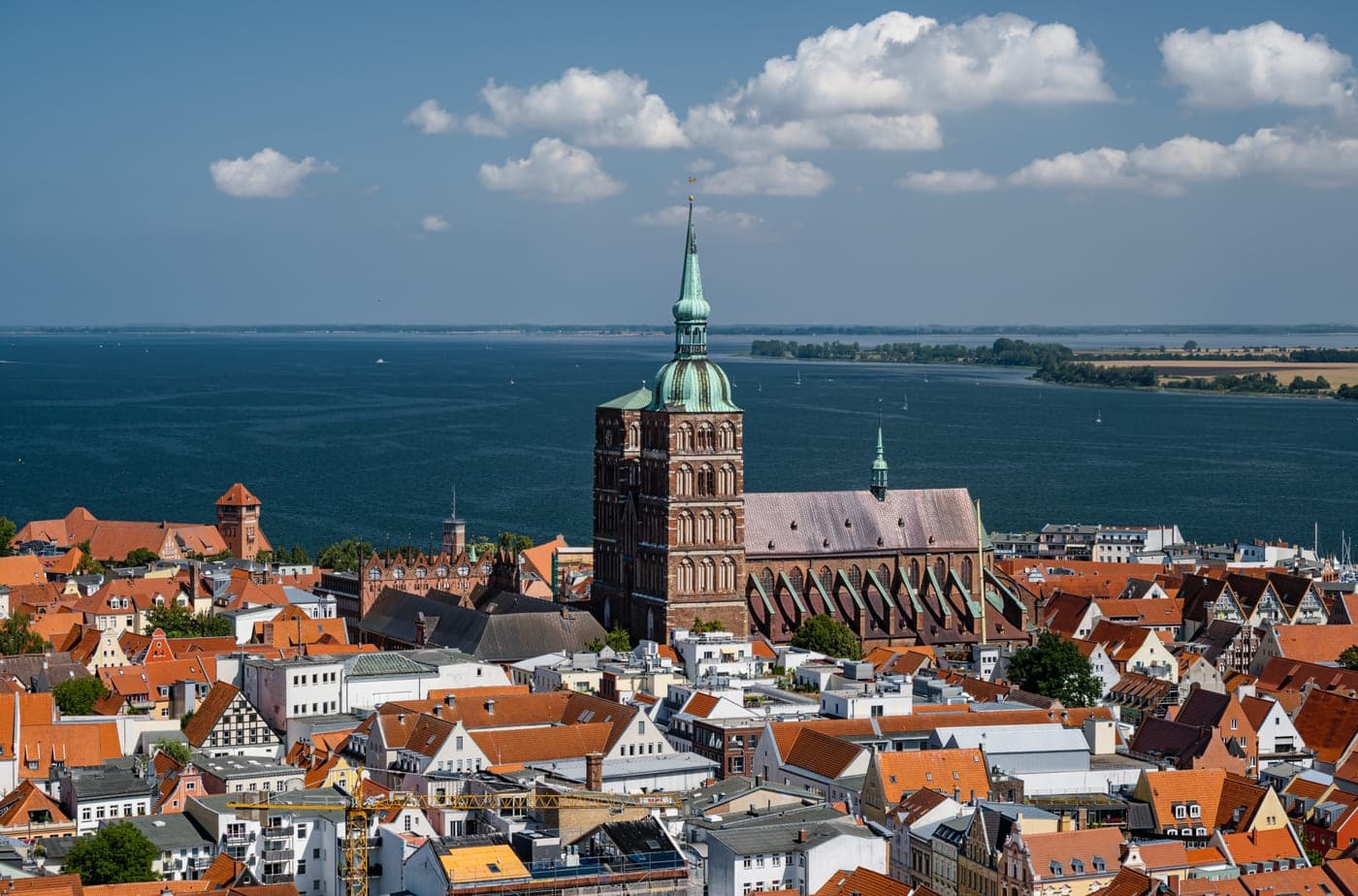
UNESCO Hanseatic city with Gothic brick architecture and Baltic harbor
Boat RentalsHiking
1 region
- Boat Rentals11 destinations
Mecklenburg-Vorpommern
Mecklenburg-Vorpommern is the largest of Germany's federal states by area, reaching from the Baltic Sea inland across a landscape scattered with lakes. The name joins two historic regions: Mecklenburg in the west, long ruled from Schwerin, and Vorpommern, Western Pomerania, in the east, the German share of the old Baltic region of Pomerania that today continues into Poland. This eastern half is flat farmland and river estuaries, with the port towns of Stralsund and Greifswald. Rostock, the state's largest city, keeps a brick Gothic skyline around St. Mary's Church, with a harbour at Warnemünde where ferries, fishing boats, and sailing yachts share the same stretch of water. Stralsund and Wismar preserve step-gabled merchant houses and market squares built on the wealth of Baltic trade. Greifswald, a university town further east, shows the same red-brick churches rising above low rooflines. Inland, Schwerin's old town circles a castle built on an island in the middle of its own lake, now the seat of the state parliament. Behind the coast lies the Mecklenburg Lake District, where glacial lakes are strung together by narrow channels and canals. Müritz anchors a national park of reed beds, wet woodland, and open water. Small towns such as Waren, Röbel, and Plau am See sit at the water's edge, their harbours used by canoes and sailing boats moving between lakes. The Baltic coast itself turns rougher and more open. Rügen, Germany's largest island, rises into chalk cliffs at Jasmund National Park, where beech forest reaches the sea above the white rock face at Königsstuhl. The island's seaside resorts, Binz, Sellin, and Göhren among them, keep rows of nineteenth-century villas with wooden verandas, a style known locally as Bäderarchitektur. Usedom, shared with Poland at its eastern end, has a similar line of resort towns, Heringsdorf, Ahlbeck, and Bansin, strung along one long sand beach joined by a wooden pier. Between the two larger islands, Hiddensee stays low and quiet. Away from the resorts, the Fischland-Darß-Zingst peninsula keeps fishing villages shaped by the shallow Bodden lagoons that separate the peninsula from the mainland. Ahrenshoop grew into an artists' colony in the late nineteenth century and still keeps galleries in old captains' houses. The region's kitchens draw on both sea and lake: herring and sprat from the Baltic, pike and zander from inland waters, rye bread and potatoes as everyday staples, and a tradition of fish smoking in the coastal villages. Mecklenburger Rippenbraten, a slow-roasted pork dish, and beer from small regional breweries round out menus built for a cooler, maritime climate. Mecklenburg-Vorpommern holds together two different rhythms: the still water and reed beds of its lake district, and the open sand and chalk of its Baltic shore.
Boat RentalsHiking