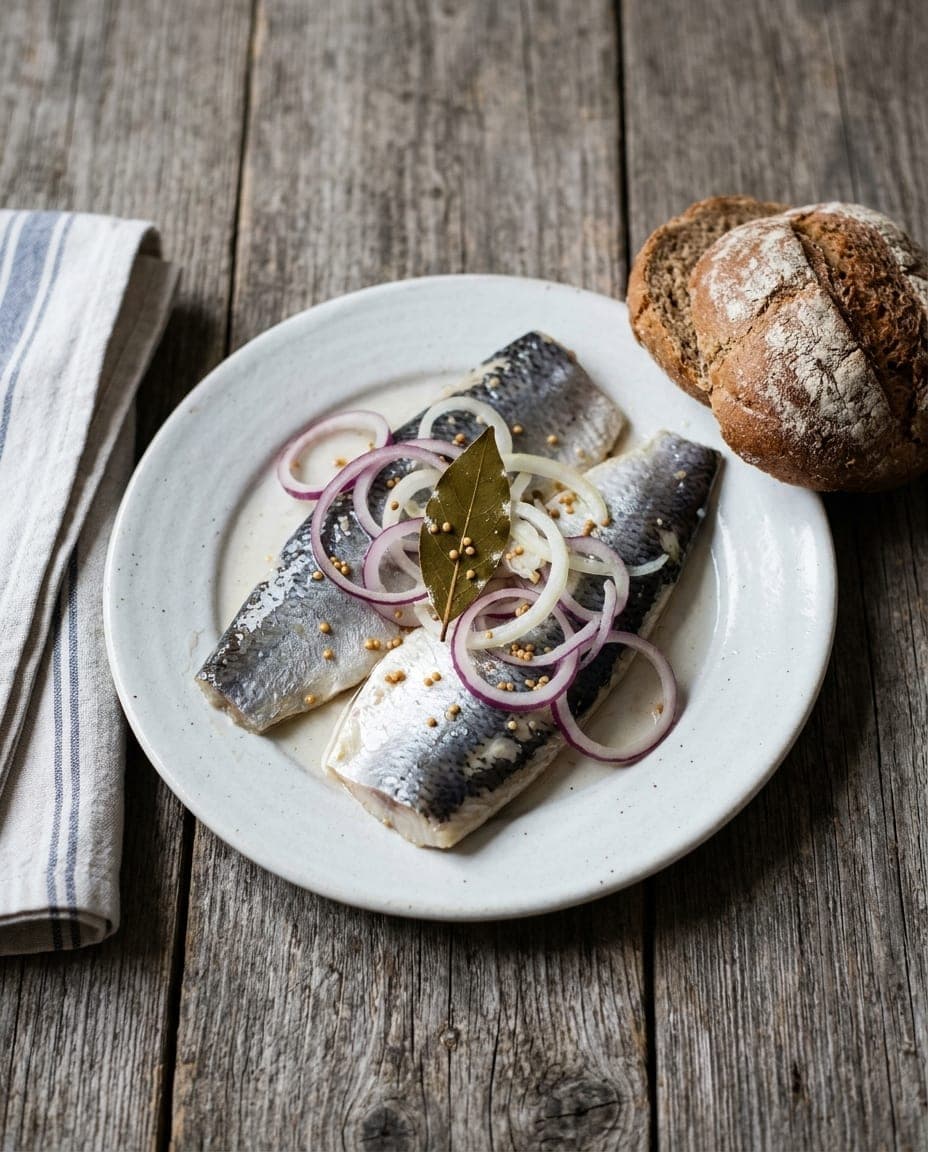
Ahle Wurst
North Hessian pork sausage, slowly air-dried for weeks or months
- Local name
- Ahle Wurscht
- Served with
- Rye bread, gherkins
- Best eaten at
- A North Hessian village inn
- Pairs with
- Pilsner and schnapps
What it is
Ahle Wurst, or Ahle Wurscht in the local dialect, translates to "old sausage". The name refers not to an ingredient but to the process: the meat is aged until it becomes firm, dark and intensely flavoured. This long-matured pork salami originates from North Hesse, particularly around Kassel, and remains a regional speciality rather than a dish found on menus across Germany.
It is a raw sausage, meaning the meat is not cooked but cured through salting, drying and time, sometimes with a little smoke. The texture ranges from firm to very hard depending on how long it has hung. The flavour is deep, salty and savoury, often described as rich without being greasy. It is not a starter or a main course in the traditional sense; it is eaten as part of a simple cold meal of bread and cold cuts, between meals or as a light supper.
How it is made
The sausage begins with pork from heavy, older pigs that is worked while still warm, soon after slaughter. The meat is cured with salt, a little sugar and saltpetre, and seasoned mainly with pepper and nutmeg; depending on the village, caraway, mustard seed or garlic, often steeped in spirits, may be added. Nitrite curing salt is not allowed under the protected recipe. The mixture is stuffed into natural casings and hung to mature in cool rooms with fairly high humidity, traditionally special ripening rooms.
The drying process takes at least four weeks and often several months. As time passes, the sausage loses moisture, becomes harder, and the flavour concentrates. Three shapes exist: the Stracke, which is long and straight; the Dürre Runde, a thin ring; and the Feldkieker, a thick, rounded sausage. The older the sausage, the more intense its taste becomes. Since 2023 it has carried EU protected geographical indication status as Nordhessische Ahle Wurscht, ensuring that only sausages slaughtered, made and matured in North Hesse can bear the name.
What goes into it
The composition of Ahle Wurst is defined by its simplicity and the quality of its ingredients:
- Fresh pork, used while still warm to ensure proper texture and curing.
- Salt, sugar and saltpetre, which draw out moisture and preserve the meat.
- Pepper and nutmeg, the main seasonings.
- Natural casings, which hold the shape during drying.
- Optional caraway, mustard seed or garlic, added by some makers for extra depth but never in large quantities.
The result is a slice of dark, firm meat that requires no cooking.
How to eat it
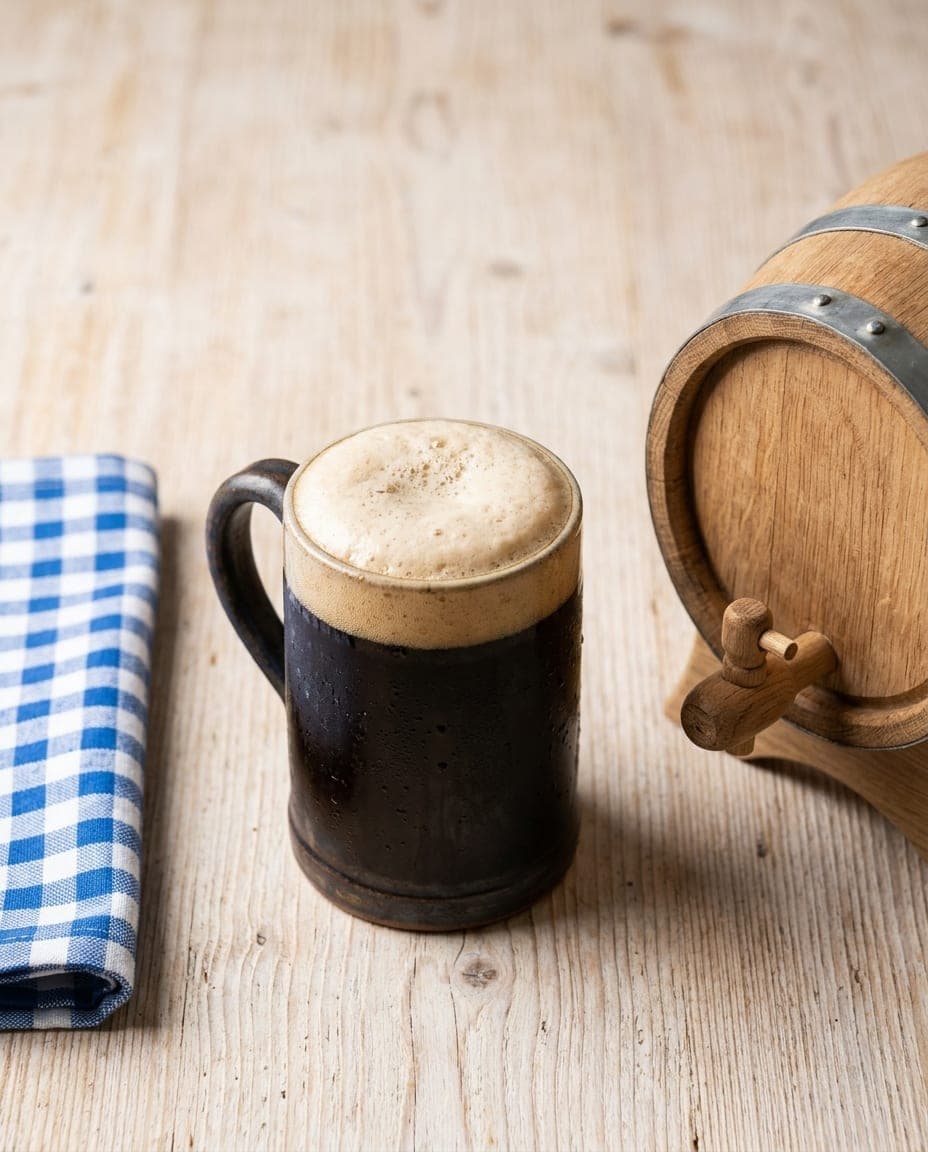
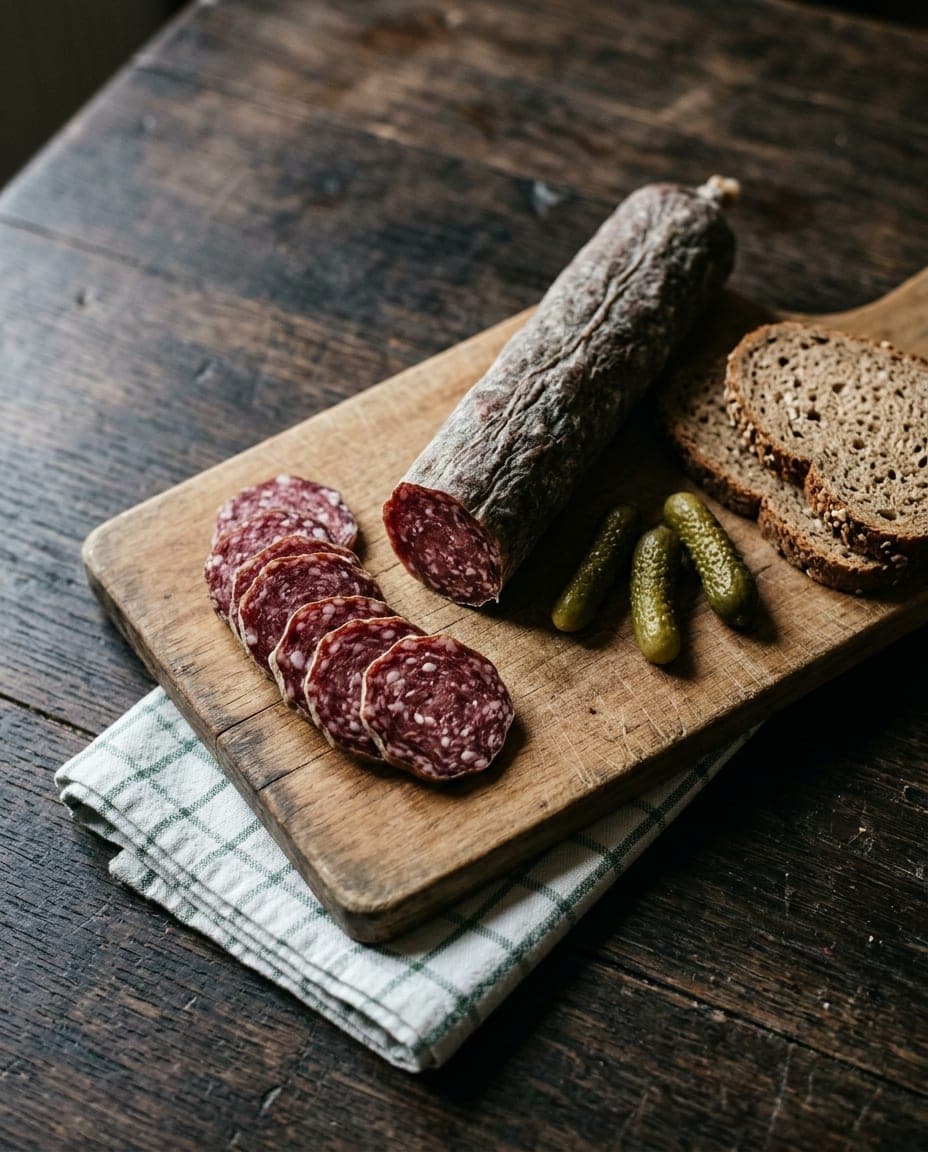
Ahle Wurst is typically eaten as part of a cold meal of bread and cold cuts, what southern Germans would call a Brotzeit. The sausage is sliced thinly with a sharp knife and served on dark rye bread. It is often accompanied by gherkins, which cut through the saltiness of the meat. A glass of Pilsner or a small measure of schnapps pairs well with the intensity of the flavour.
The combination is found at village inns and butchers' shops across North Hesse, especially around Kassel. The bread should be sturdy enough to hold the slices without breaking. Some sausages are so hard that they require a firm bite, while younger ones may be softer and more pliable. The experience is one of savouring texture and concentrated flavour rather than following a complex eating ritual.
Curious facts
- The name means old. Ahle is a dialect word for "old", referring to the long maturing of the sausage.
- Ripening rooms. The sausages are hung in dedicated ripening rooms, where they dry slowly without spoiling.
- Three distinct shapes. The straight Stracke, the ring-shaped Dürre Runde and the plump Feldkieker are all part of the protected family.
- Protected status. Only sausages from North Hesse can be sold as Nordhessische Ahle Wurscht, an EU designation registered in 2023 that protects the method and origin of the product.
- A regional staple. Similar sausages are made in neighbouring southern Lower Saxony, but the tradition remains strongest in the Kassel area, where it is everyday food rather than a tourist curiosity.
Where to try it
2 destinations
 Camper Van Rentals
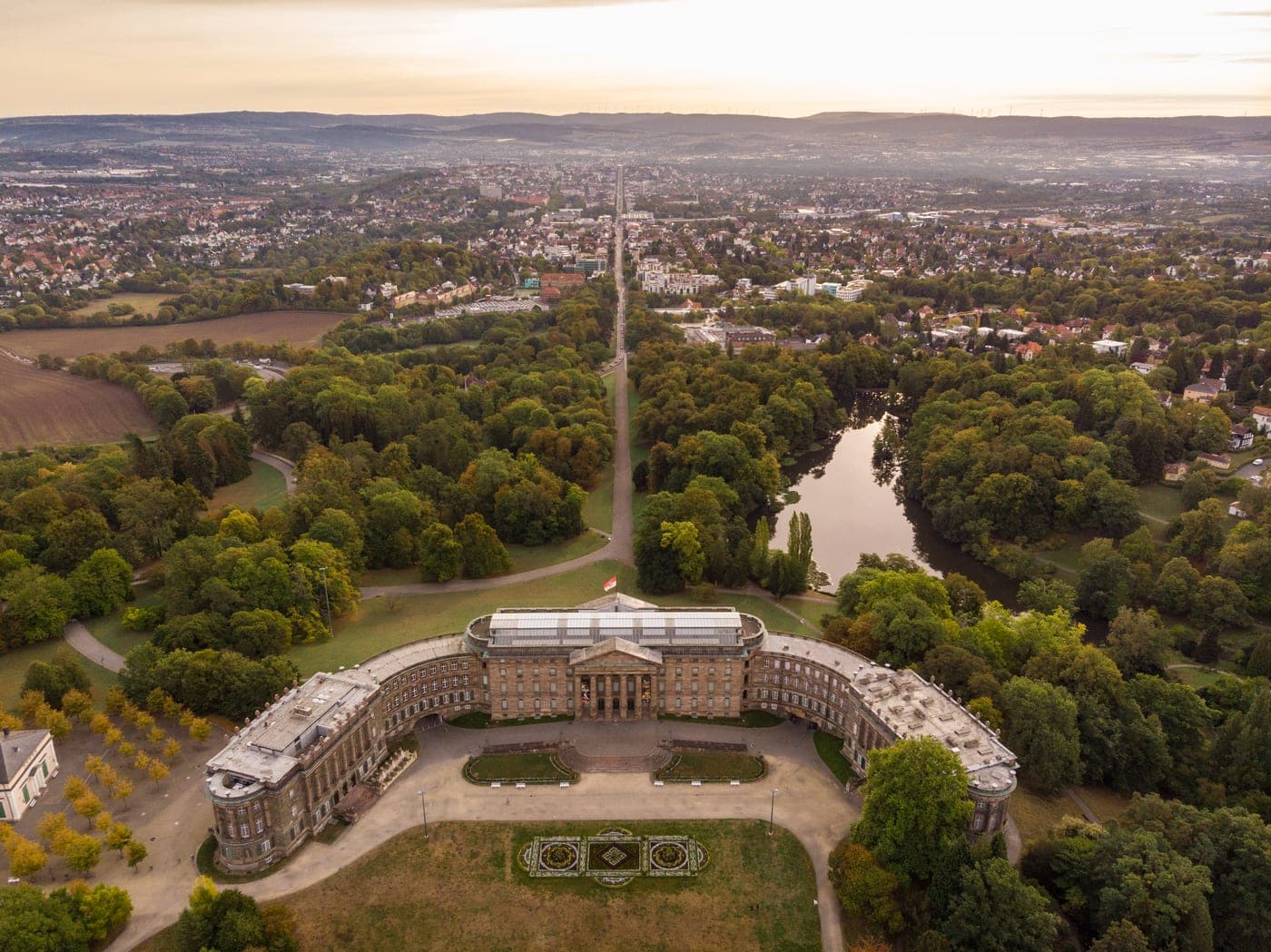
Kassel
Central German city famous for documenta art exhibition
Camper Van RentalsHiking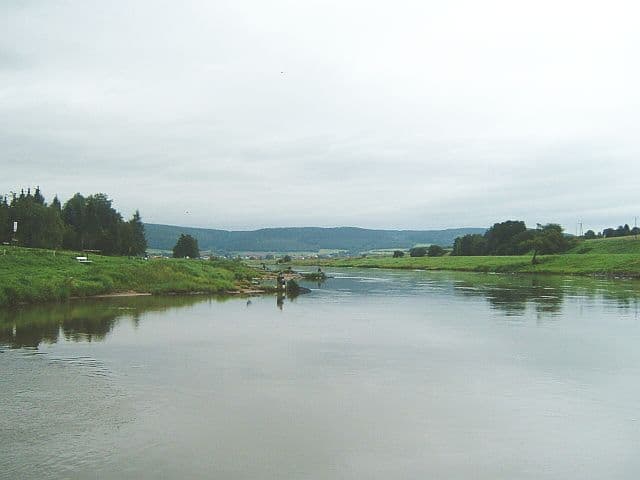
1 region
 Castles5 destinations
Hesse
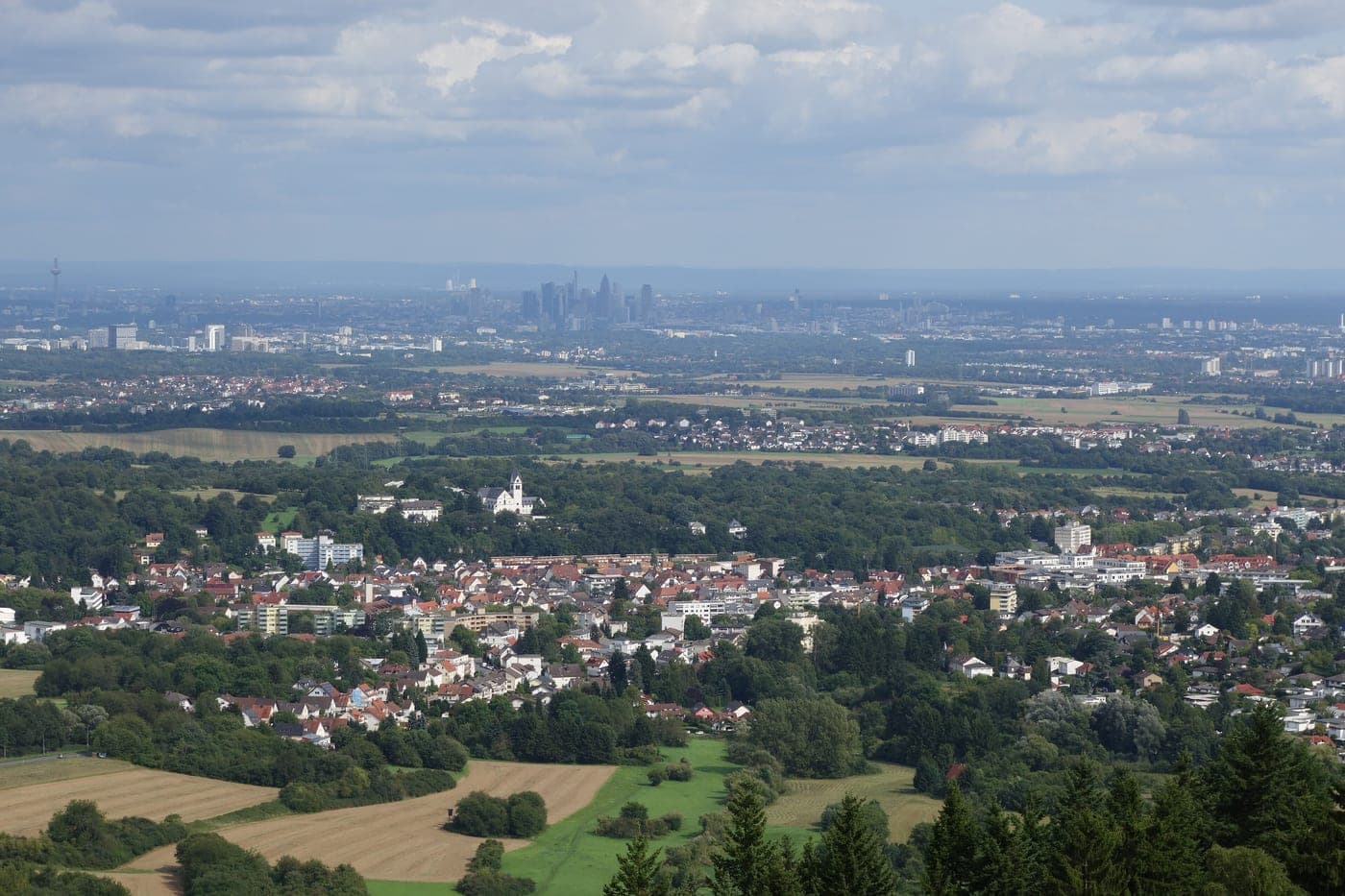
Hesse sits at the middle of Germany, and its landscape shows that in-between position clearly: river valleys lined with vineyards, forested hills that rise into proper mountain trails, and old market towns that never grew into cities. The pace here is set by the land itself. Along the Rhine, in the district known as the Rheingau, steep slopes have carried vines for centuries. Riesling is the grape that defines the area, grown on terraces above towns such as Rüdesheim, Eltville, and Geisenheim, where the river bends and the hills catch the afternoon sun. Marked cycling paths follow the water through the vine rows, past wine presses and small cellar doors that open onto the lane in season. Wiesbaden, the state capital, grew up around its hot springs. The Romans built baths here, and the town's spa culture never really stopped afterward — the same warm mineral water still rises through the ground and feeds the fountains and bathhouses that give the old streets their elegant, slightly formal air. Wide boulevards, stucco façades, and a domed casino all belong to that same spa-town character. Darmstadt, not far south, took a different path. At the start of the twentieth century, a group of artists and architects built the Mathildenhöhe colony there, a hillside cluster of houses, studios, and a wedding tower designed as a single artistic statement. The result is unlike anything else nearby: Jugendstil curves, mosaic tiles, and gardens laid out to match the buildings around them. To the north, the Taunus range folds into wooded ridges and open summits, with the Feldberg as its high point. Paths climb through beech forest and break out onto grassy tops with views back down toward the Rhine and Main valleys. At the foot of the range, Bad Homburg keeps its own spa tradition, with a park landscaped around mineral springs and a Kurhaus at its centre. Marburg lies along the Lahn river, its old town built up a steep hillside beneath a castle that has watched over the crossing for centuries. Narrow lanes climb between half-timbered houses toward the Elisabethkirche, one of the earliest Gothic churches built in Germany, and the university that has shaped the town since the sixteenth century sits woven right through the streets rather than set apart from them. Hesse also carries a strong thread of fairy tale history. The Brothers Grimm worked in Kassel for much of their lives, gathering and editing the folk tales that later spread around the world, and the town where they grew up, Steinau an der Straße, still keeps their family home. Kassel itself holds the Bergpark Wilhelmshöhe, a hillside park built around water cascades and crowned by a huge statue of Hercules, with fountains set running on fixed days through the warmer months. Further east, Bad Hersfeld grew around a Benedictine abbey whose church was left roofless after a fire centuries ago. The ruined nave now hosts an open-air theatre festival each summer, with the half-timbered old town filling up around performance nights. Fulda, close by, keeps its baroque cathedral quarter and a web of quiet lanes built for walking rather than traffic. Wine, water, and woodland repeat across Hesse in different combinations. The Rhine and Lahn valleys both carry cycling routes built along old towpaths, with easy gradients that pass through vineyard villages and under castle ruins. Autumn brings the grape harvest to the Rheingau, with presses running and new wine, still cloudy and sweet, sold by the glass in village squares. Spring and early summer suit the Taunus trails, when the beech woods are freshly green and the ridge paths stay cool. Spa towns like Wiesbaden and Bad Homburg keep their bathhouses open through the year, giving the region a rhythm that does not depend on any single season. What holds Hesse together is this mix of built and grown landscape: castle hills standing over vine terraces, spa parks laid out beside forest ridges, and small towns where the half-timbered centre and the surrounding countryside read as one continuous place rather than a destination and its outskirts.
CastlesCamper Van RentalsHiking