Tarte flambée (Flammekueche)
Thin Alsatian tart of fromage blanc, crème fraîche, onions and lardons
- Local name
- Flammekueche
- Best eaten at
- An Alsatian winstub
- Pairs with
- Alsace Pinot Blanc or lager
What it is
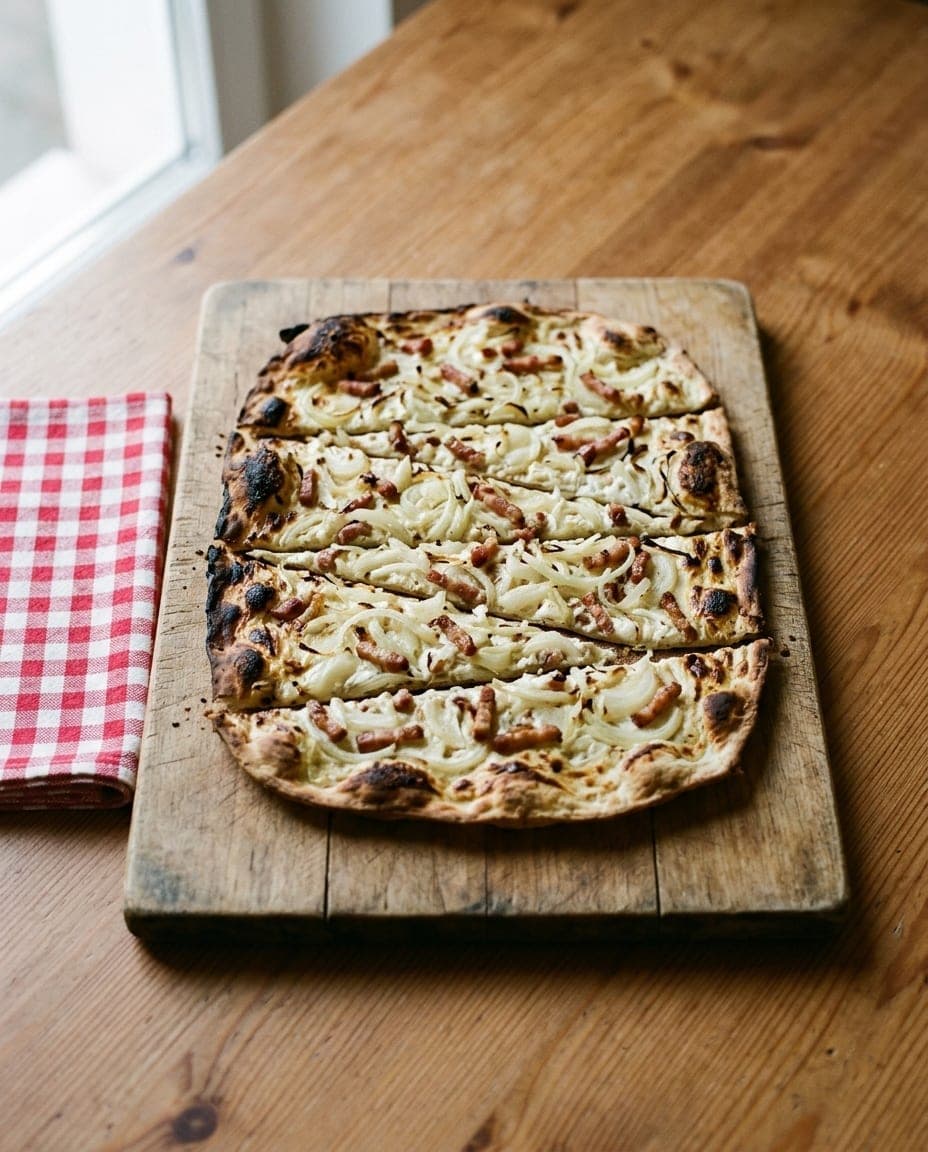
Tarte flambée, known locally as Flammekueche, is a thin, rectangular or round tart that belongs to the Alsace region of eastern France. It consists of a very thin layer of bread dough spread with fromage blanc and/or crème fraîche, scattered with raw sliced onions and strips of smoked bacon called lardons, and baked in a very hot wood-fired oven until the edges blacken. The result is a crisp base that breaks easily, topped with savoury ingredients that soften but do not melt into a heavy cheese sauce.
The dish is a regional speciality at heart, rooted in Alsace and the neighbouring German-speaking lands along the Rhine – Baden, the Palatinate, Saarland and German-speaking Moselle – where it is called Flammkuchen. It has since spread across France, but Alsace remains its home. It is not a pizza in the Italian sense, nor a quiche with a thick crust. The dough is rolled so thin that it resembles a cracker when baked. A single tart is often shared, and many tables order several to arrive one after another.
The story of the bread oven
The origin of the dish is tied to the bread-making practices of rural Alsace, and especially the farming country of the Kochersberg west of Strasbourg. Farm households baked their bread once a week in a wood-fired oven, and before the loaves went in, the heat had to be tested.
To do so, a thin sheet of dough was slid into the oven with the embers pushed aside. It baked in a minute or two, until the edge was nearly burnt. The name Flammekueche means "cake baked in the flames", describing this quick bake rather than any flambéing with spirits. Once done, the tart was not thrown away but eaten by the household while the bread waited.
For a long time it remained a homemade farm dish; it only began appearing in restaurants in the 1960s. Today it is a fixture of the winstub, the Alsatian wine tavern.
How it is made
No single recipe is enforced. The base is a simple dough of flour, water, salt and sometimes a little yeast, rolled out until it is almost translucent. This thinness is essential; a thicker crust would not crisp up in the short time required by the hot oven.
The topping begins with a layer of fromage blanc, a fresh, slightly tangy cheese, or crème fraîche (often both), spread evenly over the dough. Sliced raw onions are scattered across the surface, followed by smoked lardons, thick or thin depending on the kitchen. Heavy spices are rare.
A gratinée version adds grated cheese; other common variants include one with Munster and a forestière with mushrooms. Sweet versions, typically with apple slices, are served as dessert in some places. The savoury version remains the standard.
How it is eaten
Tarte flambée is often eaten with the hands. It arrives on a wooden board, often cut into strips or squares to share. Diners pick up the pieces directly from the board: the edges are brittle and charred, while the centre remains softer.
It is common to order several tarts in succession. As one is finished, a new one arrives, which suits the social rhythm of the winstub, where the meal is more about lingering over food and wine than a single formal course.
The dish pairs naturally with Alsace Pinot Blanc or a dry Riesling, whose acidity cuts the fat of the cream and bacon. A cold lager is an equally traditional companion.
Where it belongs
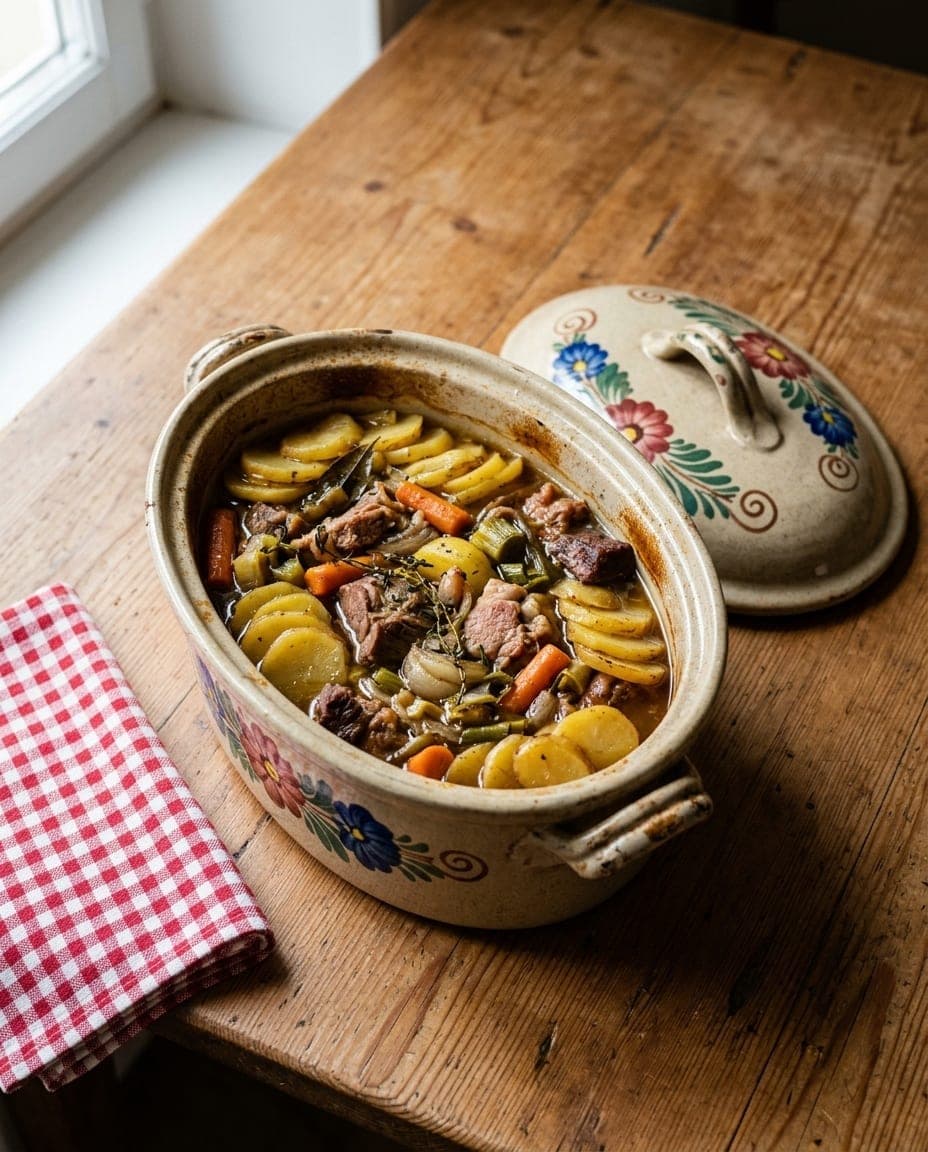
The dish is rooted in the winstub, an Alsatian wine tavern at the heart of local social life. These are not fancy restaurants but cosy, often rustic spaces where locals gather to drink regional wines and eat simple, substantial food, alongside other specialities such as choucroute garnie or baeckeoffe.
Long wooden tables are shared, and service is often brisk but friendly. The best tarts are baked in a wood-fired oven on the premises, so they arrive hot and crisp.
Curious facts
- Not actually flambéed. Despite the French name, the tart is baked in the flames of a wood oven, not doused in spirits and set alight.
- It began as an oven test. Farmers used a thin sheet of dough to check whether the oven was hot enough for the weekly bread.
- Often eaten with the hands. Unlike most French dishes served at table, it is commonly picked up, often in strips or squares.
- A border dish. The same tart exists across the Rhine in Baden and in the Palatinate and Saarland, where it is called Flammkuchen.
- A late restaurant career. It stayed a farmhouse food until the 1960s, when it began to appear on restaurant menus.
Where to try it
The best place to eat tarte flambée is a winstub in Strasbourg or the villages of northern Alsace, especially the Kochersberg, where the tart is baked fresh to order in a wood-fired oven and served immediately. A glass of Alsace Pinot Blanc or a local lager is the natural companion.
Where to try it
1 destination
 Castles
Osthoffen
Quiet Alsatian village near Strasbourg with a fully inhabited medieval castle that has been lived in since the 13th century.
Castles
1 region
 Wine Tasting10 destinations
Alsace
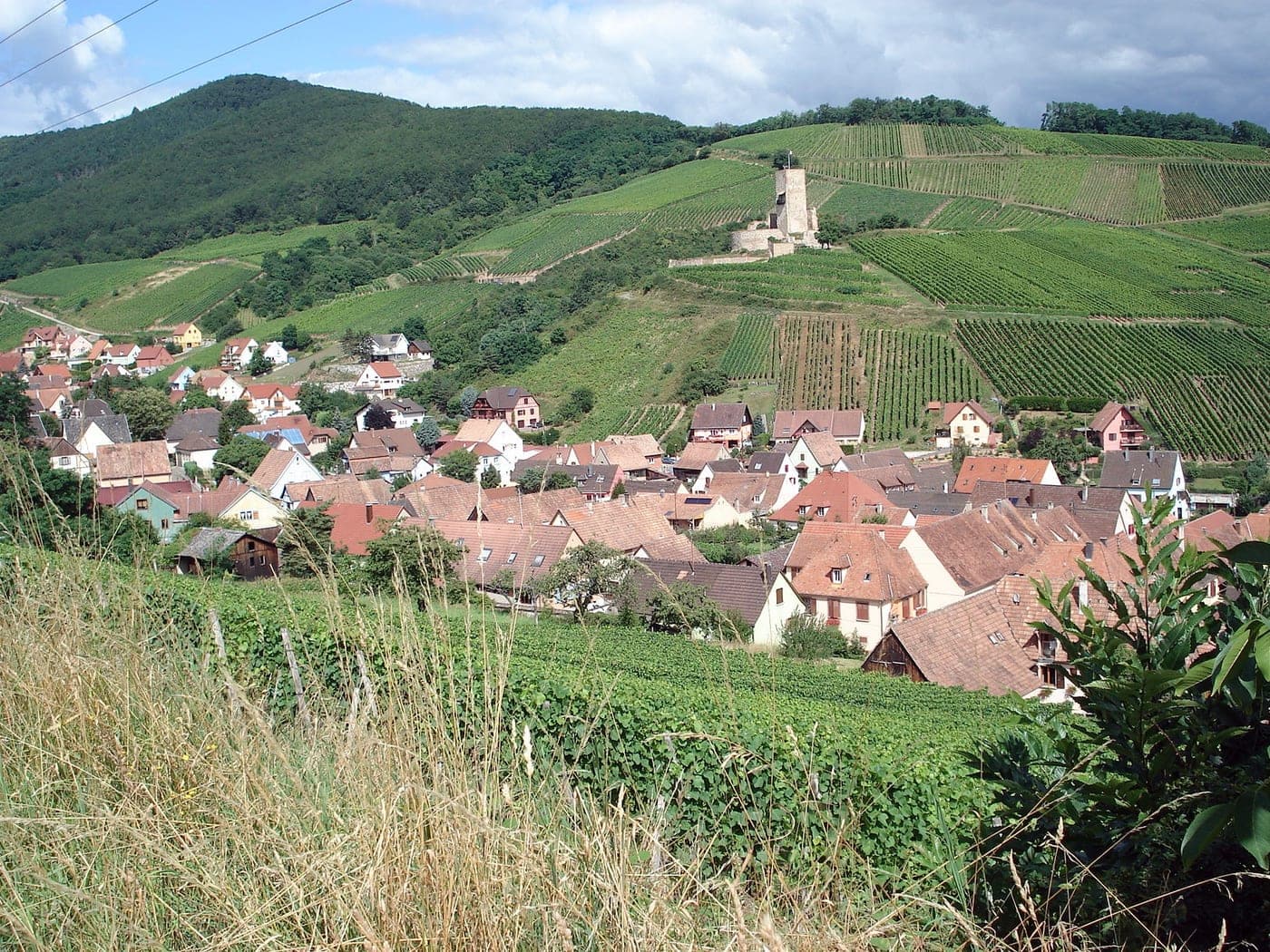
Nestled in northeastern France, this region is known for its unique blend of French and German cultures, reflected in its architecture and cuisine. Strasbourg, the largest city, features a stunning Gothic cathedral and a picturesque old town recognized as a UNESCO World Heritage site. Known for its Alsatian wines, particularly Riesling and Gewürztraminer, wine routes in the region offer opportunities to explore local vineyards and quaint villages like Riquewihr. The Vosges Mountains provide hiking and cycling trails, while the Route des Vins showcases charming towns, half-timbered houses, and traditional eateries serving tarte flambée. Rich in history, the region has a blend of medieval castles and modern European institutions, making it a fascinating area to explore at a leisurely pace.
Wine TastingHikingCastles