Baeckeoffe
Alsatian three-meat bake slow-cooked in a sealed earthenware terrine
- Local name
- Baeckeoffe
- Served with
- Green salad
- Best eaten at
- An Alsatian winstub
- Pairs with
- Alsace Riesling
What it is
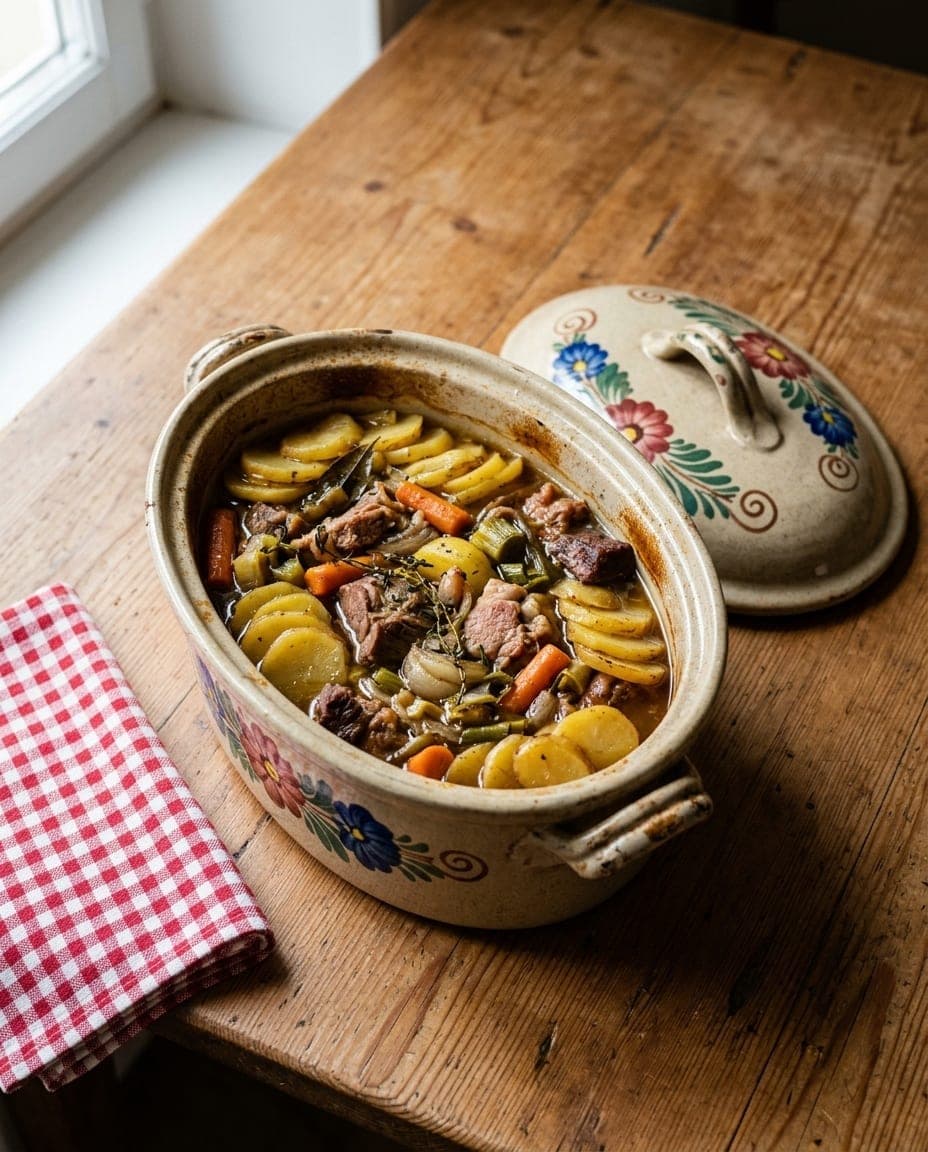
Baeckeoffe is the most substantial of Alsace's traditional dishes, a slow-baked casserole that turns simple ingredients into a deep, aromatic meal. The Alsatian name translates literally as "baker's oven", a reference to the method by which the dish was traditionally prepared. It consists of three types of meat — beef, pork and lamb — marinated overnight in Alsace white wine, onions and garlic, then layered with sliced potatoes and onions in a glazed earthenware pot. The dish is sealed with a rope of bread dough around the rim of the lid before being baked for several hours until the meats are tender and the flavours have melded into a savoury broth.
The result is a hearty, moist stew that defies the separation between meat, vegetable and sauce. Every bite contains the sharpness of the wine marinade, the sweetness of the slow-cooked potatoes and the distinct character of each meat. It is not a light starter or an appetiser; it is a main course designed to sustain a family through a long day.
The story of Monday and the baker's oven
According to the story told across Alsace, the history of baeckeoffe is tied to the domestic rhythm of Alsatian households, particularly the old washing-day tradition. On Mondays, traditionally reserved for laundry, housewives would prepare the dish early in the morning. They marinated the three meats in white wine and aromatics, then layered them with potatoes and onions in a large, oval earthenware pot known as a baeckeoffe.
Once assembled, the family would seal the lid with a thick rope of bread dough. The sealed pot was then taken to the local baker's oven on the way to the wash-house. The baker would place the pot in the residual heat of the wood-fired bread oven, still warm from the morning's baking but no longer at peak temperature. The dish would cook slowly for several hours while the women worked at the river or the communal wash-house.
The dough seal served a practical purpose: it kept the steam inside, allowing the meat to braise in its own juices and the wine marinade without evaporation. When the family returned at midday, they collected their pot, broke the dough seal, and found the meal ready to serve.
The pot and the three meats
The vessel itself is as important as the ingredients. The baeckeoffe terrine is a heavy, oval earthenware dish with a lid, often decorated with traditional Alsatian patterns. Families traditionally owned their own pot, which could be handed down over generations. The thick clay allows for even heat distribution and the tight seal of the dough ensures that the steam remains trapped inside during the long baking process.
The three meats are essential to the dish's identity. Beef provides a deep, meaty base, while pork adds fat and richness. Lamb contributes a distinct note that balances the others. The choice of white wine for the marinade is equally critical; the acidity of a dry Alsace white cuts the fat of the meats. Onions, garlic, leeks and herbs are added, along with juniper berries in some versions, though the exact aromatics vary by household.
Sliced potatoes form the base and top layers, absorbing the juices as they cook. They become soft and creamy, taking on the flavour of the wine and meat without losing their structure.
How it is eaten
Baeckeoffe is served directly from the earthenware pot, often with the lid still on to keep the heat in until the moment of serving. The dish is ladled out into individual bowls or plates, ensuring that each portion contains a mix of all three meats, potatoes and onions. It is too rich to be eaten alone; it is traditionally accompanied by a simple green salad dressed with a light vinaigrette to cut through the heaviness of the meat and wine.
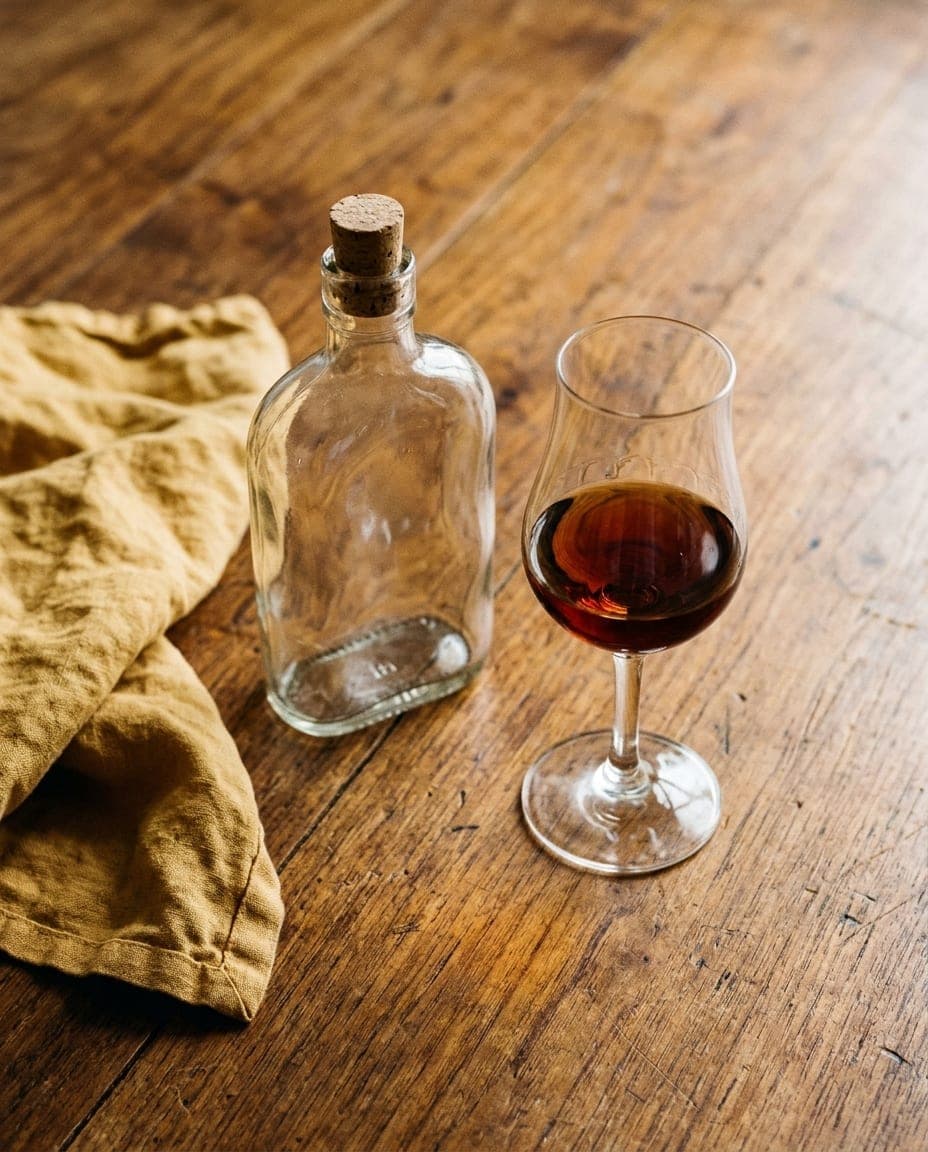
The usual pairing is a glass of Alsace Riesling or Sylvaner, often the same style of wine used in the marinade. The crisp acidity of these wines balances the fat of the baeckeoffe. In an Alsatian winstub, a small, wood-panelled wine tavern, the meal is often shared among a group, with the pot set in the middle of the table.
The dish is best enjoyed in the autumn and winter months, when the cold weather calls for something warming and substantial. However, it remains available year-round in traditional restaurants across Alsace.
Curious facts
- The dough seal is key. The bread rope around the lid locks in the steam; in restaurants it is often broken at the table, releasing a cloud of fragrant steam.
- Three meats. Classic baeckeoffe includes beef, pork and lamb, though some households and restaurants vary the mix.
- Wine marinade. The overnight marination in Alsace white wine is essential, allowing the meat to absorb the acidity and aromatics before baking begins.
Where to try it
The best place to eat baeckeoffe is in an Alsatian winstub, a small tavern that serves traditional regional food; some ask for it to be ordered in advance because of the long cooking time.
The winstubs of Strasbourg and Colmar and the wine villages such as Riquewihr and Eguisheim often list it on their menus, served in the same kind of earthenware pots used historically.
Restaurants that emphasise local produce and traditional methods are the surest bet. A visit to an Alsatian winstub offers the chance to experience the baeckeoffe as it was meant to be eaten: slow, shared and bound up with the land.
Where to try it
1 region
 Wine Tasting10 destinations
Alsace
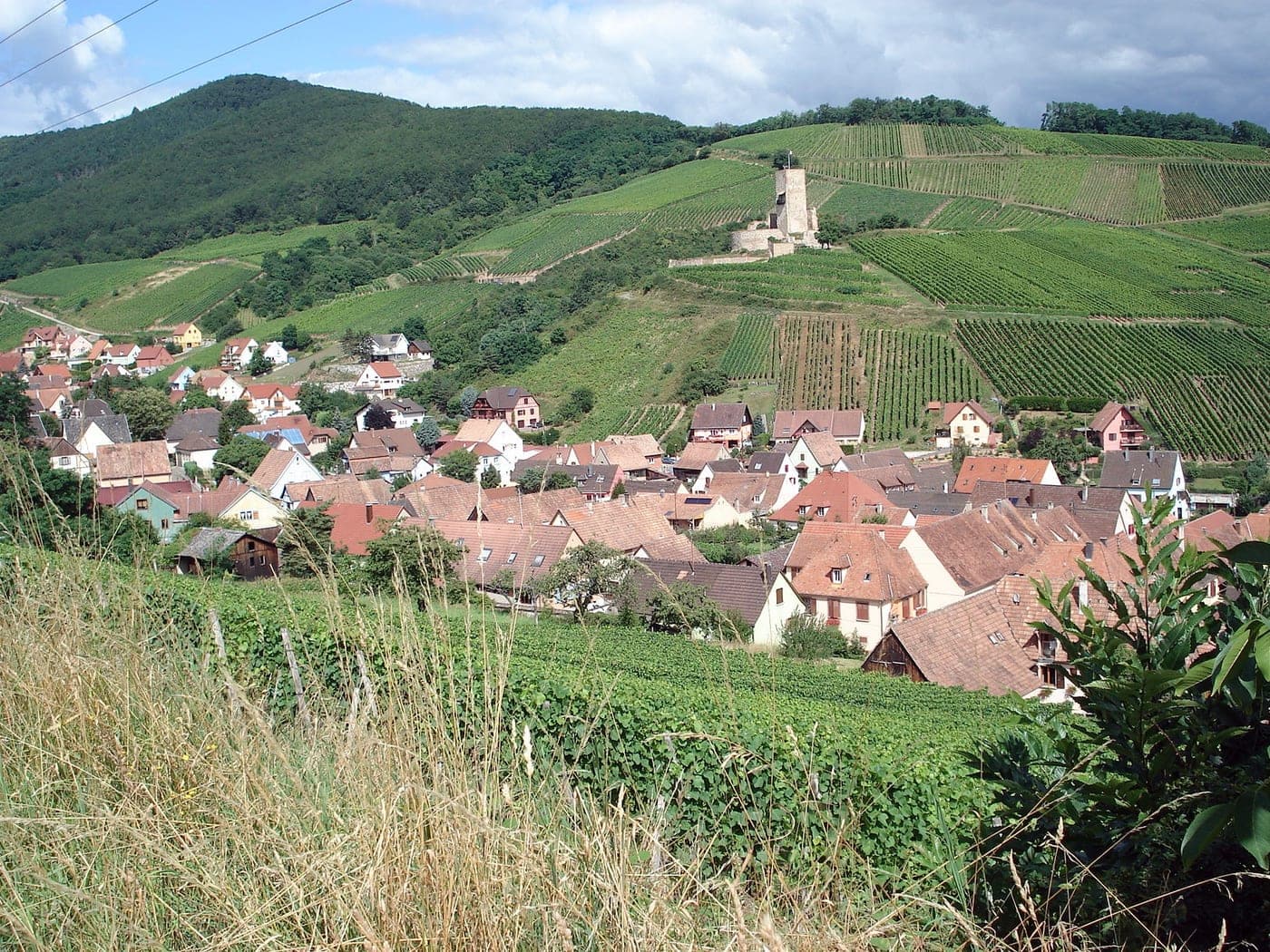
Nestled in northeastern France, this region is known for its unique blend of French and German cultures, reflected in its architecture and cuisine. Strasbourg, the largest city, features a stunning Gothic cathedral and a picturesque old town recognized as a UNESCO World Heritage site. Known for its Alsatian wines, particularly Riesling and Gewürztraminer, wine routes in the region offer opportunities to explore local vineyards and quaint villages like Riquewihr. The Vosges Mountains provide hiking and cycling trails, while the Route des Vins showcases charming towns, half-timbered houses, and traditional eateries serving tarte flambée. Rich in history, the region has a blend of medieval castles and modern European institutions, making it a fascinating area to explore at a leisurely pace.
Wine TastingHikingCastles