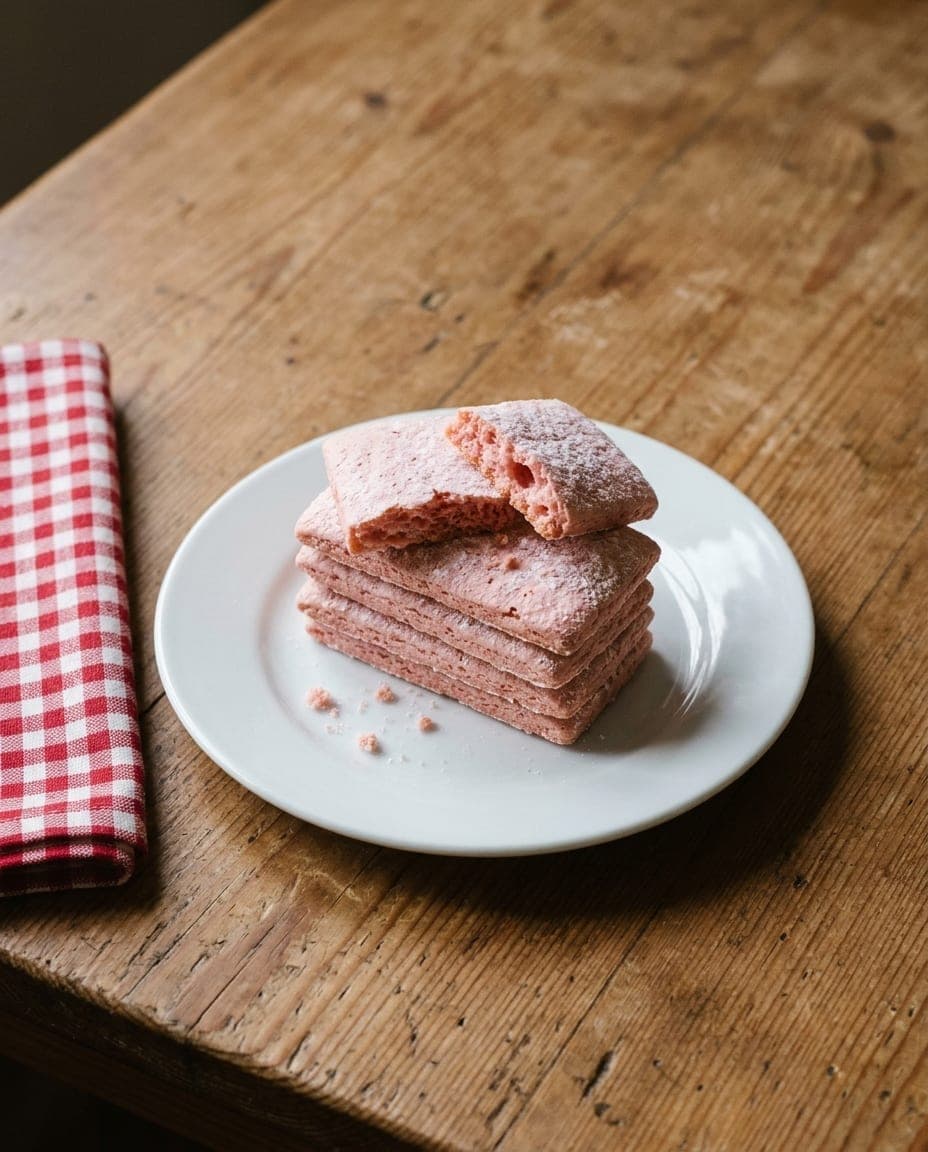
Berlingot de Carpentras
Striped sugar pyramids from Carpentras, made with candied fruit syrup
- Vegetarian

- Local name
- Berlingot de Carpentras
- Best eaten at
- A Carpentras confiserie
What it is
The berlingot de Carpentras is a hard boiled sweet from the town of Carpentras in the Vaucluse department of Provence-Alpes-Côte d'Azur. It takes the form of a small pyramid with slightly rounded faces, about a centimetre a side, translucent and coloured, with fine white lines running across it like a zebra's coat. The surface is smooth and glassy, hard to the bite but melting slowly in the mouth.
The sweet is not a cake or a biscuit. It is a confection made from boiled sugar that has been pulled and folded to create its distinctive striped appearance. While similar sweets exist elsewhere in France, the berlingot de Carpentras is tied specifically to this town and its surrounding region. The colour traditionally signals the flavour: red for mint, green for aniseed, yellow for lemon and orange for orange, with other fruits added by some makers.
The shape is as important as the flavour. Each pyramid is created by snipping a rope of hot sugar diagonally into individual pieces with oiled scissors. This technique gives the sweet its geometric form and ensures that the white stripes are visible from every angle. The result is a treat that looks like a gemstone but tastes like the classic confections of Provence.
The history of the town's sweets
Carpentras has a long tradition of making sweets, a craft that grew alongside the candied-fruit trade of the Comtat Venaissin, shared with the town of Apt further east. Preserving seasonal fruit in sugar syrup was a way to keep the harvest well beyond its season.
Local tradition traces the berlingot back to the early 14th century, when Clement V, the first pope to reside in Avignon, is said to have enjoyed a caramel sweet made by his cook; for centuries berlingots were sold by apothecaries. This story is best read as legend. The modern sweet has a firmer date: in 1844 François Pascal Long, a Carpentras pastry-cook and confectioner, began using the leftover syrup from candying fruit as its base, giving it the flavour of the local orchards without needing fresh fruit in every batch.
From 1851 Gustave Eysséric industrialised production, and by the mid-20th century several confectioners around Carpentras were making them. Today, the sweet remains a symbol of Carpentras, which styles itself the berlingot's world capital, sold in local confiseries and at the Friday market.
What goes into it
The ingredients are simple, but the method requires skill. The base is sugar boiled to a hard crack stage, often enriched with syrup left over from candying fruit. This gives the sweet its characteristic flavour without adding fresh fruit pieces.
The white stripes are not an added ingredient like icing or flour. They come from a portion of plain cooked sugar that is pulled and beaten until air makes it white and opaque, then laid in lines over the clear coloured mass. A 1953 definition required at least 40 white stripes on each berlingot.
Flavours are added to the coloured sugar before it is shaped. Mint is the classic, alongside aniseed, lemon and orange; some makers add other fruit flavours.
How to eat it
The berlingot de Carpentras is best eaten slowly. It is a hard sweet, designed to dissolve in the mouth rather than be chewed or bitten off in large chunks. The texture is crisp at first, then softens as the sugar melts. It is a treat for a quiet moment, perhaps while walking through the town or sitting by a window.
In Carpentras, the sweet is sold in the town's confiseries, loose or in bags, jars and tins, and some shops let visitors watch the confectioner at work. The Friday market, one of the best known in Provence, also has stalls selling them.
The sweet is not typically served with coffee or tea as part of a formal meal. It is more of a snack or a souvenir to take away. The colour coding makes it easy to pick out a favourite flavour when a bag is shared.
Curious facts
- The shape is cut. The pyramid form comes from snipping the rope of hot sugar diagonally with oiled scissors.
- Stripes are air, not icing. The white lines are sugar beaten with air until opaque, rather than an extra ingredient like icing or flour.
- Syrup from candying fruit. Since 1844 the sweet has used syrup left over from candying fruit, linking it to the region's candied-fruit trade.
- Colour-coded. Red traditionally means mint, green aniseed, yellow lemon and orange orange.
- A regional speciality. While berlingots are made elsewhere in France, the Carpentras version, with its syrup base and fine white stripes, is tied to this town in the Vaucluse.
Where to try it
The best place to eat a berlingot de Carpentras is in Carpentras itself, where the tradition is strongest. The sweet is also widely sold in shops across the Vaucluse.
The Friday market is the ideal spot to see the sweets on display alongside the region's other produce. A small bag makes good company on a stroll through the old town, with the sweet melting slowly on the way to the Gothic cathedral of Saint-Siffrein, begun in the early 15th century, and views towards Mont Ventoux.
Where to try it
2 destinations
 Wine Tasting
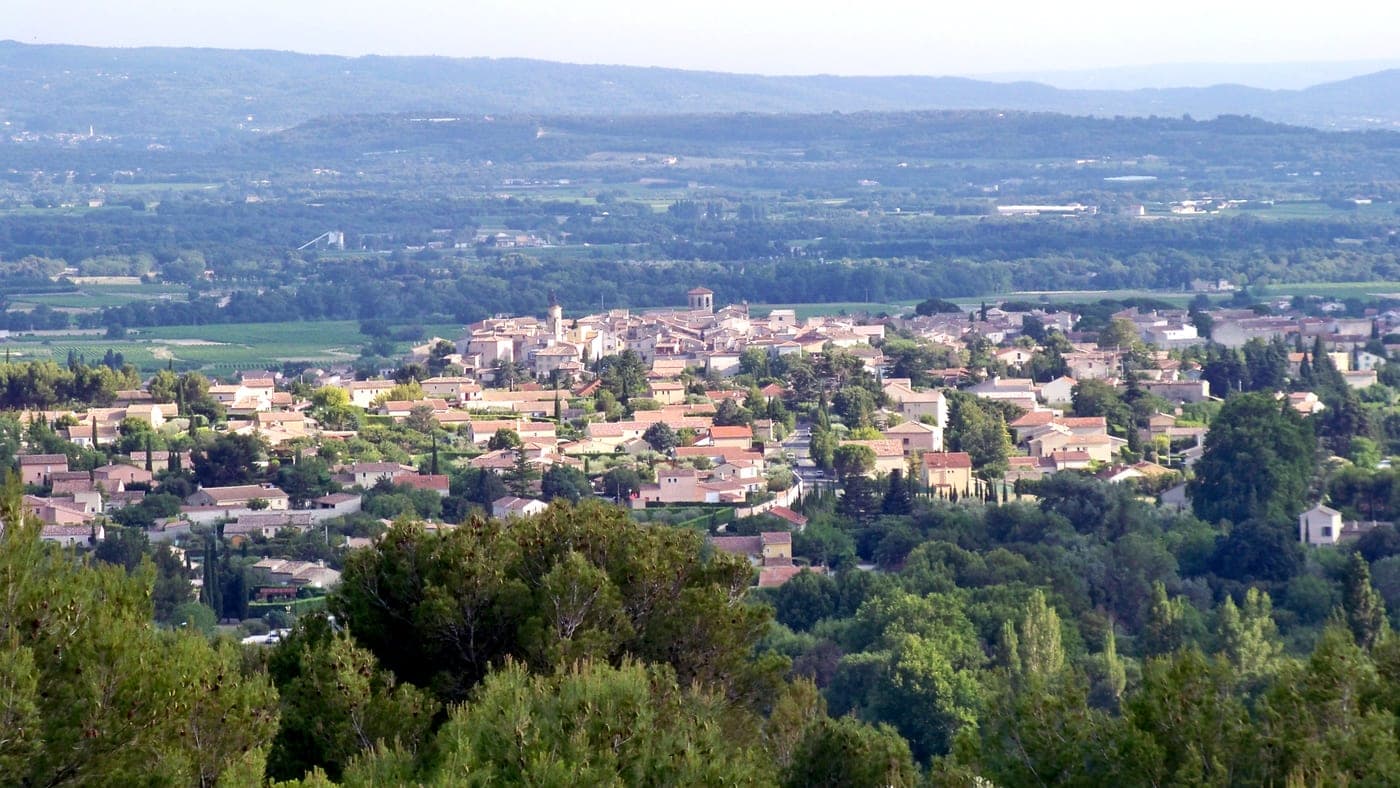
Caromb
Vaucluse wine village at foot of Mont Ventoux producing Côtes du Ventoux wines.
Wine TastingHiking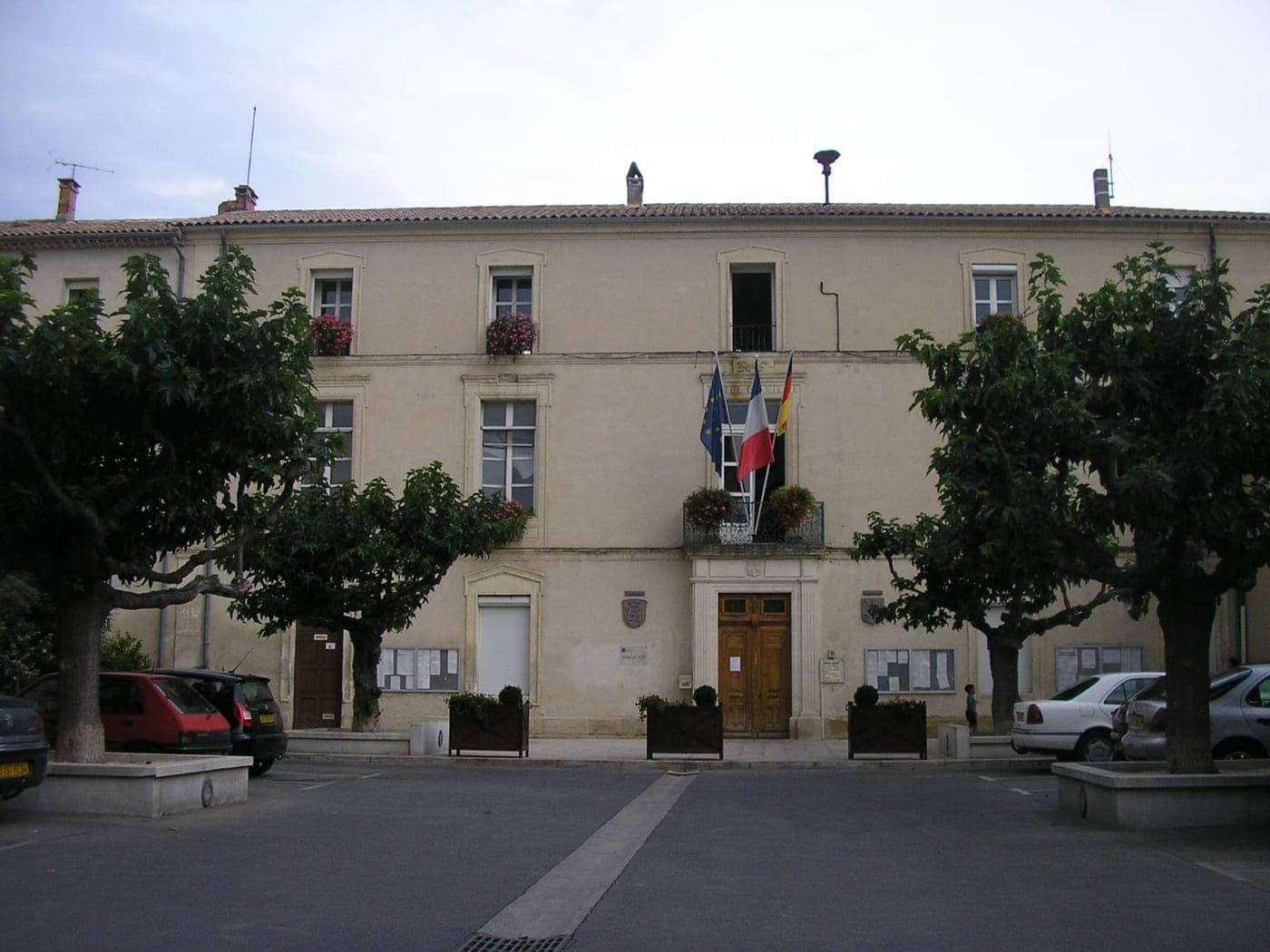 Wine Tasting
Sarrians
Sarrians is a wine town in the Vaucluse, positioned between the historic cities of Orange and Carpentras in the heart of Côtes du Rhône wine country. The town maintains a traditional Provençal character with weekly markets, plane-tree-lined squares, and local wine cooperatives. Surrounded by vineyards and orchards, Sarrians offers easy access to numerous wine estates producing both Côtes du Rhône and Côtes du Rhône Villages wines. The area combines agricultural heritage with wine tourism, providing an authentic base for exploring the southern Rhône Valley.
Wine TastingHiking
1 region
 Wine Tasting44 destinations
Provence-Alpes-Côte d'Azur
This picturesque region in southeastern France is known for its diverse landscapes, from the rugged Alps to the stunning Mediterranean coastline. It is the only region with direct access to the coast, featuring historic towns like Nice and the artistic haven of Saint-Paul-de-Vence. The region is famous for its lavender fields, particularly around Valensole, and its vineyards producing renowned wines such as Bandol and Côtes de Provence. Lesser-known villages like Moustiers-Sainte-Marie are rich in pottery traditions, while the Verdon Gorge offers breathtaking hiking and kayaking opportunities. Local markets showcase seasonal produce like olives, herbs, and artisan cheeses, enhancing the immersive experience of this vibrant region.
Wine TastingHikingCamper Van RentalsLocal Cuisine